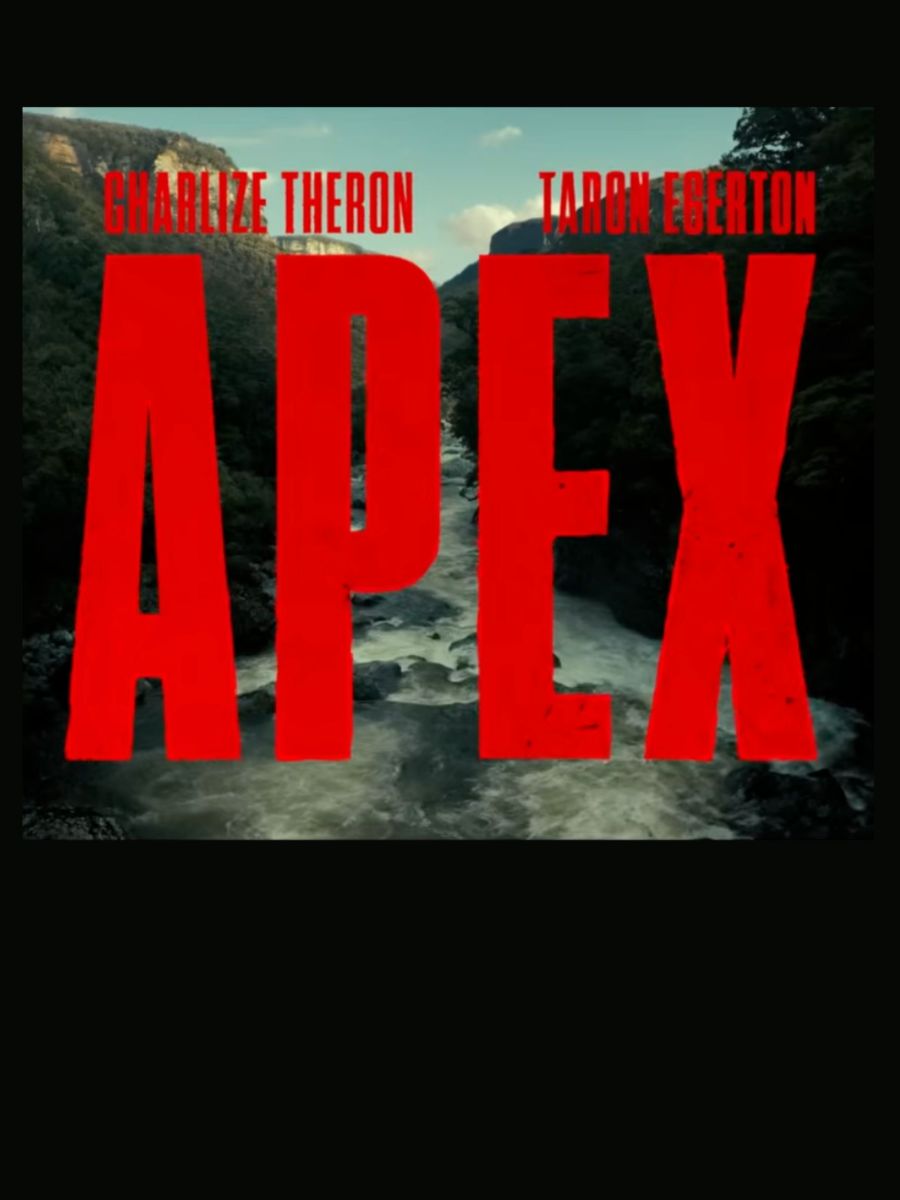
Apex (2025) Review

Quick Synopsis: Mourning the death of her partner, Sasha travels around the Outback, finding herself being hunted by Ben, a cannibalistic serial killer.

Four years ago, I reviewed Beast, another film by Baltasar Kormákur that was about someone being hunted in a landscape. In that review, I specifically mentioned how great it looked, and how great a cinema experience it was. So I was sceptical that this was released straight to Netflix, doesn’t exactly fill me with confidence. I mean, it still looks pretty. But that might be due to the landscape doing half the work for him.

I need to open this review by talking about Australian actors. I mean, they must exist otherwise Home and Away wouldn’t have lasted as long as it did, so why cast a Welsh actor to play Ben? To be fair, they do touch on it, making it clear he wasn’t born there. But he tries an accent for most of it, so he’s supposed to be, at the very least, naturalised. It almost feels like the “You’re not from here, are you?” line was added after someone noticed the accent slipping. The only way it works is if it’s his gimmick, that he’s overexaggerating his Australian nature as part of his “public persona” for some reason, I dunno, because it’s “crazy” and wacky? That would suit the rest of his character. He is definitely supposed to be crazy. But it doesn’t work. It’s like the character isn’t sure if he’s supposed to be Heath Ledgers Joker, or the villain from a 90’s Saturday morning kids cartoon, and not even a good one. Every scene has him narratively screaming, “Look at how crazy I am!” rather than simply letting him be frightening. It’s annoying and kind of distracting, feeling like the character itself is going overboard, rather than the actor. The best screen killers don’t need to constantly advertise their insanity. Michael Myers barely emotes. Anton Chigurh speaks almost conversationally. Even Mick Taylor (watching the Kill Count video for Wolf Creek as I write this), another Australian outback killer, is terrifying because he feels like someone who could actually exist. The villain in Apex feels like someone doing an impression of what a movie psychopath is supposed to look like.

That’s not the only thing harming him as a character. For a serial killer, he doesn’t do much killing. Two people (I think) died in this movie; both died in the exact same way, killed by the protagonist. The antagonist apparently has a history of murdering people, but the audience barely gets to see him do it. We’re told he’s dangerous, but storytelling generally works better when you show these things. By the end, gravity has claimed more victims than the serial killer.

That’s a problem.

It’s like making a Friday The 13th movie where everyone dies in a bus crash. Eventually you stop worrying about the villain and start keeping an eye on the terrain. There’s an obvious rewrite staring the film in the face. Make him an Outback tour guide. It’s perfect. Tourists trust him. He knows the landscape better than anyone else. He can separate people from the group without raising suspicion. Better still, we get to see him operating before the protagonist becomes his target. We understand why he’s dangerous because we’ve watched him be dangerous. So, when he meets someone who refuses to become another victim, we’ve already bought into him as a threat.

Instead, the film spends most of its running time trapped in a hostage scenario rather than delivering the hunt it advertises. The premise promises a predator tracking prey across the Australian wilderness. What we actually get is people being stuck somewhere while the plot periodically remembers there’s supposed to be danger involved.

This is a shame, because buried under the clichés is a genuinely interesting premise. Imagine spending your life preying on easy victims, only to discover this one keeps surviving everything you throw at them. The hunter slowly becomes frustrated. The prey grows more confident. Suddenly the balance of power shifts. That’s a film. Instead, Apex never really commits to that dynamic. Scenes happen, and large stretches of the film simply wash over you. Rather than a tense game of cat and mouse, it often feels like everyone is just waiting for the next location. Also, because the cast is so small, narrative convention tells you neither character is going anywhere until the climax.

The result is a thriller that never quite finds its pulse. It’s never aggressively bad. It’s too well-shot for that, and the scenery genuinely is spectacular. But almost every interesting idea feels like it’s sitting in the draft immediately underneath the one that got filmed.

You can see the better version peeking through the cracks. But I don’t want to spend my time peering at cracks, I risk getting put on a list for that.
Evil Dead Burn (2026) Review

Quick Synopsis: After the loss of her husband, a grieving widow seeks solace with her in-laws in their remote family home, only to find them possessed one by one by Deadites, forcing her into a blood-soaked fight for survival against demonic evil.

I’ve not watched an Evil Dead film since Army Of Darkness. I like to watch series in order, and I didn’t see the original until Halloween 2024. So I’m two movies and a three-season television show behind. There’s quite a fair bit of lore in this franchise, so there was a chance I’d be lost.I was, briefly. At the start, I found myself wondering who certain people were, but truthfully, it didn’t actually matter. I didn’t need to know who it was; the important thing was WHAT they were: deadites.

The franchise is weirdly regarded as comedic, despite that comedy only really coming to the forefront in Army Of Darkness; the rest have had moments of comedy, but first and foremost, they have always been horror (unless you find the idea of a tree sexually assaulting a young woman funny, in which case, ew). In that sense, EDB (EBD, pronounced Ee-deeb) is a huge success. It’s incredibly disturbing. I worried it would mistake cruelty for horror in the same way some horror films have (hello Thanksgiving, and the work of Rob Zombie), but thankfully it doesn’t. For one thing, you never get the sense that you’re supposed to cheer or revel in the violence. It fills you with fear, which is what a horror film should do.

EDB isn’t just violence; it also brings tension to the table, specifically the dinner table, where one of the year’s most tense scenes takes place. I’ve not exactly been quiet in my love of dinner scenes in movies, and EDB has a great one. The tension builds beautifully. You know something will happen. There are too many shots of heavy and/or sharp objects for something not to happen. But what it will do is it will get close, then draw back. So you’re relieved; the nightmare is over. But then it starts again, getting more tense this time, then quiets down. It repeats this until your nerves are at their breaking point. By the time the inevitable explosion of violence arrives, the film has earned every second of it.

It’s helped by having believable characters. These aren’t characters; they feel like real people. You could easily imagine them existing outside of a horror movie. They clearly have a history together. This is great as it means there’s an emotional resonance to the actions. You’re not just watching people die and be physically harmed. You’re watching family relationships get broken, trust be shattered, moments where the emotional pain cuts almost as deep as the physical. When Alice (played brilliantly by Souheilia Yacoub) is being hunted at the end, you’re not bored; you’re nervous. You want her to stop suffering, you want her to survive, not just because she’s the protagonist and that’s what’s supposed to happen, but because you’ve grown so attached to her that she feels like a friend. That’s the case for everybody in this film. Even if you don’t like them (and some are truly despicable), you understand their motivations. They’re all played by good actors too. There’s not a single weak link; everybody is on top form. EDB benefits from an unusually small central cast. Yes, technically the cast list is much larger, but most of those characters only appear in the opening and closing scenes. The overwhelming majority of the film unfolds with just six people trapped inside a single house, giving it an intimate, claustrophobic quality that suits the story perfectly.

In fact, I think you could have set almost the entire film within the grounds of the house. You’d need a few flashbacks and some narrative adjustments to cover what happens around the funeral, but it would work. It would also strengthen the parallels with the original, replacing the isolated cabin with the isolated lakehouse.

Not everything works, though. Susan’s capitulation to Edgar doesn’t quite feel real. By that point, she’s already seen what he’s become, so she has every reason not to open the door. I understand what the film is trying to achieve dramatically, but it makes her seem inexplicably foolish. Narratively, she threw a bag full of knives out a window and expects us to believe she’s shocked that those knives stabbed someone.

That’s not my only criticism. I mentioned earlier how the dinner party kept pulling back the tension only to build it up further. It tries that again near the end of the film, but pushes it a bit too far. There are multiple times where we’re given the film language of “this will end soon”, only to have another scene start. The ending is not bad, but it does definitely feel like the end of a rollercoaster where the thrills are over, and you can feel the brakes being put on.

I was also less enthusiastic about some of the visual choices. None of them looks bad (in fact, the film is consistently gorgeous), but there are moments where it feels as though individual shots were designed to look striking in a trailer rather than serve the story as effectively as they could.

The score is similarly effective without ever becoming particularly memorable. The sound design, however, is exceptional. It works hand in hand with the visuals to make every injury feel revoltingly tangible. Weapons don’t pass silently through flesh; you hear skin tearing, bones cracking and bodies breaking. It’s deeply unpleasant in exactly the way the film intends.

Those are minor quibbles. It’s otherwise a damn solid horror movie. It’s not quite as good as Backrooms, which remains my horror film of the year, but it’s comfortably one of the best genre offerings I’ve seen in 2026. More importantly, it understands what horror is actually supposed to do. Too many modern horror films mistake cruelty for fear, or assume gallons of blood automatically make something intense. EDB knows that gore without context is just noise. Every gruesome moment works because it’s rooted in believable characters and emotionally grounded situations, however supernatural they become. The violence isn’t there to earn applause; it’s there to make you flinch.

Overall, I love it. Even coming into the film without all the intervening lore, EDB reminded me why Evil Dead has endured for over forty years: beneath all the blood and possession is an understanding that horror only works when you care who’s suffering. I’m already excited for the next one (and to catch up on the ones I’ve missed).