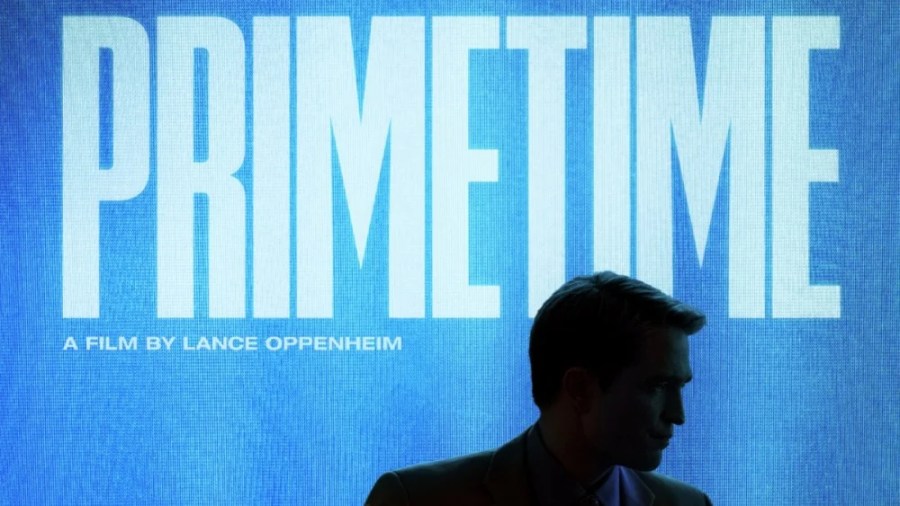
Quick Synopsis: Set in 2006, NBC journalist Chris Hansen teams up with the online vigilante group Perverted-Justice to conduct televised sting operations catching child predators for To Catch a Predator.
There’s been a few changes in how I approach this website over the years, but the biggest one came in 2018, when I decided to review every new release I watched. Since then, my approach has remained pretty constant. The only real change I’ve made, and it’s not so much a change as a realisation, is that I tend to stick to feature-length fiction.
I did review a documentary once, and that is, as far as I can recall, the only review I’ve ever deleted. There’s a reason for that: it’s tricky for me (to rock a rhyme) to review documentaries in my usual style. Fiction gives me characters, performances, narrative structure and all the other things I can get my teeth into. Documentaries, particularly those dealing with real people and real events, present a rather different challenge. There’s a fine line between reviewing the film itself and passing judgement on the people and events it depicts.
This review is going to be tricky to write for much the same reason. I’m going to have to make a conscious effort to review the film and its characters, rather than Chris Hansen as a person. After all, there’s a difference between reviewing a film about someone and reviewing that someone themselves. So if this review feels more stilted and awkwardly phrased than my others, that’s why. Consider this my disclaimer before I get started.
Right, that’s that out of the way. How was this film? Honestly, I was more into it going in than I was when I left it. I wasn’t expecting it to be incredible, nor was I expecting to come away particularly impressed. But I did expect it to be interesting, to give me something to think about or at least keep me engaged. Instead, I found myself struggling to maintain interest. To be honest, it felt lethargic, like the narrative was trawling through mud.
I also wasn’t too big a fan of the visual style. Yes, it’s unique, and purposefully dated. But dated to the wrong time. Primetime is set in the early to mid-2000s, a world defined by post-9/11 paranoia, where the prevailing attitude wasn’t to love your neighbours, but to fear them. It’s in that environment that To Catch a Predator became a cultural juggernaut, rather than the cult oddity it might have been had it been released in the 90s. The widespread use of chatrooms and instant messaging also firmly places the story in a very specific period. This isn’t just a story that happens to take place in the 2000s; it’s a story that feels intrinsically tied to that era.
Yet the visuals don’t match that. The whole aesthetic feels more 80s, drifting into the early 90s, than the period it’s supposed to represent. (We all know that culturally, the 80s didn’t end until about 1994. I can’t explain it, but it’s fact.) There’s a certain graininess and atmosphere to the film that feels deliberately nostalgic, but nostalgic for a decade that doesn’t quite fit the story being told. It’s almost as though the film is trying to evoke a different kind of paranoia, one associated with a much earlier period of American culture. It brings to mind more the satanic panic of the 80’s than anything else.
The result is that even when characters are using mobile phones or engaging with technology that unmistakably belongs to the 2000s, a part of your brain is still telling you that you’re watching something set in the 80s. It’s an odd disconnect, and one that I found increasingly distracting. The visual style might work perfectly well for a different film, but here it feels like it’s fighting against the story rather than enhancing it.
Now onto the good. The performances are great. If anybody still thinks Robert Pattinson can’t act, they’re quickly running out of justification. Pattinson is the actor that Jared Leto thinks of himself as. He takes every role seriously, and approaches them with a level of commitment most actors can only dream of. There’s an intensity to his performances that makes it difficult to look away, even when the character himself is someone you’d rather not spend much time with. He’s completely immersed in the role, and that’s exactly what’s needed for a film like this. Given the subject matter, there’s a danger of the performance becoming either too theatrical or too restrained, but Pattinson manages to find that uncomfortable middle ground. He’s unsettling in a way that feels entirely appropriate.
The supporting cast are fine, although I have to be honest, I didn’t even recognise Alex Winter in it, which he should take as a compliment. It’s always nice when an actor disappears so completely into a role that you don’t immediately recognise them, even if that does mean spending a good portion of the film wondering where you’ve seen them before.
I also like that Phoebe Bridgers was in it. Not just because she gave a good performance, but because it meant we could get one of her songs on the soundtrack. I’m always happy to see an unexpected musical appearance, particularly when it gives me another excuse to listen to an artist I already enjoy.
Chris Hansen himself has come out against this film. And I don’t blame him. Not only does it get the timing of his split from his wife wrong, but he also comes off… well, not particularly well. His relationship with the younger Dan, in particular, is fascinating in just how unsettling it is. The language Chris uses, the way he communicates with him, the apparent need to establish a level of trust and intimacy, is all very reminiscent of someone grooming a child. I’m pretty sure that’s intentional, and it’s arguably one of the more interesting aspects of the film. There’s something deeply uncomfortable about watching someone whose entire public persona is built around exposing predators displaying behaviour that bears some rather disturbing similarities to the very people he’s investigating. I would have liked the film to put considerably more emphasis on this, exploring the contradictions in Chris’s character and the potential implications of his behaviour.
I also wish it had spent more time examining the potential jeopardy that To Catch A Predator put legal cases under. The show’s methods weren’t without controversy, particularly when it came to questions of entrapment and whether the way evidence was gathered could put prosecutions at risk. There’s an interesting story to be told about the tension between securing a public confession, exposing dangerous individuals and actually ensuring that they can be successfully prosecuted. Unfortunately, the film doesn’t really have the time, or perhaps the inclination, to explore any of this in much detail.
Instead, it leans further into the idea of an ancient evil haunting the world. That whole aspect is a bit too artsy for my tastes, and I don’t think it particularly helps the story. In fact, I think it actively undermines some of what the film is trying to say. By framing paedophilia as something almost supernatural, an ancient force that exists beyond the individual, it risks shifting attention away from personal responsibility. These aren’t simply people being corrupted by some external evil. They’re people making choices, and I think that’s a distinction worth maintaining. There’s something uncomfortable about a film that spends so much time examining the darkness of human behaviour only to seemingly attribute some of it to something otherworldly.
Overall, I respect this film more than I liked it. There’s clearly something interesting going on here, and I can appreciate what the filmmakers were attempting to do, even if I don’t think all of their ideas come together particularly well. I know a lot of people like this movie, and I don’t think it’s bad. It has some great performances and some genuinely fascinating ideas, but it never quite managed to engage me in the way I hoped it would. It’s just not for me.

