Spider-Man: Brand New Day (2026) Review

Quick Synopsis: A forgotten Peter Parker lives completely isolated four years after No Way Home. While working as a full-time, anonymous hero, he faces a bizarre crime wave tied to a psionic threat while dealing with a dangerous physical mutation and reconnecting with a memory-wiped MJ

Online discourse states that superheroes are used as the ideal male fantasy. A strong man who single-handedly defeats evil, gets the girl, and is admired by society, and sometimes he’s rich. In a way, that’s pretty accurate. The male gaze is generally used to discuss how female characters are viewed, but it definitely applies to male ones too. They’re people we’re supposed to envy, people we’re supposed to want to be. So with that in mind, it’s somewhat sweet how one of the most highly regarded superheroes on the big screen began as a teenager full of sarcasm and anxiety. Not including television films, there have been 11 Spider-Man films, and only three of them have really fallen out of favour with audiences or critics. On the other hand, the Marvel Cinematic Universe is in a slump, with recent films not reaching the commercial, critical, or pop culture-penetrating heights of some of the previous. It’s into this pit of uncertainty that SM: BND (Pronounced Sum Bond) steps. The highs of the character and the lows of the MCU mean that expectations are uneven: you can go into this expecting either the next great Spider-Man film or another symptom of Marvel’s current decline

In the end, it’s pretty damn good. Firstly, it feels less gimmick-dependent than the previous three movies. There’s no expectation of a twist or unexpected-but-actually-expected-by-everyone characters. So it’s standing on its own legs for the first time in a while. Much like Peter himself, the franchise has matured into something worthy. Holland and Zendaya have incredible chemistry; even an idiot could guess they’re dating in real life. This is the best work the two have pulled off in this franchise; both giving their characters inner depth and turmoil.

I’ve always rated Tom Holland as Spider-Man; he’s always been the right performer for this iteration, playing him with just the right balance between anger and lightheartedness. BND adds a new level of weariness to his performance. You have the suspicion that his version of Peter Parker does not want to be Spider-Man anymore; he doesn’t get any sense of pride or joy from it. It’s not even a societal need; he does it because he feels he has nothing else to his life now that he no longer has MJ. He feels he has no life outside of Spider-Man. BND doesn’t give us much sense of what he does when he isn’t Spider-Man. We don’t really see a job, a social circle, or much of a life at all. Spider-Man is all he has right now. There’s a real sense of hopelessness to the character that is refreshing to see. Yes, he still makes jokes (this is an MCU film after all; if Stalin was a character in this universe, he’d be making quips as he kills people), but they mask a sense of sadness.

On the downside, the villain is underwhelming. BND does the same thing that a lot of superhero films have done lately; the person you thought was the villain turns out to not be a villain, and they end up teaming up with the hero to defeat a bigger, supposedly more important villain (who was usually someone we thought was a hero). Narratively, that’s risky, because it could mean the actual villain ends up feeling superfluous and defeated too quickly. That’s the case here. I can’t even remember their name; I can’t even remember what happened to them at the end. Were they killed? Arrested? Not a clue. Their impact on this movie is the same as a wasp flying into a cruise ship.

That’s a shame, as there’s a lot of villains they could have worked into this. I’m surprised they haven’t turned Ned into a villain. The mind-wipe would have been the perfect opportunity. It’s established he’s good at science; it would have been easy enough to give him a grudge against Spider-Man. The moment where Peter realises that he has to fight Ned could have been one of the most powerful moments in the franchise, and could have allowed Jacob Batalon to show a bit more range than he’s been allowed to show. It would mean the villain isn’t just someone for Spider-Man to fight; he’s someone Peter has a deeply personal history with. It would also give Peter something he desperately lacks in this film: someone who knows him. Peter has lost MJ, Aunt May is gone, his identity has been erased, and his former best friend doesn’t know him. Making Ned the villain would turn that loneliness into the actual dramatic conflict. Plus, it would write your closing shot for you: Ned and Peter are friends again, Ned unaware that Peter is Spider-Man, they’re joking and having fun, then there’s a look of slight distrust from both of them to the other; MJ sits unaware of the potential problem brewing in front of her.

A smaller issue is the time jump. There’s a montage of Spidey defeating low-level foes, but there’s not enough variety in it to make it feel like years have passed. We see him stopping a few crimes, beating up a few interchangeable villains, and generally doing the same thing Spider-Man has always done, but there’s no real sense of time passing. If you removed that montage and one or two lines of dialogue, you could pitch this film as happening a few months after the events of the previous one and very little would need to change. That’s particularly strange because the film has apparently decided that several years have passed, which should mean Peter has fundamentally changed. Instead, everyone feels more or less frozen in place. Peter has become more miserable, but that’s a development the film could have established without telling us several years have passed. MJ hasn’t meaningfully changed, and the world around them doesn’t feel substantially different. A time jump can be a really useful storytelling device because it allows you to skip the less interesting parts of a character’s life and show us the consequences of that time passing, but here it feels more like the filmmakers wanted the novelty of saying “years later” without actually doing anything with those years. It’s not a huge problem, but it does make the film’s timeline feel strangely artificial.

BND exists in a slightly strange position. As a Spider-Man film, it doesn’t really need to care about the wider MCU. As an MCU film, however, it’s impossible to completely ignore what comes next, especially when what comes next is supposed to be one of the biggest films in the franchise. The problem is that Marvel has spent years training audiences to look for the bigger picture. We’re supposed to notice the references, remember the post-credit scenes and speculate about what everything is building towards. When that build-up suddenly disappears, it becomes noticeable. Especially when they’re still doing the post-credit scenes, only they’re not building towards anything. Vulture still hasn’t reappeared, the beacon sent out by the Ten Rings hasn’t been answered, and Charlize Theron’s cameo in the last Doctor Strange film still appears to have led absolutely nowhere. Side note: that list was originally MUCH longer, but my editor said it was too tiring to read, which kind of proves my point about the MCU’s lack of follow-up.

Obviously, Doomsday could be incredible as a film and as a villain. Maybe the lack of set-up is the point. To be honest, after the Kang issue, I can see why they’d be reluctant to throw everything into one basket. Marvel’s response to that has been weird. It hasn’t really been to course-correct; it’s been to quietly remove the things that were supposed to lead somewhere. But there’s a difference between not revealing your villain and not establishing the world in which your villain exists. Thanos wasn’t properly explained until Infinity War, but we’d already been given reasons to know he was important. The Infinity Stones had been introduced, the Avengers had encountered his influence, and the universe had gradually been moving towards him. If Doomsday is going to be the new centre of the MCU, Marvel has some catching up to do.

Still, that’s a problem for the next film, not necessarily this one. And I think it’s important to separate the two. I’ve spent a lot of this review talking about the state of Marvel, but that’s because BND is arriving at a particularly awkward point in the franchise’s history. It would be unfair to judge it entirely on whether Marvel has a coherent five-year plan, especially when the film itself is actually quite good. When BND is focused on Peter, it works. When it’s asking me to think about where the MCU is going next, it reminds me of everything that’s gone wrong with the franchise.

And ultimately, that’s why Spider-Man has endured. He isn’t the ideal male fantasy I talked about at the beginning. He’s not a rich, confident man who gets everything he wants and is universally admired. He’s a lonely, sarcastic idiot who has been given incredible powers and somehow ended up with even more problems. He loses people, makes mistakes, gets beaten up, and still gets up the next morning and puts the suit back on. There’s something much more appealing about that than watching another superhero who seems to have everything figured out.

That’s what BND gets right. It doesn’t need to make Peter the most powerful person in the MCU, or give him another universe-ending threat to defeat. It just needs to make me care about the miserable bastard underneath the mask. And for the most part, it does. It’s not the best Spider-Man film we’ve had, and it certainly isn’t going to rescue the MCU single-handedly. But it doesn’t need to. Spider-Man has survived three different actors, multiple reboots, a cinematic universe, several attempts at making everything connected, and at least one film where the villain was a man made entirely of sand. He’ll probably survive Marvel’s current existential crisis too.

That being said, I’d still rather have another Spider-Verse movie.
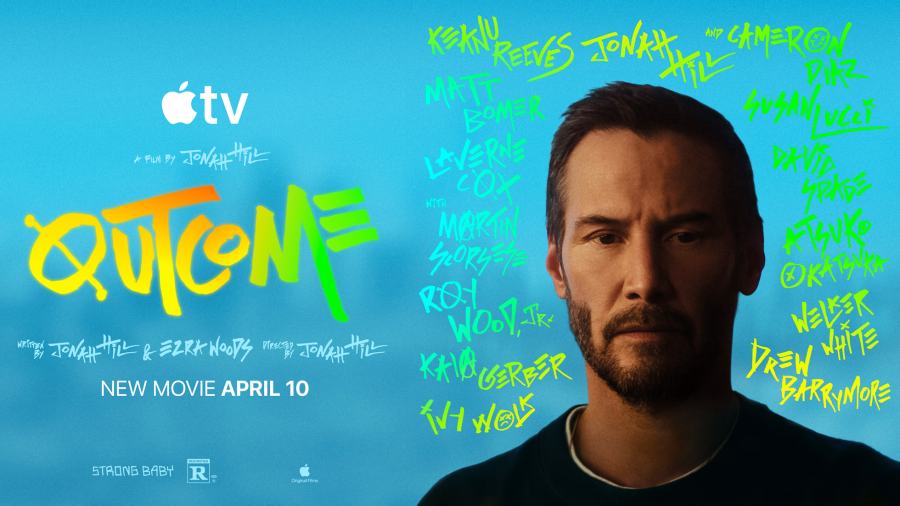
Outcome (2026) Review

Quick Synopsis: A beloved Hollywood star embarks on a desperate redemption tour after a blackmail threat forces him to confront the mistakes that could destroy both his career and his sense of self.

I’m going to start this review off in a manner which I can almost guarantee no review of this movie has done, by talking about OJ Simpson. The murder of his wife (and the accusations of his involvement in her murder) haunted him to the point he felt compelled to write a book entitled “If I Did It”, which was essentially him insisting he was innocent while describing how he would have committed the crime if he had been guilty. It’s generally regarded as a really stupid and crass idea. Similarly, in 2018, in the midst of a sexual abuse scandal that would end up with him being imprisoned for 31 years, R.Kelly released a song called “I Admit”, where he “confessed” to things such as not going to church enough, with the only mention of his crimes being a denial. Which makes sense, the only evidence the world had that he was a paedophile was a rape tape he made with a minor in 2002 (which the world knew about, by the way, so fuck EVERY musician who worked with him after that date). Now, art is art, and I’m not saying musicians, writers and filmmakers should be arrested or punished for doing this. But it is in bad taste. Certain people should not make art and attempt to make money from certain subjects. That’s my big issue with Outcome. Jonah Hill should not have been involved. It feels like this may have been his way of dealing with the accusations of emotional abuse levelled at him, when he told his partner who was a surf instructor, not to surf with men, post pictures online of her in a swimsuit, or spend time with friends he didn’t approve of. I’m fully on board with people using pain and trauma for art, but it feels like he’s using other people’s trauma that involved him, rather than his own trauma. That fact overshadows everything else about the film, especially when it discusses how “the best thing to be is a victim.” If he wasn’t involved, you could look at those moments as the film mocking them, but with his involvement, it’s not difficult to view it somewhat cynically.

So, outside of that, how is Outcome? Honestly, it’s fine. It’s not horrendously bad, but it’s nothing special. Its streaming release feels appropriate. It’s the sort of film that’s worth watching on a quiet evening, but not one compelling enough to justify a trip to the cinema. It’s an interesting idea, but all it is is an idea, nothing more. The conversations between Reef and the people he may have wronged are genuinely compelling; emotive, introspective, and full of sharp characterisation. But everything connecting those scenes is surprisingly bland.

The casting of Reeves, generally known as one of the nicest people in the world, is perfect. The rest of the cast? They’re okay. You wouldn’t have guessed by watching this that Cameron Diaz was once one of the world’s biggest stars; she no longer has the effortless screen presence that once made it impossible to look away. I don’t know if it’s the performer or the character, but Reef’s assistant Sammy doesn’t suit the style, feeling like a deliberately kooky Deschanel-type, all quirks and forced performative behaviour. Martin Scorsese gives a surprisingly good performance. Everybody is aware of his talent behind the camera, but his work as a performer in this is to be admired, giving a lot of depth to what could be a pathetic character. His almost-monologue is full of pathos, emotion, and regret. You could build entire stories around that.

Ultimately, the film never quite figures out what it wants to be. Is it attempting to be a character study about someone realising he’s kind of a dick? Is it a satire about how fame is based more around PR than actual behaviour? Is it about how our expectation that celebrities should be perfect is a doomed endeavour? Or is it about how cancel culture ruins the lives of famous people? It feels like it is aiming to be all of them, so never fully commits to anything. All of those ideas are good ideas worth studying, but they never fully mesh in Outcome. Every time it looks like it’s getting deep into something, it pulls out (sex reference unintentional but I’m keeping it).

Visually, it’s fine. There are no shots which are ugly or distracting, but nothing that will make you appreciate it. When I was younger, I used to think the director’s job was very easy; you just point a camera at what’s happening and press record. That’s the approach it seems was taken to Outcome. The camera isn’t assisting the story or themes in any way. There’s very little sense that the camera is being used to tell the story, rather than simply record it. It’s just watching from nearby. This restrained approach to directing means that the weaker stretches have nothing to lean on. When the conversation dries up, there’s nothing carrying you to the next scene.

Under different circumstances, I think I’d have come away describing Outcome as an above-average streaming drama with some genuinely compelling scenes surrounded by a lot of filler. But art doesn’t exist in a vacuum, especially when it’s so easy to draw parallels between the story being told and the person telling it. Whether that’s fair or not, it’s impossible for me to separate the two, and the film never gives me enough to overcome that discomfort. It asks you to empathise with a flawed man trying to navigate the consequences of his actions, but because of who’s making that argument, it never feels like simple fiction. It feels like self-defence.

Outcome isn’t a disaster. There are moments of genuine insight, some excellent performances, particularly from Martin Scorsese, and conversations that linger long after the credits roll. But the film never develops beyond its central premise, and Jonah Hill’s involvement hangs over every scene like an elephant in the room. Maybe that’s unavoidable. Maybe that’s the point. Either way, it’s a film whose most interesting discussion happens outside the film itself.

The Odyssey (2026) Review

Quick Synopsis: Odysseus, the Greek king of Ithaca, undergoes a long and perilous journey home after the Trojan War and encounters mythical beings as he attempts to reunite with his wife Penelope

I don’t think I need to see another Nolan film ever again. My problems with Nolan are well documented: his scripts often lack emotion, while his dialogue somehow manages to both overexplain everything and leave you wondering what anyone actually means (as perfectly encapsulated in this video). Of course, actually hearing that dialogue has always been another challenge thanks to Nolan’s sound mixing (a problem that’s cropped up throughout his career, but reached its peak with Tenet). The result has always been films I admire more than I actually connect with.

None of that is why I don’t want to see another Nolan film. I just wanted to lull you into a false sense of security. I don’t want to see another Nolan film because The Odyssey feels like what his career has been building towards. The fragmented timelines in Dunkirk, the sense of foreboding that hangs over Oppenheimer, the manipulation of geography in Inception, his exploration of mythic heroes from Batman. Everything has been building towards this moment. Seen in retrospect, the rest of his filmography feels like practice for The Odyssey. Homer’s epic demands a filmmaker obsessed with time, perspective, spectacle and impossible journeys, qualities Nolan has spent twenty-five years refining

The internet has spent an impressive amount of time arguing about the historical accuracy of a film based on a myth. Some of it has simply been misinformation, claims that Elliot Page is playing Achilles, despite actually playing Sinos. Some of it has been uglier, with people claiming Lupita Nyong’o is “too black” to play Helen of Troy (despite being one of the most strikingly beautiful actors working today, which feels rather relevant when casting Helen). Then there’s the debate over accents, with complaints that everyone speaks in historically inaccurate American accents, rather than the obviously much more historically accurate British ones. I didn’t invent that last argument, by the way. James Hibberd of The Hollywood Reporter was so annoyed by the accents that he wrote an entire article about it, arguing that the modern British accent is “traditionally considered universally pleasing and ‘just foreign enough'” to create a timeless quality. Apparently, the ancient Greeks were just waiting for actors to discover Received Pronunciation.

However, there is one criticism that does deserve to be taken seriously: Emily Wilson’s. Especially because her 2017 translation of The Odyssey formed the basis of Nolan’s adaptation. She argues that the film simplifies Odysseus, stripping away much of the complexity of the character and leaving little to say about the major themes of Homer’s work.

From the perspective of someone who has spent years studying the text, it’s a difficult criticism to dismiss. However, there is also a difference between experiencing The Odyssey as a scholar and experiencing it as a general audience member. Wilson has pored over every word of the original, examining it through historical context and the work of other translators and academics. A filmgoer is approaching the story very differently. They are not necessarily looking for every character, or comparing every choice against centuries of interpretation; they are experiencing the story Nolan has chosen to tell.

Let’s be honest, most audience members won’t leave the cinema wondering where Queen Arete is or which elements of the poem have been omitted. As historian Tom Holland (not the actor who appears in this film) has pointed out, there is no historically accurate version of Odysseus to recreate. He is a mythical figure. An “impressionist” interpretation of ancient history is arguably more valuable than a painstaking attempt to recreate every historical detail, because such accuracy is impossible. So with that in mind, how is the film itself? As you can guess from my second paragraph, I loved it. It’s long, you can’t deny that, but every scene feels like it earns its place. There is so much mythology packed into this story that removing anything risks making the journey feel incomplete. Some stuff you’ll be familiar with (the Trojan horse, the sirens, Circe), some you won’t (I can’t say because I don’t know what you’re familiar with). The impressive thing isn’t that Nolan includes these famous moments; it’s the way he reinterprets them. The Trojan horse isn’t simply a giant wooden structure waiting to be wheeled into Troy. The song of the sirens is not a beautiful melody, but a haunting lament for everything you’ve left behind. Circe’s transformation of men into pigs is one of the most disturbing versions of that event you could hope for, helped enormously by another excellent performance from Samantha Morton. Surely an Academy Award for one of her performances is only a matter of time?

The cast is one of the film’s biggest strengths. There are no real weak links. Robert Pattinson gives a deliciously sleazy performance that will make your skin crawl, somehow making every appearance both entertaining and deeply uncomfortable. Matt Damon is perfectly cast, and not just because this is another film where he spends the story desperately trying to get home. Somehow, that has become his very specific niche. As said earlier, Samantha Morton is excellent as Circe, bringing a genuinely unsettling quality to a character who could easily have become just another stop on Odysseus’ journey. The only criticism you can really make of Tom Holland is that his babyface means he doesn’t quite look like a 30-year-old, but that is hardly a fault with his performance.

Visually, this might be Nolan at his most impressive. Polyphemus the cyclops looks genuinely monstrous; the way he kills Odysseus’ soldiers brings to mind Francisco Goya’s Saturn Devouring His Son, not simply because of the violence, but because of the sense of something ancient and unstoppable consuming something helpless. The Laestrygonians are similarly nightmarish, not only because of their size, but because of the way they manipulate the landscape itself to trap and kill their victims.

This makes it the perfect opportunity to talk about one of Nolan’s greatest strengths: his understanding of scale. A low angle alone does not make something feel enormous; the audience needs something familiar beside it for comparison. This is partly why I think Godzilla x Kong: The New Empire did not work as well as it could have. The monsters were huge, but the films rarely gave us a true sense of that size. Nolan understands that difference. Here, everything that is supposed to feel massive actually does, from the mythological creatures to the buildings, landscapes, and entire worlds they inhabit.

Perhaps the most impressive thing about The Odyssey is not what Nolan builds, but what he allows us to see. The film takes us across coastlines, mountains and islands that feel almost untouched by time, and Nolan is confident enough to simply let them exist. The scenery becomes almost another character, shaping the journey as much as the people within it. Each location represents another stage of Odysseus’ journey, not just geographically but emotionally, giving the entire film a sense of scale and reality that artificial environments often struggle to replicate.

These are not historical places recreated for the camera. They are places that existed before the film and will continue to exist afterwards. Every mountain, coastline and cave has texture and history, making the journey feel less like a series of movie sets and more like an actual voyage across an ancient world.

For all Nolan’s strengths, emotion remains his greatest weakness. There is emotion here, but it comes mainly from the performances rather than the writing. The actors create feelings that the script itself rarely manages to reach. There are moments that should be devastating, but they are presented with such clinical precision that you end up more impressed than affected by what you are seeing. You understand what the characters are feeling, but you remain outside the experience rather than being pulled into it. There is an emotional distance between the audience and both the characters and the story.

The closest the film gets is near the end, when the fall of Troy is presented not as the glorious conclusion of an epic, but as what it actually was: the destruction of a city and a war crime. Even then, however, it does not have quite the impact it should. It is brutal, but in a film where soldiers are killed by living trees, transformed into pigs, or have their heads bitten off by monsters, the human horrors of war somehow feel strangely tame in comparison. You cannot present something as the tragedy that reshaped a civilisation if the audience does not feel its weight more than the fantastical violence surrounding it.

I meant what I said at the beginning: I don’t need to see another Nolan film. Not because I have lost interest, but because I genuinely cannot see how he could top this. The Odyssey feels like the culmination of everything he has spent his career working towards. Every other film now feels like a filmmaker refining the tools he would eventually need for this. Every obsession, every stylistic quirk, and every technical innovation finds the perfect material to justify itself.

I cannot imagine another Nolan film topping this because I cannot imagine another story that suits him quite this perfectly. But I hope I’m wrong. Because if Nolan somehow manages to surpass this, then we will have another one of my favourite films to add to the list.

Let’s See You Do Better (Update #1)

So, last month I posted this. So since writing the opening scene, what have I done? To be honest, nowhere near as much as I feel I should have done. Still kind of finding the rhythm of what this story is. The main thing is I still need to plan out who the main characters are. I’ve got ideas for set pieces and general plot etc, but the characters will be what makes it work. So far I’ve got some ideas. One is Bruce and Carol. Carol is a middle-aged single mother who starred in some low budget horror movies in her youth. Bruce is her teenage son. This is what that leads to:

Nightmare Carol

I’m going to set up the abuse throughout the film. Decided on this because it’s not really something that’s seen that much in horror films, not in that way anyway. When we do see a parent sexually abusing a child it’s a father abusing his daughter, I wanted to showcase the horror of when the genders are flipped. I’m considering making Bruce one of the main characters, have him kind of bring Freddy back by striking a deal; he’ll scare his friends by telling them the stories of Freddy, leaving them more open to Freddy’s influence and danger. In return, Freddy will stop Bruce’s recurring nightmares. Essentially like a mafia protection racket. That scene, in particular, will be used to kick off the third act. Bruce being in a coma will also allow me to have an absolute mindfuck of a final act.

Now onto the second scene that I’ve done. This will be about halfway through. My plan is to set up two stories; a group of children being abducted and killed by Freddy when he was alive in the past (so essentially a slasher movie mixed with IT), and the same kids when they’re older being haunted by Freddy in their dreams. The two stories will run alongside each other, leading to this:

The Death Of Freddy

So yeah, I lie. It’s not actually them, it’s someone elses memory. I’m not going to lie, this is mainly because I was fed up with the number of horror films that have flashbacks of the main characters near death, I hate them as you know the characters are not going to die so the scenes have no tension. I’m going to set up the truth subtly, so characters we establish as having no siblings in the present, will have a brother/sister in the past, and characters who are allergic to certain things will be seen eating them in the past. The main focus of this section though; the death of human Freddy. My plan for this was to have it go from “yeah, get that bastard” to “this is kind of uncomfortable”. I think I can go slightly further with what happens to him, but not certain.