Scary Movie (2026) Review

Quick Synopsis: Lol, as if you give a shit about the plot

Scary Movie 6 (which is how I’ll refer to it during this review, just for the sake of clarity and because “new movie shares same title as the original” trend annoys me) has been rumoured for a long time, and people have been weirdly excited for it. It feels like people assume the Wayans brothers haven’t made a similar film since Scary Movie 2. Like there’s a delusion that they made two successful movies, then went into a 20-year coma.

They’ve made multiple parody movies since then; two of them have been horror-based, and NONE have entered popular culture. Really, the closest they’ve got to it is White Chicks, otherwise known as the number one defence for blackface on the internet. It would be like if a band/singer announced a sequel album to their biggest hit, and it caused fans to negate that it’s the same band that’s been putting out shit music for 20 years. The same people are making it. They never went away. You just stopped paying attention.

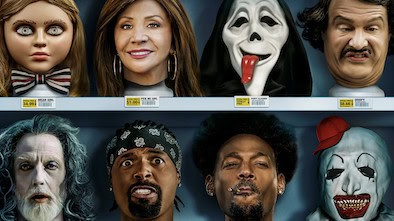
I didn’t see a trailer for this until only a few weeks ago, so I didn’t know much about it. When I saw the poster, I made this post on Bluesky:

The following will be jokes in this movie:
1) A horror movie villain does some drugs and pulls a silly face.
2) Gay sex references.
3) “Remember this thing? Reference!”
4) “Did you just assume my gender?”
5) Someone getting murdered in a safe space.

The funny thing is I didn’t even need to watch the film to find out whether I was right. The trailer arrived a week later and immediately confirmed all five. Not only that, it was needlessly confrontational. There was a weird amount of “there are no safe spaces here” energy (by which I mean, I’m pretty sure they actually used that exact phrase) radiating from the trailer, as if the filmmakers genuinely believed they were producing some dangerous act of artistic rebellion rather than a sequel to the sixth entry in a parody franchise.

It’s a bit weird because the original Scary Movie wasn’t really famous for being offensive. Crude, certainly. Juvenile, almost definitely. But it wasn’t some culture-war lightning rod that stuck it to the man. The only reason to market this one that way is that it provides a convenient shield. Any criticism can and will be dismissed as people being too sensitive or too woke rather than confronting the possibility that the jokes just are lazier than I am after I finish work.

Let me be clear; I don’t hate this film because it’s offensive or not PC. I hate this film because it’s lazy. I love the first film; some of the scenes were so spot-on that it’s difficult to take Scream seriously. Nothing in this movie will have the same effect. Mainly because none of the jokes have any point to them. Take the Weapons parody. The joke is that somebody accidentally hands out weed gummies to children, who then run around the street until one gets hit by a car. That’s it. That’s the entire concept.

Watching Weapons doesn’t improve the joke. Knowing the source material doesn’t add another layer. If you have no idea of Weapons (the film, not the concept), it just looks like random nonsense happening for no reason. That’s because most of the film isn’t parodying actual movies; it’s parodying movie trailers. The best parody films take apart the logic, style and clichés of the thing they’re mocking. This mostly points at something recognisable and waits for applause.

The story doesn’t help much either. There technically is one, but it feels like it exists purely to transport characters between references. Every time the plot threatens to establish momentum, somebody takes a detour because another horror character needs to walk through the frame. The jokes come before the narrative, every time.

The internal logic is….well it’s not there. One character can be fired into a wall of barbed wire at motorway speeds and suffer little more than mild inconvenience, while another dies from something considerably less dramatic. Consequences fluctuate depending entirely on whether a joke requires them. So nothing has stakes or consequences. When nothing has stakes, it’s hard to give a shit about the characters. I know, it’s a comedy, but even the characters in Airplane took the situation they were in seriously; they didn’t jump out of the plane from thousands of feet up and walk away. Here, everyone exists in a universe where the rules are rewritten every thirty seconds.

The boyfriend being blatantly, impossibly suspicious throughout the film is a genuinely enjoyable running gag, even if it overstays its welcome. The Final Destination-themed fairground where every ride appears specifically designed to massacre its passengers is inspired. Two legacy characters comparing their respective “what are you waiting for?” moments is exactly the sort of self-aware horror joke the film should have been built around. The refusal to do an It Follows flashback is surprisingly clever.

Even the ending lands a couple of strong punches. The second motive reveal is excellent. The first one is idiotic, but the second almost tricks you into believing the film has been secretly smarter than it appeared.

Almost.

The music is better than I thought it would be, to the point where I’m pretty sure I’d buy the soundtrack before the dvd.

As for the performances, they’re a mixed bag. Olivia Rose Keegan occasionally pushes things into that exaggerated sketch-comedy territory where every line sounds like somebody signalling that they’re delivering a joke. Then again, when she finds the right rhythm, she’s one of the better parts of the film. It feels less like a talent issue and more like a performer trying to navigate a script that doesn’t always know where its own punchlines are.

I love silly comedies; two of my favourite films from last year were The Naked Gun and Fackham Hall, which were some of the dumbest things I’ve ever seen. So I have no objections to comedy, but I do object to “look, here’s a thing from a film” as a substitute for humour. This was sold as a return to the spirit of the original Scary Movie. In reality, it feels much closer to those dreadful Friedberg and Seltzer parody films that spent the 2000s convincing studio executives that references could replace comedy.

Scary Movie mocked horror films. Scary Movie 6 mostly just reminds you that horror films exist.

The Rip (2026) Review

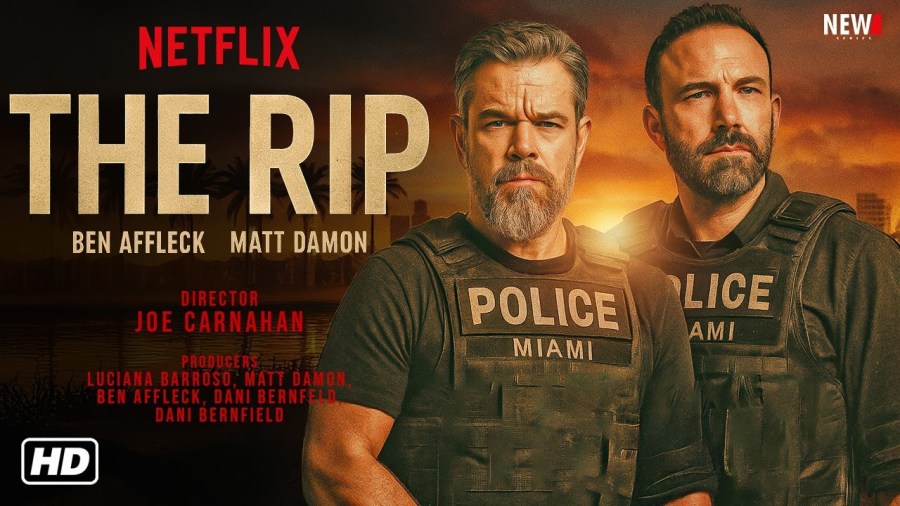
Quick Synopsis: A group of cops find a fortune in cartel cash, and almost immediately start wondering which one of them is going to betray the others first

I’m not going to lie; I went into this with low expectations. It was a Netflix original, which doesn’t exactly fill me with confidence anymore. Plus, it was from the writer of Bad Boys for Life (which I still maintain should have been the fourth movie), 2018’s Death Wish, and 2010’s The A-Team. And as much as I love Affleck and Damon, they do occasionally choose quite poorly. For every Gone Girl or The Martian, there’s a Hypnotic or Downsizing.

So I was surprised by how much I enjoyed this. To the point where I wish it got a cinema release. A huge part of that is the chemistry between Matt and Ben. Seeing them on-screen like this is like watching your favourite band reuniting; you can tell they’re relying on old tropes, but they are both bringing a more mature energy than they have before. Sure, they may not be hitting every note perfectly, but the chemistry leaps off the screen. It would be nice if the other characters were given time to shine or, God forbid, actual characterisation. But you can’t have everything.

The plot? If you ever wanted to see a more American version of the supremely underrated Shallow Grave, you’re in luck. The pacing is surprisingly quick for a film where not a lot happens. The opening is kind of dull, and full of “people are investigating cops for corruption? How dare they!” weirdness which I’ve always been uncomfortable with seeing on screen; why is the idea of police being held accountable seen as a bad thing? Thankfully, it moves past those moments quicker than Obsession moved past Ian’s billion-dollar windfall. Once the money appears, shit gets real. Relationships disintegrate like cake in the rain. Trust withers down, and suspicion grows quicker than those toys that were tiny but then expanded when you doused them in water. It’s less action-heavy than you’d expect, being more interested in metaphorical explosions than real ones. There are still some action scenes, but they’re not the things you’ll remember most.

The action scenes themselves are fine, but nothing special. It feels like they’re there just because its expected of them, almost as if netflix had certain script stipulations that meant it needed a big action scene in the first 5 minutes so people would stay tuned in, and *checks the script of a Matt Damon interview from January 2026* if the plot needed to be reiterated three or four times so that people on their phones could still understand whats going on. The best way to describe the action? Competent. It won’t blow you away, but it won’t bore you either. They’re just there.

In terms of other technical aspects: there are some weird lighting choices. It looks artistic, but it makes the film less comprehensible than it would be otherwise. It’s like they want to show off technical prowess and cinematography rather than whether it’s the best thing for the story. As cliché as it sounds (and if there’s one thing The Rip is familiar with, it’s clichés), sometimes the simple option is the best one (“Go For The Simple Option” is also the tagline on my dating profile).

There’s nothing in The Rip that you haven’t seen before, but most attempts at it won’t be as good. It’s a film you’ll be glad you watched, but not one you’ll be in a hurry to see again. It’s not big, it’s not clever, it’s not original, but it is entertaining. Maybe that’s all that’s needed now.

Before I go, fun fact: two police officers tried to sue the makers of this movie because they said it made them look like they stole stuff. No characters are named after the police officers, so it kind of seems like a guilty conscience, right?

Power Ballad (2025) Review

Quick synopsis: Wedding singer Rick Power (Paul Rudd) strikes up an unlikely friendship with singer Danny Wilson, who responds to Rick’s kindness by stealing one of his songs.

This is a difficult review to write. Not because I’m uncertain how I felt about the film. But because I used a bunch of music puns in my review of Tuner. So what am I supposed to do now? Put effort in? But I don’t wanna!

That’s unfair. Truthfully, outside of “music is a thing”, there are almost no similarities between Power Ballad and Tuner. Tuner is built around the story; Power Ballad is built around the people. From the trailer/plot synopsis, you may assume there’s more to it, that there’s no way to stretch that concept out to 90 minutes, and there must be a hidden twist. There’s not. The story really is that simple. Even the ending will be fairly obvious to anybody who is paying attention. I know someone who regularly falls asleep during films, and even she messaged me to say she guessed the ending (not during the film, she’s tired, not rude). The only thing that surprised me was how Irish the film was. Now I know it was directed by John Carney, which makes sense. But everything in the trailer made it look like it was going to be an American-focused story. Carney’s previous movies include:

  • Once (2007). Two musicians fall in love with each other (won the Academy Award for Best Original Song)
  • Begin Again (2013). A singer-songwriter collaborates with a record company executive to release an album
  • Sing Street (2013). A guy forms a band to impress a girl.
  • Flora and Son (2023), A woman learns guitar.

Yes, those are gross oversimplifications of those movies. But it demonstrates my point: he’s found a niche (music-based dramatic comedy), and he’s stuck to it. Fair play to him, he’s really good at it, and he’s great at music. The song in Power Ballad genuinely feels like the kind of song that would blow up. I kind of wish I could have seen more of Danny’s music. It’s hard to gauge how different it is from the rest of his music, as we don’t have that much to compare him to. Power Ballad also feels slightly inconsistent regarding how famous he is. Is he someone the gossip magazines and bloggers constantly talk about, or is he forgotten? It seems to be the first one, but there are too many moments which treat it as the second one. I’d also have liked to have seen more of Rick’s music career. There aren’t enough details about his former band and bandmates. Do they dislike him for jeopardising their career? Did the fact that Rick left cause a power imbalance which led to the destruction of the band? Are they even still alive? This kind of world-building would have really helped flesh out the narrative, and would have meant they could have deleted some of the moments where it feels like the wheels are spinning, but nothing is moving forward.

That paragraph may make it seem like this is a negative review. But I actually really liked Power Ballad. It’s very sweet. There are moments of pure joy and loveliness. The moment where Danny joins the wedding band on stage is incredibly charming; the friendship between Rick and Danny that comes from this moment is key to Power Ballad working. Mainly because it means the betrayal hits harder than it would otherwise. Danny’s character is interesting. On the surface, he’s confident, but the longer the film goes on, the more the real him steps forward: he’s a coward; that’s what drives his choices. Yes, he makes some very stupid choices, but they are all consistent with his character. And you can just see his entire sense of self deflate when Danny tells him the background of the song. Nick Jonas is perfectly cast, adding a bit of metaness to the whole thing. Paul Rudd goes more angry and insane than he normally does, and he does it well.

In summary, nowhere near the best film of the year, but still absolutely delightful and well worth a watch. Although the main character’s full name being “Rick Power” is kinda stupid.

Tuner (2025) Review

Quick synopsis: A talented piano tuner’s meticulous skills for tuning pianos lead him to discover an unexpected aptitude for cracking safes

Tuner is impressive. I have to say that at the start because, well, to be honest, it’s unbearably hot right now, so there’s a good chance I might start writing nonsensical bullshit (more so than usual) in a state of heat-based delirium. So I wanted to get that fact out of the way first. Everything about Tuner works. The performances are stunning. Leo Woodall, in particular, stands out. He’s a critical darling due to his performances in One Day and The White Lotus, but I’ve only seen him in Nuremberg, where he played interpreter Howie Triest. At the time, I assumed he was one of those actors with an established career full of stuff that I wouldn’t be into. Nope, he’s still relatively fresh, especially for the roles he’s been trusted with. Obviously, most of the attention will be on Dustin Hoffman, and it’s unfair to deny him that, considering his career. It’s nice to get a reminder of how great an actor he is. He’s in a similar boat to DeNiro; he made his name as a serious actor. turned out to be surprisingly good at comedy, and is now mostly known for broad comedy and “hey, it’s that guy” cameos, to the point it’s hard to remember what made them well known in the first place. He isn’t the thing you’ll remember most from Tuner, but he is the thing that will draw casual ins. On the subject of performers: I’m not entirely sure when Havana Rose Liu sleeps because she has been in so many things lately, and she’s always good to see. The entire cast all work together very well, harmonising perfectly (music pun #1 of, well, I’m not counting them, but it will be a lot).

The real highlight of the movie is the sound design. The music is incredible, not just as music, but also as a soundtrack. I will overexplain this out of fear of uncertainty that what I’ve said hasn’t made sense. It’s not just good music, but I believe it truly improves the film. It’s not done in an obvious “this is tense music because it’s tense” way; it ebbs and flows, connecting with the visuals and the narrative perfectly, the music itself telling a story. I know, that’s the point of a soundtrack, but it very rarely is pulled off as well as it is in Tuner.

The story itself is fine. The different moving parts all work together in perfect harmony. What I like about it is that it uses the uniqueness of a character with hyperacusis to drive things forward. There are moments, plot points etc which could only happen in this film. The ending hit a bit of a sour note, lacking the beautiful melody that makes the rest of the film work. Not the entire final third, which hits all the right notes. But the final scene itself, where he plays music again, then declares the piano out of tune. The performance goes on slightly too long (not quite a Coheed And Cambria 5-minute drum solo, but it’s up there), and doesn’t really add anything. There’s not really any beauty, story progression, etc. It’s just there to say “see, he can play”, which could have been done simply by having Dustin Hoffman’s character show Ruthie a video of Niki playing when younger. I’d have actually preferred that. You’d see the wonder on Ruthie’s face, the pride on Harry’s, and the despair on Niki’s that he can no longer partake in something that he loves. It could have worked as a “that’s when she understands him” moment, which is something Tuner kind of lacks. The relationship between the two feels like it skips a beat (accidental music pun), like we’ve missed something happening between them that would help develop the relationship. These are all minor issues. It’s generally a fine watch. It’s not “I must see it again immediately” good, but it’s the type of film I’ll buy in a 2 for 1 deal at HMV or Fopp. I might never watch it again, but I would recommend others mic-check it out.

Passenger (2026) Review

Quick Synopsis: A travelling couple are haunted by what’s essentially a hitchhiking demon.

The last André Øvredal film I reviewed was Scary Stories To Tell In The Dark back in 2019. I thoroughly enjoyed that, although I was surprised by it because I assumed it would be more kid-friendly/my first horror. I’ve also heard very good things about The Autopsy Of Jane Doe, The Last Voyage Of The Demeter, and Trollhunter, with all three of them being on my list to watch. I didn’t love Passenger, but it didn’t dampen my enthusiasm for his work. The most interesting things about Passenger are the things he brings to it. It’s far more visually interesting than similar films; at times, it’s close to art. Disappointingly, it does dip into the “random face jumps at the camera” scares, which are cliché to the point of boredom. Weirdly, there are times when I think it does a bit too much. Some scares are heavily signposted, and maybe it would have been better if they were a bit more subtle. The perfect example of this is a scene where Maddie (played by Lou Llobell) is trying to get to the van. She hears a noise and turns to look at the source, then turns back, and the van is further away. There are dramatic scare chords accompanying this happening. Personally, I would have liked it to be a bit more subtle, so the audience had to pay attention, putting them in the same place as the character: wondering if it is actually further away, or if her mind is playing tricks on her.

I didn’t know that much about Passenger. I saw the trailer months ago, but for some reason, the trailer wasn’t available online at the time, so I haven’t watched it again. I mainly remember it focusing on someone driving and seeing the same figure again and again by the side of the road. That kind of intrigued me, but I was curious as to how that could extend to a feature-length film. I mean, how can you get 90 minutes of someone driving and NOT picking up a hitchhiker? So I was doubtful it would have enough meat on its narrative bones. Good news, that’s not what the film is about. Bad news, it still doesn’t have enough meat. The main characters are cursed because they decide to stop their car (which kind of seems like this film is saying that stopping to help people is a bad thing and should be avoided, but what do I know?). So it’s somewhat ironic that the film itself keeps stopping. Weirdly, those are the parts of the film I think worked best. There’s an incredible scene where the two are watching Roman Holiday on a projector in the woods. It’s very sweet, the scares are subtle enough that they gradually build, and there’s actual tension. But then they get back into the van, and it turns into visual noise.

In contrast, the dumbest part is when they’re in the van and time suddenly skips forward to night. The set-up for this is that the entity is powerful at night and weakened during the day, so the characters think they’re safe in the day, but that safety is disrupted by the time skip. I would argue that manipulating time in such a manner requires immense supernatural power, much more than it would take to, say, loosen a wheel and cause a car crash. Or did he just make them fall asleep for that long? If that’s the case, why not kill or hurt them then? Also, why wake them up? They’re heading to the church of Saint Christopher, patron saint of travellers and the only place where someone would stand a chance of killing the entity. The characters don’t know where it is, so they have to look out for symbols and clues to try and find it. The characters appear to have travelled in the missing time. Here’s my issue: the demon wakes them up BEFORE they get a sign with a symbol on that tells them where the church is. If he can only timeskip a certain number of hours, why not wait until they’ve travelled a few more hours, THEN jump ahead so that they unknowingly drive past the only clue that’s visible from the roadside? They might have even taken the wrong exit and ended up avoiding it entirely. If anything, he got them closer towards it. He’s a video game boss who just happens to have the only weapon that defeats him in the hallway outside his dungeon.

On the upside, the lore is fantastic. It FEELS like a genuine urban legend. Specifically, an American one. It appears to be based on a few different ones rather than a single one. But when you watch it, it feels real, like the kind of thing travellers will tell each other. I’d have loved to have seen this as part of another movie, where we see new urban legends get told. But as a full movie? There’s just not enough to it to justify it. It says a lot that the best scares and most memorable scenes were all ones that could have come from any movie, not many that are unique to a road trip horror.

Mortal Kombat II (2026) Review

Quick Synopsis: The fighters of Earth-Realm take part in a tournament to stop Shao Khan from taking over.

I know I’ve seen the first movie. I know this because I remember one or two moments from it, plus I reviewed it here. That being said, I can’t remember much from it. I can’t remember the story, the characters (I remember Scorpion and Sub Zero were in it, but not their characterisation). Reading through, that’s probably for the best, as there are some weird changes. The first movie established that champions can be identified by a dragon-shaped birthmark. That doesn’t matter here. Johnny Cage is a reluctant champion, but the mark never comes up. Not even a scene of him complaining about how long it took makeup artists to try to cover it. Also, the first film ended with Cole going to LA to talk to Johnny Cage. Do you know who talks to Cage in this movie? Sonya and Raiden. Spoilers: Cole dies in this movie. The characters don’t mourn him for that long; I don’t even recall them mentioning him after he dies. If Cole were the one to “recruit” Cage, it would have given some semblance of emotion, as it would have meant Cage lost his introduction to this world. It could have motivated him, given him what he needed to do what must be done (Punch people in the balls).

MKII is miles better than the first one. For one, there’s more focus on the fights. There are a lot more references to the games, so fans will find a lot of things to enjoy about it. It’s great to see some of the characters and stages come to life onscreen. It’s fantastic to see the acid stage finally recreated in a way that brings to life how terrifying it is. I appreciate how MKII managed to do all those references without alienating people not familiar with the games. Unlike the Uncharted movie, which featured such a distractingly obvious game reference, MKII still works if you’re not that familiar with the game. The source material isn’t essential, but it does make it a better experience. The fights themselves look great, with some fairly decent choreography and use of locations. Hits look like they hurt, and when there’s ultraviolence, it looks pretty damn glorious.

Now onto the bad. There’s one major issue I had with it. Shao Kahn doesn’t come off as a big threat. He comes off as fearful, but beatable. We see him in a few fights throughout the film, and in almost all of them, the person he’s against gets a lot of offence in, and at times nearly beats him. That’s not how you build that character up. The audience needs to see him go against someone we know is talented, and yet utterly annihilate them. That’s what the fight with Cole should have been. Cole should have hit him with everything he had, and it should have had no effect. Essentially, I’m looking for Brock Lesnar Vs. John Cena from Summerslam 2014 (just without that annoying kid in the crowd). The other thing this movie could have learned from pro wrestling: jobbers. A jobber is someone whose entire job is to lose and make the winner look good. That’s what this film needed. The franchise is full of recognisable characters who the audience would like to see but won’t be too disappointed if they were to die: Stryker, Nightwolf, Smoke. All of them could have been introduced and then killed quickly to demonstrate Shao Khan’s power.

I’d have liked to have seen more of Scorpion and Sub-Zero, but I understand why the film does what it does with them. Karl Urban is an odd choice for Cage. This iteration of the character isn’t a cocky, arrogant person; he’s riddled with self-doubt and uncertainty. In a way, it makes sense. But I can’t help but feel how much more FUN this movie would have been with someone a bit less dour. That’s not an issue with the casting; it’s the writing. The way that this iteration of the character is written, Urban plays it perfectly, bringing to mind Jean-Claude Van Damme in Jean-Claude Van Johnson. Hiroyuki Sanada is the perfect Scorpion when we do see him. Adeline Rudolph and Tati Gabrielle as Kitana and Jade are fine; they do what they need to, but don’t excel. Was Jessica McNamee this good in the first one? Because she’s fucking great in this. Circling back to Cage, I didn’t buy the movie of his they showed us. It didn’t feel like a dated action movie; it felt too modern. The action scenes themselves felt silly, lots of obvious missed punches, but visually, it looks very 2020’s. All they needed to do was change the colours, make it a bit less HD, add different music, etc., and it would have helped sell it. As it is? It feels like it was only there to get moments they could put in the trailer.

MKII is not a fantastic movie, but it is a lot of fun. And whilst I do have a lot of issues with it, you can bet I’m going to be in the seats for the third one.

The Sheep Detectives (2026) Review

Quick Synopsis: A group of sheep investigates the murder of their shepherd.

A detective drama starring talking sheep. Directed by the same guy who directed the two Minion movies. Written by the guy who wrote The Hangover Part 3 and Scary Movie Part 4. It rained VERY heavily on my walk to the cinema so I was in a pretty shitty mood when I sat down to watch what would surely be something terrible. I even planned how long I was going to wait until I described this movie as “baa-d” in my review.

But then The Sheep Detectives (TSD, Tooshed) ruined my plans by actually being really good. Not “good for a kids movie” or “good if you go in with low expectations”, but genuinely good. It’s not the best film I’ve seen this year (at the moment, that’s probably still Project Hail Mary), but is the one I feel the need to recommend to people the most. Mainly because the gap between expectation and quality is huge. Yes, it is a kids movie, but it’s not a kids movie that talks down to the audience. At no point do the sheep do a CGI song and dance to a Taylor Swift song. It doesn’t pander or condescend; it just has a well-written story full of fun characters. The characters are kind of one-note, but they are sheep, so it’s not as though they have access to a lot of human narratives that would drive change, such as money worries, social media, or that the t-shirt they purchased at their first gig over 24 years ago has finally become unwearable. It’s a curious mix of a family film that touches on heavier themes, and Paddington-style cuteness and fun. The characters are a lot of fun to watch. Nicholas Braun’s character is very different from what he normally plays, but he pulls it off. Playing an idiot is like playing crazy; it’s much easier to get wrong than it is to get right. I would say this is the best I’ve seen that kind of character played, but since watching this movie, I’ve watched Hugh Skinner in Twenty Twenty Six. Nicholas Galzatine continues to showcase just how secretly good at comedy he is. I’d have liked to have seen more of Mandeep Dhillon, mainly because she’s always a welcome presence onscreen. The sheep voices are all pretty damn good, too. Bryan Cranston nails his vocal performance. I love Julia Louis-Dreyfus in almost anything, and have seen her in SOOOO much, but this is probably her best performance. Really, the only weak link is Rhys Darby, and he’s not even bad; it’s just that everyone else is much better.

As any fans of who-has-done-this’s can attest to, the story is key. If clues and foreshadowing are too obvious, then the audience will get there before the characters. On the other hand, if they’re too hidden or depend on the audience knowing something they haven’t been told, then the audience will feel cheated. It’s a really tricky tightrope to walk, and TSD puts more hurdles in its way by having the main characters be sheep, so they can’t communicate with local police or anybody else who can help. Plus, it’s aimed at kids. So how do you do a mystery aimed at kids but not make it too obvious for adults? I’m still not sure HOW they did it, but they definitely did. It provides enough suspects. There’s one, in particular, who I felt certain was the killer. They were in the film enough to be notable, but quiet enough that it would be a shock. I was ahead of the filmmakers because I am smart.

I was wrong. I am not smart. And I love that. I love that the reveal is satisfying. I love how, in 30 years time, an author will describe how watching this film as a child was the moment they fell in love with mystery. This will be someone’s introduction to the genre, and it’s hard to think of one that would be better.

There we go, a whole review and I didn’t make one sheep pun. None, didn’t refer to it as a “ewe-done it”, didn’t describe the character as Angela Lambs-bury, no Hercule Poir-ewe, didn’t say it’s a wooly good time, or shear perfection, or describe nervous characters as feeling sheep-ish,

War Machine (2026) Review

Quick synopsis: America fights aliens.

I’m not a complete idiot (that sound you hear is my family and friends laughing), so I am aware of the influence the US military has on films. The US Department of Defense even has an entertainment unit that handles requests when filmmakers want to utilise military equipment or locations. It’s not just “we need to make sure you use the equipment safely”; they denied support to Independence Day because the director refused to remove references to Area 51. The 1954 animated movie Animal Farm was purchased by the CIA and had the ending changed, which is ironically, very Orwellian. It’s not just film; the DoD also has agreements with TV shows such as The Price Is Right, America’s Got Talent, and The Kelly Clarkson Show. So, yeah. I’m used to American media figuratively fellating the US military. But few have done it so obviously as War Machine.

War Machine (WM, pronounced Womb) is not a movie; it’s a recruitment service. To the point where it almost seems like a parody. The villains? Alien machines that land on Earth. Now, and I believe this is very important, they don’t attack first. The machines just sit there. The US military decides to attach explosives to it to blow it up, after which, the machines rise and attack. So to reiterate: the good guys attempt to kill something, then claim to be victims when they get attacked in revenge. If that doesn’t showcase US foreign policy, I don’t know what does. I know Hitler Simpson wants to be heavily involved in the making of Rush Hour 4, but if it turns out he was involved in this, I would not be surprised. That’s how blatant the propaganda is.

WM feels like an early 90’s action movie, and that’s not a compliment. The villains are basic “others”, the characters are ultra masculine to the point of being laughable (the main character refuses to go to therapy after the death of his brother), and it all boils down to “one straight, white, American male will save the entire world”. How does he save the world? By blocking the machine’s ventilation ports. Did the visitors not realise that would be a problem? This keeps happening in movies like this, and it feels like it comes down to writers not understanding the ending of War Of The Worlds, where the aliens were defeated by a random virus. That’s not “invaders will all have one fault we can exploit”, it’s “invaders can be so cocky they neglect to take into account everything”, and that has historical precedent: think of the empires built where the first contact involved a lot of people dying of unknown diseases that their bodies weren’t used to. “Leaving a port open” is not like that; they would know that Earth has dust, rocks, and dirt. It feels slightly cheap to have a big threat defeated by what’s essentially a banana in a tailpipe. What’s weird is that this only happens once. At no point in their invasion of Earth did the alien machines get clogged up with sand in the desert, rocks from a collapsing mountain, or glass bottles full of piss thrown by English football hooligans.

How about the characters? Do they salvage this? Nope. For one thing, they’re all given numbers instead of names. Which strips them of their humanity. I get it, that’s probably the point, the military dehumanises you so you work as part of the machine. But for films? You’re supposed to give a shit about the people you’re seeing. Compare the two sentences:

  1. “It absolutely devastated me when Martha died”
  2. “I still haven’t fully recovered from the death of number 81”.

One sounds reasonable, one sounds stupid. You remember names; they’re unique, they have emotional resonance to them. Numbers don’t. It makes you feel like these characters don’t matter

So yeah, it’s dumb. But you wouldn’t know this by the Wikipedia page, which I feel has been edited by the production company. The top line says “the film received generally positive reviews from critics, praising it as a fun, old-school, throwback action movie despite its familiar, formulaic storyline”. Even the positive reviews are 3 out of 5, etc. The kindest response would be “mixed”

On the upside, it looks good. The action scenes themselves are fine, and the villains look menacing. The performances are fine, but nobody is really given enough to do. I also like the brief insight into survivor’s guilt, especially when 81 mentions how the medal he was given is just a constant reminder of the worst day of his life. That’s a fascinating look into both his character and American culture.

I’ve seen worse films this year. But it’s hard to think of films where I’ve given less of a shit.

Hokum (2026) Review

Quick Synopsis: Ohm Bauman (Adam Scott) is a horror author struggling to find an ending for his book. He travels to a hotel in Ireland to scatter his parents’ ashes, but finds himself struggling with the buildings history and its present.

I’ll fully admit that I was somewhat sceptical about Hokum. It looked like it would go one of two ways:

  1. Spooky witch stuff, which means half of what the audience sees isn’t real, and when we finally see the villain, it does that weird crawl/walk that every modern horror movie uses.
  2. No story or character movement, a film based entirely on “vibes”. A film which throws spooky shit at the screen and doesn’t bother to explain any of it.

It’s actually none of those, whilst occasionally showcasing the worst aspects of both. At its heart, Hokum is a fine spooky story/murder mystery. Damian McCarthy knows how to write and direct terror. Not “oh, that’s scary” passing fear. I mean genuine, “keep you awake at night”, terror. The kind that makes you jump at shadows long after you leave the universe of the film. The plotting doesn’t quite match it, though. The story of a missing woman, her ghost seeming to help Ohm solve her murder, is interesting. The idea of a hotel being haunted by a witch is also fascinating. But it doesn’t merge the two together well enough. The story comes from the missing woman, the scares come from the witch. So the witch is narratively underdeveloped, with her intentions muddled and unclear. She’s not really treated like the legend the film wants us to think she is. Not enough attention is paid to her. There’s not really an in-depth analysis of her, saying “legend says that centuries ago, yada yada yada”. She’s treated more like a narrative handwave than anything else.

That’s my main issue with Hokum, and it’s a pretty big one. But it doesn’t take away from what does work. The character work is miles ahead of similar movies. Ohm is deeply flawed, but when you find out his backstory, it’s easy to see why he is what he is. His actions are mostly understandable, with the possible exception of most of his interactions with Alby, whom he seems to be uncharacteristically cruel to. On the plus side, that does lead to a revelation at the end of the movie, which provides a possible explanation for the film’s events. But it does feel like that’s the only reason it’s there. Mostly, he’s a smart and capable character who makes rational decisions to ensure his survival. The way he makes sure he can get back from the basement is particularly smart.

When Hokum is unsettling, it is unbeatable. There’s one scene in particular that stands out; a fake kids’ TV show. Makes me think that maybe McCarthy would be a pretty good shout for a gritty horror reboot of Barney the Dinosaur. He also somehow made a bell one of the most terrifying noises in cinema.

It’s not just fear: like all good horror movies, it’s about something more. It’s about human nature. It’s about grief. It’s about guilt. It’s here where the film is at its most interesting, when it’s examining the characters. Whether it’s the main character who is struggling from writer’s block (very Stephen King), the sympathetic bartender, or a man who had to mercy kill his soulmate and be maligned by society because of it. All of the human characters are instantly understandable without being caricatures.

In a year where horror has been stupid (Whistle), underwhelming (Scream 7), or fun (Ready Or Not), it’s a nice change of pace for one to be scary and smart. Hokum is a perfect mix of accessible and elevated horror. You can easily see people watching it on Halloween while drunk, but you can also easily imagine it being discussed academically. I’m still not sure if it’s my favourite of the year (Ready Or Not 2 probably has that), but it’s definitely the best from a pure horror perspective. Mother of Flies is more impressive when you take into account the budget, etc. But Hokum is more impressive on its own merits. The main difference between the two is that Mother Of Flies will enhance the creators’ careers, and Hokum will inspire people to create their own stories.

It’s not quite up there with the true classics of the genre, but it’s definitely one that people should check out. If you like your horror movies “fun”, this is not for you, and that’s clearly what a lot of the negative reviews from audience members on Rotten Tomatoes are like. If, however, you’re one of those people who likes horror movies but hates gratuitous gore, this may be the best film you’ve seen in a long time.

Michael (2026) Review

Quick Synopsis: A look at Michael Jackson, apparently, he was famous.

I think it’s fair to say that Michael Jackson is probably the biggest celebrity of my lifetime. The magazine Forbes used to run a feature every year where they talked about the 10 biggest celebrities of that year. The top 10 in 2014 (the final year it ran using a complex formula rather than just “who made the most money) included Ellen DeGeneres, Katy Perry, Floyd Mayweather Jr, and LeBron James (no prizes for guessing which country Forbes is based in). No disrespect to Mr James, but I don’t think there’s many people who would argue that any of them have a bigger cultural footprint or recognition than Michael Jackson, and that was 5 years after he died. So it makes sense that a film about his life would be made and be financially successful. This is probably the biggest film of the year so far. Other films have been made since he died, but they’ve all been unofficial, leading to them being criticised by his family members. Michael not only has the approval of most of his family members (not all; his brother Tito sadly passed away in 2024, and his father Joe, not as sadly, passed away in 2018), but has a lot of family members involved as executive producers, and Michael’s own nephew Jaafar was cast in the title role.

So what does John Logan do with this unique position of writing an official Michael Jackson film? Not a damn thing. A biopic needs to achieve at least one of the following:

  1. Teach you something factual about the subject.
  2. Give you an appreciation of their talent.
  3. Examine its subject in detail.

This movie does none of that. Michael Jackson had a full life, being in the public eye for roughly 43 of his 50 years on the planet. It’s not just longevity; his life story is full of chapters worth exploring: from his childhood fame, his marriages, his relationship with his family members, his health issues, plus his (let’s not mince words here) weirdness. How can a singular film ever hope to cover all of that? Answer, it doesn’t. It briefly mentions all of them (except the marriages, which are ignored), but doesn’t go into detail about any of them. It’s the biographical equivalent of listening to 30-second samples of a band’s greatest hits; you get the choruses, but none of the verses which build up to them. You see him perform Billie Jean, but are you given any indication as to the story behind that song? Nope. You see him adopt Bubbles the monkey, is there any examination as to the chaos that caused, or a mention of how the other house members had to adapt? Nope. The idea that his adult eccentricities were a result of him not having a childhood is not given any time, and like most things about this film, if you didn’t already think that, this film wouldn’t put that idea in your head.

Michael is not interested in examining the subject, holding a mirror up to it. Instead, it kneels before it in reverence. There are multiple scenes which exist only to tell the audience how nice he was, how talented he was, how unlike everybody else he was. The film also glosses over some of the more interesting parts of his life. It doesn’t even allude to the thing he’s most known for, a certain incident involving a 10-year-old boy. Yup, a film about Michael Jackson somehow didn’t mention his appearance on The Simpsons. Oh, it also didn’t talk about the child sexual abuse scandal. But I have no issue with them not mentioning that, and I won’t attack the film over it. Mainly because the film legally couldn’t talk about it due to a settlement. So it’s difficult to criticise a movie for something it has no control over; it would be like criticising a fish for not being able to make an omelette. The fight to get MTV to play his music video (the channel had a policy of not playing music by black artists, but this totally wasn’t racism on their part) is limited to a single scene. In fact, there’s barely any mention of racism at all, almost as if the film is scared of tackling any important subject. The Jackson 5 Victory tour of 1984 is seen as a triumph that led to Michael and his brothers regaining control over their own lives, and was only caused by the father emotionally blackmailing Michael to join his brothers. In reality, Michael was pressured by everyone in his family, including his mother and brothers. There were issues with ticketing as tickets were extortionately expensive, could only be purchased in batches of four, and weren’t guaranteed. Instead, there was a lottery system, so you had to pay for tickets, the money would be held in an account for 8 weeks, and then a lottery would be held to determine who was successful. At which point, if you weren’t successful, then your money would be returned, but the company would have made A LOT of money on the interest from the account. Michael himself was vehemently opposed to this idea as he felt it priced out less affluent fans. This could have been a plot point: a genuine moment where he tried to stand up for his fans and managed to convince his brothers how bad an idea it was. For these events, he also set aside some tickets that he would give away to poor children. Again, a genuinely nice thing to do, that you wouldn’t know about if you watched this film. The ticketing system also enraged James Brown, causing him to pull out from playing with the Jacksons in New York. How is that not a moment in this film? Picture it: Michael being approached by one of his idols, flashbacks to Michael listening to James Brown records, and James Brown being disappointed in him, leaving Michael crestfallen.

Of course, that would only work if the Victory tour was a centrepiece that the film anchored itself around. That’s what this film needs. It has no central idea or event. It’s not really about anything. There’s nothing for Michael to overcome in the grand scheme of things. No giant mountain for him to conquer, just a series of small hills. So there’s no flow to it, nothing connects to the next scene. All it is is: something happens, skip forward 2 years, something happens, skip forward, something happens, skip forward, repeat. I don’t even think it told you he died.

Like most biopics, especially around musicians, Michael is bookended with a specific event: Michael performing at Wembley Stadium. Obviously, playing Wembley is a big deal. But the film doesn’t tell us that. It doesn’t tell us that he planned this to be his final tour, as he wanted to go into filmmaking. It doesn’t tell us that the tour was the highest-grossing in history at the time, and had the largest audience. It doesn’t even tie into the narrative, as we jump straight into it after the 1984 Victory tour. Also, it draaaaaags. A performance of one of the most charismatic performers of all time should not be as painfully dull as the closing section of this movie is.

It’s not just Michael’s charisma that this film misses: it robs him of any sex appeal. It’s not acknowledged much today, but a lot of his branding was based around sex. Although for that to work, the film would have to portray him as an actual adult rather than the naive manchild it insists on portraying him as.

On the bright side: there’s no denying how good his songs are, and I appreciate how much effort the film put into showing the effort that goes into crafting them: not just the writing, but the recording and production too. Jaafaar Jackson is put into an almost impossible position of trying to emulate one of the most famous people of all time. Whilst it’s not perfect, it’s hard to see someone doing better. Colman Domingo is the only performer truly allowed to let rip, giving Joe Jackson an intense energy that is downright captivating, whilst never being heroic or nice. Joe Jackson was a piece of shit in real life, and Domingo shows that. On the downside, much like The Iron Claw, it actually tones down how much of a dick he was. There’s no mention of the allegations that he sexually abused La Toya. Probably because that would mean the film would have to devote screentime to someone other than its lead character.

Ultimately, this is a film for Michael Jackson fans. One that will help them justify their fandom of him. A love letter to a complicated man, which is something that certain people will love. But there’s nothing here for most people. If this film were any more shallow, it would be sung by Lady Gaga and Bradley Cooper.