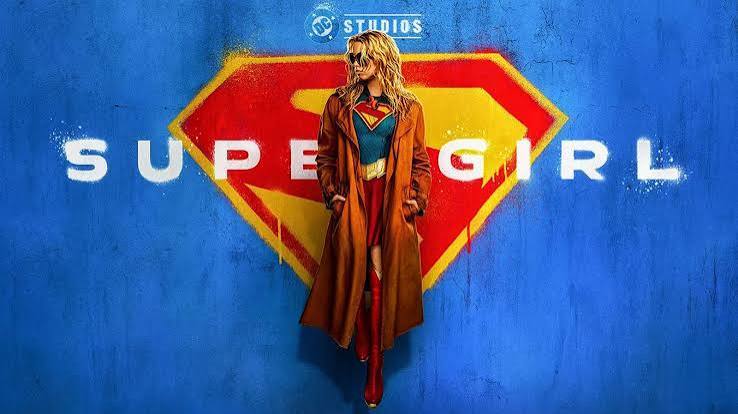
Quick Synopsis: A villain paralyses a superhero’s dog. Comes to regret it.
There’s a certain section of the internet that hates this movie. According to them, Supergirl is misandrist, implying that men are simple creatures who only see women as sex objects. They also think the film should have had Sydney Sweeney as the lead because she’s got nicer tits. I don’t see how you can view this as anti-men; it’s anti-child sex traffickers. If you see a movie be against sex trafficking and your first thought is “this movie hates men”, then you need to rethink your definition of masculinity.
It’s weird, especially since there are legitimate reasons to dislike Supergirl (from now on, when I say Supergirl, assume I’m talking about the movie; I’ll refer to the character as Kara for clarity’s sake). The plot is muddled, the villain is underwhelming, the visuals are inconsistent, characters often behave in ways that contradict what we’re told about them, and the soundtrack isn’t quite as memorable as it clearly thinks it is.
In terms of the directing, James Gunn is overseeing DC movies now, and that’s VERY evident in Supergirl. The film is so indebted to Gunn’s style that it barely feels like a Craig Gillespie movie at all. Instead, it feels like someone trying to make a James Gunn movie (but not at the same level as 2024’s Borderlands). It’s dark, not in tone, in terms of visuals. There are more than a few scenes where it’s difficult to work out what’s happening. This really harms the action sequences, as everything is so difficult to see that it’s impossible to be either impressed or emotionally affected by the action.
I actually liked the soundtrack overall, but there are too many moments where it feels desperate to seem cool or underline the film’s message. It’s never quite as heavy-handed as Captain Marvel dropping “Just a Girl,” but it comes close a few times. And yes, this is something I complain about constantly, but it desperately needed a killer cover song. The acoustic version of “The Middle” is fantastic, but to distinguish Kara’s ethos from Superman’s, an angry female-led cover of a classic American song could have been genuinely inspired.
Those issues would be more forgivable if the film wasn’t hamstrung by such a lacklustre villain. Krem has some good moments; the fact that he steals food from everyone he meets is a nice touch, and his actions truly are despicable. But it constantly feels like he’s not the big bad, but someone who reports to the big bad. Throughout the film, I kept expecting him to meet a superior who’d berate him before killing him for his failures. The film also seems intent on presenting Krem as Kara’s ideological opposite, but that idea never really lands because he doesn’t appear to have much of an ideology. There’s an implication that he’s trying to preserve his species through horrific means, yet the script barely explores that motivation. He rarely talks about his people, so instead he simply comes across as someone who would have been a sex trafficker regardless of circumstance. There’s no moral complexity to wrestle with. He’s not a villain whose worldview makes you pause and think. He’s just a dick.
The film also has a habit of telling rather than showing when it comes to Kara’s character. We’re repeatedly told she’s selfish, reckless, and directionless, yet the story rarely demonstrates those qualities. She only meets Ruthye because of a selfless act, and she beats up a stranger just to recover Ruthye’s sword. Her emotional core is built around survivor’s guilt, the trauma of losing her family, and her determination to save her dog. That’s someone with a strong moral compass, not someone who’s fundamentally selfish. Likewise, Ruthye is presented as an innocent child, yet she often speaks with wisdom far beyond her years, creating a disconnect between how she’s described and how she’s actually written.
That said, there’s still a lot to like here. Kara immediately establishes herself as a distinct character rather than simply being Superman with blonde hair. She’s angry, rebellious, impulsive, and deeply traumatised. Her past informs every decision she makes, and she’s refreshingly messy. She’s just as likely to smash a stereo as she is to break a villain’s back. Milly Alcock captures that contradiction beautifully, balancing confidence with vulnerability. She has the physicality for the action scenes, but she’s at her best in the quieter moments, when Kara’s bravado slips and we catch a glimpse of the frightened person beneath it.
The relationship between Kara and Ruthye is very sweet and helps elevate the somewhat conventional revenge narrative. It’s not exactly subtle, but it doesn’t need to be. There are times where sincerity works better than subtlety. Supergirl is very sincere; I’ll give it that. It wears its heart and message on its sleeve, and I love that about it.
Despite its flaws, Supergirl succeeds because it gives Kara a distinct identity and wears its heart on its sleeve. It isn’t the strongest superhero film in recent years, but it lays a promising foundation for DC’s future.

