Nirvanna The Band The Show The Movie (2025) Review

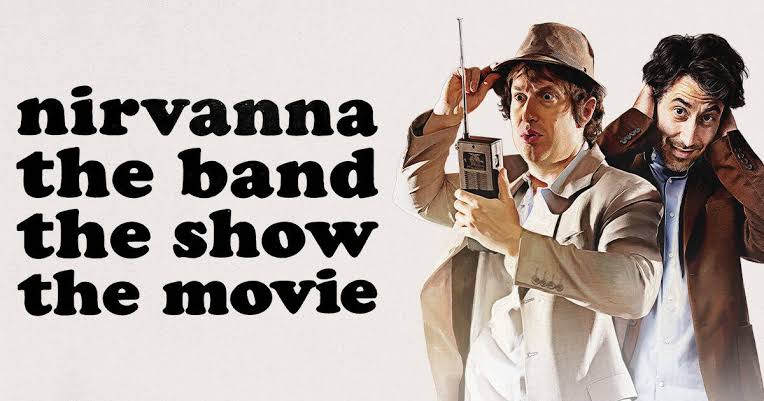
Quick Synopsis: Two hapless friends and aspiring musicians accidentally travel back in time to 2008 while trying to pull off a scheme to book a gig at a real-life Toronto music venue. Based on a web series, nothing to do with Kurt Cobain

Nirvanna The Band The Show The Movie (NTBTSTM, pronounced Not-bot-tis-tum) is based on a web series and TV show that I’ve never seen. This could end badly for me. Humour is subjective enough without walking into a film that’s potentially packed with years’ worth of in-jokes and references I don’t understand. And then there’s the fact that it’s Canadian. There was every chance I’d spend the entire thing wondering what the hell everyone was talking about.

I mean, all of those things could still be true. But if they are, they were done skillfully enough that I didn’t notice. This is not a subtle movie. In fact, it’s about as far from subtle as you can get. At one point, a character says, “This whole 2008 sequence, which would be very hard to fake if this were not 2008, will not be filmed.” That’s not so much winking at the audience as batting eyelashes, buying them a drink and asking if they’d like to come back to theirs. And I love it. The film knows exactly how ridiculous it is and leans into that as hard as it possibly can. It kind of has to. If it played things straight, it wouldn’t be nearly as funny. And it is funny. Incredibly so at times. Some of the dialogue and situations are so absurd that you can’t help but laugh.

I can tell I liked it because I managed to get over a pretty big hurdle. I don’t think he normally does, but in this movie, Jay McCarrol REALLY looked like a guy I grew up on the same street as. This guy once beat the shit out of a kid and flushed his head down the toilet. You’d think that would be some kind of classroom hijinks. Nope. The dude was in his 30s at the time. Naturally, this led to me Googling what he’s up to now. I think he’s dead. Apparently, he died by suicide. For a lot of films, that would be enough to permanently ruin an actor’s face for me. Here, it barely registered. And then there’s Matt Johnson, who was in Matt and Mara, a film I detest partly because I should have loved it but didn’t. So yeah, the fact that this film managed to overcome both of those hurdles says quite a lot.

Not that it’s a great movie. The pacing is a chore, and sometimes it feels like a genuine struggle to get through. The narrative could be tighter, too. There is an overall story in there somewhere, but you’d be forgiven for forgetting about it at times. The original web series episodes were between 10 and 20 minutes, while the TV show episodes were roughly 22 minutes apiece. I don’t think they’ve quite worked out how to stretch that into a feature. It puts me in mind of Moana 2, which was originally supposed to be a miniseries before they merged the different episodes into a movie. The result was something that felt episodic and disjointed. There’s a similar thing here. It feels like a series of skits rather than a cohesive narrative.

That being said, I admire creativity, and this definitely has that. The way they use unsuspecting members of the public to drive the story through their interactions with the performers is genius. If you know what’s happening, you can spot it. But if you don’t, it just looks like incredibly clever foreshadowing. That’s the kind of thing I really appreciate in a film: something that is genuinely impressive once you know how it was done, but still works perfectly well if you don’t.

NTBTSTM is not among the greatest movies I’ve ever seen. But it is a lot of fun. More importantly, it made me want to watch the TV show. I’m sure there are running jokes and references I didn’t catch, and once I’ve seen the show, I’ll inevitably have to come back to this and watch it again with the missing context. If a film can make someone who has never seen its source material want to go back and explore it, I’d say that’s a success.

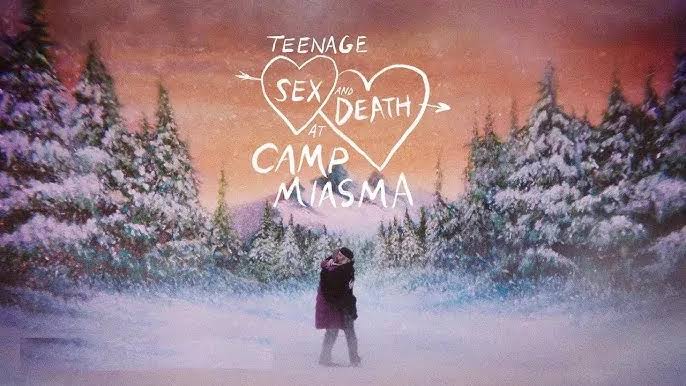
Teenage Sex And Death At Camp Miasma (2026) Review

Quick Synopsis: Kris, a 29-year-old filmmaker, is hired to resurrect and reboot the tired Camp Miasma slasher franchise for modern audiences. Wanting to pay tribute to the original, she tracks down the actress from the original; shit gets weird.

I have a somewhat complex history with the work of Jane Schoenbrun. I think she’s one of the best filmmakers around today. Her use of colour is among the best in the business. The way she weaves metaphor and storytelling into the shots is a thing of wonder. I always leave her movies feeling slightly like I’ve been hypnotised and entranced. That being said, I’m not a fan of her scripts. They always start promising but end up just on the wrong side of incomprehensibility, although I suspect cohesion and understanding aren’t really the point. I’m aware that this, more than almost any other criticism, is deeply personal and subjective. Some people will love it BECAUSE of that, because the audience is constantly wrong-footed and left in a state of confusion. Personally, I don’t mind being confused; I just want a place in the narrative to ground myself

If you loved her previous work, Teenage Sex And Death At Camp Miasma (TSADACM, pronounced Tee-Sad-At-Cam) won’t dissuade you from being a fan; if you don’t like it, this won’t change your mind. Everything that works about her previous films is now better in this. The shots are better, the music is incredible, and the performances are outstanding. Schoenbrun knows how to make a killer playlist, helped enormously by a returning Alex G. There’s a great selection of danceable synth pop for you to sink your teeth into. Hannah Einbinder and Gillian Anderson have a chemistry that leaps off the screen. From the moment they first meet, there seems to be a magnetic pull between them, like the universe is begging them to kiss. They are helped by how unbelievably horny the script is. There’s an air of unashamed sexuality over the entire thing; arguably the sex is more important than the death. The supporting characters are all fine, but none are as fully fleshed out as those two, so the actors aren’t really given as much of a chance to shine.

It feels like a deeply personal story for Schoenbrun. Much like her previous work, this feels like she’s writing it as an exploration of her own personality, rather than worrying too much about whether the audience can follow along. It’s her examining her own sexual desires and feelings. And that’s fine, but if you do something like that, you have to be aware that it won’t fully land with everybody. Every time I felt I knew what was happening, the film was determined to throw me off. I’m still not sure whether the ending actually happened, was a fantasy, an alternate universe, or a dying thought. There’s a moment where the switch from “believable and understandable” to “confusion and oddness” happens, and it’s so abrupt that it becomes genuinely jarring.

So far, this review has probably seemed fairly negative, and it’s not meant to. There’s a lot to like about TSADACM. It has one of my favourite openings I’ve seen all year. The opening credits set up how Miasma is regarded in this world, complete with reviews, initial analysis, its place in pop culture, and how it’s viewed in modern society. There are multiple references to classic cinema, and problematic histories that a lot of long-running franchises have, especially when it came to how they treated characters who weren’t cisgender, straight white men. Fans of cinema and film theory will get a lot more out of some of the dialogue than casual viewers probably will.

So, is the in-universe movie believable? Kind of. Weirdly, Camp Miasma (the in-universe movie) has the exact opposite problem that Camp Miasma (the movie we’re watching, which I’ll refer to as TSADACM for clarity’s sake) has. The writing, characters and backstories of Camp Miasma feel convincingly rooted in the 80s. Yet the filmmaking itself definitely feels modern. If anything, Schoenbrun feels TOO good a director to make a believable, slightly terrible 80s slasher. Her use of camera movement and music is too advanced and slick for it to work. It pulled me out of the movie a little bit, despite the scene itself being incredible. If an 80s movie had used some of Schoenbrun’s techniques, it wouldn’t just have been good; it would have changed the genre. It’s the musical equivalent of Green Day attempting to make a ramshackle 70s punk record. Even without trying, they’d do things that wouldn’t have been done back then, either because the technology wasn’t available or because nobody had thought of doing them yet. Put all of that together on one album, and it would inevitably be too much

Gonna be honest, I’m still not entirely sure what genre this would fit into. It doesn’t really feel like horror so much as a video thesis ABOUT horror that uses horror scenes to illustrate its point. So you can’t really judge it like you would a traditional horror movie, by examining the villain, the scares, etc. I guess the closest I can think of would be *deep breath* Surrealsexual Romantic Psychological Thriller. It’s definitely unique, and for that alone it’s worth your time and money.

This is one of only two films I’ve paid to see in the last few years, and I watched it at the Curzon, which isn’t cheap. Plus it was on my birthday, and I was on my own. It had everything working against it, and I still want to see it again.

I should note that I’m not exactly the person these themes are aimed at. I love that films like this exist; it’s clearly going to be VERY important to someone, potentially even someone who feels seen by it in a way they haven’t felt seen before. But to me? I admire it and want to study it more than I like it. This wasn’t made with someone like me in mind, but it doesn’t need to be. It feels like it’s aimed at the confused teens (and adults) who need more films like this, and I think they’ll love it. Of course, I haven’t actually spoken to any people about this film, so for all I know, I’m woefully off the fucking mark.

Although there is one important thing to note, especially after what I just said. I don’t really feel comfortable explicitly stating what I’m about to say, so I’ll try to work around it. A few years ago, for my end-of-year awards, I noticed that EVERY film in the “most me” category had a female lead. It led me to ask myself a few questions about why that was, and whether those were questions I should actually talk to someone about. I did have a discussion with some friends, and they encouraged me to explore it further, many of them speaking from their own personal experiences. I never really got anywhere with those questions, but they haven’t entirely gone away either. So there’s something increasingly strange about the fact that TSADACM is almost certainly going to win the award this year. It’s another film that feels intensely, uncomfortably close to me in a way that I don’t entirely know how to explain. And every time that happens, I get a little closer to HAVING to ask myself those questions again.

The Testament Of Ann Lee (2025) Review

Quick Synopsis: A musical biopic about Ann Lee, founder of the Shakers.

I didn’t know much about The Testament Of Ann Lee (TTOAL, pronounced like Tee-total if you slightly miss the final t), I just knew it was highly regarded, and it involved religion in some way. I can see why people like it. It feels very much like an “important” movie. It’s incredibly well-crafted, and from a technical standpoint, it’s hard to criticise it.

But I’m still gonna. Really, most of my criticism is based on how they tell the story. It’s a (according to Wikipedia) “historical musical drama”. Musicals are weirdly viewed. They’re seen as “fun”: bright colours, big emotions and joy. There are some which are high-concept and serious (Les Misérables, Annette, The End), but they’re few and far between, and, with the exception of Les Misérables, they aren’t the musicals that really penetrate popular culture.

I’m not opposed to serious musicals, but I think there’s a fundamental flaw in using the format for a biography. Because of the inherently theatrical nature of musicals, biographies don’t always suit the style. It’s hard to suspend disbelief when everybody suddenly breaks into song. You’re never really given a chance to think, “Wow, this really happened,” because the music keeps reminding you that you’re watching a constructed performance. You know the singing didn’t happen, so your brain finds it difficult to accept that everything else did too.

It’s different when it’s a biopic of a musician, because music is naturally part of their story. But a religious person? It’s odd. TTOAL gets around this somewhat by making the music extremely religious, almost choral. But that creates another problem: a lot of the songs start to sound very similar. To be fair, they’re somewhat limited by the subject matter. It would be pretty strange if the characters suddenly started rapping or performing opera.

It starts off well. It lets you know very quickly that the religious themes will be heavy, as will the weirdness. There’s also some really good music. It’s an odd experience watching a film and not being entirely sure whether it’s a horror film or a biography. I like it, though. At the very least, it shows ambition. It immediately changes the expectations of anyone who went in expecting a standard musical.

The performances are all great. Some reviewers have described it as the best performance Amanda Seyfried has ever given. I disagree, preferring her performance in the criminally underrated The Last Word. Her performance in TTOAL is certainly more difficult, because of the added pressure of singing, but I felt she was more natural in The Last Word. They’re two very different roles with very different demands, though, so perhaps it’s unfair to compare them. The more obvious comparison is her performance as Cosette in Les Misérables. She’s MILES better in Ann Lee. She makes a very good Ann Lee. I like her when she’s Ann Lee. (That joke only works if you say it like “angry” in the Incredible Hulk voice.)

The supporting cast are similarly good, although I found myself more interested in some of the performances than in the characters themselves. This is partly because the film is so committed to its style. Everyone feels like they’re performing in the same strange religious nightmare, which is presumably the point, but it does make it difficult to become attached to individual characters. They’re often there to represent an idea as much as they’re there to be people.

I didn’t even notice Christopher Abbott or Shannon Woodward, despite both having appeared in two of my hidden gem picks from the last few decades. I’d actually made a point of keeping an eye out for them in future works.

Ultimately, my biggest issue was that I never really fully bought into the premise. I recognised that what I was watching was powerful and important, but I never felt that it was powerful and important myself. The story is inherently difficult to dramatise. The story of Ann Lee is, to a large extent, about what she felt; this means the film spends a lot of time dealing with ideas and concepts rather than events. For a biography, I don’t think I learnt much about her or her life. I remember that she was born on the 29th of February, but that’s about it.

On the positive side, it’s ambitious. And I’d much rather watch a film like that than something lazy. When I watch a film, I can sometimes find myself thinking, “Does the writer/director NEED to make this?” and the answer is usually lacking. But this? I can see why someone needs to make this. That shines through in every scene. So much effort has been put into everything: the production design, the costumes, the music. They all feel like they’re combining as part of a decisive vision. Even when I didn’t necessarily like the choices, I understood the decisions behind them.

Maybe that’s the frustrating part. I didn’t dislike it. I just didn’t connect with it as much as I needed to in order to really enjoy it. I completely understand why someone would see this as a five-star movie (7 stars in the Tokyo Dome). But it didn’t work for me. Maybe that’s because there was no part of me that was particularly interested in Ann Lee or the Shakers (which would be a great name for a ’60s band). Before the film, I had no interest in learning about them, and after the film, I still have no interest.

TTOAL is ambitious, technically impressive and often genuinely beautiful. Amanda Seyfried is excellent, the music is strong, and there’s enough weirdness here to make it stand out from the endless stream of conventional biopics. But I think the same theatricality that makes it distinctive also creates its biggest weakness. I was always conscious that I was watching a film about Ann Lee rather than feeling like I was witnessing her life. I never suspended my disbelief enough to become fully invested.

Perhaps that’s an unfair criticism of a musical. But if you’re going to make a musical about a religious figure rather than a musician, you’re already asking the audience to make a pretty substantial leap. TTOAL makes that leap confidently. It just didn’t always land where it wanted me to.

The End Of Oak Street (2026) Review

Quick Synopsis: A family’s suburban neighbourhood has been transported from 1982 into the age of dinosaurs.

In 2014, David Mitchell (not that one) released It Follows. I consider it one of the finest horror movies of modern times. Not just because it’s tense and full of pitch-perfect scares, but because it inspired questions and debate: did she sleep with the people in the boat? If so, does that really make her any better than Hugh/Jeff? And if you moved abroad and just waited for it to cross the ocean, could you theoretically outrun it? With The End Of Oak Street (TEOOS), the big question I had was this: can Ewan McGregor act? I mean, he must be able to; it’s his job. He’s been in some really good films, usually alongside people who we know can act, without seeming like he’s out of place. And he’s not cheap, so if he couldn’t act, you’d think studios would eventually stop hiring him. Yet I can’t think of a memorable performance, one where he really sold the role. I only ask because he has some of the worst line delivery I’ve ever heard. One line, in particular, robbed the scene of any tension because I assumed he was being sarcastic.

Maybe that’s harsh. He is performing in an accent that’s not his. Evidently, the studio believes audiences will buy into a town disappearing through a wormhole into a prehistoric land, but having someone live in America and use a Scottish accent is a step too far. He’s also not helped by acting alongside Anne Hathaway, who is one of the best performers on the planet. Even the child actors are strong in this. Maisy Stella and Christian Convery both give performances beyond their years. So his performance looks weaker by comparison.

I’ve been accused of being too picky with my criticisms sometimes. If you believe that, you should probably avoid this, because I’m about to make one of my weirdest criticisms in a while. Here goes: this didn’t need to be set in the 80s. It felt like it was done like that because it was based on a book from the 80’s and they wanted to be accurate. But nope, original concept. This wasn’t hinted at in the trailer, and it doesn’t have much impact on the plot. The only change it would have made is the method Denise uses to do research. And I suppose the kids would have recorded videos of the dinosaur on their phones, but that wouldn’t have helped because they wouldn’t have had a signal to send them with. None of those changes would have been major. Did they do it because it’s slightly Spielberg-esque and they wanted to make the most of that? They don’t even make the most of the time period by filling the film with wave after wave of 80s bangers. I’m not saying every film set in 1982 needs to pay out for Under Pressure, but I can’t imagine Goody Two Shoes by Adam Ant would have taken a massive chunk out of the budget.

Thankfully, there is quite a lot to like about TEOOS. The dinosaurs look fantastic. I assume they took a lot of work and money to create, which is why the film cuts away from them at certain times. Or perhaps it was to stop the film getting an 18 because of the blood and violence. Either way, it’s frustrating. There’s never a point where you don’t buy them as real (unless you’re a palaeontologist, in which case you tear your hair out with frustration at the inaccuracies, none of which I know enough about dinosaurs to notice). They’re also constantly a threat. You can’t imagine someone throwing a saddle on one of the dinosaurs and using it to herd the others in like cattle. Usually, films like this treat the smaller creatures as mere nuisances, with only the bigger ones being a threat. TEOOS leaves you in no doubt that the smaller ones can still fuck your shit up.

It’s also weirdly funny, in a dark way. Believably so. Characters don’t sneak past a dinosaur, then say “do you think he saw us?” and wink at the camera because they just made a dinosaur pun. But there’s something oddly funny about some of the violence; people being killed should not be this funny. Yet the dinosaurs attack with expert comedic timing, akin to a Three Stooges skit with decapitations. That humour means that the characters feel like actual people rather than disposable bodies waiting to die or kill. They sometimes do stupid shit, but that can be explained by the fact that they don’t have much experience dealing with stuff like this. This means when characters are in danger, you want them to survive. At no point do you cheer the dinosaurs.

The core of TEOOS is the family dynamic. They’re not perfect; the relationship between the parents is strained, with alcoholism playing a role in the present and almost certain divorce in the future. These aren’t the “I will do anything to save you, my love” type; these are the “can barely stop arguing even when they might die soon” type. That being said, there’s one major death (that I won’t name for spoiler reasons) that isn’t really given enough time to breathe. They die, the plot immediately moves on, and we don’t get much time to experience the world without them. I get what they were going for, but it didn’t quite land with me. The same could be said for the mystery at the centre of the film. It doesn’t spend as much time exploring it as some people might want. It does provide an explanation, but it’s very quick and easy to miss.

There’s a good film hiding in here; play up the 80s nature or set it in modern day, aim for a higher age rating so you can show the blood, and let McGregor speak in his natural accent. Yes, they’re small problems. But together, they hamper the film more than they should. It’s a solid 7/10, and it annoys me that it’s not higher. Watch it at the cinema while you can, because I doubt the streaming services are going to be fighting over the rights.

Outcome (2026) Review

Quick Synopsis: A beloved Hollywood star embarks on a desperate redemption tour after a blackmail threat forces him to confront the mistakes that could destroy both his career and his sense of self.

I’m going to start this review off in a manner which I can almost guarantee no review of this movie has done, by talking about OJ Simpson. The murder of his wife (and the accusations of his involvement in her murder) haunted him to the point he felt compelled to write a book entitled “If I Did It”, which was essentially him insisting he was innocent while describing how he would have committed the crime if he had been guilty. It’s generally regarded as a really stupid and crass idea. Similarly, in 2018, in the midst of a sexual abuse scandal that would end up with him being imprisoned for 31 years, R.Kelly released a song called “I Admit”, where he “confessed” to things such as not going to church enough, with the only mention of his crimes being a denial. Which makes sense, the only evidence the world had that he was a paedophile was a rape tape he made with a minor in 2002 (which the world knew about, by the way, so fuck EVERY musician who worked with him after that date). Now, art is art, and I’m not saying musicians, writers and filmmakers should be arrested or punished for doing this. But it is in bad taste. Certain people should not make art and attempt to make money from certain subjects. That’s my big issue with Outcome. Jonah Hill should not have been involved. It feels like this may have been his way of dealing with the accusations of emotional abuse levelled at him, when he told his partner who was a surf instructor, not to surf with men, post pictures online of her in a swimsuit, or spend time with friends he didn’t approve of. I’m fully on board with people using pain and trauma for art, but it feels like he’s using other people’s trauma that involved him, rather than his own trauma. That fact overshadows everything else about the film, especially when it discusses how “the best thing to be is a victim.” If he wasn’t involved, you could look at those moments as the film mocking them, but with his involvement, it’s not difficult to view it somewhat cynically.

So, outside of that, how is Outcome? Honestly, it’s fine. It’s not horrendously bad, but it’s nothing special. Its streaming release feels appropriate. It’s the sort of film that’s worth watching on a quiet evening, but not one compelling enough to justify a trip to the cinema. It’s an interesting idea, but all it is is an idea, nothing more. The conversations between Reef and the people he may have wronged are genuinely compelling; emotive, introspective, and full of sharp characterisation. But everything connecting those scenes is surprisingly bland.

The casting of Reeves, generally known as one of the nicest people in the world, is perfect. The rest of the cast? They’re okay. You wouldn’t have guessed by watching this that Cameron Diaz was once one of the world’s biggest stars; she no longer has the effortless screen presence that once made it impossible to look away. I don’t know if it’s the performer or the character, but Reef’s assistant Sammy doesn’t suit the style, feeling like a deliberately kooky Deschanel-type, all quirks and forced performative behaviour. Martin Scorsese gives a surprisingly good performance. Everybody is aware of his talent behind the camera, but his work as a performer in this is to be admired, giving a lot of depth to what could be a pathetic character. His almost-monologue is full of pathos, emotion, and regret. You could build entire stories around that.

Ultimately, the film never quite figures out what it wants to be. Is it attempting to be a character study about someone realising he’s kind of a dick? Is it a satire about how fame is based more around PR than actual behaviour? Is it about how our expectation that celebrities should be perfect is a doomed endeavour? Or is it about how cancel culture ruins the lives of famous people? It feels like it is aiming to be all of them, so never fully commits to anything. All of those ideas are good ideas worth studying, but they never fully mesh in Outcome. Every time it looks like it’s getting deep into something, it pulls out (sex reference unintentional but I’m keeping it).

Visually, it’s fine. There are no shots which are ugly or distracting, but nothing that will make you appreciate it. When I was younger, I used to think the director’s job was very easy; you just point a camera at what’s happening and press record. That’s the approach it seems was taken to Outcome. The camera isn’t assisting the story or themes in any way. There’s very little sense that the camera is being used to tell the story, rather than simply record it. It’s just watching from nearby. This restrained approach to directing means that the weaker stretches have nothing to lean on. When the conversation dries up, there’s nothing carrying you to the next scene.

Under different circumstances, I think I’d have come away describing Outcome as an above-average streaming drama with some genuinely compelling scenes surrounded by a lot of filler. But art doesn’t exist in a vacuum, especially when it’s so easy to draw parallels between the story being told and the person telling it. Whether that’s fair or not, it’s impossible for me to separate the two, and the film never gives me enough to overcome that discomfort. It asks you to empathise with a flawed man trying to navigate the consequences of his actions, but because of who’s making that argument, it never feels like simple fiction. It feels like self-defence.

Outcome isn’t a disaster. There are moments of genuine insight, some excellent performances, particularly from Martin Scorsese, and conversations that linger long after the credits roll. But the film never develops beyond its central premise, and Jonah Hill’s involvement hangs over every scene like an elephant in the room. Maybe that’s unavoidable. Maybe that’s the point. Either way, it’s a film whose most interesting discussion happens outside the film itself.

The Invite (2026) Review

Quick Synopsis: A struggling married couple’s dinner with their free-spirited neighbours spirals into a provocative night of awkward revelations that forces them to confront the cracks in their relationship.

I love dinner parties in movies. They’re so fun to watch because they naturally allow group conversation, and there are certain unspoken etiquette rules that are always entertaining to watch get broken. If you want to expose your characters’ conflicts, put them around a dinner table and let what happens happen. The Invite takes that idea and makes it the entire concept.

It’s an English-language adaptation of the 2020 Spanish film The People Upstairs. It’s fairly obvious this is a remake of a non-American film. There’s something about it that feels slightly unconventional. It’s not just that it’s a summer movie driven by characters and dialogue rather than big action setpieces. It kind of feels like the cinematic equivalent of ordering food in a foreign country by speaking English with an accent. Familiar enough to understand, but just different enough to feel a little strange.

That sense of oddness is backed up by Olivia Wilde’s directing style. It’s incredibly static, with some weird blocking choices. Sometimes it feels like a play that we’re watching from the audience, sometimes it feels like someone just plonked a camera down randomly with no thought or care, and other times there’s a voyeuristic quality, as if we’ve wandered into a private argument we shouldn’t be witnessing. With that in mind, it’s difficult to criticise the film too harshly on a technical level because it’s clearly not trying to impress with flashy filmmaking. It’s aiming for a naturalistic style that occasionally feels awkward, but intentionally so.

What will chiefly inform your opinion on The Invite is the characters and the dialogue. The audience I saw it with loved it, and it’s easy to see why: it’s incredibly funny at times, with some truly incredible dialogue, and a cast who clearly enjoy bouncing off one another. The conversations have an energy that keeps scenes engaging even when very little is happening. That’s the issue, though: very little does happen. There’s almost no narrative progression for most of the runtime. Rather than pushing the characters into new emotional territory, the film spends much of its time having them elaborate on feelings they’ve already expressed. To be honest, it spends most of it catching up with the trailer. I’ve seen the trailer; I know this film involves the neighbours proposing group sex. I assumed that would be the inciting incident and it would lead to things. Instead, it’s the destination, and it’s a destination the film takes far too long getting to.

That lack of progression also affects the central relationship. Joe and Angela don’t feel like real people so much as vehicles for clever dialogue. Every conversation is packed with witty observations, but it rarely feels spontaneous or lived-in. Also, there was no warmth to the relationship between the two main characters. I understand that the point is they’re trapped in a loveless marriage fuelled by resentment, too afraid to admit it’s over. That doesn’t mean spending nearly two hours with them becomes any easier. I kept waiting for just one moment of genuine warmth, some glimpse of why these two people fell in love in the first place. There’s a brief moment where it seems they might unite against the bickering of the other couple, but it disappears almost as quickly as it arrives.

That lack of warmth really hampers the ending. Joe finally returns to the piano, Angela joins him, and they seem to reconcile. It’s a sweet scene in isolation, but after nearly two hours of anger, bitterness and emotional distance, it feels too small to justify such a dramatic shift. It’s like trying to fix a leg amputation with a piece of sellotape.

For all my issues, there is still a lot to enjoy about The Invite. Beneath all the bitterness is an impactful look at people and keeping the spark alive in long-term relationships. For a film that’s so bitter, it just may save the relationship of someone watching. They may see it and be inspired to try more, to treat their partner with love, to keep wooing them and trying to impress them instead of confusing stability for fulfilment. The ensemble also works well as a true four-hander, with every actor getting plenty to do. Although, interestingly, despite having a female director and co-writer, the film subtly privileges Joe’s perspective. He’s the only character we spend meaningful time with alone, and the only one we follow outside the apartment. It’s a small imbalance, but one that makes the supposedly shared story feel slightly weighted towards him.

I won’t begrudge anybody enjoying this. Mainly because being annoyed at someone for their film opinions would be weird. Maybe a younger, more cynical me would have loved this. It will find its audience, of that I’m certain. But I’m not part of that audience. I appreciate what it’s trying to do, but it never quite invited me in.

Supergirl (2026) Review

Quick Synopsis: A villain paralyses a superhero’s dog. Comes to regret it.

There’s a certain section of the internet that hates this movie. According to them, Supergirl is misandrist, implying that men are simple creatures who only see women as sex objects. They also think the film should have had Sydney Sweeney as the lead because she’s got nicer tits. I don’t see how you can view this as anti-men; it’s anti-child sex traffickers. If you see a movie be against sex trafficking and your first thought is “this movie hates men”, then you need to rethink your definition of masculinity.

It’s weird, especially since there are legitimate reasons to dislike Supergirl (from now on, when I say Supergirl, assume I’m talking about the movie; I’ll refer to the character as Kara for clarity’s sake). The plot is muddled, the villain is underwhelming, the visuals are inconsistent, characters often behave in ways that contradict what we’re told about them, and the soundtrack isn’t quite as memorable as it clearly thinks it is.

In terms of the directing, James Gunn is overseeing DC movies now, and that’s VERY evident in Supergirl. The film is so indebted to Gunn’s style that it barely feels like a Craig Gillespie movie at all. Instead, it feels like someone trying to make a James Gunn movie (but not at the same level as 2024’s Borderlands). It’s dark, not in tone, in terms of visuals. There are more than a few scenes where it’s difficult to work out what’s happening. This really harms the action sequences, as everything is so difficult to see that it’s impossible to be either impressed or emotionally affected by the action.

I actually liked the soundtrack overall, but there are too many moments where it feels desperate to seem cool or underline the film’s message. It’s never quite as heavy-handed as Captain Marvel dropping “Just a Girl,” but it comes close a few times. And yes, this is something I complain about constantly, but it desperately needed a killer cover song. The acoustic version of “The Middle” is fantastic, but to distinguish Kara’s ethos from Superman’s, an angry female-led cover of a classic American song could have been genuinely inspired.

Those issues would be more forgivable if the film wasn’t hamstrung by such a lacklustre villain. Krem has some good moments; the fact that he steals food from everyone he meets is a nice touch, and his actions truly are despicable. But it constantly feels like he’s not the big bad, but someone who reports to the big bad. Throughout the film, I kept expecting him to meet a superior who’d berate him before killing him for his failures. The film also seems intent on presenting Krem as Kara’s ideological opposite, but that idea never really lands because he doesn’t appear to have much of an ideology. There’s an implication that he’s trying to preserve his species through horrific means, yet the script barely explores that motivation. He rarely talks about his people, so instead he simply comes across as someone who would have been a sex trafficker regardless of circumstance. There’s no moral complexity to wrestle with. He’s not a villain whose worldview makes you pause and think. He’s just a dick.

The film also has a habit of telling rather than showing when it comes to Kara’s character. We’re repeatedly told she’s selfish, reckless, and directionless, yet the story rarely demonstrates those qualities. She only meets Ruthye because of a selfless act, and she beats up a stranger just to recover Ruthye’s sword. Her emotional core is built around survivor’s guilt, the trauma of losing her family, and her determination to save her dog. That’s someone with a strong moral compass, not someone who’s fundamentally selfish. Likewise, Ruthye is presented as an innocent child, yet she often speaks with wisdom far beyond her years, creating a disconnect between how she’s described and how she’s actually written.

That said, there’s still a lot to like here. Kara immediately establishes herself as a distinct character rather than simply being Superman with blonde hair. She’s angry, rebellious, impulsive, and deeply traumatised. Her past informs every decision she makes, and she’s refreshingly messy. She’s just as likely to smash a stereo as she is to break a villain’s back. Milly Alcock captures that contradiction beautifully, balancing confidence with vulnerability. She has the physicality for the action scenes, but she’s at her best in the quieter moments, when Kara’s bravado slips and we catch a glimpse of the frightened person beneath it.

The relationship between Kara and Ruthye is very sweet and helps elevate the somewhat conventional revenge narrative. It’s not exactly subtle, but it doesn’t need to be. There are times where sincerity works better than subtlety. Supergirl is very sincere; I’ll give it that. It wears its heart and message on its sleeve, and I love that about it.

Despite its flaws, Supergirl succeeds because it gives Kara a distinct identity and wears its heart on its sleeve. It isn’t the strongest superhero film in recent years, but it lays a promising foundation for DC’s future.

Pizza Movie (2026) Review

Quick Synopsis: Two friends need food to counteract the drugs they’ve just taken. All they need to do is get downstairs.

Sometimes you see a synopsis and the only thought in your head is “Wait, doesn’t that movie already exist?” Usually it’s because a movie is incredibly popular, so studios rush to release something similar. With that in mind, it’s hard to read the plot for this and not think “wait, isn’t that basically 2004’s Harold And Kumar Go To White Castle/Get The Munchies?” It’s an easy comparison to make. Two friends take drugs and try to find food. One of them is a nervous guy working up the courage to talk to a woman, the other being more impulsive, encouraging adventures and drug-taking. I thought that too; that was actually the first line I wrote in my notes while watching it.

But then the film revealed itself, and it’s more than the comparisons would suggest. For one thing, the female characters have more agency. They’re no longer just prizes or props; they’re fully formed characters with their own flaws and weirdness. The main characters have more depth too. Unlike Harold and Kumar, whose defining trait is essentially “they smoke weed”, Jack and Montgomery feel like people who happen to take drugs rather than characters entirely built around them.

Sadly, adept character writing doesn’t always make a good film. The drug trips themselves are superb: imaginative, creative, and a lot of fun. By comparison, the bits between them aren’t quite as good. There are also a few moments where it seems to suggest the drugs are not just affecting the characters, but are changing reality itself, with time loops, levitation, etc. There’s a cute moment at the end where we see the hallucination from an outsider’s perspective: the characters believe they’ve formed into Juan giant person (not a typo, an in-movie joke). From their point of view, they’re seamlessly moving as one person. From the viewpoint of others, it’s just the three characters tightly hugging each other and struggling to move. That’s fun. But then you have the time loop sequence, where there’s no obvious real-world explanation. Are bystanders genuinely watching these people scream, run back down a corridor, and repeat the process? If so, why does nobody react?

That being said, the time loop section is one of my favourite parts, so it’s not really a criticism. It’s more of a warning that to enjoy this film there’s a lot of “don’t think about it too hard, just go with it”. It’s not just the story, the comedy is like that too. The jokes don’t come quite as thick and fast as they do in something like Fackham Hall or The Naked Gun, but there’s certainly a variety. Some are quite smart, some are among the dumbest things you’ll see all week (even if you watch the trailer for the new Minions movie), and some exist purely because some guy thought “wouldn’t it be funny if….”

The willingness to embrace absurdity helps sell some of the weirder concepts. How many other films would have the villain be defeated by overdosing on drugs and realising they’re part of a low-budget indie movie? Or feature one of the writers joking that “my granddad wants to be in this movie”, only for a suspiciously elderly student to appear a few minutes later, played with deliberately amateurish enthusiasm? For such a gloriously stupid film, it’s surprisingly smart.

The visuals, however, are merely fine. A premise like this should give its directors licence to get truly weird, to push the visuals as far as their imagination will allow. Instead, everything feels rather restrained. There’s nothing wrong with how the film looks, but it rarely feels ambitious. The modest budget undoubtedly imposed limitations, yet there’s little here to suggest what these filmmakers might paint with a larger canvas.

The performances? They’re fine. Gaten Matarazzo does just enough to distinguish himself from his Stranger Things character. Sean Giambrone is slightly closer to his television role (Adam in The Goldbergs), but that’s more due to writing than performance. The two share a chemistry that makes you believe they’re actually friends. On the downside, the two are so good together that the traditional third-act split doesn’t land because you don’t truly believe these two would drift apart so easily. Lulu Wilson is the third part of the friendship group, and if there’s a third Ready Or Not movie, she wouldn’t be the worst choice as another relative to Kathryn Newton and Samara Weaving (she’d actually be the second best choice, first being Margot Robbie, obviously). Peyton Elizabeth Lee also leaves a strong impression despite limited material, and I’d happily watch her in a larger role.

The standout, though, is Sarah Sherman. She barely appears, yet completely owns every scene she’s in. She’s wonderfully odd, but never in a way that feels forced or performative. Instead, she gives the impression of someone who would happily spend an evening sitting alone in a dark room doing weird things regardless of whether anyone else was watching. It’s a fascinating performance, and one that makes me even more excited for Teenage Sex and Death at Camp Miasma, which is rapidly becoming one of my most anticipated films of the year.

This won’t finish near the top of anyone’s Best Films of the Year list. But it’s well worth seeking out. It starts off looking like a Harold & Kumar clone (Harold and Two-mar?) before carving out its own identity through inventive ideas, likeable characters and an appealing willingness to embrace utter nonsense. At the very least, it’s funny, imaginative, and exactly the kind of film you’d have rented from a video shop back in the day, then ended up watching two or three times over the same weekend.

Toy Story 5 (2026) Review

Quick Synopsis: Old-fashioned toys teach us the dangers of technology in a film that will soon be released on Disney+ and made available to watch online.

I don’t care about this movie.

I don’t care that it’s missing one of the main voice actors due to him sadly passing on. I don’t care that it seems like a cash-grab. And I don’t care that it kind of overrides the perfect ending of Toy Story 3. I don’t care about any of this, because I fucking loved this movie.

Sorry, did I say it overrides the ending of Toy Story 3? I meant Toy Story 4. That’s embarrassing on my part. It’s easy to see how I made that mistake, though; I just copy-and-pasted the opening to my Toy Story 4 review. I think if you liked the first four, you’ll like this too. It’s more of the same, in a good way. It features the same characters, going through the same lessons. At this point Woody and friends have had to learn that children are their own people so many times that I genuinely think they should see a doctor (although they are American, so they probably can’t afford it). The toys appear to suffer from a condition where every life lesson evaporates from their minds after about eighteen months

That sounds overly negative. It’s not meant like it. I did love this movie. I love it BECAUSE I know what to expect. I know I’m going to laugh. I know it’s going to break my heart a little bit. I know that Pixar will somehow convince me that what happens to some pieces of plastic is the most important thing in the world. I also know it’s going to look fantastic. Toy Story 5 (TS5) is probably the best-looking one of the series. It actually tries something new. When Bonnie is playing with the toys, it animates them in a way that it looks like, well, the only way to say it is watercolour CGI. The backgrounds become softer, colours blend together differently, and everything feels slightly dreamlike. It’s a surprisingly bold visual choice for the fifth entry in a franchise that could easily coast on familiarity. It doesn’t last throughout the film, but the brief moments that it does really stand out.

My issues are very small; it repeats points the franchise has already made. That’s a pretty big one, and I’ve already gone into it. One of the kids is animated in a way that she looks older than she is supposed to be, so she comes off as slightly immature. Really, it’s just her height, and the fact that until we see her interact with the toys, she does seem more of a teen than a child. There are also a few moments where the “humans never notice the toys” rule gets stretched to breaking point. The scenes involving multiple Buzz Lightyears are the biggest example. While that subplot pays off later, opening the movie with it felt like a mistake. It’s one of those ideas that’s fun once you understand where it’s going, but not necessarily the strongest foot to start on. Similarly, the film introduces a toy capable of sending messages that people don’t remember writing. Not one adult involved seems remotely alarmed by this. If my phone started sending texts that I had no recollection of sending, my first assumption would not be “lol, I am a silly billy”, mainly because my name isn’t Billy.

Besides those very minor points? It works. There’s a slight change in narrative focus. For perhaps the first time since the original movie, Toy Story feels genuinely interested in the human side of the story again. Bonnie isn’t just the kid the toys belong to. She’s an actual character with wants, fears and problems of her own. The film spends more time examining her perspective than previous entries did, and it’s stronger for it. There’s also an increased focus on Jessie. It’s hard to believe she wasn’t in the original movie. There was a 4-year period where Jessie wasn’t a part of the Toy Story universe at all. But she slotted in perfectly. I love how much more Joan Cusack is given to do in this. She may not be the top-listed, but she’s arguably the main character. The transition is handled well. It never feels like the film is forcing her into the spotlight. If anything, it feels like a natural evolution. Bonnie would realistically gravitate more towards Jessie than Woody, and the story simply follows that logic.

One thing I particularly enjoyed was the film quietly shutting down the long-running fan theory that Jessie originally belonged to Andy’s mother. I was never the biggest fan of that. Not because it was impossible or stupid, but because it makes the world feel smaller if EVERYBODY is connected. Also, if your childhood toy suddenly reappeared in your house decades later, you’d probably notice. At the very least, you’d spend a few minutes wondering whether you’d stumbled into a Child’s Play sequel (hopefully not Seed).

As for the newcomers? They work well. Lilypad will inevitably get most of the attention, and for good reason. She’s built around an interesting contradiction. The film needs children within the story to find her appealing, while simultaneously making sure real children don’t immediately demand one for Christmas and accidentally prove the villain’s point. It’s a difficult balancing act, but the film mostly pulls it off. There is a toy made of her, but it’s a VERY basic educational one, with none of the social and addictive capabilities that are in the film. The other tech-based toys are fine, but if they weren’t in the inevitable Toy Story 6, you wouldn’t miss them. Blaze, meanwhile, ended up being one of the more interesting additions. Believable as a child projecting an air of confidence whilst simultaneously having an inner personality that’s mostly anxiety. Mykal-Michelle Harris does a great job, and I do hope Blaze and Bonnie are an integral part of the franchise going forward.

In summary: it’s another Toy Story movie. Whether that’s a glowing recommendation or a dire warning is up to you. For me, it’s the former. Also the case apparently for the woman at work who spent six minutes very passionately telling me how much she loved TS5 before I’d even seen it.

Looking back, that should probably have been a clue as to how good this is.

Disclosure Day (2026) Review

Quick Synopsis: A former cybersecurity expert and a TV meteorologist uncover a decades-long conspiracy hiding humanity’s contact with extraterrestrials, racing to reveal the truth before powerful forces silence them.

I’m not a huge Spielberg fan. I’m not saying I don’t love some of his work. But no matter how good his films are (and they are, there’s no denying that), I’m not sure any of them would be in my personal top 100. I admire his work more than I like it. The one that I hold the most affection for is probably The BFG. He is very good at what he does: grounded spectacle. Really, the best way to sum them up is that they inspire wonder and awe.

That is what drives Disclosure Day. That, and hope. The emotional anchor is empathy; the idea that humanity’s ability to sympathise with others is one of our greatest strengths, and leads to our growth as a species. In a crapsack world, it’s nice to see something with hope as a central theme. It works, too. The emotional beats hit like a freight train, or a passenger train; I think if I get run over by a train, I’m not going to be that bothered by what type of train it is. Unless it’s a steam train, then I’ll be delighted as it means my obituary can say I was “chuffed to bits”.

Since it is so committed to wonder, there is the risk that it could come off slightly naive. That it would come off TOO hopeful and twee, making it seem almost like a kids’ movie. Thankfully, it contains just enough nightmare fuel to keep you interested. The footage of what humanity does to the aliens is shocking, haunting, and devastatingly accurate. That awfulness helps sell the sincerity, though. To inspire humanity to be at its best, we need to see it at its worst. We need to see it as cruel, selfish, and violent. It’s the old wrestling principle: to have someone the fans truly love, the fans kind of need to hate them first.

Science fiction has spent most of its existence asking what aliens would do to us. Invade, enslave, eat, breed (fingers crossed the last one)? The humans in this film are aware of this, and it’s why they fear the aliens. That cynicism is what stops us advancing. So in a way, it’s not actually about aliens. Disclosure Day is about humanity confronting proof that it is not alone. The question isn’t about whether we survive the encounter, but whether we deserve to.

This all sounds overly sentimental. A film where the real superpower is being nice? That sounds unbearably sweet. Which it is. But I liked it anyway. Whilst it is a bit too “nice”, it’s sincere. Anybody can be cynical; hope is harder. Hope risks looking like an idiot if it doesn’t work out. That’s why a film like this is impossibly brave.

Now it’s time for me to mention its second biggest flaw (I’ll discuss the first one later, and it’s controversial). We are told that the world is on the edge: the doomsday clock is practically midnight, there’s panic on the streets of London, and at the disco. We’re told that. But we never really feel it. We spend so much time with characters who are isolating themselves from the world that we never really get a good look at the world they’re isolating themselves from. That may be because Spielberg is so gifted at creating wonder and beauty that despair and existential dread never quite emerge from the visuals.

Now onto my biggest issue with Disclosure Day: Emily Blunt. She’s usually really good. But for whatever reason, I didn’t buy her performance in this. It felt like the epitome of “dull surprise”. Instead of displaying wonder and awe, it just seems like she’s constantly high. It’s made all the more obvious by how good Josh O’Connor is in comparison.

I don’t think his performance is the best in the film, though. That goes to someone else. I don’t know who Courtney Grace is. At the time of writing, she doesn’t even have a Wikipedia page. And I’m certainly not saying she should have been the lead; she’s only in one scene, so it would be a stretch to go from that to anchoring the film. But her performance is spellbinding. Her character doesn’t even receive a name. But her role is important; she’s the news anchor talking about the footage in real time. Having to stay professional whilst obviously hiding her emotions, before ending up emotionally overwhelmed by what she’s seeing. By the time the information is disclosed, pretty much every character is somebody who already had some knowledge of the events, as did the audience. So she’s an in-universe audience surrogate. Yes, we see brief moments of how large groups of people react, but it’s Grace’s performance that lets us truly feel the awe that humanity feels. In a film full of excellent performers, she stood out.

In a way, that encapsulates Disclosure Day. It’s not aliens or magic powers that wow us in the end: it’s a person. Disclosure Day understands that humanity doesn’t experience awe; people do. That moment works because it takes something incomprehensibly large and channels it through an individual.

The thing is, when a film is this sincere, you stop judging it purely on logic. You judge it on whether you believe it. Not whether the politics make sense, not whether every plot point survives scrutiny, but whether the emotional truth lands. For me, it did. Yes, I wish it explored more ideas in depth (it briefly talks about what the existence of aliens means for religion, and aside from one nun being okay with it, it’s not really touched upon). We’re not really given enough time to see the impact the disclosures have.

Maybe that’s the point. We’re not left with certainty that something will happen. We don’t know for sure that humanity can save itself. Instead, we’re left with the hope and belief that it will. Really, there’s a world of possibilities that Disclosure Day opens up, and maybe it’s up to us to keep those worlds open. We have the possibility that, given undeniable proof that we are small, fragile, and not alone, humanity might finally grow up.