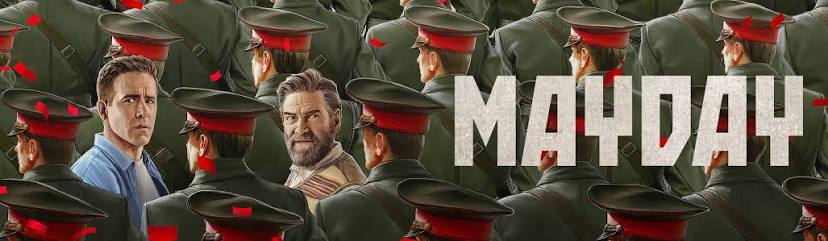
Mayday (2026) Review

Quick Synopsis: A US Pilot is trapped behind enemy lines, assisted only by a former KGB agent who wants to defect.

I’ve written this style of opening so many times that even I’m bored of reading it, so let’s skip the full sentences and get straight to the quick notes. Apple Original Movie? Probably dull. Ryan Reynolds? Usually good. Ryan Reynolds’ recent film choices? Questionable. Director? Has made films I like. This film? Not one of them. There, that’s saved all of us a lot of effort.

Sadly, I can’t do the whole review like that. I’m going to have to come up with something original to say about this movie, which is more than the writers managed. The film opens with a bird flying into the ocean, and it looks so fake that I genuinely wondered whether I was watching some kind of Hot Shots-style parody. From there, things don’t exactly improve.

The feeling that this might actually be a parody doesn’t go away as the film goes on. The US military has provided production assistance to numerous movies over the years, often in return for cooperation over how the military is portrayed. It’s part of the reason films like Top Gun have been so closely associated with military recruitment (to the point of recruiters setting up stations outside screenings). Some of the films made with assistance from the Department of Defense include Armageddon (kind of makes sense, I guess), In The Army Now (makes sense), and Ernest Saves Christmas (that… makes less sense). Mayday isn’t on that list, but it feels like it should be.

It’s a film assembled entirely from Serious Military Movie™ parts, complete with earnest speeches, American flags, men staring meaningfully into the middle distance and enough patriotism to make a bald eagle start feeling embarrassed. The result is a film that feels strangely dated.

Much like England has never got over World War 2, the US has never got over the Cold War. Probably because Russia was the last enemy America had where they could cast white actors and just tell them to do an accent. Try doing that with a modern Middle Eastern villain and you’re either veering straight into blackface-level territory or, God forbid, actually casting actors from the region. And we all know which option Hollywood would prefer. Spoilers: it’s the shitty one.

The problem is that Mayday could probably work as a pulpy action thriller if it wasn’t so determined to make everything about America. One character decides to risk everything to help another because, apparently, “I like America.” That’s the motivation. That’s the character development. It’s difficult to take seriously. Yes, there is a moment where the main character starts to question the US military after they gave his dad cancer and covered it up. But even that feels tacked on. You’d think “the government ruined my father’s life, covered it up, and then suspended me when I told people about it” might lead to a small amount of national introspection. Nope.

And then there are the action scenes.

Some of the film actually looks pretty good. There’s some nice use of colour and a few shots that suggest the filmmakers know exactly what they’re doing. Unfortunately, the fight choreography is bizarrely robotic, with characters seemingly pausing between every move to make sure everyone knows what’s happening. There’s no natural flow, everyone feels stiff (not in a sexual way) and unnatural. It feels like rehearsal footage rather than a finished scene. That’s especially strange considering this comes from the same team behind Dungeons & Dragons: Honour Among Thieves and Game Night, both of which had incredible choreography. It’s not that the filmmaking here is generally incompetent; quite the opposite. But that one fight scene is painful to watch.

The logic isn’t much better. At one point, there’s a train full of soldiers, and apparently nobody has a walkie-talkie, knows how to use hand signals, or has any other means of communicating. Their only solution seems to be firing weapons in the general direction of their fellow soldiers, because that’s what military training gets you to do; potentially wipe out your colleagues. It’s the sort of thing that makes you stop paying attention to the plot and start asking questions the film really doesn’t want you asking.

Ryan Reynolds is perfectly capable of doing serious roles. So why does it feel like he’s been stuck playing variations of Ryan Reynolds for years? At least Kenneth Branagh is doing something slightly different from normal. It’s always nice to see Maria Bakalova onscreen. She has a great career ahead of her.

There’s probably a decent film buried somewhere here. Strip away some of the Cold War baggage and the relentless American exceptionalism, and perhaps the story could breathe a little. Instead, it’s so aggressively American that it ends up hurting itself. It’s not a completely incompetent film. There are some good-looking shots, some decent performances, and moments where the action works. But it is so weighed down by clichés and dated ideas that it becomes difficult to take seriously. It feels like there’s a reason this went straight to streaming, and it’s the same reason Disney sequels used to go straight to video back in the day.
The Dink (2026) Review

Quick Synopsis: A washed-up tennis prodigy turns to pickleball to save his father’s country club and confront his past

One of these days, Apple TV is going to make a great film. Some of its TV output has been superb, but its straight-to-streaming selections have been poor. It has made some good movies, but they’ve generally been films that received cinema releases. I’m not complaining about that: I’ll always support films getting a cinema release. But it does make Apple TV a difficult streaming service for me to justify once the new season of Ted Lasso finishes.

On the plus side, none of them have been particularly awful. They’ve had some that are bland, but nothing as bad as some of Prime’s offerings. It’s into this state of mediocrity that we’re given The Dink. That’s particularly disappointing because Josh Greenbaum has made two films that I have a strong fondness for: Barb and Star Go to Vista Del Mar and Strays. Based on those two films, he’s the correct choice to direct Spaceballs 2. Based on The Dink, I’m worried.

It reminds me of the worst parts of comedies made by what the media dubbed the “Frat Pack”, and the comedy that surrounded it: Judd Apatow, Ben Stiller, Jack Black, Will Ferrell, etc. The sort of films that would find a joke and then run it into the ground. Like they were improvising, but not bothering to edit because they wanted to make sure everybody got their shtick in. It would be improved if it tried to be less of a comedy. If it stopped trying to shoehorn jokes into scenes where they don’t belong. Especially since it derails both the realism and characterisation for the sake of getting another joke in.

The insistence on comedy also comes at the expense of emotion. The film reveals late on that Dustin didn’t break his wrist in a freak accident, but broke it on purpose because he was ashamed of losing in front of his dad. That’s powerful. It should be a turning point in the narrative, something that changes how we see him. At the very least, his dad should find out and realise the trauma he’s inflicted on his son. Nope. It changes nothing. It’s not helped by the way the film treats everyone as comedy characters rather than real people. So you don’t actually give a shit.

There’s some weird narrative logic here. The film starts with Dustin’s dad being annoyed at him for banning people from the club for playing pickleball. But then his dad holds a meeting saying they need to ban pickleball players from the club because he thinks they’re being too demanding with requests like, “Make it so our court isn’t a deathtrap.” If he’s genuinely that annoyed by the pickleball players being there, wouldn’t Dustin banning them be exactly what he wanted?

Not that it’s all negative. The John McEnroe bits are funny, particularly because of how absolutely absurd they are. It’s one of the few running jokes that doesn’t run out of steam. He’s weirdly good at comedy. Less so is Mary Steenburgen, which is strange because she’s usually REALLY good. But for whatever reason, she’s not at her best here. To be honest, it’s difficult for anybody to stand out when the characters aren’t people so much as caricatures. Nobody is given enough depth to really show what they can do. Aaron Chen seems promising, though. I get the feeling he’d make a great best-friend character.

The biggest problem is that The Dink feels like it thinks it’s funnier than it actually is. There are funny ideas here, but they’re buried underneath jokes that don’t land and characters that you don’t buy. There’s a better film hiding underneath all of this. If the father-son relationship had been explored properly, the movie could have been genuinely sweet. Instead, the comedy constantly gets in the way of what could have been a surprisingly effective emotional story.

Josh Greenbaum has already shown that he can make ridiculous comedy work. Barb and Star Go to Vista Del Mar is completely bonkers, but it understands exactly how ridiculous it is. Strays is similarly stupid, but there’s a confidence to it. The Dink feels much less controlled. It’s as though everyone involved is trying so hard to make sure we’re having fun that they’ve forgotten to trust the material to actually be funny.

It’s not terrible. There are some laughs, a few good performances buried underneath the caricatures, and John McEnroe is consistently entertaining. But for a comedy with this much talent, The Dink is surprisingly forgettable. Greenbaum has proven he can do much better. Hopefully Spaceballs 2 reminds me of that.

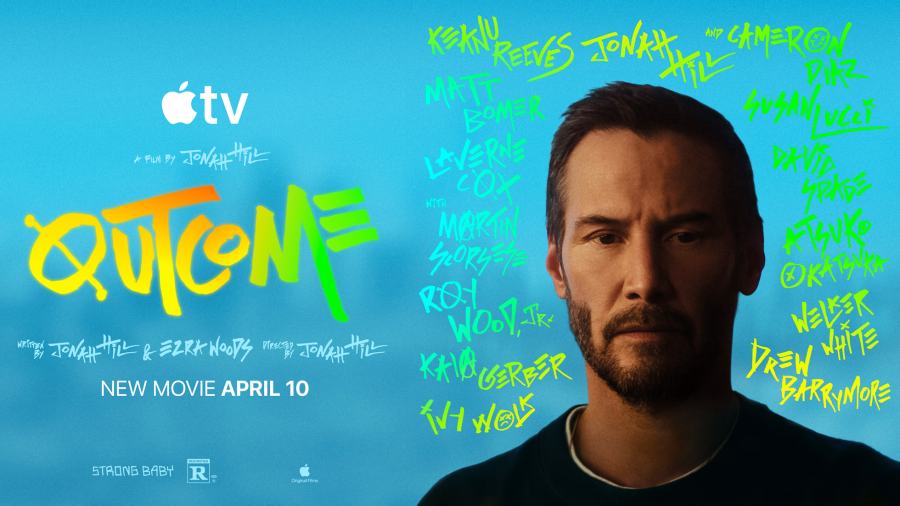
Outcome (2026) Review

Quick Synopsis: A beloved Hollywood star embarks on a desperate redemption tour after a blackmail threat forces him to confront the mistakes that could destroy both his career and his sense of self.

I’m going to start this review off in a manner which I can almost guarantee no review of this movie has done, by talking about OJ Simpson. The murder of his wife (and the accusations of his involvement in her murder) haunted him to the point he felt compelled to write a book entitled “If I Did It”, which was essentially him insisting he was innocent while describing how he would have committed the crime if he had been guilty. It’s generally regarded as a really stupid and crass idea. Similarly, in 2018, in the midst of a sexual abuse scandal that would end up with him being imprisoned for 31 years, R.Kelly released a song called “I Admit”, where he “confessed” to things such as not going to church enough, with the only mention of his crimes being a denial. Which makes sense, the only evidence the world had that he was a paedophile was a rape tape he made with a minor in 2002 (which the world knew about, by the way, so fuck EVERY musician who worked with him after that date). Now, art is art, and I’m not saying musicians, writers and filmmakers should be arrested or punished for doing this. But it is in bad taste. Certain people should not make art and attempt to make money from certain subjects. That’s my big issue with Outcome. Jonah Hill should not have been involved. It feels like this may have been his way of dealing with the accusations of emotional abuse levelled at him, when he told his partner who was a surf instructor, not to surf with men, post pictures online of her in a swimsuit, or spend time with friends he didn’t approve of. I’m fully on board with people using pain and trauma for art, but it feels like he’s using other people’s trauma that involved him, rather than his own trauma. That fact overshadows everything else about the film, especially when it discusses how “the best thing to be is a victim.” If he wasn’t involved, you could look at those moments as the film mocking them, but with his involvement, it’s not difficult to view it somewhat cynically.

So, outside of that, how is Outcome? Honestly, it’s fine. It’s not horrendously bad, but it’s nothing special. Its streaming release feels appropriate. It’s the sort of film that’s worth watching on a quiet evening, but not one compelling enough to justify a trip to the cinema. It’s an interesting idea, but all it is is an idea, nothing more. The conversations between Reef and the people he may have wronged are genuinely compelling; emotive, introspective, and full of sharp characterisation. But everything connecting those scenes is surprisingly bland.

The casting of Reeves, generally known as one of the nicest people in the world, is perfect. The rest of the cast? They’re okay. You wouldn’t have guessed by watching this that Cameron Diaz was once one of the world’s biggest stars; she no longer has the effortless screen presence that once made it impossible to look away. I don’t know if it’s the performer or the character, but Reef’s assistant Sammy doesn’t suit the style, feeling like a deliberately kooky Deschanel-type, all quirks and forced performative behaviour. Martin Scorsese gives a surprisingly good performance. Everybody is aware of his talent behind the camera, but his work as a performer in this is to be admired, giving a lot of depth to what could be a pathetic character. His almost-monologue is full of pathos, emotion, and regret. You could build entire stories around that.

Ultimately, the film never quite figures out what it wants to be. Is it attempting to be a character study about someone realising he’s kind of a dick? Is it a satire about how fame is based more around PR than actual behaviour? Is it about how our expectation that celebrities should be perfect is a doomed endeavour? Or is it about how cancel culture ruins the lives of famous people? It feels like it is aiming to be all of them, so never fully commits to anything. All of those ideas are good ideas worth studying, but they never fully mesh in Outcome. Every time it looks like it’s getting deep into something, it pulls out (sex reference unintentional but I’m keeping it).

Visually, it’s fine. There are no shots which are ugly or distracting, but nothing that will make you appreciate it. When I was younger, I used to think the director’s job was very easy; you just point a camera at what’s happening and press record. That’s the approach it seems was taken to Outcome. The camera isn’t assisting the story or themes in any way. There’s very little sense that the camera is being used to tell the story, rather than simply record it. It’s just watching from nearby. This restrained approach to directing means that the weaker stretches have nothing to lean on. When the conversation dries up, there’s nothing carrying you to the next scene.

Under different circumstances, I think I’d have come away describing Outcome as an above-average streaming drama with some genuinely compelling scenes surrounded by a lot of filler. But art doesn’t exist in a vacuum, especially when it’s so easy to draw parallels between the story being told and the person telling it. Whether that’s fair or not, it’s impossible for me to separate the two, and the film never gives me enough to overcome that discomfort. It asks you to empathise with a flawed man trying to navigate the consequences of his actions, but because of who’s making that argument, it never feels like simple fiction. It feels like self-defence.

Outcome isn’t a disaster. There are moments of genuine insight, some excellent performances, particularly from Martin Scorsese, and conversations that linger long after the credits roll. But the film never develops beyond its central premise, and Jonah Hill’s involvement hangs over every scene like an elephant in the room. Maybe that’s unavoidable. Maybe that’s the point. Either way, it’s a film whose most interesting discussion happens outside the film itself.