
Quick synopsis: Godzilla is back, this makes Japan very nervous.
I absolutely adored Godzilla: Minus One. I haven’t watched it again since, but I remember being wowed by it. Not just by the Big Z, but by the humanity integral to the story. It was a film that managed to make you care just as much about the people on the ground as you did about the giant radioactive lizard stomping around destroying everything. I was very excited by a sequel, but also nervous. Not just because sequels can sometimes be terrible and be incredibly disappointing to those who loved the original film (hello Fall 2), but also because I couldn’t really remember the specifics of the first one. It’s been a while, and whilst I remembered how much I enjoyed it, I couldn’t necessarily recall all the ins and outs of the story. Would I be spending the first half of the film trying to piece together what happened previously? Would it feel like I was missing something?
There was another reason I was slightly apprehensive, too. My parents were in the cinema watching this with me, and they hadn’t seen the first one at all. So, whilst I was trying to enjoy the film, there was a little voice in the back of my head constantly asking, “Are they hating this?” After all, this wasn’t just a sequel they hadn’t seen the original of; it was also a Japanese-language film, meaning they were having to follow subtitles throughout. Thankfully, they didn’t hate it. In fact, they both really enjoyed it. And I think the fact they could walk into a sequel to a film they’d never watched, in a foreign language, and still come away having thoroughly enjoyed themselves says a lot about the quality of Minus Zero. It’s clearly doing something right if it can appeal to people who don’t have any previous investment in this particular version of Godzilla.
The first one was not exactly subtle in its comparisons of Godzilla to the atomic bomb. This one is even less so. In fact, it practically beats you over the head with the comparison. But then, why shouldn’t it? Godzilla has always been more than just a giant monster, and there’s something particularly effective about using him as a representation of the sheer destructive power of nuclear weapons. He’s an unstoppable force of annihilation, something that ordinary people have absolutely no means of defending themselves against. The films aren’t particularly interested in being subtle about the horrors of nuclear warfare, and nor should they be.
I haven’t read any reviews or internet discourse on this, but I can almost guarantee some people will say that those comparisons mean the film is woke. Maybe not, though, because the type of people stupid enough to do that would never watch a subtitled movie because they can’t read.
Is it as good as the first one? I have to be honest, because of the length of time it’s been since I watched Minus One, I can’t say with certainty whether it’s better or worse. My memories of the first film are a little hazy, and I don’t particularly want to pretend otherwise just to make a definitive comparison. But I will say this: it’s not noticeable either way. I didn’t come out of this thinking “hmm, it wasn’t as good as the other one”, but I didn’t come out thinking it was a lot better either. It’s very much in the same league, and that’s probably good enough for me.
It’s weaker in some aspects. The human story isn’t as impactful as it was in the first one, and it doesn’t feel as though Japan itself is as important a character as it was last time around. The first film did a particularly good job of making the country’s post-war circumstances an integral part of the story, giving the destruction a historical and emotional context that went beyond simply watching buildings get knocked down. That element isn’t quite as prominent here. But the violence has a lot more impact. The scene in New York, in particular, is horrific in how impactful it is. There’s something about seeing Godzilla unleash that level of destruction in a familiar setting that makes the whole thing feel particularly uncomfortable. It’s not just spectacle; it’s genuinely disturbing.
The death count continues to be big in this franchise. Some we don’t get much focus on; they’re background bodies used to highlight the large scale of what’s happening. But some we get a lot of focus on; we see their deaths in excruciating detail. That’s where this iteration stands superior to the modern Monsterverse films: the sense of scale and how much it makes Godzilla feel like a genuine threat. He’s not just a big lizard that you can avoid. He’s not something you can get used to or prepare for. He’s a walking annihilation that, if you saw him, would haunt you for your entire life. He’s something that can cause generational trauma for entire countries.
G: MZ does a great job of showing that trauma. The survivors of the first movie aren’t elated and powerful; they live in fear of what they survived. Their experiences haven’t made them stronger in some inspirational, Hollywood blockbuster sort of way. They’ve left scars, both physical and psychological, that don’t simply disappear because Godzilla has temporarily gone away. There’s an understanding here that surviving a catastrophe doesn’t mean you’re finished dealing with it. For these people, the destruction isn’t something they can put behind them. It’s something they have to continue living with, knowing that it could happen all over again.
And that’s what makes Godzilla so effective here. He’s not a villain you can defeat and celebrate afterwards, or an obstacle that the heroes overcome before riding off into the sunset. He’s a force of nature, and even when he’s not on screen, his presence hangs over everything. The threat of his return is almost as frightening as the destruction itself. That’s something I think the Monsterverse occasionally struggles with. When your monsters become familiar characters, occasionally even allies, it’s easy to lose that sense of dread. Minus Zero understands that Godzilla should never feel comfortable.
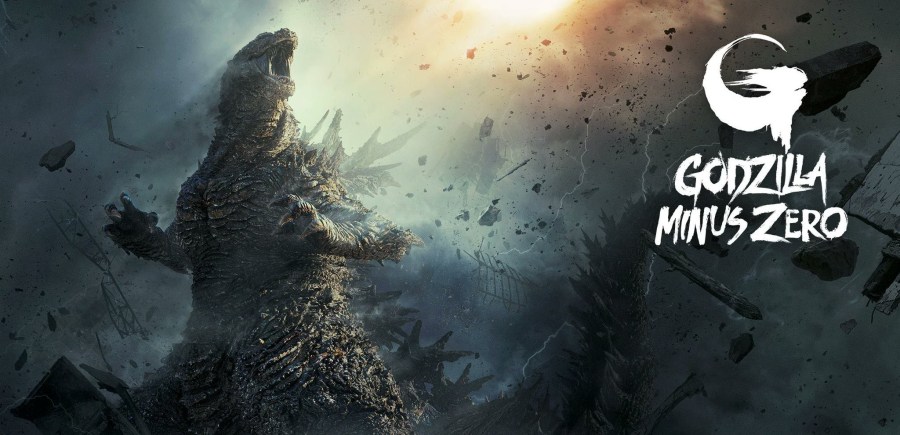
I also think the film deserves credit for not simply relying on the novelty of seeing Godzilla wreak havoc. There’s a real sense of spectacle here, and some wonderfully staged sequences that make excellent use of the big screen. Godzilla himself looks fantastic, and the filmmakers clearly understand that sometimes the best thing you can do is just let the camera linger on him for a moment. There’s no need to constantly cut between different angles or throw things at the screen to remind you how impressive he is. Sometimes you just need to let the big bastard stand there and look imposing. He’s terrifying, imposing and, occasionally, almost beautiful to look at.
The whole thing looks spectacular, really. There’s a tremendous amount of detail in the environments, the destruction and, of course, Godzilla himself. But what I particularly appreciate is how grounded it all feels. Despite the enormous scale of what’s happening, the film never loses that sense of realism. The environments feel like actual places, the destruction has weight to it, and Godzilla feels as though he’s physically occupying the same world as the people around him. It’s a difficult balance to strike when you’re making a film about a giant radioactive dinosaur, but the filmmakers pull it off wonderfully. The result is a film that looks absolutely enormous without ever feeling artificial.
The sound? That can be summed up in one word: LOUD. Deliberately so. The destruction is loud, the music cues are loud. Everything is designed to shock you from an audio perspective. And it’s not just about turning the volume up to eleven and hoping for the best. There’s a real understanding of how sound can make something feel more imposing, more frightening and more immediate. The roars, the explosions, the collapsing buildings; everything has a tremendous amount of weight behind it. You don’t just see the destruction happening, you practically feel it.
The music deserves particular credit, too. It knows when to build tension, when to announce something terrible is about to happen, and when to let the sheer scale of what’s happening do the talking. There’s something wonderfully theatrical about it all. It’s audio as storytelling, and few have pulled it off as effectively as this film does. It’s another example of how much thought has gone into making Godzilla feel like an event rather than just another CGI monster on screen.
In summary: the biggest complaint I have about this movie is that it was released in November, and as such, will come out on Blu-ray too late for me to get for Christmas. That’s genuinely my biggest gripe. I want to own this film, I want to watch it again, and I want to experience it all over again on the biggest screen I can manage at home.
I’m not saying it’s guaranteed to be the best movie of the year, but it’s definitely top 2 so far, and it will take something truly incredible to shake it out of that spot. It’s a sequel that manages to live up to the expectations set by its predecessor, whilst still giving us plenty of reasons to be excited about what Godzilla can do next. More than anything, it’s a reminder that you can make a film about a giant radioactive monster destroying everything in sight and still have something meaningful to say. Big Z remains in very safe hands.

