Pizza Movie (2026) Review

Quick Synopsis: Two friends need food to counteract the drugs they’ve just taken. All they need to do is get downstairs.

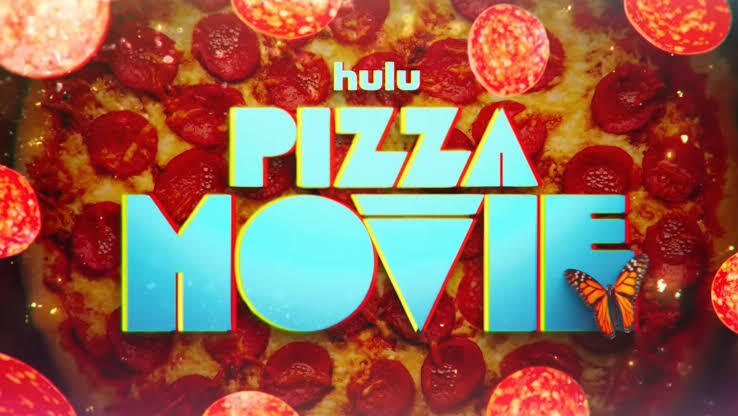
Sometimes you see a synopsis and the only thought in your head is “Wait, doesn’t that movie already exist?” Usually it’s because a movie is incredibly popular, so studios rush to release something similar. With that in mind, it’s hard to read the plot for this and not think “wait, isn’t that basically 2004’s Harold And Kumar Go To White Castle/Get The Munchies?” It’s an easy comparison to make. Two friends take drugs and try to find food. One of them is a nervous guy working up the courage to talk to a woman, the other being more impulsive, encouraging adventures and drug-taking. I thought that too; that was actually the first line I wrote in my notes while watching it.

But then the film revealed itself, and it’s more than the comparisons would suggest. For one thing, the female characters have more agency. They’re no longer just prizes or props; they’re fully formed characters with their own flaws and weirdness. The main characters have more depth too. Unlike Harold and Kumar, whose defining trait is essentially “they smoke weed”, Jack and Montgomery feel like people who happen to take drugs rather than characters entirely built around them.

Sadly, adept character writing doesn’t always make a good film. The drug trips themselves are superb: imaginative, creative, and a lot of fun. By comparison, the bits between them aren’t quite as good. There are also a few moments where it seems to suggest the drugs are not just affecting the characters, but are changing reality itself, with time loops, levitation, etc. There’s a cute moment at the end where we see the hallucination from an outsider’s perspective: the characters believe they’ve formed into Juan giant person (not a typo, an in-movie joke). From their point of view, they’re seamlessly moving as one person. From the viewpoint of others, it’s just the three characters tightly hugging each other and struggling to move. That’s fun. But then you have the time loop sequence, where there’s no obvious real-world explanation. Are bystanders genuinely watching these people scream, run back down a corridor, and repeat the process? If so, why does nobody react?

That being said, the time loop section is one of my favourite parts, so it’s not really a criticism. It’s more of a warning that to enjoy this film there’s a lot of “don’t think about it too hard, just go with it”. It’s not just the story, the comedy is like that too. The jokes don’t come quite as thick and fast as they do in something like Fackham Hall or The Naked Gun, but there’s certainly a variety. Some are quite smart, some are among the dumbest things you’ll see all week (even if you watch the trailer for the new Minions movie), and some exist purely because some guy thought “wouldn’t it be funny if….”

The willingness to embrace absurdity helps sell some of the weirder concepts. How many other films would have the villain be defeated by overdosing on drugs and realising they’re part of a low-budget indie movie? Or feature one of the writers joking that “my granddad wants to be in this movie”, only for a suspiciously elderly student to appear a few minutes later, played with deliberately amateurish enthusiasm? For such a gloriously stupid film, it’s surprisingly smart.

The visuals, however, are merely fine. A premise like this should give its directors licence to get truly weird, to push the visuals as far as their imagination will allow. Instead, everything feels rather restrained. There’s nothing wrong with how the film looks, but it rarely feels ambitious. The modest budget undoubtedly imposed limitations, yet there’s little here to suggest what these filmmakers might paint with a larger canvas.

The performances? They’re fine. Gaten Matarazzo does just enough to distinguish himself from his Stranger Things character. Sean Giambrone is slightly closer to his television role (Adam in The Goldbergs), but that’s more due to writing than performance. The two share a chemistry that makes you believe they’re actually friends. On the downside, the two are so good together that the traditional third-act split doesn’t land because you don’t truly believe these two would drift apart so easily. Lulu Wilson is the third part of the friendship group, and if there’s a third Ready Or Not movie, she wouldn’t be the worst choice as another relative to Kathryn Newton and Samara Weaving (she’d actually be the second best choice, first being Margot Robbie, obviously). Peyton Elizabeth Lee also leaves a strong impression despite limited material, and I’d happily watch her in a larger role.

The standout, though, is Sarah Sherman. She barely appears, yet completely owns every scene she’s in. She’s wonderfully odd, but never in a way that feels forced or performative. Instead, she gives the impression of someone who would happily spend an evening sitting alone in a dark room doing weird things regardless of whether anyone else was watching. It’s a fascinating performance, and one that makes me even more excited for Teenage Sex and Death at Camp Miasma, which is rapidly becoming one of my most anticipated films of the year.

This won’t finish near the top of anyone’s Best Films of the Year list. But it’s well worth seeking out. It starts off looking like a Harold & Kumar clone (Harold and Two-mar?) before carving out its own identity through inventive ideas, likeable characters and an appealing willingness to embrace utter nonsense. At the very least, it’s funny, imaginative, and exactly the kind of film you’d have rented from a video shop back in the day, then ended up watching two or three times over the same weekend.

Disclosure Day (2026) Review

Quick Synopsis: A former cybersecurity expert and a TV meteorologist uncover a decades-long conspiracy hiding humanity’s contact with extraterrestrials, racing to reveal the truth before powerful forces silence them.

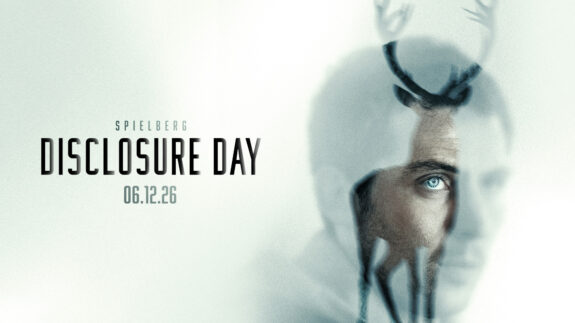
I’m not a huge Spielberg fan. I’m not saying I don’t love some of his work. But no matter how good his films are (and they are, there’s no denying that), I’m not sure any of them would be in my personal top 100. I admire his work more than I like it. The one that I hold the most affection for is probably The BFG. He is very good at what he does: grounded spectacle. Really, the best way to sum them up is that they inspire wonder and awe.

That is what drives Disclosure Day. That, and hope. The emotional anchor is empathy; the idea that humanity’s ability to sympathise with others is one of our greatest strengths, and leads to our growth as a species. In a crapsack world, it’s nice to see something with hope as a central theme. It works, too. The emotional beats hit like a freight train, or a passenger train; I think if I get run over by a train, I’m not going to be that bothered by what type of train it is. Unless it’s a steam train, then I’ll be delighted as it means my obituary can say I was “chuffed to bits”.

Since it is so committed to wonder, there is the risk that it could come off slightly naive. That it would come off TOO hopeful and twee, making it seem almost like a kids’ movie. Thankfully, it contains just enough nightmare fuel to keep you interested. The footage of what humanity does to the aliens is shocking, haunting, and devastatingly accurate. That awfulness helps sell the sincerity, though. To inspire humanity to be at its best, we need to see it at its worst. We need to see it as cruel, selfish, and violent. It’s the old wrestling principle: to have someone the fans truly love, the fans kind of need to hate them first.

Science fiction has spent most of its existence asking what aliens would do to us. Invade, enslave, eat, breed (fingers crossed the last one)? The humans in this film are aware of this, and it’s why they fear the aliens. That cynicism is what stops us advancing. So in a way, it’s not actually about aliens. Disclosure Day is about humanity confronting proof that it is not alone. The question isn’t about whether we survive the encounter, but whether we deserve to.

This all sounds overly sentimental. A film where the real superpower is being nice? That sounds unbearably sweet. Which it is. But I liked it anyway. Whilst it is a bit too “nice”, it’s sincere. Anybody can be cynical; hope is harder. Hope risks looking like an idiot if it doesn’t work out. That’s why a film like this is impossibly brave.

Now it’s time for me to mention its second biggest flaw (I’ll discuss the first one later, and it’s controversial). We are told that the world is on the edge: the doomsday clock is practically midnight, there’s panic on the streets of London, and at the disco. We’re told that. But we never really feel it. We spend so much time with characters who are isolating themselves from the world that we never really get a good look at the world they’re isolating themselves from. That may be because Spielberg is so gifted at creating wonder and beauty that despair and existential dread never quite emerge from the visuals.

Now onto my biggest issue with Disclosure Day: Emily Blunt. She’s usually really good. But for whatever reason, I didn’t buy her performance in this. It felt like the epitome of “dull surprise”. Instead of displaying wonder and awe, it just seems like she’s constantly high. It’s made all the more obvious by how good Josh O’Connor is in comparison.

I don’t think his performance is the best in the film, though. That goes to someone else. I don’t know who Courtney Grace is. At the time of writing, she doesn’t even have a Wikipedia page. And I’m certainly not saying she should have been the lead; she’s only in one scene, so it would be a stretch to go from that to anchoring the film. But her performance is spellbinding. Her character doesn’t even receive a name. But her role is important; she’s the news anchor talking about the footage in real time. Having to stay professional whilst obviously hiding her emotions, before ending up emotionally overwhelmed by what she’s seeing. By the time the information is disclosed, pretty much every character is somebody who already had some knowledge of the events, as did the audience. So she’s an in-universe audience surrogate. Yes, we see brief moments of how large groups of people react, but it’s Grace’s performance that lets us truly feel the awe that humanity feels. In a film full of excellent performers, she stood out.

In a way, that encapsulates Disclosure Day. It’s not aliens or magic powers that wow us in the end: it’s a person. Disclosure Day understands that humanity doesn’t experience awe; people do. That moment works because it takes something incomprehensibly large and channels it through an individual.

The thing is, when a film is this sincere, you stop judging it purely on logic. You judge it on whether you believe it. Not whether the politics make sense, not whether every plot point survives scrutiny, but whether the emotional truth lands. For me, it did. Yes, I wish it explored more ideas in depth (it briefly talks about what the existence of aliens means for religion, and aside from one nun being okay with it, it’s not really touched upon). We’re not really given enough time to see the impact the disclosures have.

Maybe that’s the point. We’re not left with certainty that something will happen. We don’t know for sure that humanity can save itself. Instead, we’re left with the hope and belief that it will. Really, there’s a world of possibilities that Disclosure Day opens up, and maybe it’s up to us to keep those worlds open. We have the possibility that, given undeniable proof that we are small, fragile, and not alone, humanity might finally grow up.

Dolly (2025) Review

Quick Synopsis: Macy, a young woman who fights for survival after she is abducted during a hike by a monstrous figure intent on raising her as its child.

I was looking forward to this. Max the Impaler is my kind of person, and I like horror movies, so this should be right up my street. It’s not; it definitely took a wrong turn and ended up on a street with the same name but in a different town. That said, it could be just that Dolly and I aren’t speaking the same horror language. I know that certain people will absolutely love this. Dolly has an 80’s throwback aesthetic. The colours and presentation make you feel like you’ve stumbled across a hidden 80’s slasher. Specifically, one on a cheap VHS that isn’t legally available in this country, so you had to get it from a dodgy tape trader, watched so often that the defects become part of the cinematography.

There are moments where Dolly has its creepy moments (the film, not the character. Wait, no, the character too). The trouble is that it isn’t quite good enough to sustain them. Several moments felt repetitive. Horror films often recycle scares, kills, or visual motifs; that’s part of the genre. But when you’re already feeling that sense of déjà vu before the protagonist and antagonist have even properly crossed paths, something has gone wrong in the script. At one point, I genuinely checked to make sure I hadn’t accidentally rewound the film. The overly artistic editing doesn’t help matters either. Rather than enhancing the experience, it often feels like it’s actively getting in the way.

The editing creates some practical problems, too. Characters reach for an object, and the cuts are so rapid that we don’t actually see what that object is. That’s an issue when the object is about to be used as a weapon. It’s difficult to fear someone being hit by an object if we don’t know what the object is. Is it a smoked haddock, in which case it will hurt but not likely kill the person (the fish, on the other hand, that’s probably gonna die). Or is it a wrench, in which case, yeah, that might kill a mofo.

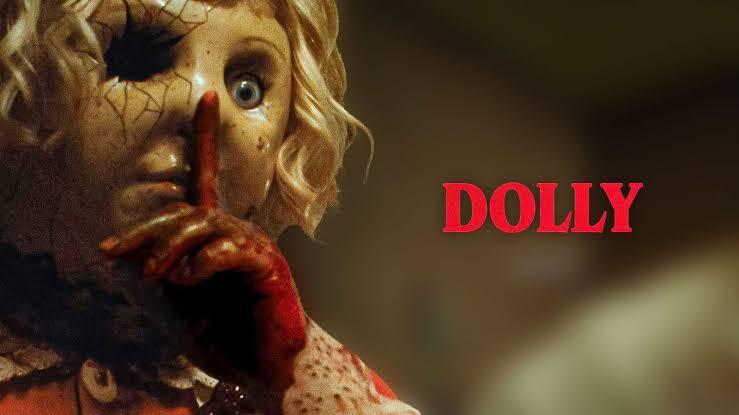
That same uncertainty extends to Dolly as a character. The mask obscures so much of their face that we rarely get a clear read on what they’re thinking or feeling. This becomes particularly noticeable when the protagonist starts fighting back. Is Dolly frightened? Angry? Offended that somebody has stopped playing along? Excited because things have become more interesting? We don’t know. I know, similar horror films also have characters wear masks, such as Texas Chainsaw. But this isn’t Texas Chainsaw, no matter how much the ending desperately wants to make you think otherwise.

The good news is that when it comes to violence, the film absolutely commits. Rod Blackhurst understands gore and, more importantly, understands impact. The violence here isn’t stylish or glamorous. It’s ugly, messy and unpleasant in exactly the way real violence should be. The injuries look painful, the deaths feel convincing, and the kills strike that sweet spot between inventive and deeply uncomfortable. These aren’t deaths that the audience cheers or goes “woooo” to; they’re deaths that are made to sicken you.

I also found Dolly surprisingly compelling as a character. They’re simultaneously terrifying and tragic, which is a difficult balancing act to pull off. It’s the kind of horror villain that future sequels would almost certainly ruin by explaining too much. As they stand here, though, they’re fascinating. You could even imagine a sequel where Dolly somehow ends up becoming the protagonist. I hope not, but you can see it happening.

Ultimately, Dolly felt like a Rob Zombie movie, and that’s not a compliment.

Saipan (2025) Review

Quick Synopsis: A recreation of the Saipan incident involving the Republic Of Ireland national team during the 2002 World Cup. If those words mean nothing to you, this film isn’t for you.

The last football movie I watched was Balls Up. That movie was fucking terrible. All Saipan had to do was be better than that. Obviously it managed that; if it hadn’t, you wouldn’t be reading this; you’d be reading a news headline saying “Makers of film attacked by a crazed/idiot reviewer”.

That’s not to say it’s a fantastic watch. For all its faults (of which there were many), at least Balls Up was memorable (except for the title, because I’m still not 100% on whether it’s called Balls Up or Balls Out). Saipan isn’t. It won’t move you, teach you, or linger in the memory. It’s just there. It’s the film equivalent of the 90’s song Save Tonight, by Eagle Eye Cherry. In the moment, you’ll enjoy it, and it’s hard to find many faults. But it won’t take long for memories and warm feelings to fade. That’s both a positive and a negative. Saipan never embarrasses itself. You never sit there bored, or annoyed. But it also never threatens to become anything more than “just okay”.

On the face of it, it rivals Seinfeld for being a piece of media about nothing. I mean, really. “A footballer shouts at his boss and quits mid-tournament” doesn’t sound like the sort of event that legends are built around. Nobody was physically harmed. Nothing was damaged. Ireland came second in their group (eventual finalists Germany topped the group), and ended up going out of the tournament on penalties to a Spain side that were on the cusp of being one of the greatest international teams of all time. There’s no Sliding Doors “but what would have happened if he stayed?” alternate history. All that would have changed is how they played, the final result wouldn’t change.

But that’s missing the point somewhat. It’s not just about that incident. It’s about professionalism, national identity, and personal pride. The reason the incident dominated headlines wasn’t because of what happened; it was because of what people thought it meant. There’s no clear-cut right-and-wrong side. To some people, Roy Keane was a selfish egotist who had no idea how to be part of a team. But to others, he was a perfectionist who refused to lower his standards and was extremely disappointed when it seemed like everybody else wasn’t taking the tournament seriously. To some, Mick McCarthy was a realist, attempting to deal with an egotist (Keane) who was being encouraged by his club manager to treat the international team. Whereas to others, he was woefully out of his depth, weak, and should have never got hired in the first place.

Saipan understands this. It doesn’t portray either side as wrong. They’re both right, but they’re having different arguments. I genuinely have no idea where the writers or directors stand on the issue. The script is impressively neutral. Perhaps that’s because all the principal figures are still alive and theoretically capable of hiring lawyers, but whatever the reason, it works. The film trusts the audience to make up their own minds.

There are a few issues. The main one is that Eanna Hardwicke looks nothing like Roy Keane. That, in of itself, isn’t an issue. Michael Sheen has shown time and time again that it’s more important to capture personality than accuracy. And it wouldn’t be an issue here if it wasn’t for one thing: the film opens with a montage featuring the real Roy Keane multiple times, repeatedly reminding the audience what he actually looks like before cutting to an actor who bears very little resemblance to him. It’s an odd decision. Why not keep Keane at arm’s length at first? Show him from behind, in silhouette, or at a distance. Build up the myth before revealing the actor. Instead, the film practically invites the comparison, and it’s an invitation that you can’t receive well.

The other issue is that it doesn’t do enough to explain why any of this mattered.

The film assumes a certain level of prior knowledge and doesn’t spend much time bringing newcomers up to speed. Non-football fans will still understand the basic facts. They’ll grasp the what and the when. But I’m not convinced they’ll fully understand the why. Which is a shame, as the why is the most important part.

Ultimately, it feels like a TV drama, albeit a very good one. It’s consistently engaging, well-acted, and intelligently written. It’s also surprisingly difficult to feel strongly about. The real incident sparked years of anger, debate, and discussion. I don’t think it’s particularly cruel to suggest that the film probably won’t. That sounds harsher than I intend it to. I’d still recommend it. It’s a solid, thoughtful piece of filmmaking that treats its subject with far more nuance than I expected. I’d say you should watch it, but watch it with someone who remembers the actual event. You might find their talks as every bit as interesting as the film itself.

Balls Up (2026) Review

Quick Synopsis: Two marketing executives end up public enemy number one in Brazil after ruining the world cup final they were invited to because they invented a condom that goes over your balls.

Weird timing. There’s a World Cup this year; in fact, that’s why I actually watched it, so I can have a somewhat topical review for once. But it’s now June; this movie was released in April. 15 days away from the final teams qualifying, two months before the first game. Wouldn’t it have made more sense to release it closer to the tournament?

The World Cup in Balls Up takes place in Brazil. That country hosted a World Cup in 2014. So is this film saying it takes place in 2014? Or is it marketed at people who want to watch a film based around the World Cup, but don’t actually like the World Cup? Why make a movie to capitalise on an event if you get all the facts wrong? It kind of feels like they wanted to make this movie, but realised the World Cup final this year is in the US, and a film that makes the US look bad isn’t likely to get funded in modern times. And they couldn’t go to Qatar or Russia due to US interest in those territories.

Also, Balls Up describes the event as the “2025 World Cup”, which doesn’t exist. For Americans: this would be like making a Super Bowl movie that says the event takes place every few months and features international teams. I’m not saying you need to know absolutely everything about something before writing a script. God knows, I dislike when people use esoteric expert knowledge to insult a film. If the cloud formation in the sky of a historical film annoys you because that’s not what the weather was like on that particular day, that’s on you, not the film. But if the entire central premise of your film is based on bullshit, then I have a problem. It would be like making a film about George Washington and having him grow up a poor black child in southern Lagos.

Also, I didn’t buy the general concept. “A condom that also goes over the balls”, that’s apparently a million-dollar idea. It’s not, stupid. It’s also not really explained WHY this would be wanted in the first place, or how it works. There’s not even a scene of someone trying to put the condom on and it snapping painfully on their balls, even when a character is about to have sex. That being said, it is possible there WAS a brief scene of that; I was just unable to watch it because my eyes were blinded by the sheer volume of shit.

It’s not all bad. Larry David being the voice of a translator app is funny. There are one or two other very brief moments that almost caused a smile. Plus, Daniela Melchior is pretty damn good at what she does. Also, watching it won’t cause a ghost to crawl out of the screen and say you’ll die in 7 days. It also hasn’t been shown to increase the risk of death by plane crash. As you can tell, I’m really struggling to find positive things to say about it. So I won’t.

It’s not just research which is missing from the script. There’s also not really a story. There’s no cohesive narrative that depends on you knowing these characters and their situation, where their characters gradually change and those changes effect behaviour. It’s just a series of long sketches and skits. They’re not scenes, they’re video game worlds. You have drugs party world, jungle world etc.

Maybe it’s saved by the characters being likeable? Nope. These characters are written as if we’re supposed to hate them and be annoyed by them. But they end up getting everything they want, so I think we were supposed to like them. They’re not easy to like, though. They’re juvenile, annoying, dumb, and are written as if they’re constantly drunk as fuck. It baffles me that this was written by the same people as Now You See Me 3, Zombieland, and the three Deadpool movies. But I suppose they did also write GI Joe: Retaliation and Ghosted, which makes more sense.

A film like this is usually released to capitalise on current events. I’m assuming this was made because Amazon isn’t showing the World Cup, so they needed to make something so bad that it would make people hate football.

And if it wasn’t for the Spain-Cabo Verde game, almost mission accomplished.

We Bury The Dead (2025) Review

Quick synopsis: During a zombie outbreak, a woman travels across a devastated Australia to find her missing husband and confront the unresolved fractures in their marriage.

It’s weird to say about someone so famous, but Daisy Ridley is underrated. Much like R-Patz after Twilight, she’s still shaking off the stink from starring in a franchise that wasn’t well received. It’s a shame as she’s really good. She is consistently excellent, gravitates towards interesting projects, and usually nails her performance. I’ll be upfront, this isn’t as good as Sometimes I Think About Dying (a film I’ve come to appreciate more and more over time, and one I definitely underrated when I first saw it). But it is worth a watch.

That recommendation comes with a relatively sizeable “but”.

If your ideal zombie movies are fast-paced, violent, and intense, you will absolutely despise this. The zombies aren’t the focus; the characters are. We Bury The Dead (WBTD: pronounced Woo-bah-ted) isn’t a zombie movie; it’s a movie that just happens to be set during one. It’s mainly about a woman travelling to meet her stranded husband in the aftermath of a social apocalypse. Much like society, their marriage is also on the rocks; damaged by infidelity, dismissiveness, and resentment. The end of the world hasn’t solved or caused their problems; it’s just meant that every excuse and distraction that they had is no longer there.

Obviously, there are zombies, but they’re not traditional lumbering monsters awaiting destruction. They’re more like a manifestation of pain, regret, and grief, physical reminders of things that refuse to stay buried. And if that sentence repels you, WBTD isn’t the movie for you. It’s not a film about survival; it’s about what happens when people lack closure; what happens when they have unsaid conversations and unfinished business. The relationships they assumed they’d have time to fix, the apologies they wished they made, and the lifetime they assumed was still ahead of them. You could tell pretty much the exact same story by having Daisy Ridley die at the start and have her character be a ghost. She spends most of the time just wandering, coming to terms with the sudden change, carrying the weight of her damaged relationship. The end of the world doesn’t make her problems disappear. If anything, it exacerbates them. WBTD asks whether reconciliation is possible when time has effectively run out. It also highlights how, when the world has gone to shit, sometimes the most important part of your life are the friends you’ve made along the way. That’s an oddly optimistic and hopeful approach, but it is one you have to dig among the grief to find.

Like I’ve said (many times, and will say many more), this isn’t for everyone. The pacing is glacial (enjoy that metaphor while you can, because in 5 years time, global warming will render it nonsensical). There are stretches where it feels like nothing happens, and then nothing continues to happen, only to be interrupted by, you guessed it, nothing happening. The characters aren’t fighters; they’re traumatised victims trying to come to terms with what’s happened. Personally, I liked it. But I understand how it would be divisive to some. The pace gives the emotions time to breathe, reinforcing the isolation the characters find themselves in.

Not to say it isn’t brutal when it needs to be. But it doesn’t enjoy its brutality. Characters don’t whoop and cheer when they are face to face with decaying corpses; they throw up and refuse to continue. Death isn’t entertaining; it’s tragic. The characters recognise that every zombie they approach isn’t an anonymous monster to be killed; they were humans, every single one had a life full of hope, potential, and family. They were neighbours, friends, eaters of cheese. The violence has an uncomfortable feel to it. There’s no triumph when zombies die. Relief, but not triumph. The characters aren’t becoming badass with every kill; they’re becoming more emotionally exhausted.

As a zombie film, WBTD is unconventional to the point you could argue it barely counts as one. As a meditation on grief, regret, forgiveness, and the possibility of reconciliation when time has effectively run out, it’s far more successful. I recognise I may have repeated myself a lot during this review. Truth is, there’s not that much to say about it. That’s not because it’s not interesting; it’s because it’s so atmosphere-based, it’s not a film to watch, it’s an experience to get lost in.

It’s slow, sombre, occasionally frustrating, and absolutely not for everyone. I liked it. But didn’t love it. It did sometimes feel like it was so desperate to be understood, it wouldn’t move on after it made its point; instead it would repeat them. There’s not a lot in this 95-minute film that couldn’t be said in a 30-minute one. The supporting characters are underutilized to the point of almost being invisible.

Plus, the fact that it’s caused by America accidentally detonating a weapon is uncomfortably realistic in 2026, where wars are threatened on a whim. And more importantly, I can finally get “Bury Our Friends” by Sleater-Kinney out of my head whenever I see this film in my “to-watch” list.

Scary Movie (2026) Review

Quick Synopsis: Lol, as if you give a shit about the plot

Scary Movie 6 (which is how I’ll refer to it during this review, just for the sake of clarity and because “new movie shares same title as the original” trend annoys me) has been rumoured for a long time, and people have been weirdly excited for it. It feels like people assume the Wayans brothers haven’t made a similar film since Scary Movie 2. Like there’s a delusion that they made two successful movies, then went into a 20-year coma.

They’ve made multiple parody movies since then; two of them have been horror-based, and NONE have entered popular culture. Really, the closest they’ve got to it is White Chicks, otherwise known as the number one defence for blackface on the internet. It would be like if a band/singer announced a sequel album to their biggest hit, and it caused fans to negate that it’s the same band that’s been putting out shit music for 20 years. The same people are making it. They never went away. You just stopped paying attention.

I didn’t see a trailer for this until only a few weeks ago, so I didn’t know much about it. When I saw the poster, I made this post on Bluesky:

The following will be jokes in this movie:
1) A horror movie villain does some drugs and pulls a silly face.
2) Gay sex references.
3) “Remember this thing? Reference!”
4) “Did you just assume my gender?”
5) Someone getting murdered in a safe space.

The funny thing is I didn’t even need to watch the film to find out whether I was right. The trailer arrived a week later and immediately confirmed all five. Not only that, it was needlessly confrontational. There was a weird amount of “there are no safe spaces here” energy (by which I mean, I’m pretty sure they actually used that exact phrase) radiating from the trailer, as if the filmmakers genuinely believed they were producing some dangerous act of artistic rebellion rather than a sequel to the sixth entry in a parody franchise.

It’s a bit weird because the original Scary Movie wasn’t really famous for being offensive. Crude, certainly. Juvenile, almost definitely. But it wasn’t some culture-war lightning rod that stuck it to the man. The only reason to market this one that way is that it provides a convenient shield. Any criticism can and will be dismissed as people being too sensitive or too woke rather than confronting the possibility that the jokes just are lazier than I am after I finish work.

Let me be clear; I don’t hate this film because it’s offensive or not PC. I hate this film because it’s lazy. I love the first film; some of the scenes were so spot-on that it’s difficult to take Scream seriously. Nothing in this movie will have the same effect. Mainly because none of the jokes have any point to them. Take the Weapons parody. The joke is that somebody accidentally hands out weed gummies to children, who then run around the street until one gets hit by a car. That’s it. That’s the entire concept.

Watching Weapons doesn’t improve the joke. Knowing the source material doesn’t add another layer. If you have no idea of Weapons (the film, not the concept), it just looks like random nonsense happening for no reason. That’s because most of the film isn’t parodying actual movies; it’s parodying movie trailers. The best parody films take apart the logic, style and clichés of the thing they’re mocking. This mostly points at something recognisable and waits for applause.

The story doesn’t help much either. There technically is one, but it feels like it exists purely to transport characters between references. Every time the plot threatens to establish momentum, somebody takes a detour because another horror character needs to walk through the frame. The jokes come before the narrative, every time.

The internal logic is….well it’s not there. One character can be fired into a wall of barbed wire at motorway speeds and suffer little more than mild inconvenience, while another dies from something considerably less dramatic. Consequences fluctuate depending entirely on whether a joke requires them. So nothing has stakes or consequences. When nothing has stakes, it’s hard to give a shit about the characters. I know, it’s a comedy, but even the characters in Airplane took the situation they were in seriously; they didn’t jump out of the plane from thousands of feet up and walk away. Here, everyone exists in a universe where the rules are rewritten every thirty seconds.

The boyfriend being blatantly, impossibly suspicious throughout the film is a genuinely enjoyable running gag, even if it overstays its welcome. The Final Destination-themed fairground where every ride appears specifically designed to massacre its passengers is inspired. Two legacy characters comparing their respective “what are you waiting for?” moments is exactly the sort of self-aware horror joke the film should have been built around. The refusal to do an It Follows flashback is surprisingly clever.

Even the ending lands a couple of strong punches. The second motive reveal is excellent. The first one is idiotic, but the second almost tricks you into believing the film has been secretly smarter than it appeared.

Almost.

The music is better than I thought it would be, to the point where I’m pretty sure I’d buy the soundtrack before the dvd.

As for the performances, they’re a mixed bag. Olivia Rose Keegan occasionally pushes things into that exaggerated sketch-comedy territory where every line sounds like somebody signalling that they’re delivering a joke. Then again, when she finds the right rhythm, she’s one of the better parts of the film. It feels less like a talent issue and more like a performer trying to navigate a script that doesn’t always know where its own punchlines are.

I love silly comedies; two of my favourite films from last year were The Naked Gun and Fackham Hall, which were some of the dumbest things I’ve ever seen. So I have no objections to comedy, but I do object to “look, here’s a thing from a film” as a substitute for humour. This was sold as a return to the spirit of the original Scary Movie. In reality, it feels much closer to those dreadful Friedberg and Seltzer parody films that spent the 2000s convincing studio executives that references could replace comedy.

Scary Movie mocked horror films. Scary Movie 6 mostly just reminds you that horror films exist.

The Rip (2026) Review

Quick Synopsis: A group of cops find a fortune in cartel cash, and almost immediately start wondering which one of them is going to betray the others first

I’m not going to lie; I went into this with low expectations. It was a Netflix original, which doesn’t exactly fill me with confidence anymore. Plus, it was from the writer of Bad Boys for Life (which I still maintain should have been the fourth movie), 2018’s Death Wish, and 2010’s The A-Team. And as much as I love Affleck and Damon, they do occasionally choose quite poorly. For every Gone Girl or The Martian, there’s a Hypnotic or Downsizing.

So I was surprised by how much I enjoyed this. To the point where I wish it got a cinema release. A huge part of that is the chemistry between Matt and Ben. Seeing them on-screen like this is like watching your favourite band reuniting; you can tell they’re relying on old tropes, but they are both bringing a more mature energy than they have before. Sure, they may not be hitting every note perfectly, but the chemistry leaps off the screen. It would be nice if the other characters were given time to shine or, God forbid, actual characterisation. But you can’t have everything.

The plot? If you ever wanted to see a more American version of the supremely underrated Shallow Grave, you’re in luck. The pacing is surprisingly quick for a film where not a lot happens. The opening is kind of dull, and full of “people are investigating cops for corruption? How dare they!” weirdness which I’ve always been uncomfortable with seeing on screen; why is the idea of police being held accountable seen as a bad thing? Thankfully, it moves past those moments quicker than Obsession moved past Ian’s billion-dollar windfall. Once the money appears, shit gets real. Relationships disintegrate like cake in the rain. Trust withers down, and suspicion grows quicker than those toys that were tiny but then expanded when you doused them in water. It’s less action-heavy than you’d expect, being more interested in metaphorical explosions than real ones. There are still some action scenes, but they’re not the things you’ll remember most.

The action scenes themselves are fine, but nothing special. It feels like they’re there just because its expected of them, almost as if netflix had certain script stipulations that meant it needed a big action scene in the first 5 minutes so people would stay tuned in, and *checks the script of a Matt Damon interview from January 2026* if the plot needed to be reiterated three or four times so that people on their phones could still understand whats going on. The best way to describe the action? Competent. It won’t blow you away, but it won’t bore you either. They’re just there.

In terms of other technical aspects: there are some weird lighting choices. It looks artistic, but it makes the film less comprehensible than it would be otherwise. It’s like they want to show off technical prowess and cinematography rather than whether it’s the best thing for the story. As cliché as it sounds (and if there’s one thing The Rip is familiar with, it’s clichés), sometimes the simple option is the best one (“Go For The Simple Option” is also the tagline on my dating profile).

There’s nothing in The Rip that you haven’t seen before, but most attempts at it won’t be as good. It’s a film you’ll be glad you watched, but not one you’ll be in a hurry to see again. It’s not big, it’s not clever, it’s not original, but it is entertaining. Maybe that’s all that’s needed now.

Before I go, fun fact: two police officers tried to sue the makers of this movie because they said it made them look like they stole stuff. No characters are named after the police officers, so it kind of seems like a guilty conscience, right?

Tuner (2025) Review

Quick synopsis: A talented piano tuner’s meticulous skills for tuning pianos lead him to discover an unexpected aptitude for cracking safes

Tuner is impressive. I have to say that at the start because, well, to be honest, it’s unbearably hot right now, so there’s a good chance I might start writing nonsensical bullshit (more so than usual) in a state of heat-based delirium. So I wanted to get that fact out of the way first. Everything about Tuner works. The performances are stunning. Leo Woodall, in particular, stands out. He’s a critical darling due to his performances in One Day and The White Lotus, but I’ve only seen him in Nuremberg, where he played interpreter Howie Triest. At the time, I assumed he was one of those actors with an established career full of stuff that I wouldn’t be into. Nope, he’s still relatively fresh, especially for the roles he’s been trusted with. Obviously, most of the attention will be on Dustin Hoffman, and it’s unfair to deny him that, considering his career. It’s nice to get a reminder of how great an actor he is. He’s in a similar boat to DeNiro; he made his name as a serious actor. turned out to be surprisingly good at comedy, and is now mostly known for broad comedy and “hey, it’s that guy” cameos, to the point it’s hard to remember what made them well known in the first place. He isn’t the thing you’ll remember most from Tuner, but he is the thing that will draw casual ins. On the subject of performers: I’m not entirely sure when Havana Rose Liu sleeps because she has been in so many things lately, and she’s always good to see. The entire cast all work together very well, harmonising perfectly (music pun #1 of, well, I’m not counting them, but it will be a lot).

The real highlight of the movie is the sound design. The music is incredible, not just as music, but also as a soundtrack. I will overexplain this out of fear of uncertainty that what I’ve said hasn’t made sense. It’s not just good music, but I believe it truly improves the film. It’s not done in an obvious “this is tense music because it’s tense” way; it ebbs and flows, connecting with the visuals and the narrative perfectly, the music itself telling a story. I know, that’s the point of a soundtrack, but it very rarely is pulled off as well as it is in Tuner.

The story itself is fine. The different moving parts all work together in perfect harmony. What I like about it is that it uses the uniqueness of a character with hyperacusis to drive things forward. There are moments, plot points etc which could only happen in this film. The ending hit a bit of a sour note, lacking the beautiful melody that makes the rest of the film work. Not the entire final third, which hits all the right notes. But the final scene itself, where he plays music again, then declares the piano out of tune. The performance goes on slightly too long (not quite a Coheed And Cambria 5-minute drum solo, but it’s up there), and doesn’t really add anything. There’s not really any beauty, story progression, etc. It’s just there to say “see, he can play”, which could have been done simply by having Dustin Hoffman’s character show Ruthie a video of Niki playing when younger. I’d have actually preferred that. You’d see the wonder on Ruthie’s face, the pride on Harry’s, and the despair on Niki’s that he can no longer partake in something that he loves. It could have worked as a “that’s when she understands him” moment, which is something Tuner kind of lacks. The relationship between the two feels like it skips a beat (accidental music pun), like we’ve missed something happening between them that would help develop the relationship. These are all minor issues. It’s generally a fine watch. It’s not “I must see it again immediately” good, but it’s the type of film I’ll buy in a 2 for 1 deal at HMV or Fopp. I might never watch it again, but I would recommend others mic-check it out.

Passenger (2026) Review

Quick Synopsis: A travelling couple are haunted by what’s essentially a hitchhiking demon.

The last André Øvredal film I reviewed was Scary Stories To Tell In The Dark back in 2019. I thoroughly enjoyed that, although I was surprised by it because I assumed it would be more kid-friendly/my first horror. I’ve also heard very good things about The Autopsy Of Jane Doe, The Last Voyage Of The Demeter, and Trollhunter, with all three of them being on my list to watch. I didn’t love Passenger, but it didn’t dampen my enthusiasm for his work. The most interesting things about Passenger are the things he brings to it. It’s far more visually interesting than similar films; at times, it’s close to art. Disappointingly, it does dip into the “random face jumps at the camera” scares, which are cliché to the point of boredom. Weirdly, there are times when I think it does a bit too much. Some scares are heavily signposted, and maybe it would have been better if they were a bit more subtle. The perfect example of this is a scene where Maddie (played by Lou Llobell) is trying to get to the van. She hears a noise and turns to look at the source, then turns back, and the van is further away. There are dramatic scare chords accompanying this happening. Personally, I would have liked it to be a bit more subtle, so the audience had to pay attention, putting them in the same place as the character: wondering if it is actually further away, or if her mind is playing tricks on her.

I didn’t know that much about Passenger. I saw the trailer months ago, but for some reason, the trailer wasn’t available online at the time, so I haven’t watched it again. I mainly remember it focusing on someone driving and seeing the same figure again and again by the side of the road. That kind of intrigued me, but I was curious as to how that could extend to a feature-length film. I mean, how can you get 90 minutes of someone driving and NOT picking up a hitchhiker? So I was doubtful it would have enough meat on its narrative bones. Good news, that’s not what the film is about. Bad news, it still doesn’t have enough meat. The main characters are cursed because they decide to stop their car (which kind of seems like this film is saying that stopping to help people is a bad thing and should be avoided, but what do I know?). So it’s somewhat ironic that the film itself keeps stopping. Weirdly, those are the parts of the film I think worked best. There’s an incredible scene where the two are watching Roman Holiday on a projector in the woods. It’s very sweet, the scares are subtle enough that they gradually build, and there’s actual tension. But then they get back into the van, and it turns into visual noise.

In contrast, the dumbest part is when they’re in the van and time suddenly skips forward to night. The set-up for this is that the entity is powerful at night and weakened during the day, so the characters think they’re safe in the day, but that safety is disrupted by the time skip. I would argue that manipulating time in such a manner requires immense supernatural power, much more than it would take to, say, loosen a wheel and cause a car crash. Or did he just make them fall asleep for that long? If that’s the case, why not kill or hurt them then? Also, why wake them up? They’re heading to the church of Saint Christopher, patron saint of travellers and the only place where someone would stand a chance of killing the entity. The characters don’t know where it is, so they have to look out for symbols and clues to try and find it. The characters appear to have travelled in the missing time. Here’s my issue: the demon wakes them up BEFORE they get a sign with a symbol on that tells them where the church is. If he can only timeskip a certain number of hours, why not wait until they’ve travelled a few more hours, THEN jump ahead so that they unknowingly drive past the only clue that’s visible from the roadside? They might have even taken the wrong exit and ended up avoiding it entirely. If anything, he got them closer towards it. He’s a video game boss who just happens to have the only weapon that defeats him in the hallway outside his dungeon.

On the upside, the lore is fantastic. It FEELS like a genuine urban legend. Specifically, an American one. It appears to be based on a few different ones rather than a single one. But when you watch it, it feels real, like the kind of thing travellers will tell each other. I’d have loved to have seen this as part of another movie, where we see new urban legends get told. But as a full movie? There’s just not enough to it to justify it. It says a lot that the best scares and most memorable scenes were all ones that could have come from any movie, not many that are unique to a road trip horror.