Spider-Man: Brand New Day (2026) Review

Quick Synopsis: A forgotten Peter Parker lives completely isolated four years after No Way Home. While working as a full-time, anonymous hero, he faces a bizarre crime wave tied to a psionic threat while dealing with a dangerous physical mutation and reconnecting with a memory-wiped MJ

Online discourse states that superheroes are used as the ideal male fantasy. A strong man who single-handedly defeats evil, gets the girl, and is admired by society, and sometimes he’s rich. In a way, that’s pretty accurate. The male gaze is generally used to discuss how female characters are viewed, but it definitely applies to male ones too. They’re people we’re supposed to envy, people we’re supposed to want to be. So with that in mind, it’s somewhat sweet how one of the most highly regarded superheroes on the big screen began as a teenager full of sarcasm and anxiety. Not including television films, there have been 11 Spider-Man films, and only three of them have really fallen out of favour with audiences or critics. On the other hand, the Marvel Cinematic Universe is in a slump, with recent films not reaching the commercial, critical, or pop culture-penetrating heights of some of the previous. It’s into this pit of uncertainty that SM: BND (Pronounced Sum Bond) steps. The highs of the character and the lows of the MCU mean that expectations are uneven: you can go into this expecting either the next great Spider-Man film or another symptom of Marvel’s current decline

In the end, it’s pretty damn good. Firstly, it feels less gimmick-dependent than the previous three movies. There’s no expectation of a twist or unexpected-but-actually-expected-by-everyone characters. So it’s standing on its own legs for the first time in a while. Much like Peter himself, the franchise has matured into something worthy. Holland and Zendaya have incredible chemistry; even an idiot could guess they’re dating in real life. This is the best work the two have pulled off in this franchise; both giving their characters inner depth and turmoil.

I’ve always rated Tom Holland as Spider-Man; he’s always been the right performer for this iteration, playing him with just the right balance between anger and lightheartedness. BND adds a new level of weariness to his performance. You have the suspicion that his version of Peter Parker does not want to be Spider-Man anymore; he doesn’t get any sense of pride or joy from it. It’s not even a societal need; he does it because he feels he has nothing else to his life now that he no longer has MJ. He feels he has no life outside of Spider-Man. BND doesn’t give us much sense of what he does when he isn’t Spider-Man. We don’t really see a job, a social circle, or much of a life at all. Spider-Man is all he has right now. There’s a real sense of hopelessness to the character that is refreshing to see. Yes, he still makes jokes (this is an MCU film after all; if Stalin was a character in this universe, he’d be making quips as he kills people), but they mask a sense of sadness.

On the downside, the villain is underwhelming. BND does the same thing that a lot of superhero films have done lately; the person you thought was the villain turns out to not be a villain, and they end up teaming up with the hero to defeat a bigger, supposedly more important villain (who was usually someone we thought was a hero). Narratively, that’s risky, because it could mean the actual villain ends up feeling superfluous and defeated too quickly. That’s the case here. I can’t even remember their name; I can’t even remember what happened to them at the end. Were they killed? Arrested? Not a clue. Their impact on this movie is the same as a wasp flying into a cruise ship.

That’s a shame, as there’s a lot of villains they could have worked into this. I’m surprised they haven’t turned Ned into a villain. The mind-wipe would have been the perfect opportunity. It’s established he’s good at science; it would have been easy enough to give him a grudge against Spider-Man. The moment where Peter realises that he has to fight Ned could have been one of the most powerful moments in the franchise, and could have allowed Jacob Batalon to show a bit more range than he’s been allowed to show. It would mean the villain isn’t just someone for Spider-Man to fight; he’s someone Peter has a deeply personal history with. It would also give Peter something he desperately lacks in this film: someone who knows him. Peter has lost MJ, Aunt May is gone, his identity has been erased, and his former best friend doesn’t know him. Making Ned the villain would turn that loneliness into the actual dramatic conflict. Plus, it would write your closing shot for you: Ned and Peter are friends again, Ned unaware that Peter is Spider-Man, they’re joking and having fun, then there’s a look of slight distrust from both of them to the other; MJ sits unaware of the potential problem brewing in front of her.

A smaller issue is the time jump. There’s a montage of Spidey defeating low-level foes, but there’s not enough variety in it to make it feel like years have passed. We see him stopping a few crimes, beating up a few interchangeable villains, and generally doing the same thing Spider-Man has always done, but there’s no real sense of time passing. If you removed that montage and one or two lines of dialogue, you could pitch this film as happening a few months after the events of the previous one and very little would need to change. That’s particularly strange because the film has apparently decided that several years have passed, which should mean Peter has fundamentally changed. Instead, everyone feels more or less frozen in place. Peter has become more miserable, but that’s a development the film could have established without telling us several years have passed. MJ hasn’t meaningfully changed, and the world around them doesn’t feel substantially different. A time jump can be a really useful storytelling device because it allows you to skip the less interesting parts of a character’s life and show us the consequences of that time passing, but here it feels more like the filmmakers wanted the novelty of saying “years later” without actually doing anything with those years. It’s not a huge problem, but it does make the film’s timeline feel strangely artificial.

BND exists in a slightly strange position. As a Spider-Man film, it doesn’t really need to care about the wider MCU. As an MCU film, however, it’s impossible to completely ignore what comes next, especially when what comes next is supposed to be one of the biggest films in the franchise. The problem is that Marvel has spent years training audiences to look for the bigger picture. We’re supposed to notice the references, remember the post-credit scenes and speculate about what everything is building towards. When that build-up suddenly disappears, it becomes noticeable. Especially when they’re still doing the post-credit scenes, only they’re not building towards anything. Vulture still hasn’t reappeared, the beacon sent out by the Ten Rings hasn’t been answered, and Charlize Theron’s cameo in the last Doctor Strange film still appears to have led absolutely nowhere. Side note: that list was originally MUCH longer, but my editor said it was too tiring to read, which kind of proves my point about the MCU’s lack of follow-up.

Obviously, Doomsday could be incredible as a film and as a villain. Maybe the lack of set-up is the point. To be honest, after the Kang issue, I can see why they’d be reluctant to throw everything into one basket. Marvel’s response to that has been weird. It hasn’t really been to course-correct; it’s been to quietly remove the things that were supposed to lead somewhere. But there’s a difference between not revealing your villain and not establishing the world in which your villain exists. Thanos wasn’t properly explained until Infinity War, but we’d already been given reasons to know he was important. The Infinity Stones had been introduced, the Avengers had encountered his influence, and the universe had gradually been moving towards him. If Doomsday is going to be the new centre of the MCU, Marvel has some catching up to do.

Still, that’s a problem for the next film, not necessarily this one. And I think it’s important to separate the two. I’ve spent a lot of this review talking about the state of Marvel, but that’s because BND is arriving at a particularly awkward point in the franchise’s history. It would be unfair to judge it entirely on whether Marvel has a coherent five-year plan, especially when the film itself is actually quite good. When BND is focused on Peter, it works. When it’s asking me to think about where the MCU is going next, it reminds me of everything that’s gone wrong with the franchise.

And ultimately, that’s why Spider-Man has endured. He isn’t the ideal male fantasy I talked about at the beginning. He’s not a rich, confident man who gets everything he wants and is universally admired. He’s a lonely, sarcastic idiot who has been given incredible powers and somehow ended up with even more problems. He loses people, makes mistakes, gets beaten up, and still gets up the next morning and puts the suit back on. There’s something much more appealing about that than watching another superhero who seems to have everything figured out.

That’s what BND gets right. It doesn’t need to make Peter the most powerful person in the MCU, or give him another universe-ending threat to defeat. It just needs to make me care about the miserable bastard underneath the mask. And for the most part, it does. It’s not the best Spider-Man film we’ve had, and it certainly isn’t going to rescue the MCU single-handedly. But it doesn’t need to. Spider-Man has survived three different actors, multiple reboots, a cinematic universe, several attempts at making everything connected, and at least one film where the villain was a man made entirely of sand. He’ll probably survive Marvel’s current existential crisis too.

That being said, I’d still rather have another Spider-Verse movie.
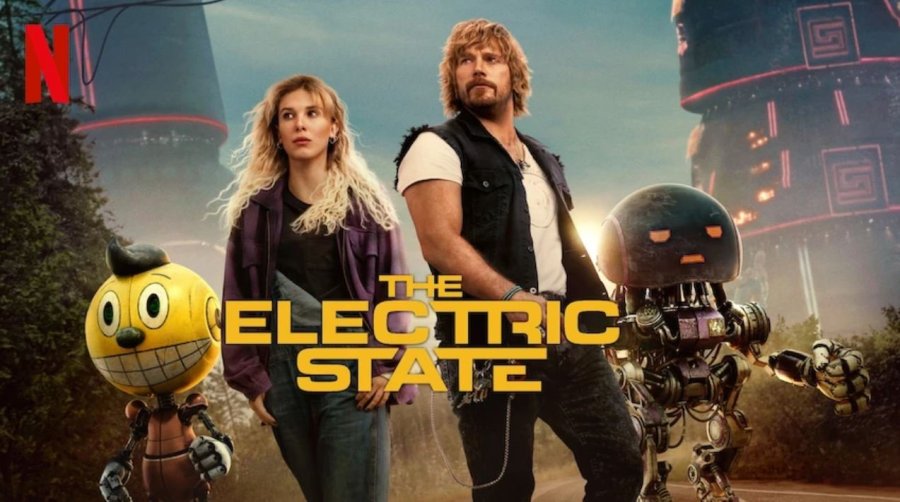
The Electric State (2025) Review

Quick Synopsis: An orphaned teen hits the road with a mysterious robot to find her long-lost brother, teaming up with a smuggler and his wisecracking sidekick. I know, SOOOO original.

Many reviews for The Electric State (or TES) seemed unkind. After watching it, I can confirm that they are, in fact, quite kind. Simply describing TES as “a bad movie” is the kindest thing you could say about it. I like the Russo brothers; they’ve directed some of my favourite episodes of Community and Arrested Development. But they also directed The Gray Man, a film so forgettable that having watched it is almost indistinguishable from not having watched it. I just looked at my review for that, and I was genuinely tempted to repost that with a few names changed, because I could make the same damn points for this.

Now it doesn’t make the exact same mistakes. Nope, TES managed to make newer, dumber mistakes. Firstly, it’s more expensive. Secondly, it doesn’t have a charming, charismatic lead like Ryan Gosling; instead, it’s stuck with Chris Pratt, who seems to be continuing his quest to try to be Harrison Ford, and failing miserably (well as miserably as someone with millions of dollars in the bank can fail). The music is nowhere near as good. I can’t remember that much of the music in The Gray Man, but I don’t remember it feeling as post-Guardians as this does. I’ll explain what that means, since the success of Guardians Of The Galaxy, it has occasionally felt like film studios treat soundtracks (especially for action movies with a sci-fi element) as a way for the director to play their favourite songs. When it’s done well, it’s brilliant. But when it’s done badly, it feels like they’re picking the most obvious songs, doing the cinematic equivalent of recommending you a great new place for coffee, a Starbucks. I’m not exagerrating the obviousness of the tracks. Here’s a selection:

I Fought The Law – The Clash. I mean, it’s a good song, but a little on the nose, don’t you think? I LOVE The Clash, but I realise that some of their songs are overused in media (one day, studios will realise that Londons Calling isn’t the only song with London in the title).

Don’t Stop Believing – Journey. This has been overused since Glee.

Breaking The Law – Judas Priest. Again, so obvious.

Wonderwall – Oasis. Jesus, what are you, a guy at a party with an acoustic guitar?

The only thing with less creative vision than the soundtrack is the script. I’ve heard the source material is REALLY good, and completely different from the film. I look forward to reading it, so I can also be annoyed at the changes they made. Lets face it, I have to be annoyed at one adaptation now that Disney+ has deleted Artemis Fowl. The script makes some weird choices. For example; the entire robot/human war is skipped over. Not “the film starts after the war”, the opening of the movie is set before the conflict, then the entire thing takes place via montage. They should have started after the war, that way THAT’S the world we’re in from the start. The way they do it makes TES feel like a sequel, with the opening montage being a summary of the first movie.

It’s also not good with how it handles the villain. I’m gonna be honest, I saw TES a few weeks ago, and I genuinely can’t remember the villain. Which I think says it all. I just remember them not being there for most of the film, so nothing had urgency. It felt like the characters were free to just walk around doing side quests.

TES also suffers from having no idea how to handle emotion. The death of Amherst should be a huge deal, as it is, if you sneeze you won’t notice he’s dead. The characters don’t seem to reflect on the moment, there’s no sense that their motivations or situation is changed by the death. It’s just something that happens.

Now, on the upside, the robots look AMAZING. Some of the other CGI is a bit ropey, but the robots themselves are brilliant. They all seem to have individual personalities, too. Weirdly, they feel the most real out of everything in this movie. The reveal of what they did to her brother is also suitably horrific and belongs in a much better movie.

Oh, on the subject of the brother. I’ll give the film kudos for filming their interactions in a way that makes it seem like the brother and sister DO share a bond, that they are close to each other. But…….and I’m not sure how to put this. Erm, it’s the wrong kind of closeness. They seem more like lovers than siblings (a note to Alabama; those are supposed to be different things). It’s weird and creepy.

It’s not the only “wait, that feels sexual” moment. Okay, so there’s a moment where two robots are fighting, and one grabs the other by the hat and pushes him down. It genuinely looks like he’s trying to force a blowjob. That, and only that, got a laugh out of me. It’s the only section where TES tickles me. I’m glad about that because it meant I got to use the phrase “TES tickles”, which sounds like testicles.

Shut up, this movie is fucking shit, at least let me enjoy something.

The Accountant 2 (2025) Review

Quick Synopsis: Forensic accountant Christian Wolff teams up with his estranged but highly lethal brother to track down mysterious assassins.

I watched the first movie in the cinema when it came out. Now here’s everything I can remember from it:

  1. Ben Affleck played an autistic person who shot people.
  2. He had a brother.
  3. It was called The Accountant.

That’s it. I don’t remember particularly disliking it, but nothing stood out. It’s why I was so confused when a sequel was announced. Was anybody really asking for a 2025 sequel to a forgotten 2016 film? More importantly, how lost will I be if I can’t remember anything?

Turns out, not that lost. It doesn’t feel like a continuation of the first one as much as a different story. There’s an incident referred to many times, which I assume was the end of the first movie, but it’s otherwise relatively standalone. I’m assuming this is better than the first, because I thoroughly enjoyed this. I had one MAJOR issue, which I’ll go into later. But otherwise, it was a lot of fun. Affleck and Bernthal have great chemistry. There are so many small moments between the two which help add to their relationship. I’m not sure whether they were in the script or whether it was due to the performers themselves, but during the action scenes towards the end, they wordlessly communicate. Not the way you’d expect, which is normally hand gestures to indicate direction. Instead, there are subtle “I’m here” brushes on the back as they pass each other in battle.

There are other cast members, but they’re all definite supporting artists in the double-act of Affleck and Bernthal. Some return from the first movie (not that I remember them), and some are new. They’re fine, but none of them would be missed if they weren’t in the third one, with one exception. She’s not in it much, but I adored Allison Robertson as Justine. She has no spoken dialogue (unless the synthesised voice is hers), but her character is wonderful, and since she’s not a secret like the first one, we get to see more of her this time. She’s joined by (there’s no other way of putting this) an army of autistic tech genius kids. I loved that whole section. Not only because the kids were fun and operated as a group effectively and believably, but also because it actually backs up Affleck’s character, you can tell he would have loved to have had a community like that growing up, so he’s doing everything he can to help them.

Now onto my main issue: the plot. There’s no polite way of saying this, it’s a mess. It makes sense, there are no massive plot holes, and it’s not confusing. It’s just incredibly superfluous. I’ve seen games on the SNES with a better plot. A lot of times, you don’t really get a feel for what’s driving the narrative forward, nothing seems important, and until the final section, the stakes seem low. It never feels like the narrative is what’s driving the characters and plot, and it’s really hard to get invested.

Somehow it still works. The characters are likeable enough that you can look past the plot that’s thinner than my patience. It’s difficult to be bored when you’re as entertained as you are here. There’s no “best scenes ever”, but there are a lot of very cute and wonderful moments. Whether it’s the line dancing scene (which is actually a really good character piece for a wordless dance scene), the speed-dating opener where Affleck’s character attracts a long queue of women and then slowly annoys every single one of them, or the pay-off to the cat comment. It’s a likeable, charming film, and one which you’ll be hard-pressed to not enjoy.

The Equalizer 3 (2023) Review

Quick Synopsis: Denzil Washington accidentally fights the mafia.

I didn’t mind the first Equalizer film, but I was less impressed with the second, mainly because I found it overly long, with the non-action scenes in particular dragging. I also found it had a twist that was incredibly obvious. This fixed the mistakes of the second one; it doesn’t feel as long, it doesn’t aim for a big twist, and it calms down on the “he’s a good, such a good, real good person” aspects which plagued the second one. Overall, I think it’s probably the best one of the three, it’s certainly the one I’m more likely to watch again.

It’s not perfect, it does drag slightly, and there isn’t that much meat on the narrative bones to make it fully satisfying. The music choices are a bit odd, feeling like they’re aiming at a younger audience than the rest of the film. And as good as Denzil is (and he is good in this role), the cuts around his physical limitations are getting more noticeable.

Now onto the good; it always surprises me how brutal these films are. In my head they’re all “someone gets shot and they fall down” and that’s as violent as it gets; all squibs and crash mats. But nope, it’s bloody. It doesn’t build up to it either, it starts with the aftermath of a bloody massacre; as openings go, it’s certainly one of the most shocking.

I haven’t seen the first two since I watched them at the cinema, and I only remember bits and pieces from them. That doesn’t seem to matter though, the only character to return is the main one. There’s an allusion to the previous films at the end (via a TERRIBLY photoshopped picture) but it’s shot in such a “THIS PICTURE IS IMPORTANT!” way that anybody who understands film language (and who knows this is a sequel, but the 3 in the title should be a big indicator of that) would understand “okay, that’s her parents, and her parents obviously know Robert McCall, that’s why he phoned her”.

There’s been a lot of love for the action scenes in this, so I won’t repeat ground others have already plowed over, instead I’m going to praise something that I feel hasn’t got enough love; this has the best explosion scene I’ve seen in a long time. Usually, explosions in cinema are just a big bang, but if you are not in the immediate zone you’re fine. In fact, if you duck or jump, you’re normally fine, and once the explosion itself is over everything is back to normal. This shows the risk that being in the general area has. Instead of feeling like a bit of a shock, it feels like something which gives everyone in the local area PTSD. That’s something which this series has always excelled at; they’ve always been technically good. They’ve also maintained a good sense of visual and tonal continuity. Probably because, unlike a lot of other action franchises, they’ve all been made by the same director; Antoine Fuqua. Keeping him on for all three means that all three flow together well. It doesn’t reach the heights of the Planet Of The Apes trilogy, but there’s not as many differences between the three. If you really enjoy one, you’re going to really enjoy all three of them.

I think the franchise is closed now (outside of the TV show). It hasn’t changed the industry, or even became that critically acclaimed. But what this series has done, is be dependable. You know what’s going on with this, and sometimes, that’s all you want from something.