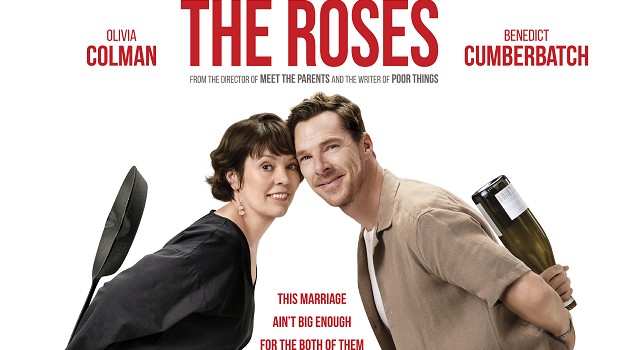
Quick synopsis: Theo and Ivy are a married couple who are slowly starting to resent each other.
I have not read the book this movie is based on, and I also haven’t seen the original 1989 adaptation. So this review will not contain any “but in the original version they did this” or “in the book this character had a different job, ruined!”. I’ll be taking this on its own merits. On its own merits, this is a damn fine movie. The laughs start early on and don’t stop until the credits roll. That’s not hyperbole; the fade to credits is, in itself, a joke.
One of the most exciting things for me about this was the knowledge that statistically, there’s a high chance that people went in not knowing what it was. They saw Cumberbatch, they saw Colman, and thought it would be a sweet romantic comedy, not knowing how angry and bitter it would get. Meanwhile, I had seen the trailer, so I knew that it was going to be cynical and spiteful and more cold-hearted than a polar bears internal organs that have been stuffed in the freezer for transplant purposes. I would sit there in the knowledge that I knew what to expect, whereas they did not. Oh, how I would mock those fools. But, much like every web comic on April Fools Day 2016, perhaps I am the fool. Because, yes, this is somewhat mean-spirited and bitter (especially in the final scenes, which I’m not a fan of how extreme they got), it’s also incredibly heart-warming.
Crucially, The Roses doesn’t make them hate each other that quickly. We see how their relationship started, then see them together and happy before the cracks start showing, and even longer before those cracks become big enough to cause structural damage. It means that the trailers were somewhat misleading, but I preferred it like this. It meant that we actually wanted them to be together. No matter how funny their barbs are (and they are), there is still a small part of you that feels disappointed that it’s come to this. It’s not like you’re watching two characters in a farce gradually descend into silliness, it’s more like you’re watching two friends tear into each other while you’re helpless to watch.
I’m not sure if you’re aware of Chekov’s Gun. Essentially, it’s a narrative device that says elements in a story must be necessary to justify their inclusion. For example, if you introduce a gun in the first act, then that gun must be fired later on. Obviously, not EVERYTHING, if a character has a cup of tea, it doesn’t mean you then have to reveal that without hot leaf water they will die. But if you make a point to specifically mention and highlight that the character is drinking tea, audiences would be forgiven for expecting that to be an important plot point later on. Sometimes this is done incredibly subtly; a spy movie will feature the character being handed a gadget while being told, “Now this device is lethal to people called Keith”, then the villain will turn out to be someone called Keith. When it’s done well, it’s a sight to behold, and few films have done it as well as The Roses. We’re introduced to so many things that we can easily think of as just symbols of excess and AMERICA, but then turn out to be vital in the third act.
It’s not all great. I wasn’t a fan of just how sociopathic they both turned at the end. Which is weird, as some of the negative reviews I’ve read have highlighted those moments as their favourite parts. It just felt like a huge leap from “flicking eyeballs” (not sexy slang) to “aiming a gun at”. There are also moments where it does feel like it’s repeating itself, and some of their friends should have noticed something was amiss earlier.
In general, though? I enjoyed it. It’s not as cynical as I expected, but it has bite when it needs to. Also, it’s good that a film like this basically centres around the message “FFS, communicate!”.
 Troubled Productions