Mike & Nick & Nick & Alice (2026) Review

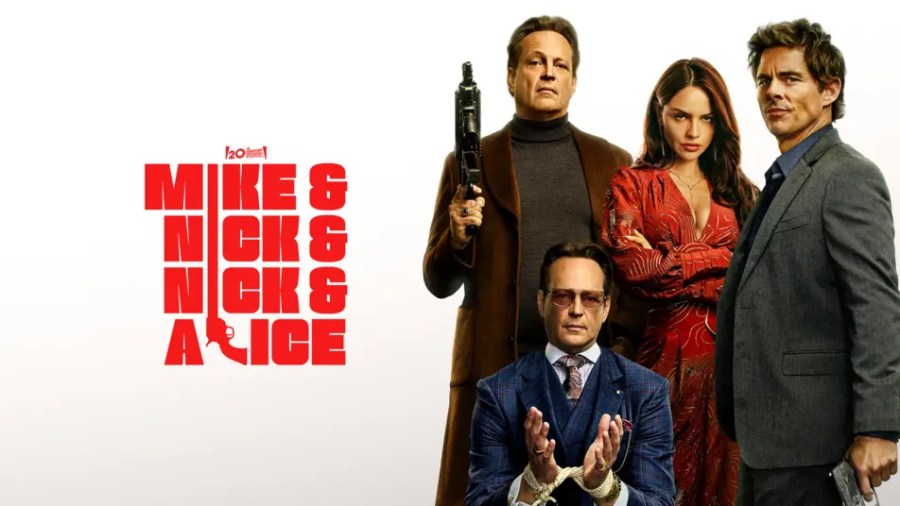
Quick Synopsis: When a mobster uses a time machine to save his best friend from a deadly night, two versions of himself, a dangerous criminal conspiracy, and the woman they both love collide in a chaotic race to rewrite fate.

Mike & Nick & Nick & Alice (or M&N&N&A, pronounced *deep breath* Mandnandnanda) is a weird movie. Mainly because of how normal it is. You’d expect an action-comedy based around time travel would be weird and feature set-pieces and moments which you’ve never seen before, but it doesn’t. So whilst it is original, it does feel kind of like it’s wasted the premise. 90% of what happens in M&N&N&A could happen in any other film, and most of the remaining 10% could be very quickly rewritten to make sense in a standard film. I mean, this is a time travel action movie, and my first draft didn’t even mention the time travel aspects; that’s how little they actually matter. There’s very little discussion of paradoxes or any of the other stuff you expect from movies about the subject.

Wasted potential aside, it is fun. Vince Vaughn is clearly having a blast, but he is hampered by there only being a six-month gap between the two Nicks, so in terms of personality they’re very similar. I also have another issue with Nick’s character. The film states that he and Mike used to be really close. But the way they interact before we’re told that wouldn’t lead you to think that. They interact almost like strangers, and not in a “we have nothing to say to each other anymore, and it’s awkward” way.

On the subject of cast, James Marsden is good at what he does, but he does need to start adding a few more tools to his arsenal, or at the very least take on more diverse roles than what he’s currently doing. He’s not helped by how bland Mike is as a character. Nick, you can imagine Nick outside of this movie; there’s enough there to base a short story around him. Mike? You’ve got nothing to go on. He’s so bland he feels like the default protagonist in a poorly made GTA clone. Eiza González is good (but Alice is sorely underused, often treated more as a prop than a character), with great chemistry with Marsden and Vaughn. Keith David? Well, it’s always nice to see Keith David in things. He elevates everything he’s in.

Using Sheena Easton to soundtrack a fight scene is a great touch. It’s playful, unexpected, and fits the film’s offbeat sense of humour perfectly. That being said, the “action scene set to a country song” has become a bit of a cliché. It feels like every other crime film or action comedy has one now, and the novelty has definitely worn off. It’s the action version of “Horror film trailer set to a slowed-down female vocal cover of a pop song”. At this point, I’d happily support a moratorium on country-song action montages for a few years until they start feeling fresh again.

One thing that stood out was the conversation about Gilmore Girls. It’s such an oddly specific topic for characters to get into in the middle of a dangerous situation, and that’s exactly why it works. It’s almost Tarantino-esque; all it’s missing is superfluous n-words and shots of the actresses’ bare feet. I can understand why some viewers might find scenes like this frustrating, arguing that the characters are too nonchalant considering there’s a mob boss actively trying to kill them. But I never got that impression. The threat is always lingering beneath the surface, influencing their decisions even when they’re talking about something completely mundane (well, as mundane as the end of a relationship can be). It feels less like they’re ignoring the danger and more like they’re coping with it however they can. These are also characters who’ve spent a lot of time around violence and death, so the possibility of being murdered isn’t exactly a new concept to them. Their casual conversations feel like a believable defence mechanism rather than a lapse in the writing.

The playful dialogue doesn’t always work, though. There’s a scene in a convenience store that’s ridiculously dumb, featuring a store clerk dismissing the very notion of “sugar-free candy”. Even if, technically, candy has sugar, you’d know what they meant. It’s like saying, “Vegan sausage rolls can’t exist because sausage is meat. Idiot”, technically right, but overly pedantic, and you’d have to be an idiot to argue it. Mike not being aware of what chloroform is also feels like something that a real person wouldn’t say, especially considering his line of work.

The action scenes are fine, occasionally bloody, sometimes fun. But there’s nothing that stands out, nothing that you’d look at and think “oh, now that’s cool”. Not everything has to be John Wick, but I saw this film less than a week ago, and no action scenes have stuck with me.

The emotional high point is the group singing Oasis to a dying Nick. It’s an unexpectedly sincere moment in a film that’s otherwise full of jokes and criminal chaos, and it’s genuinely quite touching. Unfortunately, the scene slightly undercuts itself because Nick’s death takes just a little too long. The emotional impact starts to fade as the moment stretches on, and what begins as heartfelt edges towards awkward. Had it been trimmed, it probably would have landed much more effectively.

That sums up this movie. It keeps showing glimpses of greatness. With clever dialogue, flashes of invention, and occasional bursts of inspired action. But then it walks back that greatness with jokes that rely on inexplicable stupidity, or scenes that take one good idea and stretch it just a little too far (again, the sugar-free candy bit). Ultimately, it feels like a blockbuster. By which I mean, a movie you’d rent from Blockbuster back when they were still a thing.

The Invite (2026) Review

Quick Synopsis: A struggling married couple’s dinner with their free-spirited neighbours spirals into a provocative night of awkward revelations that forces them to confront the cracks in their relationship.

I love dinner parties in movies. They’re so fun to watch because they naturally allow group conversation, and there are certain unspoken etiquette rules that are always entertaining to watch get broken. If you want to expose your characters’ conflicts, put them around a dinner table and let what happens happen. The Invite takes that idea and makes it the entire concept.

It’s an English-language adaptation of the 2020 Spanish film The People Upstairs. It’s fairly obvious this is a remake of a non-American film. There’s something about it that feels slightly unconventional. It’s not just that it’s a summer movie driven by characters and dialogue rather than big action setpieces. It kind of feels like the cinematic equivalent of ordering food in a foreign country by speaking English with an accent. Familiar enough to understand, but just different enough to feel a little strange.

That sense of oddness is backed up by Olivia Wilde’s directing style. It’s incredibly static, with some weird blocking choices. Sometimes it feels like a play that we’re watching from the audience, sometimes it feels like someone just plonked a camera down randomly with no thought or care, and other times there’s a voyeuristic quality, as if we’ve wandered into a private argument we shouldn’t be witnessing. With that in mind, it’s difficult to criticise the film too harshly on a technical level because it’s clearly not trying to impress with flashy filmmaking. It’s aiming for a naturalistic style that occasionally feels awkward, but intentionally so.

What will chiefly inform your opinion on The Invite is the characters and the dialogue. The audience I saw it with loved it, and it’s easy to see why: it’s incredibly funny at times, with some truly incredible dialogue, and a cast who clearly enjoy bouncing off one another. The conversations have an energy that keeps scenes engaging even when very little is happening. That’s the issue, though: very little does happen. There’s almost no narrative progression for most of the runtime. Rather than pushing the characters into new emotional territory, the film spends much of its time having them elaborate on feelings they’ve already expressed. To be honest, it spends most of it catching up with the trailer. I’ve seen the trailer; I know this film involves the neighbours proposing group sex. I assumed that would be the inciting incident and it would lead to things. Instead, it’s the destination, and it’s a destination the film takes far too long getting to.

That lack of progression also affects the central relationship. Joe and Angela don’t feel like real people so much as vehicles for clever dialogue. Every conversation is packed with witty observations, but it rarely feels spontaneous or lived-in. Also, there was no warmth to the relationship between the two main characters. I understand that the point is they’re trapped in a loveless marriage fuelled by resentment, too afraid to admit it’s over. That doesn’t mean spending nearly two hours with them becomes any easier. I kept waiting for just one moment of genuine warmth, some glimpse of why these two people fell in love in the first place. There’s a brief moment where it seems they might unite against the bickering of the other couple, but it disappears almost as quickly as it arrives.

That lack of warmth really hampers the ending. Joe finally returns to the piano, Angela joins him, and they seem to reconcile. It’s a sweet scene in isolation, but after nearly two hours of anger, bitterness and emotional distance, it feels too small to justify such a dramatic shift. It’s like trying to fix a leg amputation with a piece of sellotape.

For all my issues, there is still a lot to enjoy about The Invite. Beneath all the bitterness is an impactful look at people and keeping the spark alive in long-term relationships. For a film that’s so bitter, it just may save the relationship of someone watching. They may see it and be inspired to try more, to treat their partner with love, to keep wooing them and trying to impress them instead of confusing stability for fulfilment. The ensemble also works well as a true four-hander, with every actor getting plenty to do. Although, interestingly, despite having a female director and co-writer, the film subtly privileges Joe’s perspective. He’s the only character we spend meaningful time with alone, and the only one we follow outside the apartment. It’s a small imbalance, but one that makes the supposedly shared story feel slightly weighted towards him.

I won’t begrudge anybody enjoying this. Mainly because being annoyed at someone for their film opinions would be weird. Maybe a younger, more cynical me would have loved this. It will find its audience, of that I’m certain. But I’m not part of that audience. I appreciate what it’s trying to do, but it never quite invited me in.

Pizza Movie (2026) Review

Quick Synopsis: Two friends need food to counteract the drugs they’ve just taken. All they need to do is get downstairs.

Sometimes you see a synopsis and the only thought in your head is “Wait, doesn’t that movie already exist?” Usually it’s because a movie is incredibly popular, so studios rush to release something similar. With that in mind, it’s hard to read the plot for this and not think “wait, isn’t that basically 2004’s Harold And Kumar Go To White Castle/Get The Munchies?” It’s an easy comparison to make. Two friends take drugs and try to find food. One of them is a nervous guy working up the courage to talk to a woman, the other being more impulsive, encouraging adventures and drug-taking. I thought that too; that was actually the first line I wrote in my notes while watching it.

But then the film revealed itself, and it’s more than the comparisons would suggest. For one thing, the female characters have more agency. They’re no longer just prizes or props; they’re fully formed characters with their own flaws and weirdness. The main characters have more depth too. Unlike Harold and Kumar, whose defining trait is essentially “they smoke weed”, Jack and Montgomery feel like people who happen to take drugs rather than characters entirely built around them.

Sadly, adept character writing doesn’t always make a good film. The drug trips themselves are superb: imaginative, creative, and a lot of fun. By comparison, the bits between them aren’t quite as good. There are also a few moments where it seems to suggest the drugs are not just affecting the characters, but are changing reality itself, with time loops, levitation, etc. There’s a cute moment at the end where we see the hallucination from an outsider’s perspective: the characters believe they’ve formed into Juan giant person (not a typo, an in-movie joke). From their point of view, they’re seamlessly moving as one person. From the viewpoint of others, it’s just the three characters tightly hugging each other and struggling to move. That’s fun. But then you have the time loop sequence, where there’s no obvious real-world explanation. Are bystanders genuinely watching these people scream, run back down a corridor, and repeat the process? If so, why does nobody react?

That being said, the time loop section is one of my favourite parts, so it’s not really a criticism. It’s more of a warning that to enjoy this film there’s a lot of “don’t think about it too hard, just go with it”. It’s not just the story, the comedy is like that too. The jokes don’t come quite as thick and fast as they do in something like Fackham Hall or The Naked Gun, but there’s certainly a variety. Some are quite smart, some are among the dumbest things you’ll see all week (even if you watch the trailer for the new Minions movie), and some exist purely because some guy thought “wouldn’t it be funny if….”

The willingness to embrace absurdity helps sell some of the weirder concepts. How many other films would have the villain be defeated by overdosing on drugs and realising they’re part of a low-budget indie movie? Or feature one of the writers joking that “my granddad wants to be in this movie”, only for a suspiciously elderly student to appear a few minutes later, played with deliberately amateurish enthusiasm? For such a gloriously stupid film, it’s surprisingly smart.

The visuals, however, are merely fine. A premise like this should give its directors licence to get truly weird, to push the visuals as far as their imagination will allow. Instead, everything feels rather restrained. There’s nothing wrong with how the film looks, but it rarely feels ambitious. The modest budget undoubtedly imposed limitations, yet there’s little here to suggest what these filmmakers might paint with a larger canvas.

The performances? They’re fine. Gaten Matarazzo does just enough to distinguish himself from his Stranger Things character. Sean Giambrone is slightly closer to his television role (Adam in The Goldbergs), but that’s more due to writing than performance. The two share a chemistry that makes you believe they’re actually friends. On the downside, the two are so good together that the traditional third-act split doesn’t land because you don’t truly believe these two would drift apart so easily. Lulu Wilson is the third part of the friendship group, and if there’s a third Ready Or Not movie, she wouldn’t be the worst choice as another relative to Kathryn Newton and Samara Weaving (she’d actually be the second best choice, first being Margot Robbie, obviously). Peyton Elizabeth Lee also leaves a strong impression despite limited material, and I’d happily watch her in a larger role.

The standout, though, is Sarah Sherman. She barely appears, yet completely owns every scene she’s in. She’s wonderfully odd, but never in a way that feels forced or performative. Instead, she gives the impression of someone who would happily spend an evening sitting alone in a dark room doing weird things regardless of whether anyone else was watching. It’s a fascinating performance, and one that makes me even more excited for Teenage Sex and Death at Camp Miasma, which is rapidly becoming one of my most anticipated films of the year.

This won’t finish near the top of anyone’s Best Films of the Year list. But it’s well worth seeking out. It starts off looking like a Harold & Kumar clone (Harold and Two-mar?) before carving out its own identity through inventive ideas, likeable characters and an appealing willingness to embrace utter nonsense. At the very least, it’s funny, imaginative, and exactly the kind of film you’d have rented from a video shop back in the day, then ended up watching two or three times over the same weekend.

Scary Movie (2026) Review

Quick Synopsis: Lol, as if you give a shit about the plot

Scary Movie 6 (which is how I’ll refer to it during this review, just for the sake of clarity and because “new movie shares same title as the original” trend annoys me) has been rumoured for a long time, and people have been weirdly excited for it. It feels like people assume the Wayans brothers haven’t made a similar film since Scary Movie 2. Like there’s a delusion that they made two successful movies, then went into a 20-year coma.

They’ve made multiple parody movies since then; two of them have been horror-based, and NONE have entered popular culture. Really, the closest they’ve got to it is White Chicks, otherwise known as the number one defence for blackface on the internet. It would be like if a band/singer announced a sequel album to their biggest hit, and it caused fans to negate that it’s the same band that’s been putting out shit music for 20 years. The same people are making it. They never went away. You just stopped paying attention.

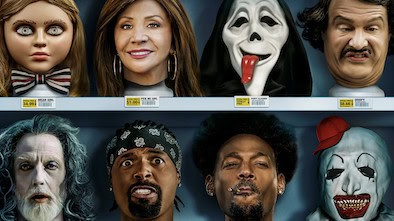
I didn’t see a trailer for this until only a few weeks ago, so I didn’t know much about it. When I saw the poster, I made this post on Bluesky:

The following will be jokes in this movie:
1) A horror movie villain does some drugs and pulls a silly face.
2) Gay sex references.
3) “Remember this thing? Reference!”
4) “Did you just assume my gender?”
5) Someone getting murdered in a safe space.

The funny thing is I didn’t even need to watch the film to find out whether I was right. The trailer arrived a week later and immediately confirmed all five. Not only that, it was needlessly confrontational. There was a weird amount of “there are no safe spaces here” energy (by which I mean, I’m pretty sure they actually used that exact phrase) radiating from the trailer, as if the filmmakers genuinely believed they were producing some dangerous act of artistic rebellion rather than a sequel to the sixth entry in a parody franchise.

It’s a bit weird because the original Scary Movie wasn’t really famous for being offensive. Crude, certainly. Juvenile, almost definitely. But it wasn’t some culture-war lightning rod that stuck it to the man. The only reason to market this one that way is that it provides a convenient shield. Any criticism can and will be dismissed as people being too sensitive or too woke rather than confronting the possibility that the jokes just are lazier than I am after I finish work.

Let me be clear; I don’t hate this film because it’s offensive or not PC. I hate this film because it’s lazy. I love the first film; some of the scenes were so spot-on that it’s difficult to take Scream seriously. Nothing in this movie will have the same effect. Mainly because none of the jokes have any point to them. Take the Weapons parody. The joke is that somebody accidentally hands out weed gummies to children, who then run around the street until one gets hit by a car. That’s it. That’s the entire concept.

Watching Weapons doesn’t improve the joke. Knowing the source material doesn’t add another layer. If you have no idea of Weapons (the film, not the concept), it just looks like random nonsense happening for no reason. That’s because most of the film isn’t parodying actual movies; it’s parodying movie trailers. The best parody films take apart the logic, style and clichés of the thing they’re mocking. This mostly points at something recognisable and waits for applause.

The story doesn’t help much either. There technically is one, but it feels like it exists purely to transport characters between references. Every time the plot threatens to establish momentum, somebody takes a detour because another horror character needs to walk through the frame. The jokes come before the narrative, every time.

The internal logic is….well it’s not there. One character can be fired into a wall of barbed wire at motorway speeds and suffer little more than mild inconvenience, while another dies from something considerably less dramatic. Consequences fluctuate depending entirely on whether a joke requires them. So nothing has stakes or consequences. When nothing has stakes, it’s hard to give a shit about the characters. I know, it’s a comedy, but even the characters in Airplane took the situation they were in seriously; they didn’t jump out of the plane from thousands of feet up and walk away. Here, everyone exists in a universe where the rules are rewritten every thirty seconds.

The boyfriend being blatantly, impossibly suspicious throughout the film is a genuinely enjoyable running gag, even if it overstays its welcome. The Final Destination-themed fairground where every ride appears specifically designed to massacre its passengers is inspired. Two legacy characters comparing their respective “what are you waiting for?” moments is exactly the sort of self-aware horror joke the film should have been built around. The refusal to do an It Follows flashback is surprisingly clever.

Even the ending lands a couple of strong punches. The second motive reveal is excellent. The first one is idiotic, but the second almost tricks you into believing the film has been secretly smarter than it appeared.

Almost.

The music is better than I thought it would be, to the point where I’m pretty sure I’d buy the soundtrack before the dvd.

As for the performances, they’re a mixed bag. Olivia Rose Keegan occasionally pushes things into that exaggerated sketch-comedy territory where every line sounds like somebody signalling that they’re delivering a joke. Then again, when she finds the right rhythm, she’s one of the better parts of the film. It feels less like a talent issue and more like a performer trying to navigate a script that doesn’t always know where its own punchlines are.

I love silly comedies; two of my favourite films from last year were The Naked Gun and Fackham Hall, which were some of the dumbest things I’ve ever seen. So I have no objections to comedy, but I do object to “look, here’s a thing from a film” as a substitute for humour. This was sold as a return to the spirit of the original Scary Movie. In reality, it feels much closer to those dreadful Friedberg and Seltzer parody films that spent the 2000s convincing studio executives that references could replace comedy.

Scary Movie mocked horror films. Scary Movie 6 mostly just reminds you that horror films exist.

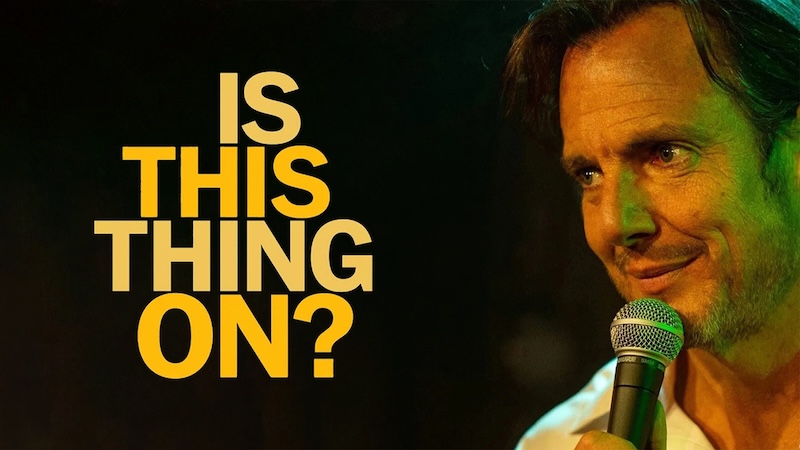
Is This Thing On? (2025) Review

Thoughts going in: No matter what, the stand-up comedy of this should be good. That being said, the trailers have felt strangely lifeless and dull.

Quick Synopsis: Alex Novak is going through a divorce and is deeply traumatised. Instead of therapy, he tries stand-up comedy.

This should have been an early contender for best film of the year. I like films about stand-up, and I like deeply personal, intense dramas. As soon as I told someone I was about to watch this, they said it seems right up my street. Plus, I like Will Arnett; he has a talent for making reprehensible people likeable.

Which is why it’s so disappointing that I didn’t enjoy it. I think part of it is that he never really seems that good as a comedian. The reaction the other comedians give him doesn’t match the reaction he gets on stage. You could show the stand-up sections independently to someone and ask if the comedian succeeded or bombed; they’d be unable to tell. It’s supposed to be cathartic, but you never really get that sense. There’s no joyful release; it’s just abject misery and pain.

The reaction he gets is weird; he’s immediately embraced by his fellow comedians. I have spoken to comedians who do these kinds of gigs, it can be brutal. Everyone is trying to break out and get noticed; they’re not going to take pity on a newcomer like that. Also, I’m sure it was unintentional, but having a group of comedians who are all women or people of colour fawn over a middle-aged white guy is kind of strange, especially when one of the female comedians sleeps with him despite them having less chemistry than somebody who decided to only do physics and biology as their GCSE science options. There’s a scene where his wife accidentally attends a comedy night where he’s performing (by which I mean, she didn’t know he’d be performing, not that she fell over and ended up in a comedy club). The comedian this is based on (John Bishop) actually had this happen to him; he told a joke about how he misses his ex so much that he keeps her head in the fridge. That joke doesn’t appear here; in fact, I can’t even remember what it was he actually said. They slept together that night, despite the fact that she was at the comedy club on a date. There’s a way this could work; if his on-stage persona was confident and charming, if he was charismatic and owned the room, allowing her to see him in a new light. But he’s the same person as he is for the rest of the film, so why would she be into that? That might be my biggest issue; comedy doesn’t change his life. He doesn’t feel like a different person because of it; we see him writing jokes, etc., but his personality and demeanor doesn’t change through his experience. He doesn’t seem to gain confidence or happiness.

My other issue is that I didn’t want the two characters to end up back together. Their characters don’t suit each other. It feels like they’re constantly looking for excuses to be annoyed at the other one. Again, there is a way to do a film where a relationship ends, he finds a passion, and they end up back together. The best example I can think of is High Fidelity. Actually, now I think about it, there are a lot of similarities between the two. They’re both about a couple that split acrimoniously, he sleeps with someone in his professional field, and they end up together after discussing their flaws and expressing regret for how they treated each other. The key difference is that in High Fidelity, Rob seems genuinely remorseful of his previous actions; you can tell he genuinely loves Laura, and we see him happy sometimes.

None of this is on the performers, by the way; Laura Dern continues to be amazing. Will Arnett can do this role; he has proven it in Arrested Development and Bojack Horseman (vocally at least), but he’s REALLY let down by a script that refuses to let him be likeable. Amy Sedaris is a highlight in the few moments she’s onscreen. Bradley Cooper is also in this film.

Bradley Cooper’s direction is strange. It’s mostly close-ups. Sometimes that choice works, making you feel the stress that each character is going through. But then there are times where it makes ITTO feel more like you’ve been cornered at a party by a guy who’s way too drunk and won’t stop talking even though you’re clearly uncomfortable.

ITTO isn’t a terrible film, but it’s not a particularly likeable one either. As I said, it’s based on a true story, and you have to wonder how many of his friends would be deeply offended if they think some of the characters are based on them. If you want a movie about a couple that dislikes each other, watch The Roses. If you want a movie about how tragedy can affect stand-up comedy, watch The Big Sick. If you want Will Arnett to be a complete mess, watch Bojack Horseman. Basically, there are hundreds of better options, and I really wish that wasn’t the case. I went into this expecting to fall in love, but instead I felt like how the main characters at the start: despondent, and like love is a waste of time.

Fackham Hall (2025) Review

Quick Synopsis: Downtown Abbey meets Airplane, but not in a plane crash way.

We’re beginning to reach the end of 2025, which means it’s soon time for me to write the annual awards. So I’m starting to think of the best movies of the year. Among the obvious candidates are a film about the power of music mixed in with a gothic tale of racism and American history, a personal drama about trauma and family via a visit to a concentration camp, and a tale about the existence of the afterlife and all the implications of eternity. All very serious topics, all very “big”. Despite how that might make me look; I adore silliness. I like silly, fun little films, of which Fackham Hall is one of the best of the year. Really, the only comparison lately is The Naked Gun, which had the advantage of having an established style.

So, how does this compare? It’s not quite as joke heavy as TNG, with a distinct lack of sign-based jokes which aren’t signposted. There are also fewer background jokes. Basically, I don’t think there are any jokes that I missed that I’ll catch on a second viewing. So I didn’t laugh as often as I did during TNG, but I did laugh louder. I can remember more jokes from this than I can TNG, although that might be down to me having seen it more recently.

But does it stand out on its own? I’d say it does. There was a surprisingly full screening when I went, and everybody seemed entertained. Nobody walked out, which for a film barely advertised and which from the poster you could mistake for a period drama, was a pleasant surprise.

The performances are exactly what’s needed. I’m not familiar with Ben Radcliffe, but he does seem like he’d be perfect in an actual period drama. Thomasin McKenzie is building a weird filmography, which makes it hard to pin down her niche: JoJo Rabbit, Last Night In Soho, The Justice Of Bunny King, and now this. All of those are completely different films, and her roles are very different, yet they’re all somehow still “her”; she’s one of the most chameleonic (is that a word? Is now) performers around. Katherine Waterston is quickly becoming one of my favourite performers, which is odd as I’ve never intentionally seen a film because she’s in it; she just happens to be in films I watch, and happens to always be REALLY good. She has a face that feels like its come straight out of the 1940’s, so she’s perfect for films like this. She also has surprisingly perfect comic timing.

On the downside, the plot is muddled. The murder of the lord feels weird in terms of pacing. The arrival of the detective investigating it turns it more into a Hercule Poirot pastiche than a period parody. That feels like a genre rife for parody, but we’re not given enough time to fully explore that. I would be fully up for a sequel with that concept, by the way. If the murder was cut out, then it would leave a hole that needs fixing (and you’d lose one of the funniest sequences), but I’m sure it could be replaced with something more suitable. It feels like Jimmy Carr wanted to put those jokes in, not realising it might have been smarter to save them for a different film; now he can’t use those jokes and scenes in a more suitable film.

The reveal at the end is a bit too obvious, but not obvious enough that it seems deliberate and is, as such, a joke. Similar to the reveal of the murderer. But I think that if you go into a film like this expecting to be wowed by the plot, you’re in the wrong movie.

Really, the biggest negative of watching this is how it affected my viewing experience of another film. You know how, when you play Tetris or Guitar Hero, it changes the way you see things briefly? All you can see is falling circles and bricks for a while? I went through a comedic version of that. My brain watched the next fil,m and it took about 20 minutes for it to adjust and try not to see a joke in every single action or moment. That’s the biggest compliment I can give this film; It broke my brain with comedy.

Friendship (2024) Review

Quick synopsis: Craig Waterman, a reclusive man, meets his new neighbour, Austin Carmichael, and forms an unexpected friendship with him. As their friendship grows, so does Craig’s obsession with Austin.

I think I’ve done this backwards. The way this was supposed to go was I watch I Think You Should Leave With Tim Robinson (starring some guy, Tim something, can’t remember), get used to his comedic style, and then watch this. I still haven’t seen the TV show (it’s on my list), so I went into this with a minimal understanding of what to expect. My best bet was that this would feel like All My Friends Hate Me (as reviewed here) and be an incredibly awkward “Social Horror”. I have mixed feelings about that movie, in some ways, it was TOO effective to be enjoyable. Friendship handles it much better. It is so heightened that it goes past relatable to the point of absurdity; if it didn’t, the film itself would be uncomfortable. Yes, it is incredibly awkward, but it stays JUST weird enough that it is still enjoyable to watch.

It helps that the decisions are logical. AMFHM felt like the other characters were deliberately gaslighting the lead; that’s the only way their decisions made sense. This? Even when Austin (Tim’s character) does incredibly weird things, you can follow his logic. As an outsider, you can see how that logic is twisted and flawed, but most of the time, you can fully understand how he reached that conclusion. It’s a difficult balancing act, and Friendship walks it perfectly, most of the time. His wife’s welcome back party veers into cruelty; it’s one of the few times where it’s difficult to follow his train of logic. I also have an issue with having the opening scene be him and his wife at a cancer survivors group, then not making the recovery a plot point. I’m not saying that the whole film should have been “The Chemo Support Club”, but you could delete it from the script and it would not change the narrative at all, which feels like a weird thing to say about something so life-changing. Whilst I’m on the subject of the negatives, I’m not sure if it’s intentional or not, but there’s one scene where someone says “weed”, and there’s a really random and loud honking noise. Not sure if its a reference to something, but it’s strange.

Now onto the positive; Paul Rudd gets a chance to flex his acting abilities here, and play someone different from the “Hi, I’m Paul Rudd, I’m going to make droll comments where I move my head to the side in the middle of the sentence”. He gets to show fear, he gets to be freaked out, he gets to be vulnerable. Obviously, this is Tim Robinsons film, but the writing makes him constantly feel like the side character in his own movie; strangely, I mean that as a compliment. He feels like someone who would be the side character in a normal film; the odd kooky neighbour of the lead who’s only there for comedic purposes. So seeing him as the lead is oddly subversive, like we’re seeing something we shouldn’t be able to. It’s like when a long-running TV show has an episode devoted entirely to a background character, the audience is keen to see what they’re like in general day-to-day life, and in Friendship, they get it.

What really made this work for me is it does have a genuine heart under all the social cruelty. It’s not going to have you feel warm and fuzzy inside, but there a few moments which will genuinely make you smile. The best example of this is the ending, which I won’t spoil, but is delightful and exactly how you want a movie like this to end; with narrative closure.

In summary; weird, awkward, but strangely lovable. But that’s enough me, the film is good too. Although it took me a while to get past Paul Rudd’s likeness to Matthew Baynton.

Time Travel Is Dangerous! (2024) Review

Quick Synopsis: Ruth and Megan run a vintage shop in Muswell Hill, using a time machine to source new old stock.

It’s nice reviewing films people know and are excited for, to add my voice to the conversation that millions of people around the world are having. But there’s also something to be said about reviewing something not quite as well-known. Films like Time Travel Is Dangerous (TTID, pronounced Tit-tied), which at the time of writing has only 25 reviews on Rotten Tomatoes, that’s critic and audience total. It deserves more than that.

I’m not really surprised, though. This film is incredibly British and quite low-budget. It’s not low budget in a way that makes you wonder how they managed to miraculously produce something on that budget; it wears its budget on its sleeve, and that’s not meant as an insult. If anything, it adds to the charm. And TTID is very charming. The characters using a time machine to bring back stuff to sell in a vintage shop? Brilliant idea. And anybody who has worked retail will recognise someone trying to buy the shop vacuum, and then being annoyed that they can’t do it. It helps that the two charity shop workers (Ruth and Megan, played by two women called *checks notes* Ruth and Megan, well, how am I supposed to remember that?) are incredibly likeable. Apparently, they are the real-life owners of a vintage shop in Muswell Hill. That genuinely surprises me. Usually, you can spot non-actors in films like this, especially as the leads. I had no idea; I just assumed they were involved in production somehow.

There are some great jokes here. An inventor’s group having a motto that’s “insert motto here” in Latin? Love it. Yeah, the jokes aren’t the smartest, but they’re funny. It’s also surprisingly poignant at times, especially the sub-plot with Botty and Ralph. I didn’t expect to find a touching treatise on fame and friendship inside a film as silly as this, but I’m glad it’s there. The entire inventor’s group is full of fun characters and jokes, so for two-thirds of the film, it’s delightful.

But then we get the final third. This section takes place in the other universe (there is a proper name for it, but I’ve forgotten it). It feels WAY too disconnected from the rest. There’s an almost entirely new cast of characters, a different visual style, and different comedy. The rest of the film is like a documentary; this part isn’t. So it feels like it takes place in a different film, where the characters of this one have just invaded it. It seems like that’s where most of the budget went (I’m guessing). It’s a shame, as that’s clearly the most ambitious part, so it feels somewhat mean to knock them for it. But it is definitely the weakest part, and knocks it down quite a bit.

There are some people who will enjoy that part, and there are also likely to be people who hate my favourite part: when Ruth is turned into a teenager because of issues caused by the time machine. I like it, I found it funny, and I liked how it drove a division between the two leads. But it’s easy to see how some may see it as a stupid diversion. Like I’ve said before, film reviews are all opinion, and opinions are never objective.

This won’t be a film liked by most people. But those who like low-budget silliness will enjoy it.

Bride Hard (2025) Review

Quick Synopsis: Sam is a secret agent, which is quite handy when her friend’s wedding is attacked by mercenaries desperate for GOLD!

It may not seem like it, but I do actually like films, honest. I don’t often go in and focus on small issues I can nitpick. At worst, I go in with a “this could be terrible, let’s see if it actually is”. I never WANT a film to be bad, and even if I go in with low expectations, I can be won over. For example, I watched Ghostbusters: Afterlife expecting it to be among the worst films I’ve ever seen, and came out absolutely loving it (honestly, I might prefer it to the first one). That’s a rather long preamble to say that I do not dislike this movie because I’m expected to dislike it, I dislike it because there was very little for me to like.

First issue? The casting. I don’t dislike Rebel Wilson, but she’s the wrong actress for this, mainly because she plays the same character she plays often: a sarcastic quipper who’s quick to random punches in the face. That doesn’t work as a secret agent; it would be like casting Adam Sandler as Bond. You can’t watch this and picture her character as a competent agent, not just because of how loud she is, meaning she’ll definitely get attention everywhere she goes. But also because she does incredibly stupid things. For example, near the end, she blows up a house accidentally whilst catching a bouquet at a wedding. Makes her seem kind of shit at her job. I know, it’s a comedy, but if the characters aren’t going to take this seriously, I’m not. Although considering how quickly one of her friends tells everyone she’s a secret agent, I can’t imagine she’d be one for very long after the events of this film.

You can’t lay all the blame at the feet of her character. Genre mash-ups are hard if you get the genres wrong. Horror/comedy? That’s fine. Hardcore pornography/musical? That’s harder (pun unintentional). Wedding comedy/action? That should work. Both are full of recognisable cliches, and both require elaborate set-pieces. Yet it doesn’t really work for this. Part of it is because the characters never feel like they’re in a decent action movie; they all act as if they’re in a wedding-based comedy where the biggest problem is the colour of the cake, not the armed terrorists. So in the middle of hostage situations, characters start making jokes and making light of the situation. These are not the hero characters who are used to this; they’re normal, everyday people for whom being hostages isn’t normal. There’s no sense of urgency or fear. Even when a character is shot, nobody seems to care that much. It doesn’t even factor into the plot.

Overall, it feels like nobody cares. That it was written by A.I. and performed by (normally very talented) performers who just wanted to get back home and eat a Müller Light, maybe a Müller Corner, the banana one with the chocolate cornflakes. In case you think I’m underestimating the effort, this is from the IMDB page:

“At the party, the priest is at the bar with other guys. He picks up two full champagne flutes in 4 different cuts. Each cut is to two girls talking, but when it cuts back each time, the priest is still picking up the same flutes. This happens 4 times.”

That should not happen in a movie you want people to see. Someone should have picked up on that. Either they should have got more shots on set that they could cut away to, or the editor could have found different ones to use. Someone either messed up, didn’t give a shit, or ran out of time. I don’t particularly care which one, I just care that it happened.

This really should have worked; most of the situations and scenes essentially write themselves due to the situation mash-up; have the bride be nervous about the bouquet toss, but need to throw something similar in the climax. Make at least ONE joke about how tuxedos are worn by both men at weddings and secret agents in films. Have a drunk relative walk in on an action scene and assume it’s a sex scene. Use the centre-pieces to defeat people. Have a scene of the bride’s guests choosing their dresses, then echo that scene later on when they’re picking weapons. Really, there are SO many ways you could have incredible, unique action set-pieces; none of which happen. The closest we get is a fight scene in a kitchen set to It’s Raining Men. But even that has a negative; it’s not a high-octane scene featuring impressive stunts, it’s mainly slowly sneaking around a small room, and then throwing something. It’s like the film-makers knew they needed that song, but didn’t know how best to utilise it, so they just threw it into a scene where it didn’t belong.

This could have been great; instead, it’s not even passable.

The Roses (2025) Review

Quick synopsis: Theo and Ivy are a married couple who are slowly starting to resent each other.

I have not read the book this movie is based on, and I also haven’t seen the original 1989 adaptation. So this review will not contain any “but in the original version they did this” or “in the book this character had a different job, ruined!”. I’ll be taking this on its own merits. On its own merits, this is a damn fine movie. The laughs start early on and don’t stop until the credits roll. That’s not hyperbole; the fade to credits is, in itself, a joke.

One of the most exciting things for me about this was the knowledge that statistically, there’s a high chance that people went in not knowing what it was. They saw Cumberbatch, they saw Colman, and thought it would be a sweet romantic comedy, not knowing how angry and bitter it would get. Meanwhile, I had seen the trailer, so I knew that it was going to be cynical and spiteful and more cold-hearted than a polar bears internal organs that have been stuffed in the freezer for transplant purposes. I would sit there in the knowledge that I knew what to expect, whereas they did not. Oh, how I would mock those fools. But, much like every web comic on April Fools Day 2016, perhaps I am the fool. Because, yes, this is somewhat mean-spirited and bitter (especially in the final scenes, which I’m not a fan of how extreme they got), it’s also incredibly heart-warming.

Crucially, The Roses doesn’t make them hate each other that quickly. We see how their relationship started, then see them together and happy before the cracks start showing, and even longer before those cracks become big enough to cause structural damage. It means that the trailers were somewhat misleading, but I preferred it like this. It meant that we actually wanted them to be together. No matter how funny their barbs are (and they are), there is still a small part of you that feels disappointed that it’s come to this. It’s not like you’re watching two characters in a farce gradually descend into silliness, it’s more like you’re watching two friends tear into each other while you’re helpless to watch.

I’m not sure if you’re aware of Chekov’s Gun. Essentially, it’s a narrative device that says elements in a story must be necessary to justify their inclusion. For example, if you introduce a gun in the first act, then that gun must be fired later on. Obviously, not EVERYTHING, if a character has a cup of tea, it doesn’t mean you then have to reveal that without hot leaf water they will die. But if you make a point to specifically mention and highlight that the character is drinking tea, audiences would be forgiven for expecting that to be an important plot point later on. Sometimes this is done incredibly subtly; a spy movie will feature the character being handed a gadget while being told, “Now this device is lethal to people called Keith”, then the villain will turn out to be someone called Keith. When it’s done well, it’s a sight to behold, and few films have done it as well as The Roses. We’re introduced to so many things that we can easily think of as just symbols of excess and AMERICA, but then turn out to be vital in the third act.

It’s not all great. I wasn’t a fan of just how sociopathic they both turned at the end. Which is weird, as some of the negative reviews I’ve read have highlighted those moments as their favourite parts. It just felt like a huge leap from “flicking eyeballs” (not sexy slang) to “aiming a gun at”. There are also moments where it does feel like it’s repeating itself, and some of their friends should have noticed something was amiss earlier.

In general, though? I enjoyed it. It’s not as cynical as I expected, but it has bite when it needs to. Also, it’s good that a film like this basically centres around the message “FFS, communicate!”.