Friendship (2024) Review

Quick synopsis: Craig Waterman, a reclusive man, meets his new neighbour, Austin Carmichael, and forms an unexpected friendship with him. As their friendship grows, so does Craig’s obsession with Austin.

I think I’ve done this backwards. The way this was supposed to go was I watch I Think You Should Leave With Tim Robinson (starring some guy, Tim something, can’t remember), get used to his comedic style, and then watch this. I still haven’t seen the TV show (it’s on my list), so I went into this with a minimal understanding of what to expect. My best bet was that this would feel like All My Friends Hate Me (as reviewed here) and be an incredibly awkward “Social Horror”. I have mixed feelings about that movie, in some ways, it was TOO effective to be enjoyable. Friendship handles it much better. It is so heightened that it goes past relatable to the point of absurdity; if it didn’t, the film itself would be uncomfortable. Yes, it is incredibly awkward, but it stays JUST weird enough that it is still enjoyable to watch.

It helps that the decisions are logical. AMFHM felt like the other characters were deliberately gaslighting the lead; that’s the only way their decisions made sense. This? Even when Austin (Tim’s character) does incredibly weird things, you can follow his logic. As an outsider, you can see how that logic is twisted and flawed, but most of the time, you can fully understand how he reached that conclusion. It’s a difficult balancing act, and Friendship walks it perfectly, most of the time. His wife’s welcome back party veers into cruelty; it’s one of the few times where it’s difficult to follow his train of logic. I also have an issue with having the opening scene be him and his wife at a cancer survivors group, then not making the recovery a plot point. I’m not saying that the whole film should have been “The Chemo Support Club”, but you could delete it from the script and it would not change the narrative at all, which feels like a weird thing to say about something so life-changing. Whilst I’m on the subject of the negatives, I’m not sure if it’s intentional or not, but there’s one scene where someone says “weed”, and there’s a really random and loud honking noise. Not sure if its a reference to something, but it’s strange.

Now onto the positive; Paul Rudd gets a chance to flex his acting abilities here, and play someone different from the “Hi, I’m Paul Rudd, I’m going to make droll comments where I move my head to the side in the middle of the sentence”. He gets to show fear, he gets to be freaked out, he gets to be vulnerable. Obviously, this is Tim Robinsons film, but the writing makes him constantly feel like the side character in his own movie; strangely, I mean that as a compliment. He feels like someone who would be the side character in a normal film; the odd kooky neighbour of the lead who’s only there for comedic purposes. So seeing him as the lead is oddly subversive, like we’re seeing something we shouldn’t be able to. It’s like when a long-running TV show has an episode devoted entirely to a background character, the audience is keen to see what they’re like in general day-to-day life, and in Friendship, they get it.

What really made this work for me is it does have a genuine heart under all the social cruelty. It’s not going to have you feel warm and fuzzy inside, but there a few moments which will genuinely make you smile. The best example of this is the ending, which I won’t spoil, but is delightful and exactly how you want a movie like this to end; with narrative closure.

In summary; weird, awkward, but strangely lovable. But that’s enough me, the film is good too. Although it took me a while to get past Paul Rudd’s likeness to Matthew Baynton.

Time Travel Is Dangerous! (2024) Review

Quick Synopsis: Ruth and Megan run a vintage shop in Muswell Hill, using a time machine to source new old stock.

It’s nice reviewing films people know and are excited for, to add my voice to the conversation that millions of people around the world are having. But there’s also something to be said about reviewing something not quite as well-known. Films like Time Travel Is Dangerous (TTID, pronounced Tit-tied), which at the time of writing has only 25 reviews on Rotten Tomatoes, that’s critic and audience total. It deserves more than that.

I’m not really surprised, though. This film is incredibly British and quite low-budget. It’s not low budget in a way that makes you wonder how they managed to miraculously produce something on that budget; it wears its budget on its sleeve, and that’s not meant as an insult. If anything, it adds to the charm. And TTID is very charming. The characters using a time machine to bring back stuff to sell in a vintage shop? Brilliant idea. And anybody who has worked retail will recognise someone trying to buy the shop vacuum, and then being annoyed that they can’t do it. It helps that the two charity shop workers (Ruth and Megan, played by two women called *checks notes* Ruth and Megan, well, how am I supposed to remember that?) are incredibly likeable. Apparently, they are the real-life owners of a vintage shop in Muswell Hill. That genuinely surprises me. Usually, you can spot non-actors in films like this, especially as the leads. I had no idea; I just assumed they were involved in production somehow.

There are some great jokes here. An inventor’s group having a motto that’s “insert motto here” in Latin? Love it. Yeah, the jokes aren’t the smartest, but they’re funny. It’s also surprisingly poignant at times, especially the sub-plot with Botty and Ralph. I didn’t expect to find a touching treatise on fame and friendship inside a film as silly as this, but I’m glad it’s there. The entire inventor’s group is full of fun characters and jokes, so for two-thirds of the film, it’s delightful.

But then we get the final third. This section takes place in the other universe (there is a proper name for it, but I’ve forgotten it). It feels WAY too disconnected from the rest. There’s an almost entirely new cast of characters, a different visual style, and different comedy. The rest of the film is like a documentary; this part isn’t. So it feels like it takes place in a different film, where the characters of this one have just invaded it. It seems like that’s where most of the budget went (I’m guessing). It’s a shame, as that’s clearly the most ambitious part, so it feels somewhat mean to knock them for it. But it is definitely the weakest part, and knocks it down quite a bit.

There are some people who will enjoy that part, and there are also likely to be people who hate my favourite part: when Ruth is turned into a teenager because of issues caused by the time machine. I like it, I found it funny, and I liked how it drove a division between the two leads. But it’s easy to see how some may see it as a stupid diversion. Like I’ve said before, film reviews are all opinion, and opinions are never objective.

This won’t be a film liked by most people. But those who like low-budget silliness will enjoy it.

Urchin (2025) Review

Quick Synopsis: Rough sleeper Mike tries to sort his life out on his release from prison.

Despite the fact that I’ve reviewed close to 600 films on this site, I am well aware that there is a disconnect between my opinions and traditional film critics. There have been some films that critics have loved that I could not give a shit about, and ones which critics have decried as terrible, which I love. Sometimes, I’m aware it’s a personal opinion, that I just don’t vibe with that particular film. But then there are films like Urchin, which make me feel that my opinions are shared by the general audience. I saw a preview of this, and whilst it didn’t inspire any walkouts, it didn’t seem to inspire much praise either. As I sat outside waiting for the bus, I got a general consensus from others who were in the screening, it was not positive. The main theme seemed to be “the guy was a prick”, and it’s hard to argue against that.

Part of that is because of how Urchin is written. Near the start of the film, as we’re still getting used to Mike’s character, we see him brutally rob someone who tries to help him. This means that for the rest of the runtime, that is in our mind. Maybe it would have been better if it had opened with him coming out of prison, and we slowly reveal what he did, by which time we may have grown to like the character. I know, I know, “drug addiction isn’t pretty, and it makes people do bad things, this film just shines a light on it”. But even when he’s not on drugs, there are still multiple times where he comes off as an unlikeable shit. Does this mean I want him to die? That I think he deserves scorn and ridicule? No, of course not. But does it mean I want to spend over 90 minutes watching him on screen?

It’s a shame, as there are moments where Urchin is genuinely heartbreaking. When we see the disdain the world shows towards him, how many people walk past him without offering to help, it does hurt, of course it does. And there are moments of beauty, too. There’s a wonderful moment where he is in a karaoke bar with two women from work, they’re just singing (if I remember correctly) Whole Again by Atomic Kitten. That’s it, that’s all the scene is, three people singing a song. But it’s SOOOO good in terms of characterisation, even how they’re sitting on a chair tells you about these characters. It’s genuinely magnificent and nearly brought tears to my eyes. But soon after that, he leaves his job due to being argumentative, and we never see the two women ever again.

I like Harris Dickinson as a performer; he has the air of someone who is a massive star, yet still does indie projects (for those who haven’t seen it, check out Scrapper, genuinely great). But his directorial choices were a bit odd. It’s clear what he was going for, a trippy arthouse style, I just didn’t like it. Especially since it’s only arthouse for small moments, most of the time it’s just a generic-looking drama, so when it does go all “and here he is standing in a forest”, it comes off as (forgive my phrasing), a little bit wanky and self-indulgent. The kind of thing that film lecturers go crazy for, yet turns audiences cold.

On the upside? Like I said, there are moments where it shines. There are also moments where it forces you to restructure how you think of crime, and how our desire for “justice” just drives people further into crime and misery. It’s also anchored by some fantastic performances. Not just from lead Frank Dillane (although he will, rightfully, gain all the plaudits). But the performance of Karyna Khymchuk feels slightly overlooked. Her performance seemed effortless, and I want to see more from her.

There are some people who will absolutely love it, I can tell. This is the type of film that WILL end up on multiple people’s “best of 2025”, and that’s fair. I just personally couldn’t find my “in”, something which will allow me to sit back and let the story take over me.

Him (2025) Review

Quick Synopsis: An up-and-coming quarterback undergoes a rigorous training regimen at the home of his idol. Weird shit happens

There are some stories which need to be told, which capture the zeitgeist perfectly. In 2006, Christopher Nowinski authored Head Games: Football’s Concussion Crisis, which theorised (and demonstrated) how maybe having grown adults smash into each other at sprinting speed could cause damage to the brain. Yes, sports needed a book to be told that brains are important. With the exception of 2015’s Concussion, it hasn’t really made a dent in cinema, which is a shame as it’s an interesting story to look into; the lengths people have to go to so they can succeed; the physical damage that is not only expected, but demanded. Sports (particularly American Football) is ripe for a film about the sacrifices needed to succeed; it needs its own Whiplash (insert your own spinal injury joke). And there are moments where Him (and we can’t brush past how bad a title that is) showcases that, when it’s absolutely brutal and forces upon you the knowledge that these players are risking their health and lives every time they step onto the field. This is best demonstrated when Cam (played by Tyriq Withers) runs into someone, skull crushing against skull. The other person is left a quivering wreck on the floor, spasming uncontrollably as the team members ignore him, cheering Cam for his violence. In a film rife with horror imagery, I found that the most disturbing.

That’s my rather clumsy segue into what I didn’t like about Him: the horror aspects. It spends its entire runtime with one foot in the stirrup of sports drama, and the other in supernatural horror, and they’re spread apart as far as you can get. Every time Him looked like it was getting interesting, it was then ruined by silly supernatural bullshit. The horror aspects actually make it less scary. It turns it from something realistic and genuinely harrowing into something incredibly generic. Also, it’s underdeveloped. It’s revealed that great players get their greatness from a ritual blood transfusion. This is actually foreshadowed very well, so I won’t fault it for that; it doesn’t exactly come out of nowhere. But it doesn’t explain why. Why does (presumably) Satan care so much about American Football? If it’s the blood that causes greatness, couldn’t they put it in anybody instead of trying to convince someone who’s already great? Also, considering he was likely to sign for the Saviours anyway, they didn’t actually need to orchestrate him being injured. All they needed to do was say, “Want to sign for this time? Come to your heroes’ training camp for a few days”.

Also, it REALLY overplays the “spooky thing happens. Cut back to normal so it was possibly a hallucination” thing. It doesn’t leave you scared; it leaves you annoyed, like it’s intentionally trying to wrongfoot you constantly, then mocking you for being confused. This is especially noticeable towards the end, where a scene set in a club is shot and edited in a manner that’s almost incomprehensible. That could have been an iconic scene, showing his final descent into being corrupted. Instead, it’s just a messy blur that uses editing techniques to not show you anything that you actually want to see.

In summary, a complete car crash, if it weren’t a horror movie, would be a lot better. But then, I suppose it wouldn’t have a gimmick. I can see what they were going for, but neither the script nor the directing is good enough for it. I’m also somewhat put off by Marlon Wayans’ response to negative reviews, saying, “Some movies are ahead of the curve. Innovation is not always embraced”. This isn’t ahead of the curve, it’s Suspiria mixed with Whiplash, but if Suspiria was made by a first-year film student.

Zero (2024) Review

Quick Synopsis: Did you see 30 Minutes Or Less? It’s basically that, but not comedic.

Zero has a lot going for it. The use of African hip-hop gives it a unique sound. Plus, it’s nice to see a movie set in Africa that shows how stunning it can look; the coastline shots, in particular, are gorgeous. It has a unique concept (weird thing to say when my synopsis compares it to another movie) that lends itself well to high-energy and fun set-pieces.

It doesn’t live up to that potential, though. Part of that may be down to the performances. Hus Miller does not have the right gravitas for this role. I don’t want to seem cruel, but I think the fact that he co-wrote it may have had something to do with his casting. He comes off as someone you’d get if you ordered John Cena from Temu, mixed with “Angry Business Man who screams the lead character’s name at the end of a really shitty UK sitcom episode”. Cam McHarg at least has the physical presence required for his part. Moran Rosenblatt is the only performer who gave a performance I wanted to see more of.

The big issue? The plot is f*cking stupid. It’s a tonal mess that’s uncertain what it wants to be. Does it want to be a Statham-like action movie, albeit with a message? Does it want to be a zany comedy? Does it want to be an intense thriller? It feels like it wants to be all those things at once, which means it ends up being none of them. It’s not helped by how bad the action sequences are. I’m not sure how something can be both cheap and yet also feel overproduced, but Zero manages it. The action sequences have all the energy and excitement of watching a piece of bread become overcome with mould. It doesn’t have a unique style; instead, it decides to ape other popular styles (it loves to attempt Edgar Wright-style sequences, but gets the timing wrong, so it constantly looks like the film is pausing). I’ve said before that films sometimes seem so determined to have a visual style that they get stuck up their own arse (Spoilers for my review of Urchin by the way). This is the first time I’ve seen a film get stuck up someone else’s arse.

The thriller aspects? It feels like Zero attempts to have a mystery, but never wants to answer it. We get glimpses of why this is happening, and why the characters were chosen (one represents the wealth of America, one represents the violence), but it doesn’t feel satisfactory. It feels oddly condescending to Senegal. “America may have rich people, but people from Senegal are rich in experience and life, and aren’t violent at all” is a woefully simplistic take. The United States has caused a lot of issues (as have pretty much all world powers at some point, look up the atrocious acts Belgium committed in the Congo Free State), but to say that every act of violence in Senegal is due to them is ridiculous, and incredibly infantilising towards Senegal, treating them as if they’re children who are being misled by an adult.

There are two moments where it gets the tone right, but they’re completely different tones. One, the way the passengers on the bus react to the bomb strapped to someone’s chest. It’s exciting, dynamic, and slightly funny. The other moment is when a character is delivering a monologue, and the camera shows us Dakar residents staring at the camera, allowing us to read our own motivations into their stares. That’s the only moment where it feels like it knows the message it wants to impart, and there’s a real beauty in its simplicity. If it kept up the momentum from any of those two moments and kept that tone throughout, then Zero would have worked.

In summary, this is probably the first film I’ve reviewed where its title would also represent how I’d score it out of 5.

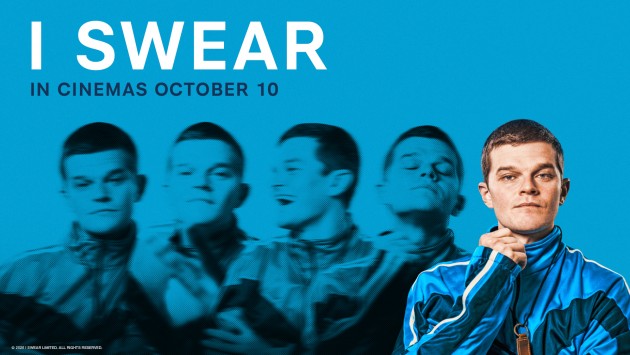
I Swear (2025) Review

Quick Synopsis: The true story of John Davidson, a man with an issue which causes people to mock and belittle him, being Scottish. Oh, he also has Tourette’s syndrome.

It’s difficult to figure out how to judge “based on a true story” films. Do you judge them on their own merits as a film, or does the true story itself affect reactions? I change between the two. Personally, I see it as a “factual errors won’t stop me liking a movie, but it will make me like it less”. The Iron Claw, for example, made multiple errors. Not small ones, they lied about the number of brothers who died for one thing. But I still enjoyed that movie. Well, I say “enjoyed”, it made me cry. It also matters how important the lies are to the key themes and climactic moments. Bohemian Rhapsody made a few errors that felt disrespectful to the memory of Freddy, mainly in terms of the timing of his diagnosis. That soured me on it somewhat.

How is any of that relevant here? I’ll come back to it at the end, because it is important when I talk about my feelings towards it and how I feel a bit iffy about it. But I’ll start with the positives. I Swear is a beautiful movie, not visually, but narratively and emotionally. It’s heartbreaking at times. Especially since so many of the problems faced by the main character are entirely down to how others react to him, rather than what he’s done. From the teachers (and his parents) assuming he’s just being a little shit, through to the police arresting him, and the judge in one of his court cases basically saying Tourette’s doesn’t exist. It’s frustrating to see him being unable to clear the hurdles which society has placed in front of him and then chastised him for not being able to clear.

It’s comforting to think that society has moved on (in some aspects) when it comes to disability acceptance. And it’s horrific to see how backwards society was just a relatively short time ago. It’s comforting how it ends, when we see him speaking as an advocate, talking to the police about how they can do better, speaking to schools telling them to stop being dicks, and talking to other people with Tourette’s about their lives (and talking to their family members too).

There are moments where the film does feel like it’s using the condition for laughs, but it never feels like it’s mocking it, which is important. It’s a film coming from a place of understanding and education, something which is a lot easier to do when it’s anchored by such great performances. I’m not entirely sure how many of the supporting cast have the condition, but I suspect that a few of them do. Robert Aramayo doesn’t, and I’m sure specialists will be able to spot that, but as a casual movie-goer, it’s easy to believe. Ordinarily, that would mean I call him the best performer, but he’s acting alongside Maxine Peake, who constantly feels like she’s one film away from being an A-list superstar.

Now onto the bad (and referring back to what I mentioned earlier about the “based on a true story” complications). Well, “bad” is overstating it, but most of the weak parts come from the same problem: the desire to tell a complete story. Yes, that is admirable, but it feels like writer/director Kirk Jones is determined to tell as much of the story as he can, so he squeezes things in when there’s no natural narrative space for them. There are at least two minor subplots which could be excised completely. Literally, if you cut out the sections, the narrative gaps would close themselves with no indication that something was missing. Yes, those sections do show us how sad his life can be at times, but they feel so episodic and are never referenced again, so they feel a bit pointless.

Now onto the other issue: what’s not mentioned. The closing credits show real-life footage of the characters. It’s good to see how accurate the performances and moments are (it shows that he does occasionally accidentally punch his friend in the face). But some of it was from years ago, and it made me wonder who filmed it. Turns out, the main character was the subject of a BBC documentary when he was 16, then again at 30, and once more at 37. Those documentaries are NEVER mentioned or referred to during the film, which feels a bit weird. It kind of changes the narrative, because he’s no longer a youth leader just because of his work in the local community; at least part of it would have been because of his notoriety for appearing in a documentary. My main problem is that there are so many interesting stories that could have led to: how did he feel about his portrayal in that documentary? How did his town feel? More importantly, in the 1980s, kids were dicks. Their response to seeing Joey Deacon, a kid with cerebral palsy, on Blue Peter, was to use “Joey” as an insult. It’s not hard to imagine that seeing John Davidson on television would have had a similar effect; kids would have used his name as an insult. That realisation, that he’s seen as a national joke, would have been an INCREDIBLY powerful scene to see. It’s strange that a film that was so focused on telling us everything left out such an important part of his life and journey. It would be like making a film about One Direction and not mentioning The X-Factor.

Overall, I Swear is kind of hurt by it’s “based on true story” nature, but also improved by it. In general, it is definitely worth seeing. I caught it at a secret screening. For those unaware, that’s a thing that Cineworld do where they preview a film, and you have no idea what it is until you go in. Ordinarily, the title card for these is usually met with a few people walking out, as it’s not what they expected. I Swear is set to be released on 10th October. Before that, we have:

One Battle After Another

The Strangers: Chapter 2.

Radiohead X Nosferatu: A Symphony Of Horror

Him

The Smashing Machine

All of those are pretty big deals, and it’s not difficult to imagine that some people went into this screening expecting it to be one of those (I felt certain it would be One Battle After Another). Despite the almost guaranteed “oh, didn’t think it would be that”, nobody left when the title came up. Nobody left at any point. That’s a HUGE deal for a secret screening. I was at a “Halloween Classics” secret screening a few years ago, and somebody left when they found out it was The Shining, and that’s a classic. The fact that this held everybody’s attention is a sign of how good it is. It should do well, and it will be received well, but it may not be something people remember in 5 years’ time.

Together (2025) Review

Quick synopsis: Tim and Millie are a couple who are slowly drifting apart. They then find themselves having the complete opposite problem in this Romantic Horror (is that a thing?).

Together is 70 minutes of pure body horror, incredibly weird disgusting-ness set against a backdrop of romantic co-dependency. The trouble is, the film is 102 minutes long, and that over 30 minutes really brings it down.

There’s not a specific section that’s the problem. It’s not like The Watchers, where the final section significantly dragged it down. There are just moments throughout which don’t really feel necessary, where the premise is stretched thinner than someone who curses a witch whilst saying how they want to lose weight. I get the theme it’s going for, as will every audience member, as it bashes you over the head with it. There are also some incredibly misguided moments of comedy. I also didn’t buy some of their reactions as genuine. With a premise like this, you have to wonder “how will others react to this?” We’ll never know, as the only person they discuss it with has already had it happen to them. They do meet one of the characters mothers at the end, but at the very end, just before the film cuts to black, so we don’t see how she reacts to it. This is probably because if they discuss it with some people, it would make it too difficult to not have THAT overwhelm the story, but I’m not sure ignoring it makes it any better. It’s a relatively simple fix, have them on a week away in a remote cabin somewhere, with no people nearby for miles.

This is all pretty negative so far, I know. But when Together works, it REALLY works. The climactic fusing together (does it really count as a spoiler when its ALL OVER the marketing?) is absolutely vile, in a wonderful way. It reminds me of The Substance, but more painful. The use of “2 Become 1” on the soundtrack during that scene is incredibly unsubtle, but this film can’t have subtlety when it’s as gross as it is. The performances are pretty damn good, the real-life chemistry between the two leads shines off the screen, and really adds to the story being told. On the subject of performance; Dave Franco has never sounded less like his brother, and more like Aaron Paul.

Back to the body horror. That’s really the main reason to watch this, and it doesn’t disappoint. I like how it actually has a reason behind it. There’s a narrative reason for the merger to happen, it’s explained why and how it happened. It also has a thematic reason, ties into the central messages well. It’s not just stuff happening for the sake of it, the horror has a reason and a message. That has to be commended, and is the reason for me recommending this film, even if I didn’t think of it quite as highly as everyone elses seems to. Is it a very good film? Yes. Is it an all-time classic? Not quite. But it’s quite close, and that’s more than most films could manage.

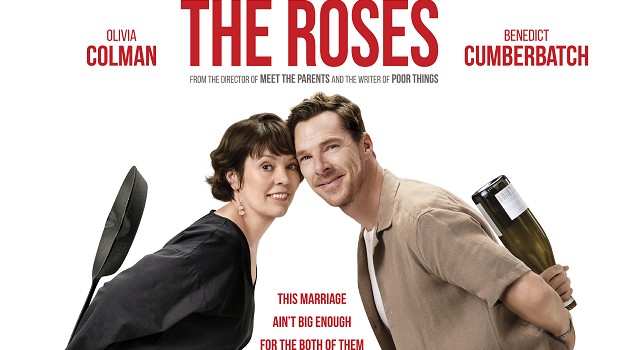
The Roses (2025) Review

Quick synopsis: Theo and Ivy are a married couple who are slowly starting to resent each other.

I have not read the book this movie is based on, and I also haven’t seen the original 1989 adaptation. So this review will not contain any “but in the original version they did this” or “in the book this character had a different job, ruined!”. I’ll be taking this on its own merits. On its own merits, this is a damn fine movie. The laughs start early on and don’t stop until the credits roll. That’s not hyperbole; the fade to credits is, in itself, a joke.

One of the most exciting things for me about this was the knowledge that statistically, there’s a high chance that people went in not knowing what it was. They saw Cumberbatch, they saw Colman, and thought it would be a sweet romantic comedy, not knowing how angry and bitter it would get. Meanwhile, I had seen the trailer, so I knew that it was going to be cynical and spiteful and more cold-hearted than a polar bears internal organs that have been stuffed in the freezer for transplant purposes. I would sit there in the knowledge that I knew what to expect, whereas they did not. Oh, how I would mock those fools. But, much like every web comic on April Fools Day 2016, perhaps I am the fool. Because, yes, this is somewhat mean-spirited and bitter (especially in the final scenes, which I’m not a fan of how extreme they got), it’s also incredibly heart-warming.

Crucially, The Roses doesn’t make them hate each other that quickly. We see how their relationship started, then see them together and happy before the cracks start showing, and even longer before those cracks become big enough to cause structural damage. It means that the trailers were somewhat misleading, but I preferred it like this. It meant that we actually wanted them to be together. No matter how funny their barbs are (and they are), there is still a small part of you that feels disappointed that it’s come to this. It’s not like you’re watching two characters in a farce gradually descend into silliness, it’s more like you’re watching two friends tear into each other while you’re helpless to watch.

I’m not sure if you’re aware of Chekov’s Gun. Essentially, it’s a narrative device that says elements in a story must be necessary to justify their inclusion. For example, if you introduce a gun in the first act, then that gun must be fired later on. Obviously, not EVERYTHING, if a character has a cup of tea, it doesn’t mean you then have to reveal that without hot leaf water they will die. But if you make a point to specifically mention and highlight that the character is drinking tea, audiences would be forgiven for expecting that to be an important plot point later on. Sometimes this is done incredibly subtly; a spy movie will feature the character being handed a gadget while being told, “Now this device is lethal to people called Keith”, then the villain will turn out to be someone called Keith. When it’s done well, it’s a sight to behold, and few films have done it as well as The Roses. We’re introduced to so many things that we can easily think of as just symbols of excess and AMERICA, but then turn out to be vital in the third act.

It’s not all great. I wasn’t a fan of just how sociopathic they both turned at the end. Which is weird, as some of the negative reviews I’ve read have highlighted those moments as their favourite parts. It just felt like a huge leap from “flicking eyeballs” (not sexy slang) to “aiming a gun at”. There are also moments where it does feel like it’s repeating itself, and some of their friends should have noticed something was amiss earlier.

In general, though? I enjoyed it. It’s not as cynical as I expected, but it has bite when it needs to. Also, it’s good that a film like this basically centres around the message “FFS, communicate!”.

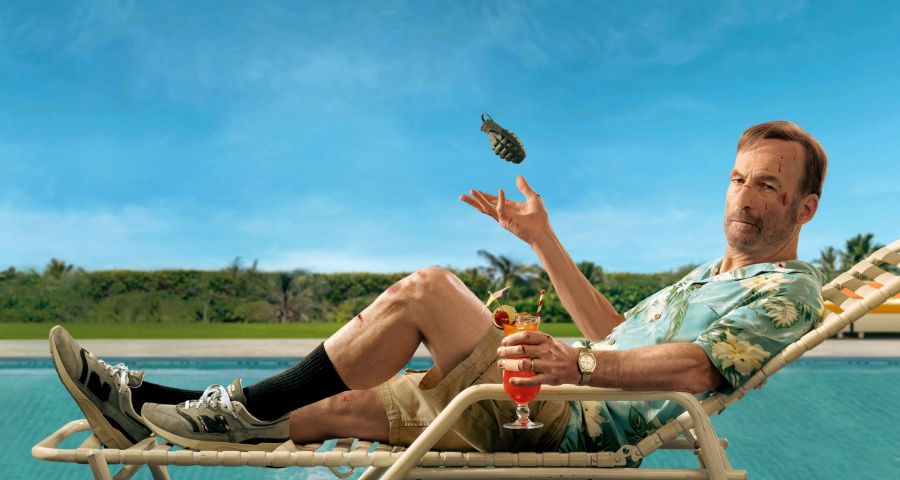
Nobody 2 (2025) Review

Quick Synopsis: An assassin goes on holiday, and people die.

I thoroughly enjoyed the first Nobody. It was action-packed, it was fun, and it was short enough that it didn’t outstay its welcome. In that aspect, Nobody 2 succeeds. It does all the important stuff well, and carries on the legacy of the first movie.

There are some aspects in which it’s not quite as successful. The action scenes aren’t as memorable as those in the first one; none of them come close to the bus scene. It’s also slightly overstuffed, particularly in the villain department. There is one definite BIG bad, but they’re introduced after we’ve already had issues with everybody else, so they’re not given as much focus. This may seem like sacrilege, but I didn’t like Sharon Stone in this. Her performance felt so hammy that I witnessed a little felt frog marry it. It felt like she was giving a performance, not that she got lost in the role. The background characters aren’t as well-written as they could be. With some aspects of them feeling overpowered and unrealistic, especially when they hold their own in fights with people they really shouldn’t.

Now, onto the upside, very little of that previous paragraph actually matters. You’ll be entertained throughout anyway. The action scenes, like I said, aren’t quite as good as the first one, but they are still very good. They’re set up beautifully. Things are mentioned throughout the film that later become relevant in a later scene when they are used to kill people. There are some great music choices, varied too. Cliff Richard’s songs fit alongside Celine Dion and The Offspring; all the choices make sense, although it would be an incredibly weird soundtrack if you played all of them together.

What Nobody 2 does better than the first one is set up a potential future. There are so many plot threads that are just waiting for a future film to unravel them. It also avoids the trap that people think John Wick fell into: becoming overly long and too steeped in lore. Nobody 2 is a quick 90 minutes, meaning it never overstays its welcome. For people who like the action of the John Wick movies (which you should, they’re awesome) but actually have social lives, which means they can’t spend an entire day watching a franchise, Nobody 2 is the perfect substitute. When the film ends, you want more. On the one hand, that’s delightful. On the other hand, there is a small part of you that feels unsatisfied, like you’ve had a delicious burger, but you’re still hungry.

The Bad Guys 2 (2025) Review

Quick Synopsis: Reformed criminals are forced to return to a life of crime.

I have to be honest, I can’t really remember that much from the first one. I know I’ve seen it, and I know I reviewed it. But none of the characters really stuck with me. My main memory of it is how it had the bad luck to be released very close to Zootopia/Zootropolis whilst exploring familiar themes.

The sequel has the advantage of being released roughly 4 months before the Zootopia sequel, so it doesn’t have the same comparison issues. It’s also much better paced, starting with a heist instead of a conversation. The initial heist is surprisingly well written. Not just in terms of the action making sense in terms of physics and geography, but it also showcases all of the gang’s talents. It could easily get away with “this is Ms. Tarantula, expert computer hacker”, but instead it just shows her expertly hacking. This is incredibly smart as it means that people who watched the first one recently won’t feel like it’s repeating itself, but people who haven’t watched it recently still get to know their personalities and skills. I admire the scriptwriting that goes into that.

I admire other parts of the script less. It feels very episodic, it doesn’t flow from one scene to the next, instead it feels like there’s a definite STOP at certain points, seemingly destined for a theme tune and a “How will our fishy friend find his way out of this aquarium of agony? Find out next week!” voiceover. Some of those moments are better than others. The section at the Lucha Libre show is a particular lowlight. If you’ve been on the internet, you may have seen people point out how impossible one of the Fast and Furious movies is because it has a scene that takes place on a runway, and for it to work in the film, it would need to be miles long because of how long the scene is. This has a similar issue. Characters run for far too long in a small ring without hitting the ropes. It’s a minor issue, but once I noticed it, it was impossible to ignore.

It’s a shame, as that moment could have been brilliant. The space-bound sections are much better, and it’s clear that the writers did their research on how rocket launches occur in stages. Yes, it’s incredibly unrealistic in parts, but mainly for the rule of fun. The action scenes on the space station make tremendous use of the situation, and it’s genuinely difficult to see how they’re going to top that in the sequel.

Overall, I liked this more than the first one. The first was too obviously indebted to its influences; this feels like its own movie; it has an identity that the first one didn’t. The bringing back of Professor Marmalade felt weird, though. Had some funny moments, but it felt needless. Also, there were moments where it felt like this was trying to appeal to furries, especially with the way they portray Kitty Kat. A bit uncomfortable, not gonna lie.