Ella McCay (2025) Review

Quick Synopsis: A look at the lives of those close to or under ella, Ella, Ella. That only works if you sing it like Rihanna’s Umbrella

On January 27, 1992, George HW Bush was making a speech during his re-election campaign that included the sentence “We are going to keep on trying to strengthen the American family, to make American families a lot more like the Waltons and a lot less like the Simpsons”, this was after his wife had described the show as “the dumbest thing I’ve ever seen”, which answers the question of whether she spent much time with her own son. Three days after Bush’s speech, the rerun of Stark Raving Dad (the Michael Jackson episode) featured a new opening; the family watching the speech on television, then Bart saying, “We’re just like the Waltons. We’re praying for an end to the depression, too”, which is a truly great joke. I do have a reason for saying this; it may be difficult to picture now, but there was a time when The Simpsons was considered subversive and dangerous, when schools forbade any Simpsons merchandise as they considered Bart a bad example.

I’m mentioning this because the writer/director of Ella McCay is James L. Brooks, one of the key writers for The Simpsons in its early years. With that in mind, it’s weird that he made this movie. On the one hand, it’s nice to see movies like this; simple movies about women going through tribulations which don’t involve sexual assault. Films which are ultimately pure at heart and can be watched on a Sunday afternoon after dinner. On the other hand, it feels socially irresponsible to make a movie in 2025 about US politics and have it be utterly toothless. If this were released 10 years ago, I’d have had no problems with it. I wouldn’t have loved it; it’s far too flawed for that, but I wouldn’t be quite as disappointed as I am. Today, Rob Reiner was murdered, and the President of the United States essentially responded that he died because he was anti-Trump. The most surprising part of that is that it’s not that surprising. This is the world we’re in now; if you make a political comedy, it needs bite. In 2025, making a movie like this feels like an act of cowardice.

But aside from that, how is it? It’s a mess. Characters are inconsistent in terms of behaviour; it seems to be written by an AI that’s ignoring previous input. There are so many stories running through it, but very few of them are given enough time to justify their existence. They all feel like they’re building towards something, then they just choose not to. This is most obvious with her dad. His story ends with her saying she won’t accept his apology. But it never looked like she was going to anyway, so it’s not really that satisfying an ending; nothing is gained or changed. There are moments where the film that it could be makes an appearance. Watching her verbally express her anxieties and worries in a cannabis-induced monologue is a fantastic window into her psyche, is close in quality to the monologue from Barbie, which is very high praise.

It feels like it was originally designed as an ensemble piece, focused on a large group of people all connected through one person; the trials and tribulations of her friends, family, and colleagues. But then, somewhere in the edit, they decided to cut out non-Ella scenes. As a result, none of the side-characters are memorable; they don’t feel like actual people with their own lives; they just feel like they don’t exist outside of Ella.

I refuse to accept that James L.Brooks has financial difficulties. He is not forced to make movies anymore. He’s at the stage of his career where every project should be a passion project. It should be “I NEED to tell this story, and only I can, it must be told”. So for him to be 85 years old and think that THIS is the film he needs to make? I can’t help but feel a little disappointed.

Plus, the title (Ella McCay) is far too close to the name of the lead actress (Emma Mackey), and I don’t like that. It’s not an actual issue, but it will mean I am forever not quite sure whether I’ve got the title of this film correct. Also, whenever anybody called out her name three times, my brain automatically ended “ey ey ey” and started singing Umbrella.

Five Nights At Freddy’s 2 (2025) Review

Quick Synopsis: One year has passed since the supernatural nightmare at Freddy Fazbear’s Pizza. Former security guard Mike has kept the truth from his 11-year-old sister, Abby, concerning the fate of her animatronic friends. When Abby sneaks out to reconnect with Freddy, Bonnie, Chica and Foxy, she sets into motion a terrifying series of events that reveal dark secrets about the true origin of Freddy’s.

I won’t lie, I could just repost my review of the first movie, SOOOO many of my issues with it are repeated here.

It’s a horror movie without gore, without suspense, and without scares. 

Yup, same here. It’s incredibly neutered. I’m not asking for full hardcore violence, but a little bit of blood and more disturbing sound design would have helped sell the violence.

Piper Rubio outshines all of them, though. She’s only 8 years old but never misses a beat, even when she has to express some relatively complex concepts. I haven’t seen a child perform this well since McKenna Grace in Gifted. Her relationship with her brother and her need for social acceptance are a core part of the narrative of FNAF. The moments where it dwells on that are the strongest parts of the film (that and the animatronic work, which is sublime).

The only part of this that is changed is that Piper Rubio is no longer 8. She’s still the strongest performer by a wide margin. Elizabeth Lail seems to be having an off-day; I know she can give a better performance than this. Also, that mention of McKenna Grace seemed to be weirdly prophetic, as she’s also in this. Not for long enough, though, I hope she has more screamtime (pun intentional) in Scream 7.

Like I said, when it’s not a horror movie, when it’s a family drama dealing with loss, that’s when it’s at its best.

Oh, that’s definitely the case here. The relationship between Mike and Abby is core to why this works. The two are so sweet together; so even when the film itself isn’t that entertaining, it’s just so damn nice to watch the interplay between the two.

The continuity lockout is much bigger for this than it was for the first one. If you’re not familiar with the original games, you’ll struggle to work out why certain things are met with dramatic music, or why some of the sentence structures feel clunky and designed to get certain phrases in. I have a slight knowledge of the games, so I recognised some of the references; but there were a few moments which I recognised as references, but didn’t get the references themselves (like when an American sitcom starts talking about NY politicians).

My biggest issue is the ending; it doesn’t really have one, not in the traditional sense anyway. Not in a “the story is complete and we’ve reached a dramatic conclusion” way. It ends with a character being possessed and about to hunt down everyone. That’s not an ending; that’s the third-act setback that leads to the ending. It feels like they cut an entire section out. I also wasn’t happy that seemingly essential plot points were in the middle of the credits. Not a fan of that, if something is important, it should be in the actual film, credits scenes are for fun stuff, not essential.

In summary, incredibly similar to the first one, but with newer mistakes.

Zootropolis/Zootopia 2 (2025) Review

Quick synopsis: Detectives Judy Hopps and Nick Wilde find themselves on the twisting trail of a mysterious reptile who turns the mammal metropolis of Zootopia upside down.

I may have made a mistake going in. I tend to avoid reviews before seeing a film, but sometimes I do accidentally glance at one, or at least see the headline. The one headline I saw for this described it as a “soulless film-by-numbers affair filled with corporately approved jokes” and “might as well be AI-generated”. So I went in with low expectations. After viewing Zootropolis 2, I don’t understand where that reviewer was coming from. It’s not quite as good as the first one, but it is still a worthy viewing experience.

Most of the cast from the first film return, including Tiny Lister, through the use of archival recordings. Joining the cast are Patrick Warburton, Macaulay Culkin, Ke Huy Quin, and Andy Samberg. That’s the main cast; the voice cameos make it look like whoever wrote the Wikipedia page is just making shit up; Ed Sheeran, Mario Lopez, Mae Martin, Auli’i Cravalho, Tig Notaro, The Rock, CM Punk, Roman Reigns. The last two are particularly fun as the Zebros, who seem like the kind of characters destined for a spinoff.

So how does the story compare? It’s good, but it does feel reminiscent of the first one. The whole “the ones you think are dangerous aren’t really” message is essentially the same as the first one. There’s even the “cuddly animal you thought was friendly turns out to be a dick” plot twist. That one in particular hurt, as it seemed so obvious that I felt it must be a red herring. The Nick and Judy relationship also repeats some moments from the first movie. If the first movie didn’t exist, this would be great; as it is, it feels kind of like a remake.

I think it would have been stronger if they hadn’t done that late-stage heel turn; it would have backed up the film’s thesis that “it’s your personality that determines you, not your species/family”. It also misuses Dawn Bellwether from the first movie; she gets broken out of prison, then arrested again at the end. I’m not asking for her to have a huge impact on the story, but why bother bringing her back if you’re not going to use her at all? I also wasn’t impressed with how they say that Nick has a phobia of reptiles, then never mention it again.

That is a rather negative way of looking at it. On its own merits, it’s charming. It’s also very funny; packed full of jokes; there are moments where it feels like they’re cramming them in until it’s fit to bursting. Gary The Snake is a wonderful character who suits the franchise. It has enough heart to carry it through its weaker moments, and the animation is absolutely gorgeous. This isn’t as focused on the characters in the world as the first one, but the world itself is explored more; we get a much bigger focus on how the world works, how the different zones interact, etc.

In summary, just as good as the first one, and the signs for the inevitable third one are good.


Clown In A Cornfield (2025) Review

Quick Synopsis: Some kind of circus worker (can’t remember the specifics) kills teens in a rural setting of some sort.

Fun fact: this was the 100th new movie I’ve seen this year, beating my previous record by roughly 11. It kind of sucks that such a momentous occasion is being marked with a film so bland that even a local cheap chicken shop wouldn’t sell it. It says a lot that the most memorable thing from this film is that you can sing the title to the same tune as Goldfinger’s cover of Man In A Suitcase. Also, I kept spelling it Cornfrield for some reason. If this movie were a colour, it would be mud-brown.

For Clown In A Cornfield (CIAC, pronounced Sigh-ack) to work, it needs to do one of two things: either be ridiculous and weird, or be brutal beyond belief. This does neither. It’s rated 15 in the UK, and it feels like it’s towards the lower end of that rating. The kills, even the most violent ones, feel remarkably pain-free. None of them really sticks in my mind. The opening two in particular feel neutered. One is offscreen, and the other one breaks physics. The clown approaches the future victim while they’re lying on the floor, then does a sideways sweep (like a hockey player making a quick pass), it then cuts to the person being lifted up on the weapon high up above the clown’s head.

The actual script isn’t too impressive either. Seinfeld famously described itself as “a show about nothing”, CIAC takes it to the next step by having nothing happen. The background characters are so underwritten that they might as well be cameos, so when the film shows us that there are multiple killers (I don’t count as a spoiler as it occurs before the halfway point,) it’s not difficult to see how the unmasking is going to go. The iconography of Frendo is so underbaked that I’m pretty sure it gave me salmonella. It doesn’t feel like “this has haunted the town for years”, or even a recent urban legend. The main characters use the idea that Frendo is a killer as a joke in a YouTube video. Also, for most of the deaths, the clown is only seen by the person they kill; so why dress as a clown in the first place? It’s unfair to single out CIAC for that, as SOOOO many slashers make the same mistake, to the point where I was actually impressed when Heart Eyes provided a good reason for the characters’ “fame”.

I don’t want to spoil the ending, but it’s basically Hot Fuzz, only we’re expected to take it seriously. I think we are, anyway. By all logic, this should be comedic, and there are times where it feels like it’s trying to be one, but it’s like being headbutted by a teletubby; incredibly po-faced. It’s weird as Eli Craig also directed Tucker and Dale Vs. Evil, which got the comedy/horror balance spot on. Here, it feels like it didn’t do enough to satisfy either genre.

On the upside, there are some musical choices. And there are some surprisingly subversive choices made with the main characters. It’s nowhere near as bad as I’ve made it sound. I doubt it will be in the bottom half of my movie rankings this year. There’s not much offensively awful about it, but there’s absolutely nothing worth highlighting. It’s mediocre, and in some ways, I find that more offensive than being bad.

Now You See Me, Now You Don’t (2025) Review

Quick Synopsis: The Four Horsemen and a new generation of illusionists join forces to steal the world’s largest diamond from a South African mogul who heads an international crime syndicate.

I’m a huge fan of this franchise. I mean, they’re clearly bollocks, with some of the moments (particularly when they were passing the card around in the second movie) defying physics. But that doesn’t mean they’re not enjoyable and well-crafted. It’s weird how all three movies in this franchise have a similar style despite being directed by different people. Now You See Me, Now You Don’t (NYSMNYD, pronounced Nice-mon-yad) is directed by Ruben Fleischer, best known for Zombieland. Now You See Me 2 was by Jon M Chu, who has since moved on to the two Wicked movies (as in, the two movies based on the stage show Wicked, not two movies I think are wicked), and the first one was brought to the world by Louis Leterrier, who gave us Fast X (which should have been called Fast X Your Seatbelts). It feels like Fleischer understood the world better out of the three; he’s really good at staging action sequences among crowds, making them feel dynamic and not like everyone is just standing there watching instead of running away.

I like the script for this more than I did the others; there aren’t as many obviously unrealistic moments. My biggest issue was one which I’m not sure most people would notice. I’m aware I watch more films than most people (I’m one film away from 100 new releases seen this year), so I don’t think it’s too pretentious to say I pick up on things more than most people would, especially verbal foreshadowing. Like a verbal Chekov’s Gun, if a character in a cop movie talks about how their former partner died mysteriously, odds are that character isn’t really dead and will come back at the end. In this, a character is explicitly introduced with “I couldn’t find out much about your past”, so its obvious his past will be a plot point. Added to that, there’s an unseen mysterious character, with nowhere near enough side characters as potential suspects for who they are. So it’s not as mysterious as it should be. Yes, the way the reveal is pulled off is incredibly satisfying, but they could have hidden it a little better. It also would have been nice if the villain was a bit more cruel.

It’s been almost ten years since the last movie, so it would have been understandable if they assumed people didn’t remember what happened and opened with a flashback. This doesn’t do that, it jumps straight in, no explanation of what happened before, no reintroductions or summaries. I like that. It treats the audience as adults rather than spoonfeeding them everything. The way it introduces the new characters could be slightly more subtle, but it works. They slot in with the established crew without overshadowing them. I may not have been too impressed with him in I Saw The TV Glow, but Justice Smith is growing on me with performances like this (I’ve also been playing The Quarry lately, which may explain it). Dominic Sassa is impressive enough that you forget he’s only been acting for a few years.

Is this among the best movies I’ve seen this year? Nope. It might make the top 25% but that’s it. Am I going to buy it on DVD/Blu-ray? Almost definitely. I won’t gush to everyone about how incredible this movie is, about how everyone should see it, and it will change your life. But I will watch it again. If anyone asks whether it’s worth it, I will say yes.

The Running Man (2025) Review

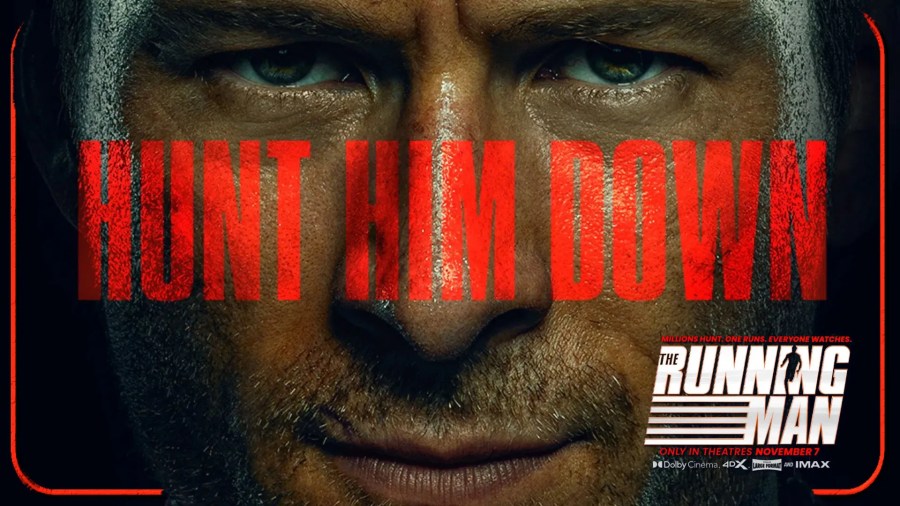
Quick Synopsis: Desperate to get the money required to get his family luxuries such as food and healthcare, Ben Richards enters The Running Man, a TV show where people must survive 30 days being hunted by assassins.

The existence of this movie has annoyed a lot of people. People who are complaining, “They remade the Arnie movie. Be original! And they’ve changed aspects of it”, seemingly not realising that it’s not a remake, it’s another adaptation of the book, and some of the changes have been made to make it more faithful to the book. I watched the original a few weeks ago; it’s a VERY loose adaptation of the source material, removing a lot of the central themes. So in that sense, the 2025 version is better; it’s a lot more faithful, keeping not just the basic plot points but also the world-building required to make the story more than “muscle man kills everyone”.

As good as the first version is, it never truly felt dystopian or real. This feels real. The characters are clearly financially suffering, and living in a world where most of the media shows glamorous lifestyles that are beyond the reach of most people. A world where people are constantly watched. A world where the divide between corporations and government is wafer-thin. In short, a world which can either be described as “one we’re heading towards” or “one we’re already in”, depending on whether you view your glass as half full, half empty, or missing because some fucker stole it. The world has changed since the 80s, when America was led by a psychopathic manchild brought to the world by his appearances in the media, and Britain was determined to crush the rights of the poor, disabled, non-white, and members of the LGBTQ community. The proliferation (big word, go me) of AI and surveillance means that certain parts of this now ring very true. It does make things easier for the filmmakers; characters don’t have to say “they edited it using artificial intelligence based on pre-existing recordings” We’re all so familiar with deepfakes that we automatically know.

So it’s a good adaptation, but is it a good movie? I mean, the Tim Burton version of Charlie And The Chocolate Factory is clearly more accurate than the Gene Wilder one, but is clearly inferior, partly (but not entirely) down to Depp’s decision to play Wonka like Michael Jackson, but more creepy. I liked it. The political satire is on point, the action sequences are fun, and there are no sequences where you’re bored. Also, it’s fun. Action movies can make a political point and still be fun.

That being said, it could do more. Edgar Wright is known for certain things, mainly his editing and his music choices. It feels like The Running Man doesn’t showcase his skills. There are some very good music choices (especially in the opening), and like I said, some of the action sequences are fun. But there are no scenes which stand out as particularly impressive compared to his other works. There’s nothing which you can point to and say, “That! That is why we love cinema”, like the opening chase of Baby Driver.

The performances are fine. It’s still weird to see Glen Powell as an action hero, but I suppose that’s kind of the point. Colman Domingo is great, bringing to mind Carl Weathers’ performance as Apollo Creed with the energy and charisma he has.

There’s been some negative talk online about this movie. Those people are wrong. The Running Man is one of the most fun experiences you can have in a cinema without risking being thrown out. There’s a delightful energy to the whole thing, and the action scenes actually make sense. There’s not much suspension of disbelief required for it to make sense, no requirement to leave your brain at the door and “stop nitpicking and just start enjoying”. That doesn’t mean it’s overly pretentious and serious, though. You can just watch it at home (when the DVD/Blu-ray is released) with a couple of beers and some friends (sadly, friends aren’t included with a dvd purchase, I’ve checked) and cheer at the sequences, you’re not going to be have to be like “shhhh, you’re missing important plot points, concnetrate!”. Essentially, this movie is what you make it; if you want political satire, it’s got it, if you want bang bang blow up shoot shoot action movies, it’s that. So while it’s not an easy film to declare the best movie ever, it’s a very easy movie to enjoy.

I like that.

Shelby Oaks (2024) Review

Quick Synopsis: Mia is haunted by the disappearance of her sister Riley 12 years ago. She’s given up all hope, then a stranger hands her a videotape of Riley’s final moments.

I’ve seen this movie described as a mix of Blair Witch and Hereditary, which is remarkably accurate. It has the lore and world-building of Hereditary, and the reality-based found footage of Blair Witch. It’s been overused since then, so people forget just how exciting The Blair Witch Project was when it came out. What made that movie work was how real the footage itself felt; the people in it didn’t like actors, so it genuinely felt like we were watching something hidden. It also wasn’t overly edited and full of jump scares, which is a trap its weaker imitators have fallen into. In that regard, Shelby Oaks continues that tradition, with the found-footage sections being incredible to watch.

It’s when it steps away from the found-footage premise that it becomes less interesting. The moment it happens is brilliant, and feels like a genuinely “holy shit” moment, the likes of which I haven’t seen since the Ghostface deaths in the opening of Scream 6. It can’t keep that momentum up, though. Once that moment has gone, the film doesn’t come close to matching it. You’re still invested in the story and the mystery, but a little bit of that “wow” factor has gone; there’s not as much to separate it from every other horror movie. I think part of the annoyance with it is that the mystery is intriguing, but you never really feel like you’re getting close to solving it until the film tells you what’s happening; there are no clues for the audience to figure out. If you’re watching this with friends, there will be no discussion about your theories or guesses. It gives you a puzzle, then makes you watch someone else solve it, so after a while, your brain can’t help but wander. Without that “I want to solve the mystery”, you’re just left with a spooky story, albeit a very competent one.

It’s clear that Chris Stuckmann has a lot of talent as a director; he’s an expert at crafting scares out of seemingly nothing. He’s helped by a brilliant performance from Camille Sullivan. I was also fond of Sarah Durn’s performance as Riley, especially towards the end when we see her perform not as a video host, but as a traumatised victim. She looks haunted. Nobody else really lasts long enough to have an impact, but it is always nice to see Keith David. There’s also some great audiowork, which is an underrated part of crafting tension.

When it is tense, it’s on “edge-of-your-seat” levels. Shelby Oaks is the kind of film that nail-biting was invented for. I watched it in the cinema, which is a great way to watch a film like this; sitting in a dark room with lots of space around you, letting everything overwhelm you. The only way the experience could be better is if you had to listen to it on those massive over-ear headphones.

What surprised me about Shelby Oaks is just how nostalgic it made me feel. The videos genuinely feel like they’re from the early days of YouTube, where it was weird people making art as opposed to corporations making “content”. There’s a sort of innocence to the videos the Paranormal Paranoids make, which makes what happens to them all the more frightening.

I wish I could play this as a video game, or watch it as a series of YouTube shorts played off as real. As a feature film, it runs out of ideas in the final third (but the ending is pretty shocking), which really does a disservice to the art created beforehand. In summary, quite frustrating, but the work of people who clearly know what they’re doing. One day, Stuckmann could make the greatest horror movie of modern times, but he’s not quite there yet.

Roofman (2025) Review

Quick Synopsis: The true story of Jeffrey Manchester, an armed robber who escapes prison and secretly hides in a Toys R Us for six months.

I was quite hyped for this, the trailer made it look fun and pacier than a blue hedgehog wearing trainers. So it was somewhat of a shock when I realised it was over two hours long. The concept (man hides in Toys R Us) didn’t feel like it had enough meat on it to justify that runtime. I’ve now seen it, and those fears were not without merit. It overly complicates what should be a relatively simple story, and just isn’t fun enough.

Roofman is weirdly cosy, at times playing like a Hallmark Christmas movie. On that note, it should have actually been a Christmas movie. So many of the emotional and narrative set-pieces are built around it in the final third, so they really should have just leaned into it and released it a few weeks later. It also meant that it would have been played on TV every single year. At the moment, I can’t really see many TV stations rushing to show this. It doesn’t really have much to it.

Maybe it would have helped if we actually saw more of how he operates. He goes from a normal person to a serial thief off-screen. We’re shown him thinking about committing armed robbery, to having already committed almost 40 of them. I’m not saying we needed all of them in full, but it wouldn’t have hurt Roofman to cut some of its superfluous moments and replace them with a robbery montage near the start. This would have improved the pacing and made it flow a bit better than it currently does. Also, it would have made him seem more competent. We’re told he’s great at noticing things; he commits 5 crimes in this movie. One, he gets caught and thrown in prison, not good. Then he escapes prison, all good there, but heavily dependent on luck. He camps out in the store, but commits simple errors whilst doing so (he’s clearly noticeable on security cameras). Fourth, he goes to break into a pawn shop and ends up in the building next door by mistake, a failure. Lastly, the toy store again, which he messes up. So the only time he objectively succeeds is in escaping prison. We don’t see him being good at his “job”. A montage would have solved something; we would have seen what makes him so talented.

I have a specific problem with the pawn shop robbery. He ends up in the building next door and breaks through the wall to the pawn shop. This sets the alarm off. He then breaks the glass door with a giant statue and escapes. Does this lead to an exciting police chase? No. Does this lead to a moment of panic where he realises how reckless he’s being? No. Does it lead to a near miss? Nope. So what does it do? It gets him a gun. That’s it. The alarms, etc, don’t matter to the plot at all. So what was the point of that scene? It’s America, “but how did this white person get a gun?” is not a question any audience members would have asked; we would have assumed he found it in a cereal box or something. Asking where an American got a gun from is like asking where a 19th-century London prostitute caught syphilis from; it would be more surprising if they didn’t have it. There are a few other moments which aren’t followed up on; he breaks into the store’s computer to change someone’s shifts. That’s never followed up on; at no point does the manager notice, “hang on, I had this person due to work and now they’ve mysteriously disappeared from the roster, who did this?”

Now onto the romance part of the film. I’m not opposed to it. The worst part of it is that it kind of negates his kids. He goes from “my children are my entire world, it’s why I do what I do”, to “Wooo new family”. He tries to contact his kids once or twice, but his focus and motivation definitely seem to be on his new relationship. The relationship between the two feels real, and her inner conflict towards the end makes complete sense when you take into account her character and personality. Usually, a relationship between a woman and a criminal is displayed in a “she softened his hardened heart, and hardened his…” way. But Roofman takes great lengths to display how kind a person he is, even before that, only committing crimes so he can buy the necessities for his family (a big TV, a brand new bike, mariachi singers for a birthday. You know, the essentials), so he doesn’t really change at all. Really, it’s just two people who stay exactly the same for the entire film, with no personal growth. Yes, he is looking to escape to another country when he can, but that never seems to be his main motivation. The “I am flying away” parts only take up roughly 5 minutes of screen time, and could be missed entirely with a few badly timed pissbreaks. All it needed was for him to put posters of his destination on the wall.

In summary; not a perfect film. It’s likeable enough, but has less weight than a helium balloon. The kind of film you stick on at Christmas to have on in the background as you sleep off a cheese coma.

Friendship (2024) Review

Quick synopsis: Craig Waterman, a reclusive man, meets his new neighbour, Austin Carmichael, and forms an unexpected friendship with him. As their friendship grows, so does Craig’s obsession with Austin.

I think I’ve done this backwards. The way this was supposed to go was I watch I Think You Should Leave With Tim Robinson (starring some guy, Tim something, can’t remember), get used to his comedic style, and then watch this. I still haven’t seen the TV show (it’s on my list), so I went into this with a minimal understanding of what to expect. My best bet was that this would feel like All My Friends Hate Me (as reviewed here) and be an incredibly awkward “Social Horror”. I have mixed feelings about that movie, in some ways, it was TOO effective to be enjoyable. Friendship handles it much better. It is so heightened that it goes past relatable to the point of absurdity; if it didn’t, the film itself would be uncomfortable. Yes, it is incredibly awkward, but it stays JUST weird enough that it is still enjoyable to watch.

It helps that the decisions are logical. AMFHM felt like the other characters were deliberately gaslighting the lead; that’s the only way their decisions made sense. This? Even when Austin (Tim’s character) does incredibly weird things, you can follow his logic. As an outsider, you can see how that logic is twisted and flawed, but most of the time, you can fully understand how he reached that conclusion. It’s a difficult balancing act, and Friendship walks it perfectly, most of the time. His wife’s welcome back party veers into cruelty; it’s one of the few times where it’s difficult to follow his train of logic. I also have an issue with having the opening scene be him and his wife at a cancer survivors group, then not making the recovery a plot point. I’m not saying that the whole film should have been “The Chemo Support Club”, but you could delete it from the script and it would not change the narrative at all, which feels like a weird thing to say about something so life-changing. Whilst I’m on the subject of the negatives, I’m not sure if it’s intentional or not, but there’s one scene where someone says “weed”, and there’s a really random and loud honking noise. Not sure if its a reference to something, but it’s strange.

Now onto the positive; Paul Rudd gets a chance to flex his acting abilities here, and play someone different from the “Hi, I’m Paul Rudd, I’m going to make droll comments where I move my head to the side in the middle of the sentence”. He gets to show fear, he gets to be freaked out, he gets to be vulnerable. Obviously, this is Tim Robinsons film, but the writing makes him constantly feel like the side character in his own movie; strangely, I mean that as a compliment. He feels like someone who would be the side character in a normal film; the odd kooky neighbour of the lead who’s only there for comedic purposes. So seeing him as the lead is oddly subversive, like we’re seeing something we shouldn’t be able to. It’s like when a long-running TV show has an episode devoted entirely to a background character, the audience is keen to see what they’re like in general day-to-day life, and in Friendship, they get it.

What really made this work for me is it does have a genuine heart under all the social cruelty. It’s not going to have you feel warm and fuzzy inside, but there a few moments which will genuinely make you smile. The best example of this is the ending, which I won’t spoil, but is delightful and exactly how you want a movie like this to end; with narrative closure.

In summary; weird, awkward, but strangely lovable. But that’s enough me, the film is good too. Although it took me a while to get past Paul Rudd’s likeness to Matthew Baynton.

Time Travel Is Dangerous! (2024) Review

Quick Synopsis: Ruth and Megan run a vintage shop in Muswell Hill, using a time machine to source new old stock.

It’s nice reviewing films people know and are excited for, to add my voice to the conversation that millions of people around the world are having. But there’s also something to be said about reviewing something not quite as well-known. Films like Time Travel Is Dangerous (TTID, pronounced Tit-tied), which at the time of writing has only 25 reviews on Rotten Tomatoes, that’s critic and audience total. It deserves more than that.

I’m not really surprised, though. This film is incredibly British and quite low-budget. It’s not low budget in a way that makes you wonder how they managed to miraculously produce something on that budget; it wears its budget on its sleeve, and that’s not meant as an insult. If anything, it adds to the charm. And TTID is very charming. The characters using a time machine to bring back stuff to sell in a vintage shop? Brilliant idea. And anybody who has worked retail will recognise someone trying to buy the shop vacuum, and then being annoyed that they can’t do it. It helps that the two charity shop workers (Ruth and Megan, played by two women called *checks notes* Ruth and Megan, well, how am I supposed to remember that?) are incredibly likeable. Apparently, they are the real-life owners of a vintage shop in Muswell Hill. That genuinely surprises me. Usually, you can spot non-actors in films like this, especially as the leads. I had no idea; I just assumed they were involved in production somehow.

There are some great jokes here. An inventor’s group having a motto that’s “insert motto here” in Latin? Love it. Yeah, the jokes aren’t the smartest, but they’re funny. It’s also surprisingly poignant at times, especially the sub-plot with Botty and Ralph. I didn’t expect to find a touching treatise on fame and friendship inside a film as silly as this, but I’m glad it’s there. The entire inventor’s group is full of fun characters and jokes, so for two-thirds of the film, it’s delightful.

But then we get the final third. This section takes place in the other universe (there is a proper name for it, but I’ve forgotten it). It feels WAY too disconnected from the rest. There’s an almost entirely new cast of characters, a different visual style, and different comedy. The rest of the film is like a documentary; this part isn’t. So it feels like it takes place in a different film, where the characters of this one have just invaded it. It seems like that’s where most of the budget went (I’m guessing). It’s a shame, as that’s clearly the most ambitious part, so it feels somewhat mean to knock them for it. But it is definitely the weakest part, and knocks it down quite a bit.

There are some people who will enjoy that part, and there are also likely to be people who hate my favourite part: when Ruth is turned into a teenager because of issues caused by the time machine. I like it, I found it funny, and I liked how it drove a division between the two leads. But it’s easy to see how some may see it as a stupid diversion. Like I’ve said before, film reviews are all opinion, and opinions are never objective.

This won’t be a film liked by most people. But those who like low-budget silliness will enjoy it.