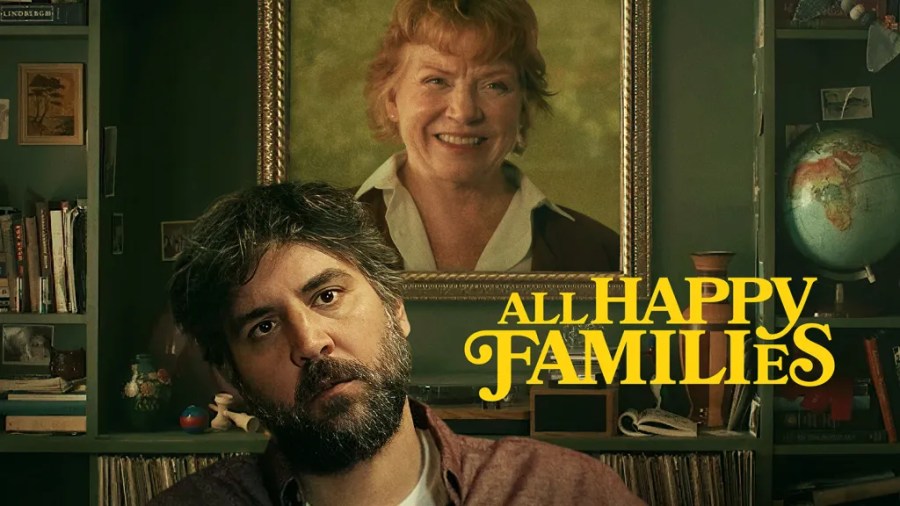
Synopsis: A family gathers to renovate their home. Truths are unearthed and memories dug up.
Josh Radnor appears to be following the Zach Braff career path of being the lead in a sitcom, which everyone eventually comes to hate, thinking the lead character is creepy and weird, to low-budget indie films, the only difference being that he’s starring in them instead of directing them. Braff’s films are weird. It felt like everyone loved Garden State, then watched it again and changed their mind. Josh Radnor is yet to even approach anything like Garden State, casting agents seem reluctant to cast him in feature films for some reason.
All Happy Families (AHF, pronounced Arth) isn’t going to change their mind. He plays the same put-upon character we’ve seen him play before. It feels like he was cast because he played a similar character, not because they wanted to give him a chance to spread his thespian abilities. That’s not saying he gives a bad performance. But you are going to compare his character to Ted Mosbey, who, love him or hate him, is a character audiences are familiar with and have notions about. His character here is never given enough to distance himself from that comparison. The closest he gets from stepping away from that character is when he’s interacting with his family members and the chaos they bring; and that’s only because that entire dynamic makes you think of the Bluths from Arrested Development (only in this case, it’s the brother character that is accused of sexual misconduct, not the actor who plays the father. Seriously, fuck Jeffrey Tambor, and the way the entire male cast talked over Jessica Walters’ experiences.) If you thought being compared to How I Met Your Mother is bad, try being compared to Arrested Development.
This may seem like I disliked it. The truth is, I didn’t. It’s a difficult film to dislike, mainly because it’s a difficult film to feel any powerful emotion towards. It’s sauceless pasta. Bland, dull, and everybody has tried similar stuff that’s better.
There are glimpses of what this movie could be. The scene on the boat is fun, and it displays the characters’ personalities very well. The mum (Sue, played by Becky Ann Baker) is the type of person who corrects a tour guide, Will (his brother, played by Rob Huebel) is famous and kind of smug, Graham feels overshadowed, and their dad, Roy (John Ashton,) just goes along with it. If the writers tweaked the narrative and put this scene first, it would have made a fantastic opening scene.
The moment where his mother has a discussion with his trans daughter is incredibly sweet, and the kind of scene which feels modern and like it has something to say. Other narratives are running throughout, every character going through their own trials: Sue has been groped by her boss, Roy has a gambling addiction that threatens to rear its head, his brother Will has been accused of sexual misconduct on the set of his TV show, and Graham is going through a personal crisis. All of these are very worthy plots, and all are narrative fruits that are ripe for picking. However, they’re so underdeveloped that the audience only gets a brief glimpse of each narrative before it is disposed of. This approach can work in real life; not every story gets an ending, sometimes it’s just that things happen. But it’s handled really badly here, especially in the closing section.
The end feels really rushed. You have all this drama colliding together, and you expect it to lead to something. Instead, it just kind of becomes nothing. I mean, stuff happens, but it doesn’t FEEL big. The payoffs are incredibly flat, and there’s zero intensity. It feels like a 10-episode TV show which skips episodes 7,8, and 9. Or the writer HAD to keep it under 90 minutes and wasn’t allowed to delete stuff they’d already done.
In summary, it’s cosy, sweet, and very heartfelt at times, with good performances throughout. But it’s nowhere near as good as what’s already out there. In a world of exquisite dining, this is toast.
 Troubled Productions