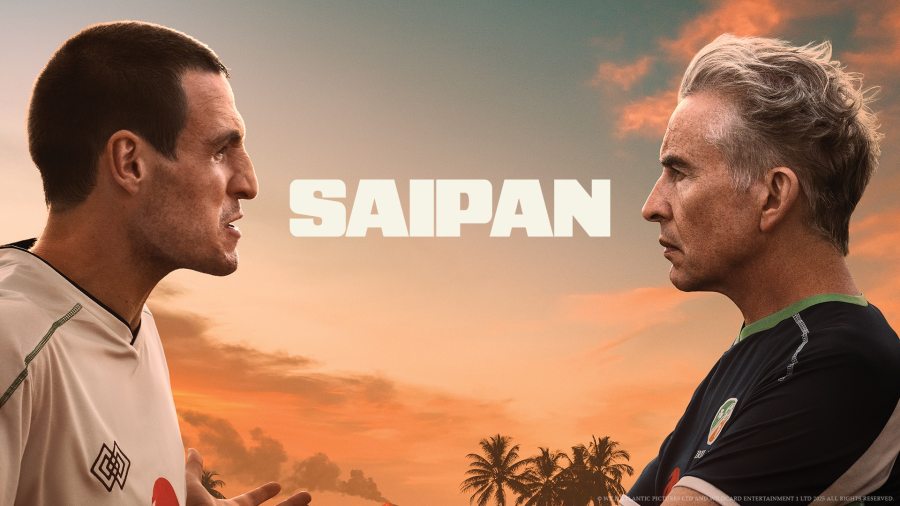
Saipan (2025) Review

Quick Synopsis: A recreation of the Saipan incident involving the Republic Of Ireland national team during the 2002 World Cup. If those words mean nothing to you, this film isn’t for you.

The last football movie I watched was Balls Up. That movie was fucking terrible. All Saipan had to do was be better than that. Obviously it managed that; if it hadn’t, you wouldn’t be reading this; you’d be reading a news headline saying “Makers of film attacked by a crazed/idiot reviewer”.

That’s not to say it’s a fantastic watch. For all its faults (of which there were many), at least Balls Up was memorable (except for the title, because I’m still not 100% on whether it’s called Balls Up or Balls Out). Saipan isn’t. It won’t move you, teach you, or linger in the memory. It’s just there. It’s the film equivalent of the 90’s song Save Tonight, by Eagle Eye Cherry. In the moment, you’ll enjoy it, and it’s hard to find many faults. But it won’t take long for memories and warm feelings to fade. That’s both a positive and a negative. Saipan never embarrasses itself. You never sit there bored, or annoyed. But it also never threatens to become anything more than “just okay”.

On the face of it, it rivals Seinfeld for being a piece of media about nothing. I mean, really. “A footballer shouts at his boss and quits mid-tournament” doesn’t sound like the sort of event that legends are built around. Nobody was physically harmed. Nothing was damaged. Ireland came second in their group (eventual finalists Germany topped the group), and ended up going out of the tournament on penalties to a Spain side that were on the cusp of being one of the greatest international teams of all time. There’s no Sliding Doors “but what would have happened if he stayed?” alternate history. All that would have changed is how they played, the final result wouldn’t change.

But that’s missing the point somewhat. It’s not just about that incident. It’s about professionalism, national identity, and personal pride. The reason the incident dominated headlines wasn’t because of what happened; it was because of what people thought it meant. There’s no clear-cut right-and-wrong side. To some people, Roy Keane was a selfish egotist who had no idea how to be part of a team. But to others, he was a perfectionist who refused to lower his standards and was extremely disappointed when it seemed like everybody else wasn’t taking the tournament seriously. To some, Mick McCarthy was a realist, attempting to deal with an egotist (Keane) who was being encouraged by his club manager to treat the international team. Whereas to others, he was woefully out of his depth, weak, and should have never got hired in the first place.

Saipan understands this. It doesn’t portray either side as wrong. They’re both right, but they’re having different arguments. I genuinely have no idea where the writers or directors stand on the issue. The script is impressively neutral. Perhaps that’s because all the principal figures are still alive and theoretically capable of hiring lawyers, but whatever the reason, it works. The film trusts the audience to make up their own minds.

There are a few issues. The main one is that Eanna Hardwicke looks nothing like Roy Keane. That, in of itself, isn’t an issue. Michael Sheen has shown time and time again that it’s more important to capture personality than accuracy. And it wouldn’t be an issue here if it wasn’t for one thing: the film opens with a montage featuring the real Roy Keane multiple times, repeatedly reminding the audience what he actually looks like before cutting to an actor who bears very little resemblance to him. It’s an odd decision. Why not keep Keane at arm’s length at first? Show him from behind, in silhouette, or at a distance. Build up the myth before revealing the actor. Instead, the film practically invites the comparison, and it’s an invitation that you can’t receive well.

The other issue is that it doesn’t do enough to explain why any of this mattered.

The film assumes a certain level of prior knowledge and doesn’t spend much time bringing newcomers up to speed. Non-football fans will still understand the basic facts. They’ll grasp the what and the when. But I’m not convinced they’ll fully understand the why. Which is a shame, as the why is the most important part.

Ultimately, it feels like a TV drama, albeit a very good one. It’s consistently engaging, well-acted, and intelligently written. It’s also surprisingly difficult to feel strongly about. The real incident sparked years of anger, debate, and discussion. I don’t think it’s particularly cruel to suggest that the film probably won’t. That sounds harsher than I intend it to. I’d still recommend it. It’s a solid, thoughtful piece of filmmaking that treats its subject with far more nuance than I expected. I’d say you should watch it, but watch it with someone who remembers the actual event. You might find their talks as every bit as interesting as the film itself.
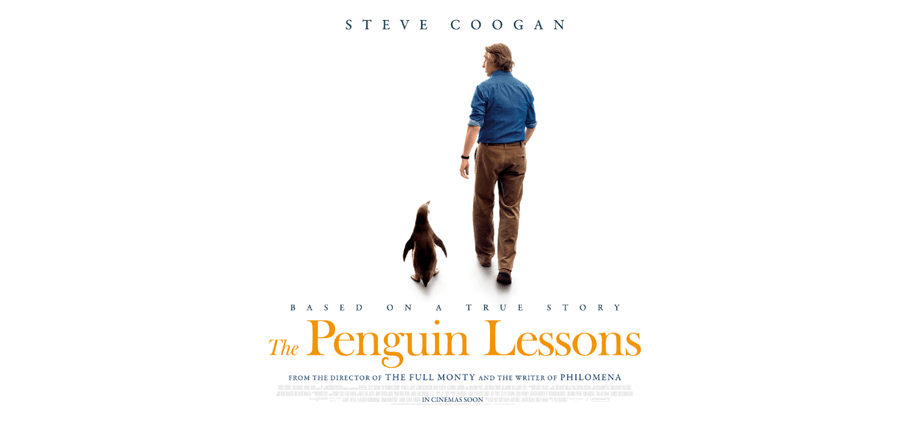
The Penguin Lessons (2024) Review

Quick Synopsis: An Englishman experiences personal and political changes after p-p-p-picking a penguin during a turbulent time in Argentina’s history.

You’ve seen the trailer, so you know how this film is going to go. A stuffy teacher in a foreign country is going to struggle to fit in, but then he finds a cute animal companion. Through this animal, he learns the value of kindness, but the out-of-touch leaders at his school try to stop him. Eventually, he’ll fall in love with a local woman. It will be heartwarming, it will be safe, and it will be predictable.

Nope. The “out of touch principal” section is very short, to the point of being inconsequential. He also doesn’t fall in love, or even gain a new social group. Truth be told, it’s not REALLY about a man and a penguin, it’s about a man in a fascist regime, coming to terms with personal responsibility and how to help in a world where you feel helpless. This isn’t done very subtly. A character flat out tells him that she expects bad people to do bad things, but she’s frustrated when good people do nothing. That character is then “arrested” in public while the main character just stands nearby, frozen to the spot.

It’s easy to criticise the character for doing that, but it’s also easy to see why he wouldn’t do anything. He knows that if he tries to help, he’ll either be arrested or executed. The government at the time (and the one that followed it) were arrested and disappeared. Don’t worry, the country was suitably chastised by *checks notes* being given a World Cup and financial backing from the West.

I’ve read some reviews that have criticised this movie for how it flips between being a silly movie about a penguin and being a serious movie about government oppression. I didn’t mind it, in fact, I really enjoyed the way they did it. Fascism doesn’t only affect you during the serious moments, it affects you when you’re making jokes with your friends, and an officer arrests you for thinking you were mocking him, it affects the TV you watch because your favourite show has been cancelled for not being patriotic enough. It doesn’t segregate or only rear its head at certain times, it causes your life to switch from comedic to serious real fucking quick. How many people do you think have made jokes, unaware that the secret police are right outside their door, ready to disappear them?

As you can tell, I did enjoy this film. Although, spoilers, (kind of, it won’t affect how you view the story), the penguin fucking dies. You will feel things. It is an emotional scene in a surprisingly emotional movie. If you had told me in the 90s that the guy who played Alan Patridge would give a subtle and brilliant dramatic performance, I’d have wondered why you were a grown adult talking to a child, and also “Who’s Alan Partridge? I haven’t watched that yet. I wouldn’t even watch The Day Today until the very late 90s”. But if you told me in the 2000s, I would have been doubtful. Coogan seems to have walked away from his comedic roles and into more dramatic fare. It suits him; he has a “classical English actor” face, and it’s good to see his performances finally match it.

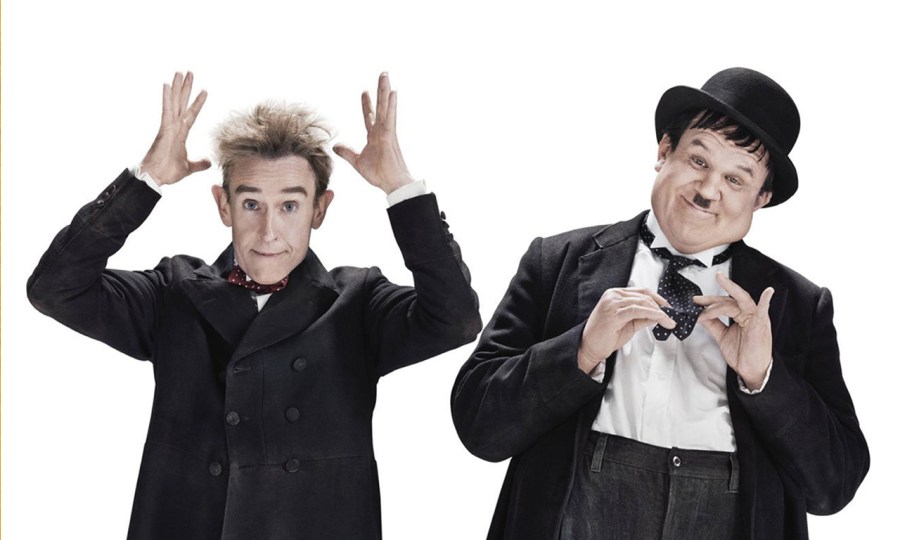
Stan & Ollie (2019)

I recommend you see this movie, but with one caveat. It’s about one of the most famous comedy duos of told time, so you expect this to be highly comedic, right? That’s the wrong approach to this, go in expecting a drama and you’ll be fine. It took a while for me to adjust to that mindset, so for about half the film I was disappointed, then there was a scene in a hotel lobby of the two of them having an argument, a really heavy one. Not in terms of shouting and screaming, but in terms of the pure emotion on display. At that point a switch in my head was turned on and I got it. From that point on I enjoyed it a lot more. I get the feeling they used artistic license with history at some moments, but not too many. It seemed relatively honest. By which I mean it made them seem like dicks at times, it admitted they were not perfect individuals or ones who had just suffered misfortunes, but were in fact sometimes the cause of their own misfortunes. I like when biopics do that (for a great example of this, watch Get On Up, the film about James Brown which seems to veer from loving warm tales to a full-on character assassination depending what scene you’re watching).

I will admit to having never seen any Laurel And Hardy, but now I want to. I want to see how accurate their depictions are of them. I’ve heard people say they were spot on imitations, but I can’t really comment on that, all I can comment on really is the story, which was great. It was almost like a love story. Well, it is a relationship story, essentially. We see them at their best, and at their worst. When their wives join them it completely changes the interplay between them, for the better. The wives’ interactions with each other are delightful, in a cringey way. The pair throw pointed barbs at each other all the time, some subtle, some not, and they provide some of the best laughs of the film. It also provides the backdrop of one of the biggest heartwarming moments near the end. A moment which will make you think “oh no, don’t do that” but then be very glad they did.

The big downside is the pacing is a bit slow at times. And we’re not really shown enough background about them. But that is minor, this isn’t a film about Laurel and Hardy, this is a film about a very specific time period in their life. And that it does very well, you really get a feeling for how far they’ve fallen.

This film is very good, but it lacked that something that made it great. If it’s the best film I see all year I won’t consider this a good year, but if it’s the worst film I see all year then 2019 is going to be great.

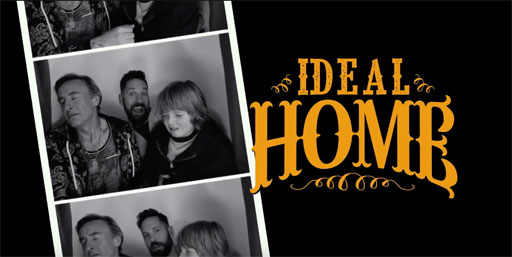
Ideal Home (2018)

I knew nothing about this film. Never saw it marketed, which considering how marketable a name Paul Rudd is right now (Particularly because of Ant-Man) I found that puzzling. Almost like this film was one that was shuffled out embarrassingly by the studios. Add to the fact it’s a story about a gay couple, which is a story cinema still has issues with telling in some of the more oppressive and backward parts of the world (Iran, Saudi Arabia, America. Yeah I said it, come fight me bro), left me with a big cause for concern. I was particularly worried that this film would just be full of gay stereotypes, that the leads would be doing the kind of performance that is best left in the awful and horribly dark days of the 90’s. There are moments where Steve Coogan and Paul Rudd to go a bit too stereotypical, but those moments are fleeting, other than that the characters are pretty much just like every other character the two of them play. They actually have surprisingly good chemistry, to the point where I really want to see Steve Coogan in a Marvel film (him as a villain in the next Ant-Man movie would be incredible to see).

That’s not the only way this film subverts expectations. There’s not that much homophobia in it. It’s a film where a gay couple look after a troubled youth. It would be expected for there to be a moment where another character says “those guys are dirty fags” and the kid gets annoyed and punches them in defence of his new dads. The closest you get to that is another kid saying to him “you have two dads?” “I guess so”. There’s a moment where Steve Coogan visits his son in prison (the kid they’re looking after is his Grandson from his straight phase). It’s shown they have an incredibly strained relationship, and the son has a history of awful behaviour (drugs, stealing from prostitutes etc) and has a foul mouth. So when Coogan’s character says “Paul is my male companion, and has been for 10 years. Do you have a problem with that?”, you expect tension. But nope, the son just says “no” and that’s it. It’s beautiful how nothing that moment is.

This isn’t really a film about sexuality, it’s a film about parenting. And a pretty damn sweet one. I knew I was hooked when the kid was handed back to his dad, and the dad was drink driving and nearly falling asleep with the kid in the car. When that part happened I messaged someone “this film better not go where I think it’s going”. I was genuinely invested in these characters.

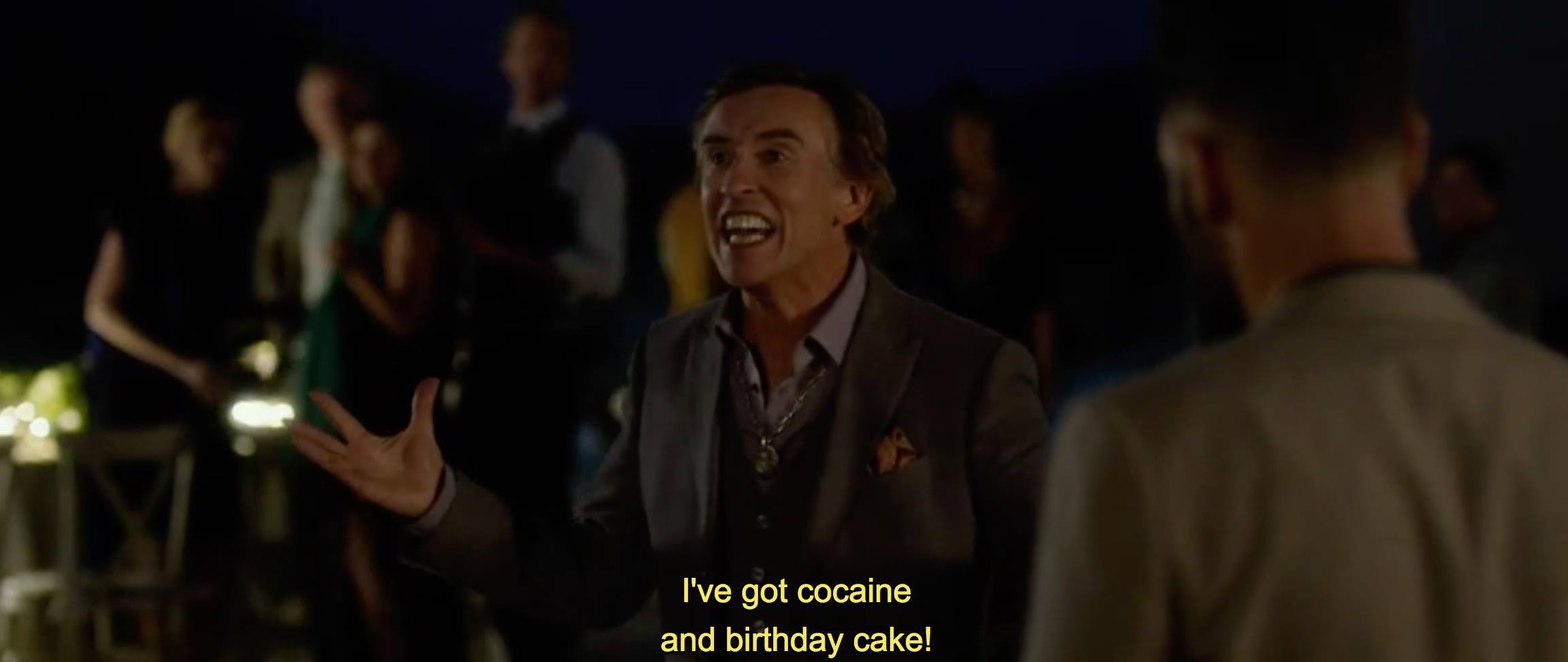
So I would recommend seeing this. Maybe don’t buy it on day of release, but if you get a chance to watch it, take it. You won’t regret it. I mean, it gave us this quote:

45452584_10161070958020125_8550834257709236224_o (1)