Zootropolis/Zootopia 2 (2025) Review

Quick synopsis: Detectives Judy Hopps and Nick Wilde find themselves on the twisting trail of a mysterious reptile who turns the mammal metropolis of Zootopia upside down.

I may have made a mistake going in. I tend to avoid reviews before seeing a film, but sometimes I do accidentally glance at one, or at least see the headline. The one headline I saw for this described it as a “soulless film-by-numbers affair filled with corporately approved jokes” and “might as well be AI-generated”. So I went in with low expectations. After viewing Zootropolis 2, I don’t understand where that reviewer was coming from. It’s not quite as good as the first one, but it is still a worthy viewing experience.

Most of the cast from the first film return, including Tiny Lister, through the use of archival recordings. Joining the cast are Patrick Warburton, Macaulay Culkin, Ke Huy Quin, and Andy Samberg. That’s the main cast; the voice cameos make it look like whoever wrote the Wikipedia page is just making shit up; Ed Sheeran, Mario Lopez, Mae Martin, Auli’i Cravalho, Tig Notaro, The Rock, CM Punk, Roman Reigns. The last two are particularly fun as the Zebros, who seem like the kind of characters destined for a spinoff.

So how does the story compare? It’s good, but it does feel reminiscent of the first one. The whole “the ones you think are dangerous aren’t really” message is essentially the same as the first one. There’s even the “cuddly animal you thought was friendly turns out to be a dick” plot twist. That one in particular hurt, as it seemed so obvious that I felt it must be a red herring. The Nick and Judy relationship also repeats some moments from the first movie. If the first movie didn’t exist, this would be great; as it is, it feels kind of like a remake.

I think it would have been stronger if they hadn’t done that late-stage heel turn; it would have backed up the film’s thesis that “it’s your personality that determines you, not your species/family”. It also misuses Dawn Bellwether from the first movie; she gets broken out of prison, then arrested again at the end. I’m not asking for her to have a huge impact on the story, but why bother bringing her back if you’re not going to use her at all? I also wasn’t impressed with how they say that Nick has a phobia of reptiles, then never mention it again.

That is a rather negative way of looking at it. On its own merits, it’s charming. It’s also very funny; packed full of jokes; there are moments where it feels like they’re cramming them in until it’s fit to bursting. Gary The Snake is a wonderful character who suits the franchise. It has enough heart to carry it through its weaker moments, and the animation is absolutely gorgeous. This isn’t as focused on the characters in the world as the first one, but the world itself is explored more; we get a much bigger focus on how the world works, how the different zones interact, etc.

In summary, just as good as the first one, and the signs for the inevitable third one are good.


Clown In A Cornfield (2025) Review

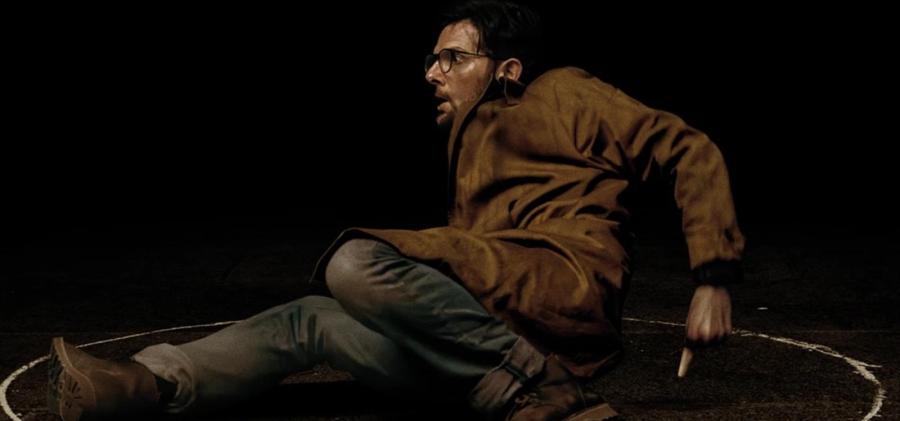
Quick Synopsis: Some kind of circus worker (can’t remember the specifics) kills teens in a rural setting of some sort.

Fun fact: this was the 100th new movie I’ve seen this year, beating my previous record by roughly 11. It kind of sucks that such a momentous occasion is being marked with a film so bland that even a local cheap chicken shop wouldn’t sell it. It says a lot that the most memorable thing from this film is that you can sing the title to the same tune as Goldfinger’s cover of Man In A Suitcase. Also, I kept spelling it Cornfrield for some reason. If this movie were a colour, it would be mud-brown.

For Clown In A Cornfield (CIAC, pronounced Sigh-ack) to work, it needs to do one of two things: either be ridiculous and weird, or be brutal beyond belief. This does neither. It’s rated 15 in the UK, and it feels like it’s towards the lower end of that rating. The kills, even the most violent ones, feel remarkably pain-free. None of them really sticks in my mind. The opening two in particular feel neutered. One is offscreen, and the other one breaks physics. The clown approaches the future victim while they’re lying on the floor, then does a sideways sweep (like a hockey player making a quick pass), it then cuts to the person being lifted up on the weapon high up above the clown’s head.

The actual script isn’t too impressive either. Seinfeld famously described itself as “a show about nothing”, CIAC takes it to the next step by having nothing happen. The background characters are so underwritten that they might as well be cameos, so when the film shows us that there are multiple killers (I don’t count as a spoiler as it occurs before the halfway point,) it’s not difficult to see how the unmasking is going to go. The iconography of Frendo is so underbaked that I’m pretty sure it gave me salmonella. It doesn’t feel like “this has haunted the town for years”, or even a recent urban legend. The main characters use the idea that Frendo is a killer as a joke in a YouTube video. Also, for most of the deaths, the clown is only seen by the person they kill; so why dress as a clown in the first place? It’s unfair to single out CIAC for that, as SOOOO many slashers make the same mistake, to the point where I was actually impressed when Heart Eyes provided a good reason for the characters’ “fame”.

I don’t want to spoil the ending, but it’s basically Hot Fuzz, only we’re expected to take it seriously. I think we are, anyway. By all logic, this should be comedic, and there are times where it feels like it’s trying to be one, but it’s like being headbutted by a teletubby; incredibly po-faced. It’s weird as Eli Craig also directed Tucker and Dale Vs. Evil, which got the comedy/horror balance spot on. Here, it feels like it didn’t do enough to satisfy either genre.

On the upside, there are some musical choices. And there are some surprisingly subversive choices made with the main characters. It’s nowhere near as bad as I’ve made it sound. I doubt it will be in the bottom half of my movie rankings this year. There’s not much offensively awful about it, but there’s absolutely nothing worth highlighting. It’s mediocre, and in some ways, I find that more offensive than being bad.

Now You See Me, Now You Don’t (2025) Review

Quick Synopsis: The Four Horsemen and a new generation of illusionists join forces to steal the world’s largest diamond from a South African mogul who heads an international crime syndicate.

I’m a huge fan of this franchise. I mean, they’re clearly bollocks, with some of the moments (particularly when they were passing the card around in the second movie) defying physics. But that doesn’t mean they’re not enjoyable and well-crafted. It’s weird how all three movies in this franchise have a similar style despite being directed by different people. Now You See Me, Now You Don’t (NYSMNYD, pronounced Nice-mon-yad) is directed by Ruben Fleischer, best known for Zombieland. Now You See Me 2 was by Jon M Chu, who has since moved on to the two Wicked movies (as in, the two movies based on the stage show Wicked, not two movies I think are wicked), and the first one was brought to the world by Louis Leterrier, who gave us Fast X (which should have been called Fast X Your Seatbelts). It feels like Fleischer understood the world better out of the three; he’s really good at staging action sequences among crowds, making them feel dynamic and not like everyone is just standing there watching instead of running away.

I like the script for this more than I did the others; there aren’t as many obviously unrealistic moments. My biggest issue was one which I’m not sure most people would notice. I’m aware I watch more films than most people (I’m one film away from 100 new releases seen this year), so I don’t think it’s too pretentious to say I pick up on things more than most people would, especially verbal foreshadowing. Like a verbal Chekov’s Gun, if a character in a cop movie talks about how their former partner died mysteriously, odds are that character isn’t really dead and will come back at the end. In this, a character is explicitly introduced with “I couldn’t find out much about your past”, so its obvious his past will be a plot point. Added to that, there’s an unseen mysterious character, with nowhere near enough side characters as potential suspects for who they are. So it’s not as mysterious as it should be. Yes, the way the reveal is pulled off is incredibly satisfying, but they could have hidden it a little better. It also would have been nice if the villain was a bit more cruel.

It’s been almost ten years since the last movie, so it would have been understandable if they assumed people didn’t remember what happened and opened with a flashback. This doesn’t do that, it jumps straight in, no explanation of what happened before, no reintroductions or summaries. I like that. It treats the audience as adults rather than spoonfeeding them everything. The way it introduces the new characters could be slightly more subtle, but it works. They slot in with the established crew without overshadowing them. I may not have been too impressed with him in I Saw The TV Glow, but Justice Smith is growing on me with performances like this (I’ve also been playing The Quarry lately, which may explain it). Dominic Sassa is impressive enough that you forget he’s only been acting for a few years.

Is this among the best movies I’ve seen this year? Nope. It might make the top 25% but that’s it. Am I going to buy it on DVD/Blu-ray? Almost definitely. I won’t gush to everyone about how incredible this movie is, about how everyone should see it, and it will change your life. But I will watch it again. If anyone asks whether it’s worth it, I will say yes.

The Running Man (2025) Review

Quick Synopsis: Desperate to get the money required to get his family luxuries such as food and healthcare, Ben Richards enters The Running Man, a TV show where people must survive 30 days being hunted by assassins.

The existence of this movie has annoyed a lot of people. People who are complaining, “They remade the Arnie movie. Be original! And they’ve changed aspects of it”, seemingly not realising that it’s not a remake, it’s another adaptation of the book, and some of the changes have been made to make it more faithful to the book. I watched the original a few weeks ago; it’s a VERY loose adaptation of the source material, removing a lot of the central themes. So in that sense, the 2025 version is better; it’s a lot more faithful, keeping not just the basic plot points but also the world-building required to make the story more than “muscle man kills everyone”.

As good as the first version is, it never truly felt dystopian or real. This feels real. The characters are clearly financially suffering, and living in a world where most of the media shows glamorous lifestyles that are beyond the reach of most people. A world where people are constantly watched. A world where the divide between corporations and government is wafer-thin. In short, a world which can either be described as “one we’re heading towards” or “one we’re already in”, depending on whether you view your glass as half full, half empty, or missing because some fucker stole it. The world has changed since the 80s, when America was led by a psychopathic manchild brought to the world by his appearances in the media, and Britain was determined to crush the rights of the poor, disabled, non-white, and members of the LGBTQ community. The proliferation (big word, go me) of AI and surveillance means that certain parts of this now ring very true. It does make things easier for the filmmakers; characters don’t have to say “they edited it using artificial intelligence based on pre-existing recordings” We’re all so familiar with deepfakes that we automatically know.

So it’s a good adaptation, but is it a good movie? I mean, the Tim Burton version of Charlie And The Chocolate Factory is clearly more accurate than the Gene Wilder one, but is clearly inferior, partly (but not entirely) down to Depp’s decision to play Wonka like Michael Jackson, but more creepy. I liked it. The political satire is on point, the action sequences are fun, and there are no sequences where you’re bored. Also, it’s fun. Action movies can make a political point and still be fun.

That being said, it could do more. Edgar Wright is known for certain things, mainly his editing and his music choices. It feels like The Running Man doesn’t showcase his skills. There are some very good music choices (especially in the opening), and like I said, some of the action sequences are fun. But there are no scenes which stand out as particularly impressive compared to his other works. There’s nothing which you can point to and say, “That! That is why we love cinema”, like the opening chase of Baby Driver.

The performances are fine. It’s still weird to see Glen Powell as an action hero, but I suppose that’s kind of the point. Colman Domingo is great, bringing to mind Carl Weathers’ performance as Apollo Creed with the energy and charisma he has.

There’s been some negative talk online about this movie. Those people are wrong. The Running Man is one of the most fun experiences you can have in a cinema without risking being thrown out. There’s a delightful energy to the whole thing, and the action scenes actually make sense. There’s not much suspension of disbelief required for it to make sense, no requirement to leave your brain at the door and “stop nitpicking and just start enjoying”. That doesn’t mean it’s overly pretentious and serious, though. You can just watch it at home (when the DVD/Blu-ray is released) with a couple of beers and some friends (sadly, friends aren’t included with a dvd purchase, I’ve checked) and cheer at the sequences, you’re not going to be have to be like “shhhh, you’re missing important plot points, concnetrate!”. Essentially, this movie is what you make it; if you want political satire, it’s got it, if you want bang bang blow up shoot shoot action movies, it’s that. So while it’s not an easy film to declare the best movie ever, it’s a very easy movie to enjoy.

I like that.

The Hand That Rocks The Cradle (2025) Review

Quick Synopsis: Afluent attorney Michelle brings a new nanny into her home, shit gets creepy.

The original movie is one of my non-childish childhood favourites. I think everyone has those movies you watched growing up that you have fond memories of, that weren’t kids’ movies. Movies that aren’t stupid and cheesy. These are “proper” films. Your first introduction to nuance and mature themes. I’ve watched it again recently, and it still holds up. It’s a tense drama, led by some fantastic performances, especially Rebecca De Mornay, winner of the “Actress whose name sounds most like a Hitchcock character” award. If I heard this was being remade, I would have been deeply offended but curious. I only ended up hearing about its existence roughly two weeks before the release date, so I didn’t really get enough time to draw up strong opinions about it.

I’m not as opposed to remakes as some people; I won’t dismiss something purely because it’s a remake. So I was going into this with an open mind, but with the knowledge that it could suck. One advantage this has is that Maika Monroe isn’t as inherently unsettling as De Mornay. That’s not an insult to De Mornay, by the way, but she’s very easily believable as a creepy person, so it’s difficult to build her up as a creepy person because that’s her baseline. It’s like watching an action movie where you’re expected to be surprised that the mild-mannered janitor played by The Rock turns out to be a former soldier; it’s kind of obvious.

This does what a remake should do: sticks to the spirit of the original whilst changing the specifics so that you are still surprised. As good as the original was, Mrs Mott’s motivations always felt a little too caricatured evil to be as compelling as it could have been; “I’m annoyed that this woman reported my husband for sexually assaulting her” is a weird motivation. I won’t spoil it, but the villain’s motivation in this version is much more believable and personal. As good as Annabella Sciorra was in the original, Mary Elizabeth Winstead exceeds her in some aspects; it helps that she’s great at being frightened.

On the downside, the husband’s role is even more of an afterthought in this than it was in the original. I can’t remember his name, what he looks like, or any aspects of his personality. That’s a small complaint, though, as the core relationship in this story will always be the one between the two women.

In terms of visuals, this is overly artsy at times. Sometimes it works; the house fire is beautifully cinematic. But on others, it’s a little much; we don’t need a shot of her blood on the road the way it’s done. Truth be told, it feels a little pretentious at times. It’s definitely more cinematic than the original, for better and for worse. There’s one shot which I’m definitely not a fan of; when Rebecca kills someone with a baseball bat it lacks impact due to how it’s shot; it needs a split second or two

The story? I mentioned before how I preferred the villain’s motivation in this version, but how it’s revealed feels a little weak. There’s also a sex scene that doesn’t feel necessary. In a lesser movie, that would be a random sex scene made for titillation, but because this movie is obviously trying to be good, cheap moments like that hurt it more than they’d hurt others. If this weren’t trying to be so good, it would be a better movie. Which is a weird thing to say, I know. But the story is cheesy and over exaggerated, but the directing and performances are mature and sophisticated, which causes a weird style clash.

In summary, an interesting watch, and not one I regret. But I won’t hold it with the same love and reverence as I did the original.

Die My Love (2025) Review

Quick synopsis: Grace is a writer and mother. One of those things is ruining her life.

This is going to be a difficult review to write. Not for personal reasons, the emotional moments didn’t cause PTSD or flashbacks to similar events in my life. It’s difficult because it’s going to be tricky for me to talk about this and not make it very similar to my review of Urchin. I also went into that with high expectations, which weren’t met. Both films seem to have a disconnect between reviewers and audiences; with multiple high scores in professional reviews, yet audiences (at least the screenings I was in) met them with silence at best, and derision at worst. They both suffer the same flaw: making a straightforward and potentially emotionally compelling piece “artsy” to the point it’s incomprehensible.

Die My Love (DML, pronounced Dimm-ell) has noble intentions; showcasing how postnatal depression can cause women to feel isolated and gaslit by their own brain, how damaging it can be to their mental and physical health. The issue is that it’s clear that some of the film takes place inside her head, but you’re never sure quite how much. It’s the kind of film which, if it ended and you found out everything except the opening scene was all a dream, would make sense. There’s no indication of what’s real and what’s imagined, so it’s difficult to feel fully invested. It also makes it difficult to learn anything from it. It doesn’t say how you can help your loved ones who are dealing with similar issues, and no indication of how women can help themselves through it. The character does go to a psychiatric institution, but that doesn’t help. If anything, it just widens the chasm between the two leads, with her being angry at him for attempting to get her help. So the main message seems to be “you’re fucked”. The lack of audience investment also means that there is zero emotional resonance. This should be deeply emotional; instead, you’re left cold because you don’t give a shit about anybody in it.

Jennifer Lawrence gets some slack, but she is the core to what does work; the few moments which have emotion are all down to her. Robert Pattinson is fine, but there were many scenes where I couldn’t tell if he was angry and frustrated or just drunk. The two have great chemistry as a couple. The opening moments of them as a happy couple are delightful. The wordless foreplay feels real; they feel like a couple at play, completely comfortable with each other. Most of the other cast aren’t really in it long enough to leave an impact. I love LaKeith Stanfield, but his character adds nothing except raised questions. If you removed him, it would leave no hole in the film. That’s partly because a lot of the film goes from moment to moment, with things happening and then not being referenced again. You’d think somebody headbutting a mirror until they bleed would be mentioned, but nope. They rarely mention a character killing a dog. In fact, they don’t bring up the baby as much as they should, with multiple scenes where it feels like they just leave it at home.

On the plus side, the choice of music is good. With some songs you’ll know, and some you won’t. They are all tonally perfect for each scene, usually played at the perfect volume. I am aware that’s a weird thing to say, but sometimes films struggle to show music being played, with there being a disconnect between the music and the scene, with it clear that the music isn’t actually being played on set. DML, you can almost feel the beats of the music as it’s played, and she dances around the house.

In general, DML is a deeply uncomfortable watch. The constant noise and narrative disruption mean the audience never feels settled; they always feel tense and frustrated. I get it, that’s the point, it means you feel what the character feels. But if something is designed to be deliberately off-putting, it’s not an unfair criticism to not like it because you find it off-putting. I can watch films about death and loss without the requirement of the cinema staff murdering the person sitting in front of me. It feels like a film you’re supposed to analyse, dissect, discuss, think about, pore over. There are very few moments where it feels like a film you’re supposed to watch and want to see again. It’s a thesis, not a film.

Relay (2024) Review

Quick Synopsis: A bribe broker facilitates deals between corrupt companies and their threats. His new threat is a woman who has some dangerous leverage against a multinational conglomerate.

I was in a weird position for this. I’m not entirely sure how, but I had heard the “twist” ending for this. So I couldn’t be fully invested because instead of wondering where it was going to go, I spent my time trying to see the crumbs that would eventually come together into the sandwich of narrative completion. I’m going to admit, I did wonder if I had heard incorrectly. It felt like there was no way the ending I heard could be correct. If it was, surely they’d have set it up somehow? Put clues which don’t make sense until a second watch? Nope. It’s unpredictable, but not in a good way. It feels like it’s a twist for the sake of a twist. The annoying part is how unnecessary it is. If you changed it and made it more straightforward, it would work much better.

Remove the unnecessary moment near the end, and it’s a very solid thriller. I’m sure there are some plot holes that emerge if you think about it, but none that are so glaring that any idiot (by which I mean, me) can see them. I’m unsure of the opening. On the one hand, it is nice to have a film that doesn’t treat you like an idiot, but on the other, it takes longer to give you context clues than it should. One thing I am sure about is that Lily James’s character repeated her motivation. She explains it to a lawyer, who advises her to contact the relay service. She then explains it to Ash (played by Riz Ahmed). I understand why she would need to explain it twice, but I don’t understand why we had to see it twice. It would have worked if we started at the end of her meeting with the lawyer, so we just see him say “we can’t deal with this, but unofficially, here’s someone who can”. As an audience, our tension will be heightened, and we’d be wondering what it is that she’s so desperate and in danger. Although that does remind me of one plot hole that does need explaining, but I can’t explain it without ruining the twist. So I’ll just say this: the characters are INCREDIBLY lucky their plan went as it did.

This is all sounding negative. Which is a bit mean. Relay is one of the tensest films of the year. When it works, it’s remarkably old school and Hitchcockian; a tale of an ordinary man caught up in something much bigger than him, surviving on just his wits and local knowledge. The central premise is actually genius; a messaging service keeping anonymity by using deaf messengers and teletypewriters is perfectly suited for tense dramas. It reminded me of John Wick, how it set up its world visually and trusted in the audience to buy in.

It’s anchored by a great performance by Riz. That really shouldn’t be a surprise, I mean, he’s an Oscar-nominated performer (losing to Anthony Hopkins, which is nothing to be ashamed of). I think he may be one of my favourite British performers, and has been ever since I saw him in Four Lions. He has a nervous energy in this, like you can imagine that he jumps twenty feet in the air every time someone taps him on the shoulder. But he also seems like someone who’s really good at his job and is confident in doing it. It’s a strange dichotomy that is tricky to pull off, but he does it brilliantly.

In summary, this won’t be in my list of best films of the year. But it will join the likes of Bridge Of Spies, The Post, etc, by being a film that in a few years’ time will be added to a streaming service, and I’ll think “oooo, I really enjoyed that, I’ll watch it”, and then think “yup, that was certainly a good movie”.

Time Travel Is Dangerous! (2024) Review

Quick Synopsis: Ruth and Megan run a vintage shop in Muswell Hill, using a time machine to source new old stock.

It’s nice reviewing films people know and are excited for, to add my voice to the conversation that millions of people around the world are having. But there’s also something to be said about reviewing something not quite as well-known. Films like Time Travel Is Dangerous (TTID, pronounced Tit-tied), which at the time of writing has only 25 reviews on Rotten Tomatoes, that’s critic and audience total. It deserves more than that.

I’m not really surprised, though. This film is incredibly British and quite low-budget. It’s not low budget in a way that makes you wonder how they managed to miraculously produce something on that budget; it wears its budget on its sleeve, and that’s not meant as an insult. If anything, it adds to the charm. And TTID is very charming. The characters using a time machine to bring back stuff to sell in a vintage shop? Brilliant idea. And anybody who has worked retail will recognise someone trying to buy the shop vacuum, and then being annoyed that they can’t do it. It helps that the two charity shop workers (Ruth and Megan, played by two women called *checks notes* Ruth and Megan, well, how am I supposed to remember that?) are incredibly likeable. Apparently, they are the real-life owners of a vintage shop in Muswell Hill. That genuinely surprises me. Usually, you can spot non-actors in films like this, especially as the leads. I had no idea; I just assumed they were involved in production somehow.

There are some great jokes here. An inventor’s group having a motto that’s “insert motto here” in Latin? Love it. Yeah, the jokes aren’t the smartest, but they’re funny. It’s also surprisingly poignant at times, especially the sub-plot with Botty and Ralph. I didn’t expect to find a touching treatise on fame and friendship inside a film as silly as this, but I’m glad it’s there. The entire inventor’s group is full of fun characters and jokes, so for two-thirds of the film, it’s delightful.

But then we get the final third. This section takes place in the other universe (there is a proper name for it, but I’ve forgotten it). It feels WAY too disconnected from the rest. There’s an almost entirely new cast of characters, a different visual style, and different comedy. The rest of the film is like a documentary; this part isn’t. So it feels like it takes place in a different film, where the characters of this one have just invaded it. It seems like that’s where most of the budget went (I’m guessing). It’s a shame, as that’s clearly the most ambitious part, so it feels somewhat mean to knock them for it. But it is definitely the weakest part, and knocks it down quite a bit.

There are some people who will enjoy that part, and there are also likely to be people who hate my favourite part: when Ruth is turned into a teenager because of issues caused by the time machine. I like it, I found it funny, and I liked how it drove a division between the two leads. But it’s easy to see how some may see it as a stupid diversion. Like I’ve said before, film reviews are all opinion, and opinions are never objective.

This won’t be a film liked by most people. But those who like low-budget silliness will enjoy it.

Good Fortune (2025) Review

Quick Synopsis: A well-meaning but inept angel named Gabriel meddles in the lives of a struggling gig worker and a wealthy venture capitalist.

Aziz Ansari could have gone down a very different career path. He was a pretty big deal in comedic circles in the late 2010s, then in 2018, he got caught up in a #MeToo-related scandal (albeit one of the tamer ones). At this point, he could have gone the Jimmy Havoc route and retired from public life, he could have gone down the Louis CK path and ignored it, or he could have done what Russel Brand did and gone full-blown conspiracy theorist (albeit one who agrees with a US political party funded by billionaires). Instead, he did something almost unheard of in celebrity circles; he took ownership of his mistake. Not in the form of a multi-million dollar apology tour, but instead by admitting he misread a situation, fucked up, and he apologised for it. As such, he’s avoided the stink that surrounds someone like Kevin Spacey and is forgiven for it to the point it never comes up anymore (outside of idiotic reviewers who start their reviews of his movies by talking about it, oh wait).

Good Fortune is his first foray back into cinema (with the exception of The Bob Burgers Movie, which is more a continuation of something he was already working on), and it’s nice to see him back. Not just as a performer, but his skills as a writer have also been sorely missed. He avoids the trap that a lot of comedy writers fall into, making sure that the other performers get just as many laughs as he does (seriously, watch some films written by comedians and see how unbalanced the comedy is in their favour). Keanu Reeves gets to show everyone he can still pull off the Wholesome Bro shtick he perfected in Bill and Ted.

Not that the writing is perfect. It comes across a little dismissive of its own lead, Arj. Arj is mostly likeable and charming, but his getting fired from his job as Jeff’s assistant doesn’t come off as particularly unfair or something that Jeff needs to atone for. He’s not fired over a misunderstanding or something beyond his control; he was fired because he used company money to pay for an expensive date. I know, techbro millionaire could afford it, but still. It’s like being fired from Woolworths for eating Pic-a-Mix; you can disagree, but it’s hard to argue against. It’s such a simple fix, too. Just have him use the company card accidentally. Or use it for something essential, where he’s so desperate he has no other choice BUT to use the company card; his car gets towed a few scenes later, it would have been easy to have him try to stop it happening, but realising the only way it can happen is if he uses the card, but show he’s conflicted about it. His using it to pay for an expensive lunch comes off a little “the poor deserve to be poor because they make bad choices”. It’s a relatively small moment, but it paints an ugly colour over the character as it means you’re aware that whenever he’s complaining, it’s kind of his fault, and he never realises what he’s done is wrong.

If you ignore that scene, the film is pretty damn good, with moments that are depressingly relatable and frustrating, even in the small moments. For example, he can’t sleep, so he tries to listen to a relaxation app for assistance. It starts to work, but the peace is interrupted by a loud, obnoxious advert, meaning the “free” app is utterly worthless unless you pay for premium, which is pretty damn shitty for something designed for health reasons.

There are many moments like that, moments which are relatable and you hope will age badly because the problems won’t exist in 5 years. If you want to explain to certain people why younger people are struggling despite working, show them this. As one character explains, it’s hard not to live as a worker in a gig economy and not be angry. It never lets the message it’s telling get in the way of a good narrative, or in the way of jokes. There are some great jokes here, moments which caused the (disappointingly not full) screen I was in to burst out in laughter. Then there were moments where you could sense people really invested in the story.

In summary, thoroughly enjoyed this. I’m not going to feel an urge to buy it on DVD, but that’s mainly due to space rather than quality. It is a bit unrealistic, though, especially at the end. I can buy the existence of angels. But a rich person being prosecuted for financial crimes? As if.

For a lot of comedians (particularly American ones), The Aristocrats routine is a staple. It allows them to showcase their talents within an expected framework, take something everybody knows and show an audience how they do it. I believe there are two versions of it for scriptwriters, two stories every single writer should do their own version of to showcase their skills. One is A Christmas Carol (which I’ve done, and might post this year when I run out of reviews to post). The other? It’s A Wonderful Life. This is Anzari’s Wonderful Life, and I’d love to see him do a Christmas Carol. It’s strange how a film can make you want to see a completely different one, especially one that will never exist. But Good Fortune is so entertaining that you can’t help but want more, but realise a sequel would be terrible.

Good Boy (2025) Review

Quick synopsis: A haunted house story from the POV of a dog.

Sometimes it can be difficult to sell a film just by explaining the plot. How can you sell someone on Knives Out if you just sell it as “a murder mystery drama about a rich guy”? Then there’s Good Boy. “A horror movie told from the POV of a dog”. That’s all you need. Once you hear that, you don’t need to know the director, any of the performers, or even to see a trailer. That concept is simple enough and strong enough to draw you in. For that, this has to be commended. It doesn’t fail to live up to that premise either. If you like the concept, you will love this film.

Gimmick films can be tricky because they need to be worth watching even once the novelty of the gimmick wears off. “From a different perspective” is a fun gimmick to use, especially in horror, but it has been done a lot lately. We’ve had films from the perspective of a ghost (Presence), films from the perspective of the killer (In A Violent Nature), and films from the perspective of a group of fucking idiots (Truth Or Dare). From the POV of a dog is interesting, and I can’t think of any others like it. The closest I can think of comes from video games. It adds a unique twist to a somewhat tired genre; everything is more terrifying when it’s towering over you. What will be a downside to a lot of people is that, because the main character is a dog, there’s no vocal way to convey a lot of information. You REALLY have to pay attention to enjoy this film; there’s no way you will enjoy this if you’re not 100% in. Which is a rather long-winded way of saying that this is a terrible film to watch on the same day you get your flu jab as instead of paying attention to it, you’ll sit there trying to remember the final line in the Postman Pat theme song (“he puts all the letters in his van”, by the way). Don’t worry, I have seen it again, so this review isn’t coming from a place of tired haze.

If you pay attention and give this film what it deserves, you will be rewarded. It’s fascinating. I am slightly disappointed that it does firmly place its foot in the “this house is haunted” box; there is definitely a haunting here, no doubt about it. It may have been more interesting if it were ambiguous, where we realise that what we’re seeing isn’t a haunting, it’s just something the dog doesn’t understand. Maybe a scene where it looks like his owner is possessed, but with further context clues, it turns out he’s just drunk. A fearsome creature turns out to be an animal that the dog isn’t familiar with, that kind of thing. For a definite horror movie, this does its job well, though. It helps that we care about the characters, despite there only really being two of them (and one of them being a dog). The ending is heartbreaking (don’t worry, the dog doesn’t die), and it is the best way this story could end. The heart shown in that moment encapsulates why Good Boy stands out in a crowded genre; it’s genuinely sweet at times. It helps that they picked the right kind of horror movie. It’s not needlessly violent and disgusting, or full of jump scares. Instead, it’s an exercise in creeping dread. Instead of smashing you in the face with violence, it creates an atmosphere and uncertainty which lingers over the run-time.

On the subject of run-time, it’s only 72 minutes. I admire that, I much prefer that to a longer one. Mainly because longer films sometimes overstuff the narrative to try to justify their length. A shorter film says, “yup, we know the limits of this story”. It’s difficult to see how this could be longer and still maintain the elements that make it work.

In summary, this may not be your cup of tea, but it’s a film that I’m very glad was made, purely because of its originality. I wish there were more films like this, even though I don’t really feel I need to see it again. If I’m with someone who wants to watch it, I’ll watch it. But I can’t see myself going out of my way to see it again. That’s nothing against it, it’s a fine film, but it’s never quite great.