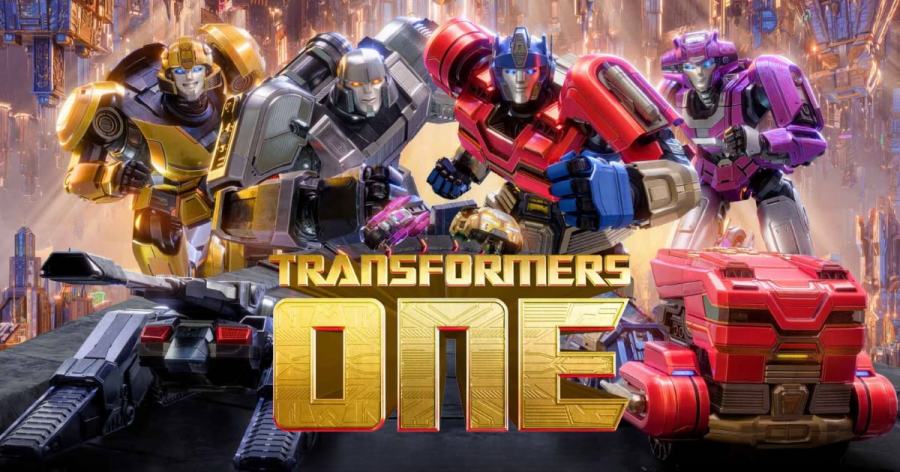
Transformers One (2024) Review

Quick Synopsis: A look at the inciting incident in the hatred between Optimus Prime and Megatron

I was mildly looking forward to this. The trailer caught my attention, and I thought, “That looks like a lot of silly fun.” A bit like the second coming of The Lego Batman Movie, which I still think is dumb brilliance. It’s not dumb brilliance, it’s just brilliant. Yes, it has some silly jokes, but nowhere near as much as it could. Before it fully settled into the tone I spotted numerous opportunities for some silly jokes, and I assumed it was the scriptwriters missing opportunities. That’s my bad, this is not attempting to be silly, just entertaining, and yes, Virginia, there is a difference. Everything makes sense within the logic created. Also, EVERYTHING is played straight, to a horrific extent at some points.

This isn’t a “fun and joy for kids” movie. It deals with colonialism, disability rights, hierarchal power structures, appeals to authority fallacies etc. It doesn’t shy away from darkness, characters are decapitated, torn apart, mutilated at birth, and stabbed repeatedly. You don’t expect kids’ films to feature a scene of a main character being horrifically tortured, and you certainly don’t expect it to be shown and not just implied or cut away from.

This is only the second film that Josh Cooley has directed, and he does brilliantly. It will be a weird thing to say as a response to an animated kid’s film, but I feel he would make a fantastic horror film. He knows about scale, he knows about tension, and he knows how to maximise character pain so that the audience can feel it, I shouldn’t wince in pain when an animated robot gets hurt, but this manages it. He’s helped by the animation style; it is almost stop-motion in how physically real the world looks.

It’s very well cast. There are NAMES in this, Johannson, Hemsworth, Fishbourne, Hamm etc. And all of them nail it, they actually act, and they’re not just doing their normal voices. The real MVP is Brian Tyree Henry. There’s one moment in particular where his performance is one of the best I’ve heard all year, not just in kids films, in general. His conviction and passion is breathtaking, and it’s genuinely chilling to hear him deliver it, particularly the line “No, I want to kill him” which would easily be seen as cheesy if delivered by a lesser performer.

I know I’ve seen the first Michael Bay Transformers movie, and I think I’ve seen the second one too. But I can’t remember much from them, they were fine as I was watching them, but nothing stands out, it was just metal smashing metal like some Robot Fuck Club (great band name). This? I will remember this. At the risk of sounding crude, it’s f*cking fantastic. It has everything I want in a movie; laughs, good characters, references to Key And Peele sketches, looks fantastic, heart, and some mild terror. Some people may argue that the start of darkness is too obvious. Those people are wrong, it’s not “predictable”, it’s foreshadowing/storytelling, and damn fine storytelling at that.
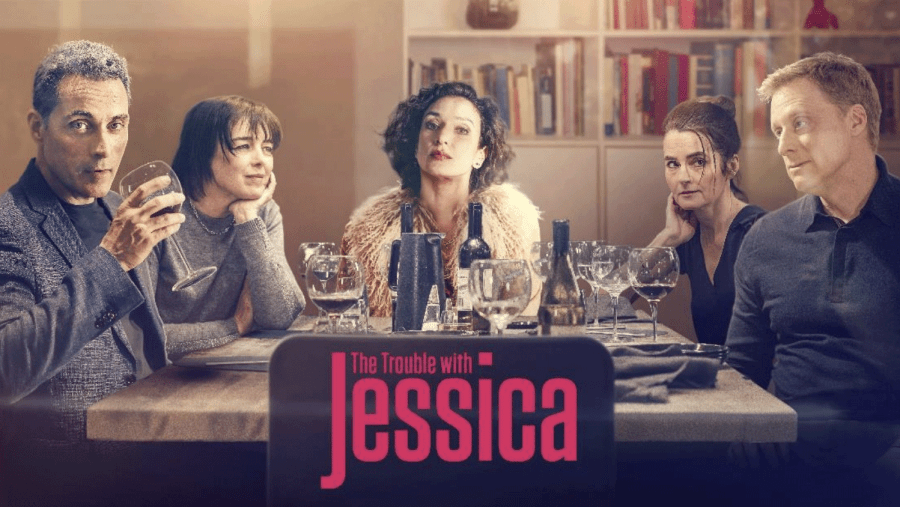
The Trouble With Jessica (2023) Review

Quick Synopsis: Sarah and Tom have one final dinner party before selling their home. The suicide of an unwanted guest ruins the party (and the chances of a successful sale)

I fucking love a good dinner party scene. There’s something about them that’s so tense to watch unfold. I think it’s because they have societal expectations in ways that other parties don’t. There’s an expectation that everyone will behave politely and behave well. There’s also the fact that they tend to be very conversation-based, so it’s VERY easy to get information over via dialogue. “so how’s the new job going?” is a perfectly normal thing to ask at a dinner party, so it’s very useful for exposition. I mention that because the one in here has some of the most tense five seconds I’ve ever seen. A tenseness which is then made worse by the revelation that the character was joking. There’s a definite shift in dynamics there. Ordinarily, it would be “This rudeness puts everyone on the defensive”, but here it actually does the opposite, it puts everyone on the offensive, against her, so your feelings are conflicted when she commits suicide soon after.

On that subject; I wasn’t a fan of the post-suicide moment. She commits suicide, they try to cut her down and save her but are unsuccessful, and she falls onto the floor dead. Title card. That, that I’m fine with. But then there are establishing shots of the house and food before we go to the characters reacting. Those shots are only roughly 5 seconds long but completely kill any momentum. It’s just a weird narrative decision.

That’s The Trouble With Jessica’s (TTWJ, pronounced That-weej) biggest flaw; it has a good story but no idea what to do with it. The main farcical driver is that the characters want to move her body to her own house because they think having a dead body in their house will affect their house price. Very funny, very middle class. But they get to that decision far too quickly.

Part of the problem is that the satire never hits as sharply as it could. Primarily because tonally, it feels like the target of its ire and its target for a viewing audience are one and the same, so it’s very scared of annoying the people who are viewing it.

It REALLY feels like a weirdly dark episode of Coupling without Jeff, in which Jane kills herself. Seriously, watch this movie with the core 4 from that sitcom in mind, if I told you “Which Coupling character would this person be?” I GUARANTEE you’d get the exact same. That’s a criticism of the script, by the way, nothing against the performances. Shirely Henderson gets the plaudits, but it’s fascinating how well Alan Tudyk plays a middle-aged Brit.

The familiarity and lack of bite aren’t the only issues with the script. There are completely unnecessary flashbacks to scenes we saw earlier, it would have worked better if we saw just the flashbacks, not the originals. It also has trouble ending. It doesn’t so much drive to the home stretch, as stutter.

It has some fun moments though. The intertitles are interesting, but when they get to “The trouble with driving a dead body across London in the middle of the night”, they suddenly become brilliant. Some of the dialogue is hilarious, and the characters are very believable.

In summary, I’m glad I saw this, but that’s mostly because it’s available on Netflix and I watched it there, if I watched it at the cinema I’d be much harsher towards it.

Lee (2023) Review

Quick Synopsis: The tale of Lee Miller, acclaimed war photojournalist

This review was going to be so simple. It was just going to be a lot of jokes about how the name character has the same name as me. Lots of “I don’t remember doing any of this” stuff. It was going to be SOOOOO dumb but funny. Now I can’t do that. And I can’t do that because this film is too good for that. It’s deeply emotional and important, and making stupid jokes about it feels like it would cheapen it a lot. Stupid Lee, being too good for me to make jokes about, as all my friends say: Lee ruins everything.

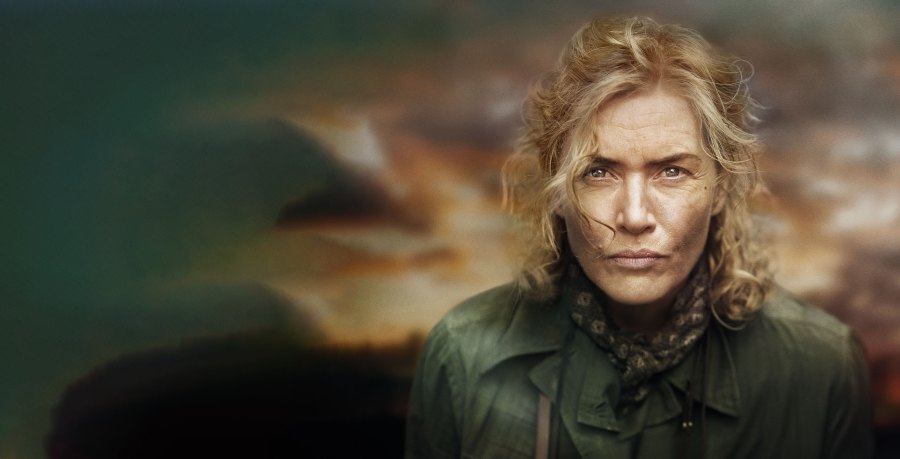
Lee is not perfect, at times it feels like it assumes you know the importance of certain images, so you’re sitting there and being amazed at the recreations and new insight into how they were constructed etc. As it is, you spend a few moments with no idea what is happening. My other issue, and it hurts me to say this, Andy Samberg is not as good a dramatic actor as the other performers. In a lot of films, that would be okay, but here, he’s opposite Kate Winslet who is at the top of her game. Despite my prediction towards small weird stuff, and my avoidance of the obvious big-budget films (by which I mean, I haven’t seen Titanic), I’ve always been a fan of Winslet, mainly because she’s in the supremely underrated Heavenly Creatures. This is off-topic, but she also seems like a hugely brilliant human being.

The other downside of Lee is going to make me sound a bit weird. There’s been a lot of Nazi films lately. Not films about Nazi leadership, or even the soldiers. But a focus on the ideology, about how it penetrates everyday society and needs to be snuffed out before it poisons. This concerns me. Not because I think “but free speech! people should be free to be racist idiots!” or “WOKE!” etc. But because writers, even those writing about the past, are ALL writing about the current world. So I’m slightly uncomfortable that so many writers in 2020’s feel the need to point out how nazi’s are bad, we don’t have that many “don’t eat lava” films, because we all know that’s obvious. So I’m worried that there is a resurgence in Nazi viewpoints being accepted in polite society, and astute writers are noticing that.

Otherwise, this is damn fine. There is so much to like about this. It’s shot beautifully for a start, done in such a way that it really makes you feel like you’re in a different time. The story is what’s key though. It’s incredibly engaging throughout. It’s the closest I’ve seen to Civil War in terms of how it details the importance of war photographers (incidentally, the lead character in that film was named after Lee Miller). It does so much right. Importantly, it starts off pre-war. But in a time where, in hindsight, war was inevitable. It’s fascinating to see how dismissive they are of the looming threat. It also provides a huge contrast when war does break out, even when you don’t see them, you are aware of what has happened to some of the characters we were introduced to in the opening (although it could do a better job of reminding you they are when they’re mentioned near the end).

In summary; there is A LOT to like about Lee. It’s harrowing, beautiful, and absolutely essential. I’ve seen some movies where the audience stands up and leaves the very second the closing credits start. Sometimes people sit there, but from the general hubbub, you can tell they’re just waiting for a credits scene. With this, there was silence, not of shock, not of exhaustion, but one of appreciation, almost reverance.

I Saw The TV Glow (2024) Review.

Quick Synopsis: A classmate introduces teenage Owen to a mysterious late-night TV show — a vision of a supernatural world beneath their own. In the pale glow of the television, Owen’s view of reality begins to crack.

I was less than a minute into this and I had a singular thought “This reminds me a lot of We’re All Going To The World’s Fair”. It turns out there’s a reason for that; the writer/director is the same, Jane Schoenbruen. The music was SUCH a big part of WAGTTWF (Pronounced Wag-toot-woof), and I’m glad that Schoenbrun managed to reunite with Alex G to get the music done. I’m going to cheat a bit here and quote my review from WAGTTWF, because so much of my thoughts of that are my thoughts for ISTTG (I-stoot-og). So here are the still-relevant pieces:

This is weird. I’m still not entirely sure if I liked it or not. I am very glad I’ve seen it, and it is one that I would recommend, but my personal thoughts on it are still going through my head.

This is definitely still apt. ISTTG is fucking weird. Worlds Fair felt Green, Glow feels purple. I don’t know what Schoenbrun has planned next but I’m guessing the colour scheme will be red.

the writing and directing has potential. It’s strangely hypnotic. It’s the cinematic equivalent of a lava lamp. You don’t watch and think about character and plot, you’re just entranced by everything and lose track of time while observing. The whole thing feels very personal, 

Oh yeah, very true. Glow is ethereal as hell. There are times where you’re not really sure what’s going on, and in the hands of a lesser director, you’d turn away. But Schoenbrun has a way of making you not want to turn away for even a second. It does have a more cohesive narrative than Worlds Fair, certainly more ambitious. The narrative is helped by how REAL it feels. The fake TV show in particular feels like it already exists. The film he watches in the cinema? Not so much. The downside of that is made me think I really need to finish my script for Hi! School (a horror drama where someone finds a way to go into the universe of their favourite 90’s teen sitcom). So all of that is fantastic to see. On the downside, this is kind of let down by the performances. Brigette Lundy-Paine is great, and there are moments where Justice Smith is, but there are also moments where he doesn’t quite have the range needed. I doubt the ending would work with a different actor though. There are moments where he is weak, but he NAILS that.

The ending is weird. I’m not going to go into the particulars, just the general feeling of it. It’s a culmination of his feelings of isolation and despair. Only at that point, it’s not just that the world is ignoring him, it’s ignoring him to the point of hostility.

Both of Shoenbruns films so far feel deeply personal. They realised they were trans during the production of Worlds Fair (whilst tripping on mushrooms) and came out after the project wrapped. Glow was clearly created by someone with a firmer grasp on their gender identity. It’s not so much a standard narrative film, as much as it is them coming to terms with their egg cracking moment (the moment in a trans persons life when they realise their identity does not correspond with their assigned gender). The parallels aren’t obvious, but once you know they’re there, they are difficult to ignore.

So yeah, see this. Turn the lights off, shut the curtains, turn your phone off, and just be enraptured by what you’re watching. It’s not for everybody, but you won’t see anything else like this. For some reason, it reminded me of the indie game Gone Home (which if you haven’t played, I highly recommend), no idea why. It also has an absolute killer soundtrack

Oh, this is definitely still true. You WILL need to decompress afterwards. You may be annoyed, you may be delighted, but you will have opinions. I’m so glad the director’s career is progressing. I’m not sure their work is quite mainstream enough to justify a major budget, but a bigger budget is definitely deserved. There is going to be a third film in this thematic trilogy, and I look forward to it. I’m glad that Shoenbrun has allowed us to join them on their personal journey of identity.

I should note that this review was written entirely by a cisgender male. Maybe if I was trans, the metaphors and journey would have been a lot more obvious. Maybe it would have been “important” to me and part of my own journey. I love that films like this exist, it’s clearly going to be VERY important to somebody. But to me? It’s just a pretty damn good movie full of unsettling scares and music cues. And that’s fine. This wasn’t made with someone like me in mind, but it doesn’t need to be. It’s aimed at the confused teens (and adults) who NEED this, and I think they’ll love it. Of course, I haven’t actually spoken to any trans people about this film, so for all I know, I’m woefully off the fucking mark. But I don’t think I am.

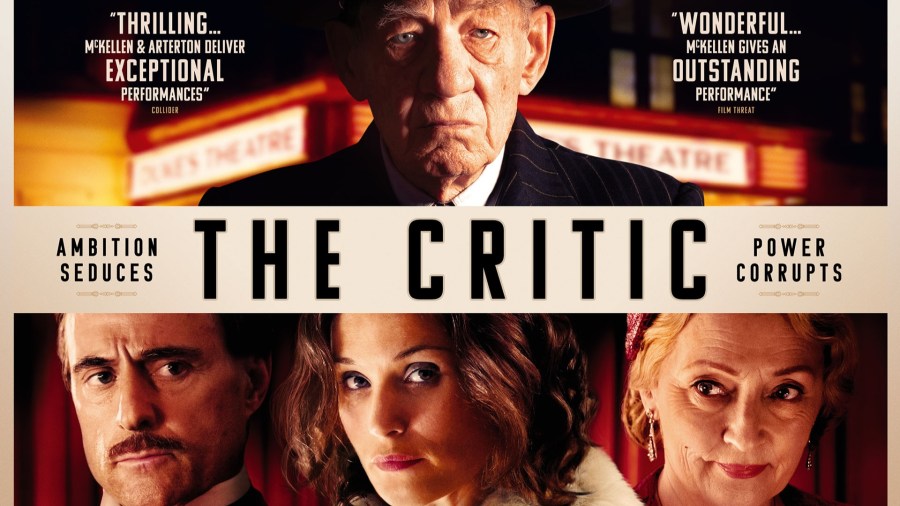
The Critic (2023) Review

Quick Synopsis: A theatre critic lures a struggling actress into a seductive blackmail plot.

I went into this on a weird day. It was one of those days where you can’t stop worrying about one thing, and it just keeps entering your head and ruining everything. So however this review goes, bear in mind that it was good enough to distract me when nothing else did for the three days prior. So whatever else I say, I can’t deny it is effective at keeping your attention. That’s a good thing, because it means you’re still paying attention when the story finally starts. I hadn’t seen a trailer for this, or even read a synopsis. So I wasn’t sure what The Critic was about. That level of not-knowing continued for most of the film’s run-time. Soooooo much of the runtime for The Critic is spent setting up the story, with barely any time spent on the actual story itself. The actual plot-related portion only takes up about 10-20 minutes.

It is mainly about Jimmy, his character is so compelling. He’s acerbic, ambitious, a real drunken hot mess. He’s also gay, which leads to a great scene of him verbally jousting with some nazi dickheads. It’s essentially that scene from Black Books where Bernard approaches skinheads, but more subdued. It’s interesting to see a critic on-screen. It shows just how important reviewers are, and if you ever know any reviewers, even if you just read their stuff online, you should give them presents and compliments. The opening two-thirds mostly focuses on him as a cruel reviewer having to come face to face with the targets of his ire, about how they react to his brutal insults, his words have power and with that power comes responsibility. It’s an interesting look into the power of writing, especially in a time when the country is under threat from the rise of fascist political parties and opinion formers (thank god THAT’s not an issue anymore). That section is so interesting that it overshadows the rest of the narrative. It feels wrong to say, but “people talking” was more compelling to watch unfold than when there was sex, murder and blackmail.

Not that the sex and blackmail aren’t enjoyable (isn’t that Donald Trumps’ campaign slogan?). Visually it’s a delight. The opening scene is a barrage of bright colours that are a true feast for the eyes. The dialogue is also a lot of fun. There are some lines here which could have been written by Noël Coward. The performances are damn fine too. Everybody knows Ian McKellen is great (hence all the awards and respect he has), but this is the first time I’ve ever really “got” Gemma Arterton. Before I just thought of her as “Is that Cobie Smulders? Oh it’s not”. But there are moments in this where she showcases how good she really is. There’s a scene in particular that stands out, where Nina and Jimmy are conversing about how she became an actress because of him, and how she’s craving his approval. Arterton is damn near perfect in that scene, even her silences say so much. Ben Barnes is fun to watch onscreen, even if (for some reason) I thought he was Henry Golding.

In summary; I would say this is worth watching, but maybe not immediately. It probably wasn’t helped that I watched this on Friday afternoon, just after that I watched Lee, and the day before I watched Babes. I haven’t posted the reviews of them yet, but (spoilers), they are both fantastic and among my cinematic highlights of the year. And no matter how good the salmon and cucumber sandwich of The Critic, it’s in between the warm and delicious bread of Lee and Babes. That metaphor makes sense right?

The End We Start From (2023) Review

Quick synopsis: After floods decimate the UK, a new mother does her best to find a safe space for her and her child.

I watched this in the middle of summer, and you’d think a film about torrential rainfall wouldn’t make sense to be watched in the summer. Ordinarily, you’d be right, but you’ve forgotten one thing; I live in England. I’ve spoken before about how the external atmosphere can affect the film-watching experience (I am wondering if part of my disdain for how Oculus ended was because the cinema turned the lights on early), but watching this in a weirdly wet summer definitely changed it, was like having surround sound.

The End We Start From (TEWSF, pronounced Two-soff) sets its genius relatively early on, having the scenes of her giving birth be intercut with scenes of her house being flooded. This is both smart and an obvious thing to do, but obvious like “having cheese on pizza instead of boiled foot dust” is obvious, in that if you did otherwise it would be weird. I do have some issues with the opening section though. It has her husband (referred to as R, and played brilliantly by Joel Fry) be away. With that, you’d assume the story would be about the two of them trying to reach each other. But then he just appears at the hospital after she’s given birth, so his not being in the opening didn’t affect the plot. It’s peculiar when you consider they get separated again. So their on-screen chemistry feels very stop-start. Ordinarily, I’d say “Keep them separated until the end so when the two meet again it feels special”, but that would be a stupid thing to do as it would rob TEWSF of a key scene; the one where R’s parents die. We know one dies but aren’t told anything about how or why until a few scenes later, and when you find out, damn it’s brutal, so, damn, brutal. It all feels real too. COVID taught us a lot (For example; that you should wash your hands after peeing, and that you shouldn’t sneeze directly on people. Both of which are things that apparently needed teaching), but the most sobering thought (so sobering it drives me to drink) was that people are dicks. They need to go to Ladbrokes even if it does kill the person behind the counter who’s forced to work even whilst sick.

I kind of wish we saw more of the world the film takes place in, most of what we see is just the universe surrounding the main character (Jodie Comer, credited as Woman). Much like AQP: DP, it all happens so quickly and the character isn’t at the centre of it. We do see a few other people, but only sporadically. It’s essentially a road movie where we only see the pit stops. As such, we feel like we’re in a weird purgatory where the character spends a lot of time in various places but none long enough to let the audience feel grounded and like we’re getting to know anybody. So much happens, but because they all feel like they have no impact, weirdly it seems like nothing happens.

That’s a shame as I would like to see more of some of the characters; partly as an excuse to see more Gina McKee and Katherine Waterston, especially Waterston who is always incredible. Of course, Comer is great, but that’s to be expected. I was surprised by how good Joey Fry is, I’ve only seen him in comedies, or acting alongside other sitcom actors. He more than holds his own in this. He’s surprisingly key to how this works. Considering it’s about a mother and a newborn child, you’d think it would contain a lot about modern femininity, and it does. But it also tackles masculinity, the feeling that if you’re not a provider then you are failing as a man.

It’s not just the people on screen, there’s a lot of talent behind the camera too. The music is mostly fitting, there is one part where it feels slightly too jaunty for what just happened, but otherwise, it’s dour and depressing. The visuals are sublime too, there are no gorgeous shots in it, but it’s not a movie for beauty, it’s about ugliness. Mahalia Belo has done a fantastic job of directing TEWSF. Even just the little moments are done as well as they could be. There’s a two-second shot of the television networks shutting down, that two seconds is creepier than most horror movies. Watching TEWSF is like wading through a murky puddle, but doing so in the middle of summer so that even when you are nearly stuck, you can still feel the warmth and have a small glimmer of hope of what’s coming.

In summary, it has flaws, but it’s incredibly powerful and definitely worth your time. Although I do question the logic of the main character crying so much during a flood; that’s just making it worse.

Sometimes I Think About Dying (2023) Review

Quick Synopsis: A story about isolation, boredom, and lacking purpose. No it’s not my biography and it’s rude of you to say that.

A few years ago I travelled to New York at the end of winter. In preparation, I purchased some winter clothing. Among them was a new pair of boots. Not just warm and sturdy, but they also came with a neat little extra; spikes on the soles that you could flip down in harsh icey conditions. I still have those boots (we don’t really have “winter” here, we just have rain) and I consider the flippable cleats a genius design. It’s so simple too, you see them and think “why don’t more companies do this?”. That’s how I felt about the opening credits of Sometimes I Think About Dying (Otherwise known as SITAD, pronounced sit-add). The fact that they use a different font is embarrassingly mindblowing. It takes the same amount of effort as doing them the same way as everyone else, but it does SO much in establishing style. I’ve mostly seen it in horror movies to be like “Oh look, we’re spooky”, or to establish the time period in which the film is set. Here it’s to establish a theme. It’s such a simple thing but it works beautifully and it means that no matter what happened for the rest of the runtime, I was going to take something positive from this.

Thankfully, even without that, I’d be able to be positive about SITAD, it’s delightful. But not in a “everything is fantastic and wonderful if you just believe” fake BS way that Hollywood provides. In a way, you can say it’s twee, kind of. But it’s a sense of twee with all the colour and joy drained away from it. Mostly it’s a film that says “I don’t understand people”. Those three previous sentences may seem disjointed (and some would say inherently contradictory) but that’s the wonder of SITAD. It’s depressive elegance, with some stark cinematography that’s beautiful in its simplicity. It’s shot not to sell a story, but to sell a character and a mood.

The script matches that, doing so much with so little. Normally characters establish themselves by saying things, SITAD establishes itself by having the main character not say anything while everybody else talks around her. In a lesser film, this would be met with scenes of her trying to say something but getting cut off whenever she tries to speak. Here, she doesn’t even attempt to say anything, she just stands in the background until she can safely leave without anybody noticing. She doesn’t have isolation thrust upon her, she actively prefers it. It’s great because when she speaks out loud, it actually means something. It’s at least 20 minutes before Fran (Daisy Ridley’s character) utters her first words. Side note, one of these days I’ll remember what Daisy Ridley looks like when I’m not looking at her, my brain keeps picturing Charlotte Ritchie. Daisy Ridley gets a lot of praise (and she should, she’s PHENOMENAL), but I feel that Marcia DeBonis needs praise too. Her speech near the end where she’s talking about her husband suffering health issues is heartbreaking and delivered perfectly. Crucially, it’s not delivered as “a performance”, with perfect diction and line delivery. She stumbles over her words, is slightly unclear on a few syllables, and pauses mid-sentence. In essence; she feels REAL.

That’s partly why I loved this film so much, nothing about it felt fake. It doesn’t feel like we’re there watching them, it’s better than that. Even though we see her from an audience’s perspective, it somehow feels like we ARE Fran. It’s helped by a powerful score (brought to you by Dabney Morris), and a powerful performance. But it is mostly anchored by how good the writing is.

It’s not perfect though. Fran is a little bit too cruel at times which can make her hard to root for. But when she does say something heartless such as “You’re exhausting, no wonder you can’t stay married”, the VERY next scene shows her obviously regretting it.

As you can probably tell. I LOVED this movie. It’s not up for my favourite of the year, but it is possibly the one I’ve connected with the most. Good films entertain, and great ones inspire. This will inspire you as a writer, as a director, as a musician, as a performer, fuck it, with the way this tackles themes of isolation and self-sabotage, this will inspire you as a person. A lot of people won’t like it, and even those who do like it might not like certain parts of it. For example, I saw some reviews say the party scene was cringe and went on too long. Personally, that was the highlight of the movie. It felt like the first time Fran felt accepted, she was letting the mask of insecurity slip, and the sheer joy she showcases is infectious. I’m not saying this is the best film of the year, but it is probably the one I would recommend most at the moment if you want to feel things and be touched (not in a Kevin Spacey way). One of the most genuine movies I’ve seen all year, and I’m a better person for having watched it.

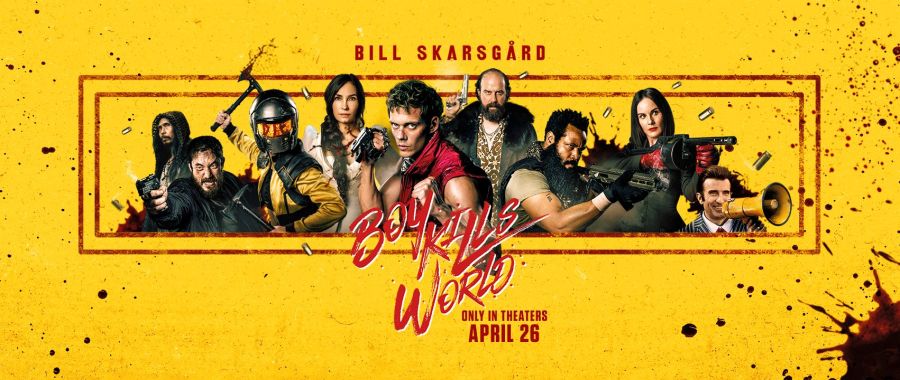
Boy Kills World (2023) Review

Quick Synopsis: An unnamed deaf-mute ventures on a revenge plan against those who killed his family.

As is a sadly familiar story with smaller films lately, even ones I’ve seen at the cinema, I knew nothing about this as it received no trailers or promotional material in my local. You could easily not know it existed. That’s a shame as Boy Kills World (or BKW, pronounced Buck-ow) is one of the highlights of the year.

Saying this film is “weird” would be an understatement. “Batshit insane” is more appropriate. It’s essentially a live-action anime mixed with Naked Gun. It takes longer than you’d expect for that tone to come through though. Don’t get me wrong, you’re not waiting a long time for it to establish tone, but it does take longer than it probably should. Up until the opening credits it just feels like a standard movie. When it gets weird, it does get WEIRD, but it could place its flag earlier on.

It is weird, but in a way that makes sense within the universe created. The world it takes place in is weird, so when odd shit happens, it doesn’t feel out of place. There’s a general sense of “what the fuck?” over the whole thing. Thankfully it’s not offputting, mainly because it’s incredibly funny. Bill Skarsgard has great physical comedy skills; bringing to mind Buster Keaton, only with violence and bloodshed. He has a hell of a difficult job, not being able to vocally communicate with the other characters puts him at a huge disadvantage. He does have a slight advantage over similar roles by having a voiceover performed by H. Jon Benjamin. On the downside; it’s hard to not hear him as Archer or the main character from Bob’s Burgers whose name escapes me right now (Gene Parmasen?), so he never really feels like he is the character as much as he is just narrating as a separate person. He does provide some fantastic laughs though. A lot of the cast nail the comedy side; Brett Gelman and Andrew Koji are particular highlights, Koji surprisingly so.

The weirdness and comedic nature don’t mean it doesn’t excel from a technical viewpoint. The action scenes are intense and expertly crafted. The story is much better than it needs to be. It really feels like a genuinely dystopian city. It’s creepily believable. It’s not loudspeakers and constant “all hail us”. It’s statues, police presence, and state-sanctioned violence on dissenters. The scene where Boys family are executed is chilling, as is the fact that the regime has a lot of supporters. It also notable that there’s not really a “nice” side. It’s not a battle between good and evil, it’s a battle between two sides desperate to kill each other. Although one of the sides:

  • Started the conflict.
  • Has more advanced weaponry.
  • Has an army/police force that brutally crushes any form of resistance to them.
  • Indulges in mass surveillance of its people.
  • Has a media supporting them who are ready to go after anybody who opposes them.
  • Stifles free speech.
  • Massacres children indiscriminately

Yet that side is still portrayed as the “good” side. I wonder if there are any real-life parallels to that happening right now. I’m sure not.

Unsubtle political posturing from me aside, Boy Kills World isn’t the best film of the year (that honour still belongs to either Civil War or American Fiction), but I think it is the one I most want to watch again. It’s not perfect, the music choices could be more fun. There’s not really an iconic needle drop, which feels like a wasted opportunity. There’s also a late twist which isn’t as surprising as the film thinks it is.

Civil War (2024) Review

Quick Synopsis: In a dystopian future America, a team of military-embedded journalists races against time to reach Washington, D.C., before rebel factions descend upon the White House.

I have watched lots of terrible films, some at home, some at the cinema. Some, I’ve slowly realised are bad as the film went on (Lucky, or ironically Alex Garland’s previous film Men), and some I knew were going to be shit from the opening moments (Wolf, Hellboy), and a few I knew would be shit before they even started but I knew I’d get a decent review out of them (Thunder Force). But no matter how bad a film is, or how torturous the experience is, I have one rule; stay until the end. There have been a few cases where I have got up IMMEDIATELY at the fade-out, but I made sure I stayed until then. Civil War is the closest I’ve ever come to walking out of a screening.

Not because it was bad, or I objected to anything in it (and in a film about an American Civil War there was potential for it to be very problematic in terms of themes), or even because I didn’t like what I was watching. It was just so unbearably brutal and bleak that I felt I needed a break, just for a few minutes so that I could compose myself and face what was unfolding. Civil War is one of those films which seems horrific and terrifying until you sit down and think about it and realise it’s actually somehow more horrific than you first thought.

That’s the point of it though. People have come out against the film for “not picking sides”. In a way, they have a point. It’s difficult to know how to feel about certain factions because you don’t know their motivations. All we know is that the president has done some awful things. But we don’t know why. The war itself isn’t given any background, and the main opposing faction is comprised of both a red and blue state, so it’s difficult to assign any political leanings to it. We do see one group who are torturing and massacring any foreigners or people they see as “un-American”, but they’re shown as being unaffiliated with any of the main rebel factions. Similarly, it mentions an “Antifa massacre”, now is this a massacre committed by anti-fascists, or one committed upon them? The film doesn’t say.

It’s easy to see why this would annoy people. They need a side that is right and wrong, and they need to feel like they’re on the right side. I don’t think it matters though. If someone is threatening to shoot you it doesn’t matter what side they’re on. Unless they’re Israeli in which case, you’re obviously Hamas and deserve to be killed, even if you’re an unarmed child laying sick in a hospital bed. The point of this movie isn’t that you’re right, or even that you’re wrong and need to change your ways. The point is; war is fucking shit. It’s not fun. It’s not glorious, it’s not inspiring. It’s fucking shit and brutal and people will be killed unnecessarily. It won’t be “driving through the city playing CCR and shooting evil-doers whilst fireworks go off”. It will be “Family members and people you love are going to be tortured and you won’t be able to stop it, so stop wishing for it to happen you fucking idiots”.

It’s a lot more effective because of how well the story is crafted. Some characters are only in one scene yet are so well defined that you can fill in the gaps and create a believable back-story for them. All cast really well too, Jesse Plemons is perfect in his small role, as are the other one-sceners. But it all hinges on the core cast: Dunst, Wagner Moura, Cailee Spaeny and Stephen McKinley Henderson. They work brilliantly together. Truth be told; Wagner Moura is given less to do than the others, but he does have some great stand-out moments, particularly at the end. Dunst is fantastic and is a reminder of why she is highly regarded in acting circles. I haven’t seen that much of Cailee Spaeny before (mainly because I never got around to watching Priscilla), but she is damn near perfect. I want to see what she does next because she is fucking phenomenal in this.

In summary; a fantastic watch. Possibly the best film I’ve seen this year. Very much not an easy watch though. The scene with the mass graves, in particular, was difficult to stomach. It is something I feel most people NEED to see though. And you should see it in theatres whilst you can before you end up seeing it in the streets.

Back To Black (2024) Review

Quick Synopsis: The tragic tale of the life and death of Amy Winehouse.

Have to admit, I’m not that big on Amy Winehouse. I appreciate she was talented, but for whatever reason, her music never really appealed to me enough to actively choose to listen to it. So how would I get on with a film about her that seemed to treat her as the most unique and talented that has ever existed? Probably with scorn.

Luckily, Back To Black (or BTB, pronounced Baa-tob) doesn’t treat her as a God-like figure. In fact, I’d argue it goes too far in the other direction. On the upside, it means that you’re not watching a film that constantly has to defend the terrible decisions the main character makes, but on the downside, it means you’re left watching a film with a main character whom it’s kind of difficult to like. Even before the drugs, she’s an incredibly abrasive character. Now this isn’t just a “She’s a woman standing up for herself! Difficult!”. Out of the four main conflict styles (Man against man, man against society, man against nature, man against self), this is definitely against self. She constantly gets in her own way. When she’s offered a record deal? “I ain’t no fucking Spice Girl, fuck you!”. When she’s told she needs to stop drinking and punching people? “I have to live my life the way I want, fuck you!”. When they try to make her go to rehab? She says “No, no, no. And also? Fuck you!”. It’s been a while since I’ve watched something with this much disdain for its main character. It’s much more sympathetic to her father Mitch than the 2015 documentary Amy. It does include him saying she doesn’t need to go rehab, but it doesn’t include the moment where he followed her to Saint Lucia with a camera crew so he could make a documentary about her called My Daughter Amy, in which she’s clearly uncomfortable and desperate for privacy.

I feel the tabloid media gets off easier than it should too. There are a few scenes of them camping outside her house, but only in those moments. There’s a lot where it seems like she’s left alone. Like the tabloid scenes were only there to say “See, we included it” and then never referenced again. It also doesn’t touch on just how bad her addictions were at some point. We see her get in a quick punch-up, but we don’t see it affecting her live performances. Her 2007 tour is shown as a success when in actuality she was a drunken mess for a lot of those gigs, cancelling a lot of them. We also don’t see her disastrous final gig at Belgrade. It’s a shame as that could have been an incredibly emotional scene, but the film is too scared to be ugly, too preoccupied with showing us the glamour, and not enough grit.

The performances are pretty damn good though. Marisa Abela doesn’t really physically resemble Winehouse that much, although there are moments where you can see Amy in her like a magic eye picture. She carries herself like Winehouse did though, and that’s the important thing. Her voice is damn near perfect for it, especially for the singing. Jack O’Connell is fine as Blake, but we’re not shown enough of him outside of his relationship with Amy to make him seem like a full person. Eddie Marsen is, as usual, a captivating presence on screen, and you can feel the character’s despair at how his daughter is squandering her life (but not enough to suggest rehab).

In summary, it’s okay. It’s a better watch than the Bob Marley film but feels more like a concept than a completed idea, there are too many missing pieces to make it feel complete. In the jigsaw of cinema, this is missing so many narrative pieces that you can’t even finish the borders first. We don’t even get to see much about her death, no news reaction to it, no family reaction to it, no fan reaction to it. So the whole thing lacks the tragedy that would elevate it to something greater.