Woman Of The Hour (2023) Review

Quick Synopsis: It’s 1970 and Sheryl Bradshaw is so desperate for TV time that her agent books her on The Dating Game, unaware that one of the male contestants is harbouring a dark and disturbing secret: he’s from Texas. Oh, and he kills people. That’s bad too.

Woman Of The Hour (or WOTH, pronounced to rhyme with cough) is like a six-dicked Calydonian boar, a strange beast you can’t turn away from. It’s helped by a truly fascinating story. This actually happened. In 1978, serial killer Rodney Alcala made an appearance on The Dating Game, and he did win, which has to be a real kick in the teeth of the guys who were rejected. Everything else about the story is fiction. The entire story of the woman who went out with him? Fake. The woman in the audience who reports the killer and is ignored? Fake. The host of the show is a complete dick? Fake (for this one specific person). A producer making creepy comments about Anna Kendrick whilst pointing at her breasts? Fa-oh wait, that’s real, happened to her when she was 19, which sadly meant she was too young to drink, so she couldn’t go to a bar, buy a bottle of drink then use the bottle to slit the throat of that producer.

I’m okay with that kind of approach to historical accuracy. This is mainly because it never pretends to be anything other than what it is; it is a fictional narrative that occurs during a real historical story. If it was presented with a subtitle like “The true story” then I’d object. The reality isn’t important, the story and the setting is. The setting is significant. This was a time when, according to the letter of the law, women were mostly equals (sometimes), but the reality was very different. Men still felt comfortable being sexually aggressive with female strangers, who would then be told to “take it as a compliment” or “stop complaining” when they mentioned it. It’s very different from now, I’ve spoken to many men on the subject and they all agree women are treated equally now. The time is just as much a character as the serial killer (now there’s a sentence I’ve never said before).

The other essential half of the jigsaw of WOTH is Anna Kendrick. This is her directorial debut and it’s pretty damn impressive. She does have a tendency towards being overly arty and “oooo look at this” as opposed to using the camera to tell a story. There are no moments which are “bad”, nothing which makes you think “Ooof, I wouldn’t have done that”, and more experienced directors have done that (A Quiet Place: Day One, for example, featured one of my least favourite shots of the year from a coherence standpoint, and that was from a guy with experience). I hope Kendrick continues to direct, and I’m curious as to what her next move would be. I’m hoping she continues to do stories she has a passion and personal interest in (she donated her fee from this movie to charity, because she’s lovely and a badass). She’s about 2 movies away from making an INCREDIBLE feminist AF drama which I will absolutely LOVE.

Her performance is good too. The moment where she calls everyone out on their misogyny is glorious to watch. I’ve seen some reviews state she was the wrong choice, and that she feels too modern for a 1970s character. To those people I say, you’re wrong. I won’t debate this, I won’t explain this, but you are wrong.

The weakest part, for me, is the narrative. The fact he was on a tv show (you know, the whole selling point of the film) doesn’t matter. It’s not his appearance on TV that leads to his downfall, his downfall wasn’t until the next year. So really, the main crux of the film is entirely inconsequential. It’s still a good watch, but I do wish that more things mattered, that the timeline was more coherent, and that the side characters were memorable. So much focus went on the “serial killer on a dating show”, that it feels that not enough effort was put on anything else in the narrative, so it feels incredibly underbaked.

That being said, there is one BRILLIANT scene that’s not set on the show. The date. Specifically, the aftermath when she’s creeped out by him in the car park. It’s CHILLING, and makes the hair on the back of your neck stand on edge. It’s also (I imagine), a scene in which pretty much every woman alive has a “yeah that happened to me too. When? Well the first time was when I was 12, then the next time it was-” series of anecdotes which are similar.

In summary, an easy film to be impressed by. An easy film to be moved by. But also a film in which you can’t help but feel there’s something better from the creators in the future.

The Iron Claw (2023) Review

Synopsis: The triumph and tragedy of the Von Erich brothers, a wrestling family based in Texas during the 70’s and 80’s.

I’m gonna be honest with you guys, girls, both and neither, this film would have had to be TERRIBLE for me not to like it. I watched a documentary about the Von Erichs a few years ago so I knew the tragedy was perfect for a movie. That foreknowledge also meant that what happened was not a surprise. I’m not sure what would be the most devastating way to watch this. If you went in completely blind then you might think “Oh, that moment was very sad. Time to see how the family recovers from this. Wait, now THIS?” and find yourself relentlessly overcome by the constant slew of depressing events, a bit like watching the news in [insert current year]. But is being aware of what’s coming any better? Watching with the knowledge of what’s going to happen is a bit like watching a train slowly fall on an unknowing family having a picnic. You can see something terrible will happen, but you can’t do anything to stop it.

The worst part about this? The reality is actually sadder. There’s another brother who passed away that the film doesn’t show. Imagine that, having so much bad shit happen to your family a two-hour film isn’t enough to fit it all in. There are some other moments where it plays a bit loose with reality. Nothing major, it’s mainly about the chronology of events. A lot of things are made to look like they happened closer to each other than they actually did, creating a false sense of connection to some of them, implying that some events were the direct cause of the tragedies, even when in reality there were years between them. For most people watching, this won’t cause any issues, but for those who know what actually happened, it can be a bit frustrating to watch, but not enough to stop you from enjoying it.

A few wrestling fans might have issues with the cast not really looking much like the people they’re portraying. It’s true, in photos you can’t really see the resemblance. But the way that each actor captures the essence of their character is perfect. With one exception. I try to shy away from bad performances from actors I don’t know, particularly with those who don’t even have a Wikipedia page. It can feel a bit like bullying, and you never know if they might see it and feel discouraged. If you’re a name actor and your performance is shit? Yes, I’ll call you out on your performance, but I do try to be a bit kinder to unknowns. I’m about to break that rule for Aaron Dean Eisenberg. His portrayal of Ric Flair is shocking, and unrecognisable as the character. Ric Flair has a very distinctive vocal cadence, and Eisenberg doesn’t even approach it. At best he sees the correct cadence in the distance and then heads in the opposite direction to buy cheese, walking right past a warehouse that’s currently holding acting workshops. It’s distractingly bad and is the weakest part of a truly great film.

I think everybody should see this film, it’s genuinely fantastic. It will break you, and when you think it’s finished, will break you again. It’s so well done too. There’s a scene set in the afterlife which risks coming off cheesy, especially in such a grounded film. But it REALLY works here, with even the surviving Von Erich coming out in support of it. I’m glad he liked it, as he wasn’t actually involved in production so if he wasn’t a fan of the finished result it would mean the whole thing comes off slightly exploitative. The reaction from most people in the industry, and from family members, has been mostly positive. There’s been a few people who have said it made the father, Fritz Von Erich, look like a dick. I mean, nobody will come out of this thinking he was a good person, but considering it only implied instead of flat-out stating that when he forced his son to give a press conference after a coma it was whilst the son had brain damage, and it doesn’t contain a moment where he drunkenly tells his only surviving son “The only reason you’re still alive is because you’re not man enough to kill yourself like your brothers did”, I’d argue that Fritz The Twat actually got off pretty light.

In summary; watch this film. But FFS pick something nice to treat yourself to afterwards. I’ve watched two holocaust-based movies this year, but they didn’t quite hit home like this did. I think it’s because the holocaust is SO large that it’s hard to truly comprehend. Whereas the themes of The Iron Claw; toxic masculinity, burnout etc. They’re all ones that we see every day all around us, and they’re ones which some people actually still defend as push as good things. So it’s heartbreaking to see the natural ending of a lot of those vices. It’s not something that happens to other people, it’s something we can see happening to all of us. So it has a natural sense of empathy to the way you watch it. Only, you know, it’s empathy with spandex tights and fake fights.

The Zone Of Interest (2023) Review

Quick Synopsis: In this drama written and directed by Jonathan Glazer, a couple (Rudolf Hoss and Sandra Huller) struggle to raise their children under the pressures of his work, that work? Commandant of a concentration camp.

The Zone Of Interest (Tzoi, pronounced Soy) is an important film. The holocaust is a strange and emotive subject. We are taught a lot about it, and the facts are discussed often in modern society. So, we learn a lot about it, but we don’t learn much FROM it. We don’t discuss how the Nazis used language specifically to dehumanise people so that the treatment of them was deemed more appropriate. If we did learn that lesson, we wouldn’t have politicians describing refugees as “vermin”. We don’t discuss how the citizens of Germany ignored what was going on for their own comfort. If we did, then we wouldn’t be okay with the government essentially making homelessness illegal by arresting anybody sleeping rough in the street. So we do need films like this, even in a time far removed from the events. We need something that shows how to some people it wasn’t a constant threat to their lives, it was just something that happened to other people. To some people involved, it wasn’t the most important part of their lives, it was just something they worked on to get a promotion. TZOI’s focus on the “banality of evil” is both its greatest strength and its biggest flaw. The fact that Glazer focuses so much on the mundane and regularness of the family is fascinating and incredibly harrowing. But lets face it, watching people do nothing for 105 minutes soon does become quite dull, that level of boring mundane stops being fascinating and starts becoming, well, boring and mundane.

A lot goes unsaid and happens in the background. But it could have done a slightly better job of pushing some of that to the front. I’m not asking to make it very obvious, but there are a few moments (particularly at the end) where a bit of clarification would have improved not only the understanding but also helped push through the idea and message that the film was trying to put forward.

Outside of the normality of Nazi life, there’s not really that much to it. It makes its point, and then continues to make that same point, never developing or adding to its themes. Once you’ve watched 5 minutes, really you’ve seen it all. In general, it leaves you with a hollow(caust) feeling, a realisation that this would have been far better as a short.

The worst realisation though? The fact that the people who need to learn the lessons from this is trying to teach, are the EXACT type of people who won’t watch a film like this. It’s essentially preaching to the converted.

It’s a shame, as this is at times fascinating, and depressingly real. It’s shot very realistically. Not like a documentary, with static shots and a set of people well aware they’re being filmed. It’s more like you’re an invisible witness to the goings-on. Sandra Huller continues to be one of those performers I now feel guilty for not paying attention to sooner. Christian Friedel as Rudolf Hoss is a revelation. His non-verbal reactions are key to the horrors TZOI contains. He is helped by the script giving him a lot to work with, there’s a moment near the end where he is so overcome with revulsion over his acts that he tries to vomit, but is unable to. It’s reminiscent of the (incredibly disturbing) documentary The Act Of Killing. There are lots of subtle moments which are equally horrifying (finding body parts in the river his family swim in, the soundtrack of slight screaming), but none have quite as much humanity as that moment does.

I do like how the ending shows that his legacy wasn’t as a great commander, but of the builder of one of the most horrific displays of humanity anybody has ever witnessed. His name is not sung in glorious tones but is instead spat out with disgust and hatred.

Like I said, there’s a lot to, well, not exactly “enjoy”, but appreciate. I just, I kind of wish it had bigger ambitions than “Art Student Film”.

Toni And Cleo (feature-length script)

So as you may know, I occasionally post my own scripts on here, and that’s what today’s is about. Sometimes with my longer scripts I’ll post updates as I go so that you can see it all develop and come together. That’s not the case here, all I’m giving you is that it’s a follow-up episode to this. For those of you who didn’t click that, first off; rude. Second: a school shooting occurred. That’s all that’s relevant from that episode to this one. It features the same situation, but different characters and a different time frame. I hope you enjoy, worked really hard on it and incredibly proud of what I’ve managed to do:

Spoilers, so read that before you read on.

This went through quite a few different iterations while I was writing it. The moment where she burns the pictures of her son as she thinks he’s the killer, and only finds out the truth too late? That was originally the ending. Decided against that as it meant I was unnaturally delaying the characters from getting to that location. They would have gone straight there so narratively it was difficult to make that interesting. Would have just been people driving and talking, and that’s quite difficult to make compelling. My next ending was her finding out that her son was actually a good person, and beat people up for a good reason. Again, I brought that forward, because Toni was too sad and I needed to do something to cheer her up. The other major change was introducing the character of Esther. I never planned her to be in it, she turned up in the script one day and I was intrigued by what I could do with this character. I then decided to adjust the timeline and have a lot of it take place in flashbacks, so the show started on the set of Esther and we kind of worked the story back towards that point. The original opening was Toni’s husband leaving her. I don’t think it added anything to the story or the characters, so I deleted it and it doesn’t feel like it’s missing so worked out for the best.

The introduction of Esther also allowed me an antagonist. In the original draft the antagonist role was taken by someone very different: Toni’s sister Cleo. This is why the way they interact in the car from the airport is drastically different from how they do otherwise. I felt Toni needed someone who supports her, and Cleo was the best choice. It didn’t require much changing, I changed some of their dialogue to take place between Toni and Esther instead, other than that I kept it the same. That’s kind of weird but I feel it makes sense in the story, the two sisters do react with some hostility when they meet, and that relationship does change so there is the chance it could come off as unnatural. But luckily I made this change when I got to the part of the story where the shooting happens, so the audience just sees it as “they’ve put aside their petty differences because they’ve realised what’s important”. So it weirdly makes sense (albeit completely accidentally).

The other change was the ending. It did end with Esther shooting herself, and ending I was never really happy with, only had it happen because it needed an ending and it needed to be at that point (was going to make it twenty pages longer but when I got to that point I just felt “this has to end in the next few pages, otherwise it would feel wrong”). I’ve changed it so she walks out in shame (was going to have her arrested, but despite being a horrible person, she never technically broke any laws, plus, I knew enough about her character to know she’d flourish in prison). A fantastic ending is out there somewhere, I just need to try and find it.

Yeah, that was that. I hope you enjoyed it, any feedback will be greatly appreciated, and thank you for your time. Oh, and I am aware I labelled this a “feature-length” script, despite it being a television episode. My aim for every episode of this is that they could work as stand alone features with a little tweaking, and I firmly believe that to be the case here. Plus, if I said it was episode three people would feel they would have had to read the first two (which considering I haven’t written the second one yet, would be difficult)

Sometimes Always Never (2018)

So, this is the first review since my big announcement, for those who missed it, it’s here. So with that in mind, what piece of horror media will I review to get in the mood for it? Oh, it’s a film about scrabble. It does feature death, maybe. It’s about a family struggling with someone running away years ago, and still suffering from not knowing what happened. The father copes by playing scrabble. Yeah, it’s strange, but within the context of the film, it works. This film is all about the script and the characters, and it completely nails both of those. The dialogue is razor-sharp and the characters are all well-defined to the point where you feel you have already met these characters.

The way they interact with each other is really sweet too, you understand the family dynamics easily and it’s incredibly heartwarming at times. So why have I not raved about great this movie is to everybody? From a technical standpoint, it looks a little cheap. I’m not sure if it was a stylistic choice or not but it didn’t really work for me. Also whilst the script is good, the story kind of meanders and doesn’t do enough. Characters are heavily focused on for one scene then never mentioned again. It aims for a slice-of-life dramedy but adds a bit too many plotlines which go unresolved to really seem satisfying. It seems at time that the story doesn’t know what it’s about so aims for as many themes as possible in the hopes of finally grasping onto one. The title comes from a discussion about buttons on suits (you sometimes do the top one up, always do the middle one up, and never do the bottom one), it seems a bit weird for a film where the themes are scrabble and words, to take the title from a rule about suit-buttons. It’s like they put that scene in just to explain the title.

The cast are pretty damn good in this though. Bill Nighy’s accent sometimes wavers but never too distractingly. Alice Lowe continues to be great, Louis Healy has a future in ITV dramas, and Sam Riley really shows off his range. The oddest highlight for me was Ella-Grace Gregoire. She’s not in it for long but has great screen presence and her natural charm lights up the scenes she’s in. This is helped by tremendous chemistry with the aforementioned Healy and Lowe. Interested to see what she does next and looking forward to it.

There is a really heartwarming and lovely film within this, it just tries a bit too hard to be a mix of Wes Anderson and quirky British drama, whilst never really approaching the heights needed for both.

Beautiful Boy (2018)

Okay so the last two films I’ve seen, well they have not been the best. Actually, it’s not been a great last month or so really; I Love My Mum, Bright Burn, Songbird, Dark Phoenix, it’s been a bad run. With a few notable exceptions (Spider-man, Toy Story) I couldn’t be blamed if I was slightly losing my enthusiasm for film. The last film I really enjoyed that wasn’t part of a franchise/reboot was Late Night. I’ve been crying out for something unique and good. Okay, this is based on a book so isn’t technically original, but it is very very good. Incredibly emotive and stylish. It’s a story about a teens addiction, and his family’s reaction to it, particularly his dad. This is not just a story about addiction, but also about family love. Their relationship is integral to the plot, and you completely buy into it. The big problem with it is how distracting it is to have Amy Ryan and Steve Carell reunited on screen and have it be so serious, they were a great comedic couple on The Office, so it’s weird to see them together and have it be so serious. Other than that weirdness, the cast is pretty solid. Carell is so good at being serious that at this point it no longer comes as a surprise. His chemistry with Timothee Chalamet is electric, you genuinely feel like they care for each other. It’s also great to see Jack Dylan Grazer in more stuff, he’ll have the lead in a sitcom at some point, I guarantee it.

It’s also a great-looking film. Don’t get me wrong, there are no shots here which you’ll frame and hang on your wall, but for Van Groeningen’s English-language debut he really shows what he can do, using his shots to tell a story, framing characters in such a way that just by a single shot you can see character relationships. There’s a stark brutality to some of the shots

I’m not saying this is the perfect film, but it doesn’t have any major negatives to it. It’s almost two hours and does kind of feel it. Also, there are moments where it seems to make certain insinuations about what caused the addiction. I don’t think some of them are deliberate, but someone with a knowledge of film language won’t fail to see the (possibly unintentional but still uncomfortable) implications.

But that aside, it’s still definitely worth your watch. I’m trying to think of one word to describe it and all I can come up with is; beautiful. It has a timeless quality and feels like a film that’s always existed, highly recommended.

Tully (2018)

I had no idea what this film was about. I hadn’t even seen a poster. I assume a lot of you will be in the same boat so here goes: it’s about a couple who have just welcomed their third child (one of whom has an unmentioned disorder similar to autism, for drama) into the world and the mother is knackered, so they hire a night nanny so she can get some sleep. The night nanny is a young, confident go-getter who speaks slightly pretentiously (think Juno, and not just because Diablo Cody wrote both) and teaches the mother the real meaning of……sleep? I don’t know. I get it, a lot of people are going to like this film, personally, I didn’t. It’s not that it wasn’t a good film, it’s just such a personal story, but not one that engaged me personally. As such the things I would otherwise not mind, suddenly became huge problems for me. The adults who were speaking like pretentious movie teenagers just seemed really annoying and unrealistic. The one-scene characters who were just there to create conflict just made me think it was a waste of time. Actually, there’s a lot of waste in here. Infinity War was long, but it made those minutes count, almost every scene was needed. I can’t think of many scenes from that film where if you didn’t take them out, it wouldn’t make the film slightly less incoherent either in terms of story or character building. This is the opposite, it’s a lot shorter, but there’s more waste. In fact, I’d say there’s more waste than content. There are so many scenes here where if you cut them, it wouldn’t affect the movie at all, they’re that inconsequential, which, for a film that’s only just over 90 minutes long, is a terrible indicator. It’s the sign of screenwriting fluff (and trust me, if there’s anybody who knows about screenwriting fluff, it’s me, it’s my bread and butter, and black pudding, and sausages, and beans, and *checks word count* bacon, and eggs, and tomatoes and now I’m hungry).

Also the ending. It’s not quite as bad as Truth Or Dare, but it’s the kind of ending which you’ll either love or hate, I was not a fan. Mainly because I don’t think it earned it. It tries to be clever with a twist, but it just feels kind of cheap and doesn’t even provide a pleasing “aha!” scene. THAT’S what makes a great twist ending, that specific moment where a character in the film, and thereby the audience pieces it all together. Think of that scene in The Usual Suspects where you finally find out who it is, or the “where do you think we are?” scene from Scrubs. The entire ending could be summed up in that one moment, that’s the “wham” scene, where you marvel at the brilliance of it all. This doesn’t really do that, it just provides lots of little things in quick succession, so it means we don’t have that glorious memorable moment, to the point where I’m not entirely sure everybody in the screen I was in got what happened. Actually, I know they didn’t, as I overheard people’s discussions as they were leaving.

There’s no way to discuss this without actually saying what the ending is so here goes (spoiler warning): the night nanny she hired doesn’t exist and is a figment of the main character’s imagination, she’s imagining a younger version of her. It’s narratively unsatisfying and asks more questions than it answers. Specifically; what happened to the actual nanny then? It wasn’t ordered by her, her brother said he’ll pay for it and get it organised etc. It’s mentioned to him that they now have a night nanny, and he doesn’t respond “Well let me know the costs and I’ll cover it”, or “so when you order one it’s fine yet you refuse mine? What the fuck?” Or even “Where from?”. It’s just kind of frustrating. Which is a shame as there are some things to like in this, Charlize Theron is outstanding as always, she just throws herself into every character and it’s superb to see. Some of the dialogue will definitely cause a chuckle (although there are moments where the dialogue is written in a way that you’re reminded it’s a movie because it seems so fake), and the soundtrack is pretty damn cool as well. It’s just a shame it never really clicked for me. I think that’s the main flaw, I didn’t personally click with it, and I felt I should have. Which meant its flaws annoyed me more than it should, and the good things didn’t hit as much as they should.

A Quiet Place (2018)

Words alone do not do justice to this film. A true game-changer in terms of horror. The typical approach to directing horror films is “quiet, intense music, quiet, LOUD, OH SO LOUD”, replacing genuine terror with jump scares. Which are fine, they scare you during the film, but they don’t completely mess you up and fill you with dread. This film shows the importance of sound in horror, actually, screw that, it’s the importance of sound in cinema in general. It’s a great showcase of the power of cinema, not in a “this film will emotionally devastate you for days” way, but in that it changes the way you watch films. The disadvantages of going to the cinema to watch films normally involve other people: they make too much noise talking or eating or (when I went to see Hunger Games) getting drunk, falling asleep and snoring, then getting annoyed at the cinema staff that they didn’t pause or rewind the film for you (if you think that’s a reasonable request to make: go fuck yourself). This film is different, from my experience (and from what everyone who has seen) everyone in the cinema partakes in an unspoken (hah) pact; if you speak we will hurt you. I haven’t seen a film influence the audience this much since….well, ever. Nobody made a noise, and it was a busy screen. It was actually pretty great, as when there was a loud scene, you could just hear everyone finally open their food/cough etc. When I say “nobody” made a noise, there was a few coughs here or there but that can’t be helped, and if anything, that enhanced the experience. In 1952 John Cage composed the piece 4’33”. It’s basically: everyone in the orchestra puts their instruments down and do nothing for four minutes, thirty-three seconds. The intention is that it makes people listen to the background noise, to make them aware of the atmospheric sounds around this. This film does that, Because the audience noise was so sporadic, when it did happen it wasn’t annoying, it was scary. That’s what makes this film unique, every time you see it will be different because you’ll have to listen to the background noises around you. They’ll be people uncomfortable who’ll be adjusting their position, which creates noise that scares you, that exact scare will never happen again for any other screening, it’s unique to that one experience. It’s a horror movie with audience participation.

It’s not just the sound, the way the film looks is superb too. John Krasinski has done a GREAT job with this. Even more so considering it’s only his third film, and his first horror. Horror is a genre where you need a good director for it to work. Comedy you can kind of get away with it looking bland if the script is good, horror doesn’t allow that, you NEED someone who is a master behind the camera, and the fact he’s this accomplished is a great sign. With him and Jordan Peele doing work like this, this early in their careers, other directors will need to step up their game for their films to be considered great. Films will no longer be allowed to be as cartooney and silly looking as Saw 3D (holy hell that film looks cheap), which is great, as it means more greatness.

His performance was good too. Him and Emily Blunt share an obvious chemistry (can’t imagine why) which really sells their characters plight. He’s been in a lot of other films, but I think THIS is the one where he finally sheds his “Jim from The Office” status. The true star of the film though, is Millicent Simmonds. Not just because it’s good to have an actual deaf person playing a deaf character as opposed to someone with perfect hearing, but because she brings really subtle nuances to the character that just break your heart, and in doing so brings a non-verbal performance that’s up there with Sally Hawkins in The Shape Of Water. Also she made a few script alterations that improved it a lot. Adding “I’ve always loved you” to a father saying “I love you” to his daughter, which added SOOOOO much.

This is the best time to mention the sign language in this film. Due to both a character being deaf, and the fact the characters can’t make noise, sign language plays an important part in this film. And this is where the film does something which turns it from good to great; the characters all sign in their own unique way. Some characters sign very poetically and flow, showing the importance of beautiful language, whereas some sign very short and curt, like they’re in the military.

So yeah that’s it. Watch this film, then watch it again, and again. It has an absolutely heartbreaking moment in it, features an elderly character committing suicide over the death of his wife, and it kills a child before the opening credits, this is a film that truly gives absolutely zero shits about your comfort, and is all the better for it.

Projector (2015)

How It Was Made

Projector-shooting-script

Photos (behind the scenes etc)

Summary

Projector is a 20 minute, surrealist dramedy. It follows Christopher, a young and burnt-out filmmaker, on a dreamlike odyssey through three of his films: with the help of his own fictional creations he confronts the bitter, lonely man he is becoming. It takes influence from Fellini’s 81/2 and Charlie Kaufman’s Synecdoche, New York, with the surreal and meta techniques they use to explore the mind of a creative character, and the ways in which their lives influence their art, and vice versa.

Characters

Christopher: An amateur filmmaker, who after some critically successful shorts was contracted to adapt A Christmas Carol into a trendy and modern feature: a script that has now become his personal Moby Dick, and driven him into isolation. His small successes have caused him to become egocentric and a smartass, eschewing the people closest to him. His character arc progresses as he finally gets over himself by seeing where his attitude will get him, and rekindles his love of film, remembering the joy it used to bring him and others; in many ways it mirrors the Scrooge character arc from A Christmas Carol.

Phillip and Lesley
Philip: Christopher’s close friend and old writing partner, who shares his taste for snark. He was left out of the writing deal by Christopher. This fragmented their friendship, but Phil still genuinely cares for him and wants to help.

Lesley: The protagonist from one of Christopher’s earliest films, Venetian Blind. He was a happy-go-lucky detective jaded by the ‘film-noir’ detective lifestyle he idealised. He was portrayed by Phillip with a Bogart swagger, so takes his form and is a symbolic representation of their friendship. He is similar to Phillip, as he genuinely cares for Christopher and wants to help him, but is more hard-edged, and willing to push Christopher further to make him hear sense.

Maria: A character from Christopher’s second short film, Super-Ego, and based upon an ex of his. Because of this she thinks, and knows the worst of Christopher. Fiery and unapologetic, she speaks her mind and takes some pleasure cutting Christopher down to size, only showing the sympathetic sweet women she can be, after he shows her genuine remorse.

Mike: A stoner from Christopher’s comedy-horror, EXIT. He appears to be very passive to Christopher, not really caring about his problems and why he’s there, too busy doing nothing. A small character, but he represents Christopher’s possible future if he continues as he is, becoming a shut-in slacker with no ambition beyond the next bowl.

Synopsis

Act 1: Christopher is procrastinating from writing when Phillip calls him. They share a short conversation in which Phil tries to convince him to come out for his birthday, but Christopher refuses, using his script as an excuse. Phil offers to help, frustrating a defensive Christopher and the conversation ends bitterly.

Act 2: Christopher wanders through his first two films. He meets Lesley, who is coy about how or why Christopher is here, confronting him about his recent attitudes and the lack of work, showing an old video of him and Phillip and how they used to work ideas out together. But this only proves to aggravate Christopher, and he leaves. He then meets Maria in the second room, just after her angry break-up with Sean. This leads to a biting argument where Maria harshly calls Christopher out on his self-pitying nature and his short comings as a writer, while he tries to defend himself. But just as they seem to be coming to a break through, Maria’s ex bursts into the room and Christopher is forced to flee.

Act 3: Christopher enters the third room and meets Mike, a pot-head from his third short film, the comedy-horror EXIT. Still stressed Christopher sits and smokes with him, as he has no real interest in Chris, being far too occupied with his own smoking. Christopher spirals into a bad trip and is left alone in the dark, where he is confronted by a monstrous manifestation of his issues. He kills it, and it transforms into him. Faced with his own death and the possible repercussions of what his life will become, he is dragged away and forced into an intervention by Lesley. He finally watches his silly, cheap debut film Attack of the Deadly Gust, which he made when he was a teenager. Finally remembering the joy films use to bring him and others, rekindling his filmmaking spirit. He re-enters his room and calls Phillip with a new film idea, at which point the director, crew, and camera are revealed, and that Projector has really been a film.

Style
The surreal elements of the film are largely visually meta, with a motif around common movie mistakes, e.g. boom shadows, crew reflections, audio glitches ect, which Christopher becomes more aware of as he goes further through his films, as the lines between fiction and reality break down. It also uses touches of psychological horror, with the appearance of a monstrous manifestation of his issues. The direction of the in movie films will be split between the group, with Mark directing the opening and closing scenes, Conor directing the film noir Venetian Blind, Chloe directing the horror EXIT, and Lee directing the superhero comedy Super-Ego. This is to give each of Christopher’s films their own unique look and style, and give each one its own in-film identity. With this in mind to help Projector feel like a coherent film, and not a series of shorts, there will be overarching trades, like each film existing in a black void, with the set and props lit like a stage production, with only his bedroom having visible walls.

Cast:

Christopher: Bradley Godbeer

Gerald: Jordan Medley

Lesley Mattock: Adam Diskin

Maria: Amy Woods

Sean: Josh Hayes

Crew:

Mark Tonkin: Camera Operator, Casting Director, Director, Director of Photography, Floor Manager, Location Scout, Producer, Prop Maker, Props Buyer, Set Designer, Writer

Conor Amos: Camera Operator, Director, Director of Photography, Editor, Sound Editor, Visual Effects Artist, Writer

Chloe Tennant: Director, Editor, Lighting Operator, Visual Effects Artist

Lee Garrod: Casting Director, Director, Floor Manager, Location Scout, Producer

Cristiana Alves: Location Scout, Producer, Props Buyer, Set Designer

Jordan Medley: Lighting Operator

Bradley Godbeer: Casting Director

Alex Sheene: Boom Operator, Sound Recordist

Christopher Harris: Set Builder


The Mercy (2018)

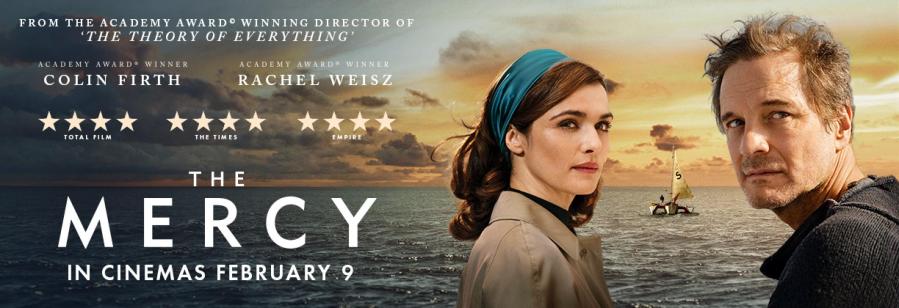
In a few reviews of films based on true stories, I have mentioned that I can find it hard to be fully engrossed in them when I know how the stories end. I’ve also mentioned before how it really annoys me when films put so much of the story in the trailer that the entire film is playing catch up to the trailer when you watch it. Who’d have thought I’d finally see a film that combines both? Lucky me!

I’m not underestimating that by the way, if you watch the trailer then you’ve seen the film. I mean, sure you miss the final five minutes (possibly less), but other than that the trailer is basically a condensed version of the film. I kept waiting to see something new, to see a plot point that propelled the final third of the film into an area I didn’t expect, but nope, just same old, same old.

I think this films biggest problem is it’s a bit too Colin Firth-ey, not Tom Hardy-ey enough. Colin First is a great actor, this cannot be denied, but a lot of films he is in, they tend to be kind of twee and lovely. Tom Hardy, however, chooses film roles in films that could break your spirit. That’s what this film needed. It needed darkness, it needed to stop focusing on beautiful scenery (and it is beautiful, don’t get me wrong) and focus more on inner turmoil. It also needed to stop CUTTING AWAY FROM THE MAIN CHARACTER. I mean, seriously, the film is about a man hopelessly lost and completely isolated from those he loves. The most effective way to do this would be to keep him as the main focus, you focus so much on his on this small boat that you begin to feel trapped with him. You begin to miss the other characters just as much as he does, you feel his loss. This film doesn’t give you an opportunity to do that, it continually cuts back and forth between him and his family, in both the present and the past. I get why they did that, it’s showing what he’s missing and has left behind, I just REALLY don’t agree with it. If they didn’t show that nobody would think “yeah, it’s just his family though, why’s he so bothered about that?”. It’s his family so the initial assumption is that he loves them very much, we don’t need to see it and the fact we do hurts the flow of the film and means we never really get to feel trapped with him, because narratively we’re not.

There’s a great story told somewhere within this film, I just felt the director was the wrong choice. I’m not saying James Marsh is a bad director, but not every story is suitable for some directors, you wouldn’t expect Tim Burton to do a historical drama, if Michael Bay was doing the new Saw it would be a mess. Marsh’s style is focused on beauty, this film needed to be uglier to work, then it could have been truly spectacular.