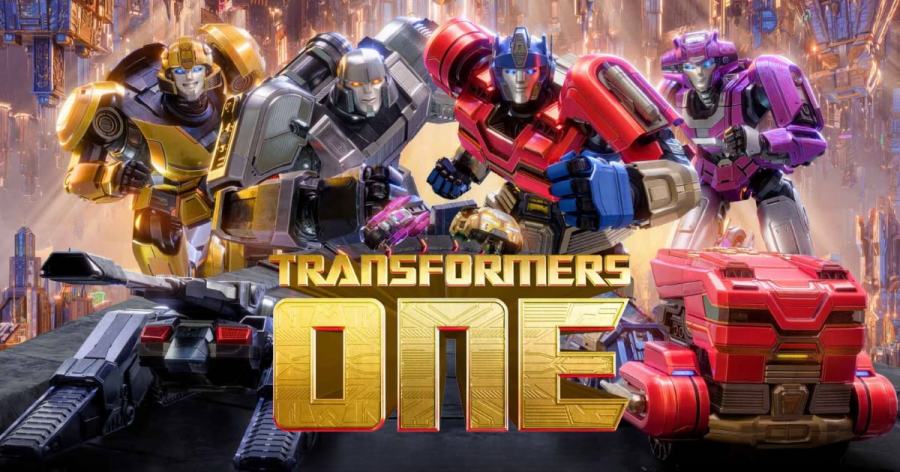
Quick Synopsis: A look at the inciting incident in the hatred between Optimus Prime and Megatron
I was mildly looking forward to this. The trailer caught my attention, and I thought, “That looks like a lot of silly fun.” A bit like the second coming of The Lego Batman Movie, which I still think is dumb brilliance. It’s not dumb brilliance, it’s just brilliant. Yes, it has some silly jokes, but nowhere near as much as it could. Before it fully settled into the tone I spotted numerous opportunities for some silly jokes, and I assumed it was the scriptwriters missing opportunities. That’s my bad, this is not attempting to be silly, just entertaining, and yes, Virginia, there is a difference. Everything makes sense within the logic created. Also, EVERYTHING is played straight, to a horrific extent at some points.
This isn’t a “fun and joy for kids” movie. It deals with colonialism, disability rights, hierarchal power structures, appeals to authority fallacies etc. It doesn’t shy away from darkness, characters are decapitated, torn apart, mutilated at birth, and stabbed repeatedly. You don’t expect kids’ films to feature a scene of a main character being horrifically tortured, and you certainly don’t expect it to be shown and not just implied or cut away from.
This is only the second film that Josh Cooley has directed, and he does brilliantly. It will be a weird thing to say as a response to an animated kid’s film, but I feel he would make a fantastic horror film. He knows about scale, he knows about tension, and he knows how to maximise character pain so that the audience can feel it, I shouldn’t wince in pain when an animated robot gets hurt, but this manages it. He’s helped by the animation style; it is almost stop-motion in how physically real the world looks.
It’s very well cast. There are NAMES in this, Johannson, Hemsworth, Fishbourne, Hamm etc. And all of them nail it, they actually act, and they’re not just doing their normal voices. The real MVP is Brian Tyree Henry. There’s one moment in particular where his performance is one of the best I’ve heard all year, not just in kids films, in general. His conviction and passion is breathtaking, and it’s genuinely chilling to hear him deliver it, particularly the line “No, I want to kill him” which would easily be seen as cheesy if delivered by a lesser performer.
I know I’ve seen the first Michael Bay Transformers movie, and I think I’ve seen the second one too. But I can’t remember much from them, they were fine as I was watching them, but nothing stands out, it was just metal smashing metal like some Robot Fuck Club (great band name). This? I will remember this. At the risk of sounding crude, it’s f*cking fantastic. It has everything I want in a movie; laughs, good characters, references to Key And Peele sketches, looks fantastic, heart, and some mild terror. Some people may argue that the start of darkness is too obvious. Those people are wrong, it’s not “predictable”, it’s foreshadowing/storytelling, and damn fine storytelling at that.
Quick Synopsis: Arthur Fleck is in prison after the events of the first film, whilst there he meets a romantic interest.
Initial reaction to this has been, well it’s not been positive has it? Normally, I don’t care about internet reviews, because they’re usually just “This movie has a black person in. Woke! This has Winona Ryder dating someone who’s not me. That’s bullshit, she’s my Winona! One star”. This was especially puzzling when you remember the positive reaction of the first one. People loved that. When the initial Blu-rays were released people referred to it as “The shipped gold standard“, due to how glad they were that they could finally have it. I mean, yeah, Joker: Folie A Deux (Or J: FAD, which is pronounced the only way you could pronounce that acronym really), is a musical, and the Angry Incel Dickhead “No Mercy! Coffee’s For Closers! Sweep The Leg!” faux alpha’s tend to hate them because those movies consist of people showing emotion. Logically, they should love this movie though, because it also has zero emotion, unless you count unrelenting bleakness as an emotion. It’s just a series of shit things happening in a shit world. You don’t feel like you enjoy it, it feels like you’re on permanent jet lag.
I’m not opposed to musicals, I’m opposed to THIS being a musical, especially the way they did it. Joaquin Phoenix can sing, he showed this with his performance in Walk The Line. But he can’t show that in this. His voice as Arthur Fleck (and how annoying is it that his character isn’t in the DCEU Batman movies, so we never got an A.Fleck/Affleck movie) is pathetic and downbeat, and he carries that through to the singing. If I wanted an incel icon singing songs of love, I’d listen to Bright Eyes (sorry Conor Oberst). Also, he’s acting alongside renowned waitress/actress/musician/singer Lady Gaga, who is a MUCH better singer than he is. Of course, he’s a better actor, so it kind of balances out, but is deeply unfair to both performers. Also, how can you have a musical called Joker and not have “Send In The Clowns”? I will admit, the use of “That’s Life” is damn perfect.
Serious musicals can work, just look at Annette, but that worked because it leaned into the weirdness, and because all the songs were written by Sparks there was a coherent vision throughout the soundtrack. They had a vision, and they carried that through over 27 songs (63 is over 27, right?). That same coherent song choice isn’t present in J: FAD, instead it feels like an old man choosing songs at the jukebox.
There’s a consistency in style though, it’s not as though you get pop punk, underrated “I Think We’re Alone Now” 80’s popstar Tiffany, blues, and then thrash metal. It is pretty much just all the same style, but no sense of flow between them, and not many choices which completely redefine how you feel about that song.
The script is nothing to write home about, either. The “romance” between Harley and Joker never really feels real. We’re not given a reason to believe she would be into him. There’s no seduction or moment of attraction. He sees her singing, starts talking, and seduces her by basically saying, “I’ve got troubled thoughts and a self-esteem to match.” What a catch! Somehow, this works, and they become America’s suite-hearts. Well, they don’t. Nobody notices them as a couple. The hero worship for Joker doesn’t extend to the woman doing everything possible to get him out of prison. You’d think she would have a fan club or something. It feels like the film wanted the pint-sized peroxide princess Harley Quinn but had no idea how to fit her in, so all the scenes of her character feel badly written. The newspapers don’t recognise her as who she actually is, and don’t give me the “she paid the press to stop them reporting”, because they still report on her attempted prison breakout/Joker romance, which you’d think would be far more damaging to her family. It’s not helped by how much of the runtime consists of “imagine spots, ” not very interesting ones either.
None of my negativity for this is down to the performers. They’re great. Phoenix continues to play Joker as some kind of West Coast smoker uncomfortable with his new-found fame, and Gaga is a fantastic performance. I’d like to see them together in something else, even another musical, but one a bit more fun. There’s no sense of playfulness to this. It doesn’t feel like a musical, it feels like a film where the characters sometimes sing in their mind, yes, there is a difference. Also, the way it handles fame and the weirdness of people who spend their days worshipping sociopaths (That reminds me; Americans, don’t forget to vote) is interesting, and those are things that people need to talk about. But they could talk about them a lot better than this. No matter how important it is, a message doesn’t mean shit if it’s delivered in a shit way. It’s why my method of writing “Recycle!” on a shovel and twatting people didn’t do much to convince people to change their rubbish disposal methods. This isn’t a movie, it’s a thesis and a poorly written one at that. It’s not even interesting, there’s one FASCINATING, well not even a sub-plot, just a “thing that has happened”. In this universe, someone created a drama based on the events of the first film. It’s referred to in passing a few times, but there’s no indication of what it’s like in terms of style. I WANT to see stuff about that. I feel it would give a better indication of how the world is truly reacting to what happened (especially since the majority of J: FAD takes place in the prison or in a courtroom, so it does feel quite claustrophobic). Plus it would also make a point about how the media sensationalises violence whilst also decrying it, in some kind of self-feeding cycle of shit. Plus, it would give it a sense of playfulness which is otherwise lacking (except for the animated opening).
You may have noticed, but during this review, I slipped in the song titles (and in two cases, the lyrics) for every song (except track 1) from the Fall Out Boy album which shares a title with this flick. I did this mainly because I was so bored during J: FAD that my mind wandered, and went automatically to the Fall Out Boy album. Yes, it was weird and distracting, making this review a lot more stressful than it would be otherwise. But it also means I put more effort into this than the writers did into the movie. Sadly, there’s absolutely no way for me to put “Disloyal Order Of The Water Buffalo” in.
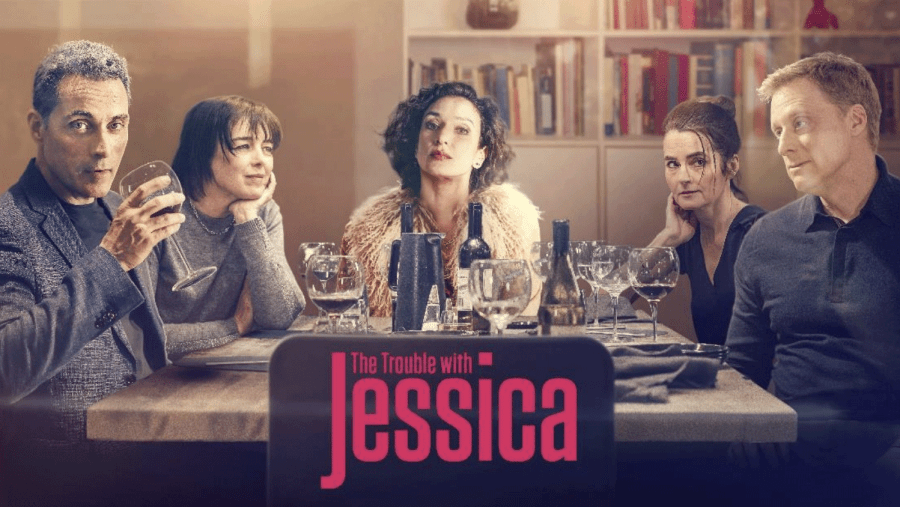
Quick Synopsis: Sarah and Tom have one final dinner party before selling their home. The suicide of an unwanted guest ruins the party (and the chances of a successful sale)
I fucking love a good dinner party scene. There’s something about them that’s so tense to watch unfold. I think it’s because they have societal expectations in ways that other parties don’t. There’s an expectation that everyone will behave politely and behave well. There’s also the fact that they tend to be very conversation-based, so it’s VERY easy to get information over via dialogue. “so how’s the new job going?” is a perfectly normal thing to ask at a dinner party, so it’s very useful for exposition. I mention that because the one in here has some of the most tense five seconds I’ve ever seen. A tenseness which is then made worse by the revelation that the character was joking. There’s a definite shift in dynamics there. Ordinarily, it would be “This rudeness puts everyone on the defensive”, but here it actually does the opposite, it puts everyone on the offensive, against her, so your feelings are conflicted when she commits suicide soon after.
On that subject; I wasn’t a fan of the post-suicide moment. She commits suicide, they try to cut her down and save her but are unsuccessful, and she falls onto the floor dead. Title card. That, that I’m fine with. But then there are establishing shots of the house and food before we go to the characters reacting. Those shots are only roughly 5 seconds long but completely kill any momentum. It’s just a weird narrative decision.
That’s The Trouble With Jessica’s (TTWJ, pronounced That-weej) biggest flaw; it has a good story but no idea what to do with it. The main farcical driver is that the characters want to move her body to her own house because they think having a dead body in their house will affect their house price. Very funny, very middle class. But they get to that decision far too quickly.
Part of the problem is that the satire never hits as sharply as it could. Primarily because tonally, it feels like the target of its ire and its target for a viewing audience are one and the same, so it’s very scared of annoying the people who are viewing it.
It REALLY feels like a weirdly dark episode of Coupling without Jeff, in which Jane kills herself. Seriously, watch this movie with the core 4 from that sitcom in mind, if I told you “Which Coupling character would this person be?” I GUARANTEE you’d get the exact same. That’s a criticism of the script, by the way, nothing against the performances. Shirely Henderson gets the plaudits, but it’s fascinating how well Alan Tudyk plays a middle-aged Brit.
The familiarity and lack of bite aren’t the only issues with the script. There are completely unnecessary flashbacks to scenes we saw earlier, it would have worked better if we saw just the flashbacks, not the originals. It also has trouble ending. It doesn’t so much drive to the home stretch, as stutter.
It has some fun moments though. The intertitles are interesting, but when they get to “The trouble with driving a dead body across London in the middle of the night”, they suddenly become brilliant. Some of the dialogue is hilarious, and the characters are very believable.
In summary, I’m glad I saw this, but that’s mostly because it’s available on Netflix and I watched it there, if I watched it at the cinema I’d be much harsher towards it.
I have been very harsh to a lot of movies this year, and when I look at what’s coming up, I will more than likely continue to be. So it’s only fair I share some of my own writing with the world, so here goes.
You see it a lot on social media, posts saying “Have you seen this person?”, and people share it far and wide. I very rarely do this, and it’s because of my paranoid nature. Whenever I see a post like that, I think, “What if they don’t want to be found?” And I know that’s terrible, but what if an abusive husband was using the kindness of strangers to locate his ex-partner who left him? With enough “helpful” people, he’ll be able to pin down her location, and that thought scares me. Rather than just say that out loud on Facebook, I wrote it in a script, and then only had that moment last about 20 seconds. This is a first draft, but I’m interested in feedback. Oh, trigger warning for domestic violence, it’s not shown but is talked about.
The one thing that does concern me is if it’s clear enough what’s happening. I think I’ve written it in a way that readers/viewers can figure out it’s all taking place on social media, but that might be because I know that’s what it is. There must be another way of doing it, and I’m curious what it would be. I didn’t want to run the risk of being obnoxious and pushing that aspect in the audience’s face, so it was difficult to find that balance. I think I also need to introduce the concept of Mikaela
Quick synopsis: Remember Beetlejuice? He’s back, in fog form.
I think I left it too late to watch the original Beetlejuice. I didn’t see it until I was in my late 20’s, by which time I was already over-familiar with the iconography and character, and it was too late for me to be obsessed with it. Also, I was never the biggest Tim Burton fan. His stuff has always seemed to be a case of style over substance, like a Zack Snyder who hasn’t yet discovered porn.
Maybe Beetlejuice Beetlejuice will change that? While I wasn’t a huge fan of the original, I liked it and consider it among his strongest works. So if anything could get me to buy a ticket to ride the Burton Bus it would be this piece of unfresh meat (if he ever gets accused of sexual improprieties then that sentence is going to seem so bad).
Spoilers, it doesn’t. I have the same issue with Beetlejuice Beetlejuice (BB, pronounced Bébé) that I have with much of Burton’s work; the script. There are five different plotlines, most of them run episodically rather than alongside each other. There are moments which aren’t really storybeats, just stuff happening one after the other. It seems like it’s setting up a plotline or villain, and then it is resolved within 10 minutes.
None of this is the fault of the actors though; all of them are on top form. Winona Ryder continues to be the best, Jenna Ortega slots into this universe perfectly, Keaton is exactly what you expect, and Catherine O’Hara is a damn delight. Jeffrey Jones is missing from BB, but his character isn’t, appearing in animated form in a plane crash, and in live-action form walking around the afterlife without a head. The reason for this is that Jeffrey Jones is a gross paedophile, so having him in this would be a huge PR problem. I do have an issue with his character being in it though, especially being so revered and a major part of one of the characters’ plotlines. Dunno, it just feels a little weird. I know it’s not him, but it is slightly uncomfortable to see that much love shown to a character played by him. It would be like if you dressed up as Jimmy Savile and attended a kids’ birthday party; the adults would know that it’s not actually him, but they would still be a little bit grossed out.
There are moments where BB is better than the original, some of the visuals have a lot more creativity to them, the characters are better defined, and the world feels more real. The “involuntary karaoke” scene is definitely worse though, and that’s mainly down to song choice. The song is still good, but it’s not as well known, not as likely to be sung by drunk people at music festivals, and just not as bombastic and hilarious considering the scene. To the point where it feels like it only exists in this movie BECAUSE it was in the first one.
It’s a shame, this could have been great. It is pretty good, but it doesn’t make you think that Burton has developed much as a filmmaker since he made the original. If there was only a five-year wait for this to be released, that would be okay, but 36 years and THIS is the best he can do? It’s a little disheartening, and definitely not good enough for me not to sing the title of it to the tune of Lollipop Lollipop.
Quick Synopsis: A family takes an experimental AI into their house. Everything works out fine. Psych! Stuff starts to suck.
AfrAId was directed by Chris Weitz, who also directed About A Boy, The Twilight Zone: New Moon, and The Golden Compass, which is a weird film history if you think about it. Not really relevant at all, I just wanted to mention it.
I went into this with lower expectations than I would if Gillingham were playing Barcelona (football joke, I NEVER make them), I knew it had bad reviews and box office, and bad horror movies are usually The Crow-est of the low. So I knew this would be terrible. But then something went wrong; it’s not terrible. It’s not good, but it’s not terrible. It is never bad enough to be awful, but also it’s never quite good enough to stand out. It doesn’t help that it’s quite derivative, it’s not saying that much which hasn’t been said before (primarily by equally stupidly titled M3gan). It can’t compare to that, and not just because the AI in this isn’t as memorable, or as well-written. Occasionally it only does things BECAUSE it’s a horror movie, there’s no “non-creepy” justification for many of the AI’s choices.
On the plus side, it does seem like it has something to say, which I always like to see in a horror movie. The proliferation of AI is a concerning development and one that’s too big for films to ignore. This film also says a lot about how families interact with themselves and with technology, especially concerning how that affects parenting. It doesn’t always work, though. There are some parts where the AI nature of it just
The revenge porn bit, in particular, didn’t sit right with me. I don’t care that it ruined that kid’s life, he knowingly made and shared porn of his girlfriend. I don’t give a shit that he won’t go to college or that he’s being tried as an adult. To be perfectly honest I hope he gets hit by a fucking car. Now it gets fun. No word of a lie, I legit wrote that line, and then that character died in a car crash. So that’s nice.
On the upside; the performances are good. John Cho is underrated (as anybody who has watched Searching will know), and I’m still waiting for the world to pay attention to just how utterly fantastic Katherine Waterston is. Both of them feel slightly beyond this movie, almost like this was a film made years ago and only just released now to make use of their fame. There’s also no issue with direction; it looks good, has decent audio cues etc.
The main issues are pretty much entirely down to the script. The pacing is like a drunk driver; all over the place, causing great damage, and indefensible. The ending is a huge letdown. It goes too “real”, with the AI making incursions into reality which are a bit too far-fetched and would be easily solved by humans. The closing scenes are also far too predictable, to the point where it feels like a parody.
In summary; not as bad as I expected, but not as good as I wanted. AfrAId is like people who discuss politics on Twitter, too concerned with saying stuff “now” than trying to figure out how to say it.
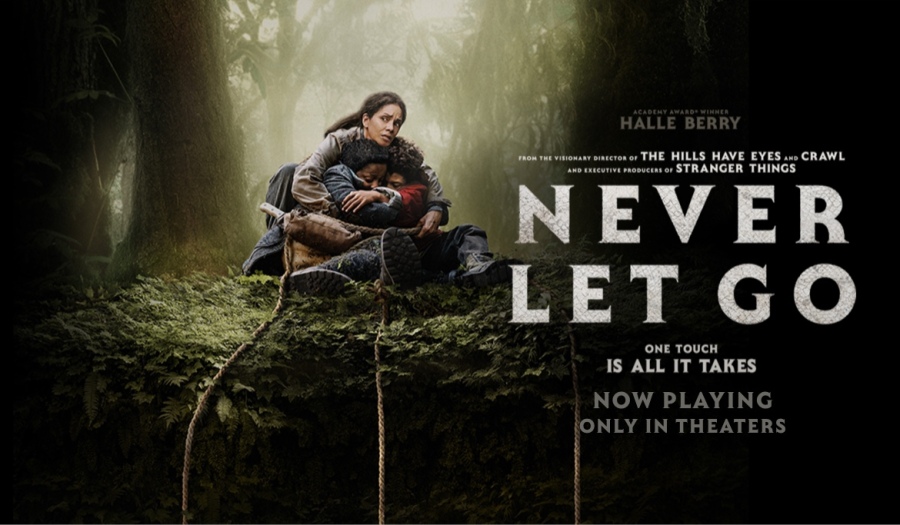
Quick Synopsis: In response to a worldwide evil, a mother (Halle Berry), protects her children via tethering them to the house with a rope, thus ensuring no evil can come to them. As the years go on, she struggles to keep them content with their new lifestyle.
I have a mixed history with Alexandre Aja (the director of Never Let Go, or NLG, pronounced Nelgg), I enjoyed Horns, but I found Crawl a bit poor, so I was unsure what to expect. Halle Berry is in it, which bodes well as she does seem to be more careful about what scripts she chooses lately (probably because of Catwoman), and even if a film is bad, Berry is always good. I wasn’t aware of the two child actors in this, but they are pretty damn good in this. It’s not “good for child actors”, just flat-out good. So that’s definitely a plus. Aja’s directing is pretty decent too with some brilliantly creepy set-pieces and creative visuals. There are moments where it is a bit too dark to see, but that’s to be expected in a film set in a cabin that lacks as many lights as this does. It’s also a genuinely interesting story, and provides a real sense of survivalism, particularly with how difficult it is even for those experienced in it. Doesn’t matter how good you are at hunting if the animals have all gone somewhere else (unless you’re a nomadic tribe obviously). And it doesn’t matter how good you are at farming if it’s too cold and flooded for the crops to work. It’s not “organic salads made entirely from hand-grown fruits”, sometimes it’s “eating fried bark”. You’re only ever one winter away from starvation, and that will lead to you making difficult decisions like wondering if you should kill your dog. So much of NLG is utterly fantastic. The film itself? Far from it.
Whenever you watch a film, you don’t watch it in a vacuum (or any other household appliance), it can set up expectations and then subvert them, and other times it makes them seem predictable. So movies now need to be written with that in mind. Never Let Go attempts to play with expectations, but in its attempts to do so, it traps itself like a fly in a spider’s web and is just as ugly. It knows that your first thought while watching this will be “Okay so is the twist going to be that she’s actually just making it up?”, which would work. Instead of subtly laying in clues, it has characters outright state that they believe that to be the case. It sets up that “twist” far too obviously, to the point where you begin to wonder if it’s actually a double twist and it turns out she was telling the truth all along. But that’s not a twist, that’s just a straight story. The way that NLG tries to set up both endings means that whatever ending it picks, it will end up feeling predictable. It traps itself by attempting to be too clever.
I suppose that’s to be expected, I mean, it has to attempt SOMETHING, the story itself really doesn’t lend itself to a 100-minute feature. It only has three characters, and the very notion of the story means they can’t interact with anybody else, and two of them have known only this life forever. So with nothing to upset the status quo, and no new characters introduced, it’s difficult to be hooked. I’ve seen worse films, but I’ve yet to see a semi-decent movie be as derailed by a poor script as much as this one was. I suppose at least they’re trying.
Quick Synopsis: Elisabeth Sparkle is an ageing actress who has just lost her job as the host of an aerobics TV show. Desperate to regain her “sparkle” she takes a serum which causes a younger version of herself to “hatch”, with one rule; she must switch between the two versions every week, without fail.
I am so glad this was directed by Coralie Fargeat. As anybody who watched 2017’s Revenge can attest, she’s talented as hell. She is the perfect director for something like this, injecting standard scenes with an air of creepiness. She also makes some incredibly brave decisions, mainly to do with holding a shot MUCH longer than most directors would, uncomfortably long at times. She sets her standards in the opening shot, where we see a star on a Hollywood Walk of Fame get created, and then see it age and decay. Not only is it a beautiful sequence (plus weirdly fascinating), but it’s also thematically appropriate; seeing a star be damaged by the pressures put upon it alongside the natural damages caused by time passing, well it’s not exactly subtle, is it?
The other reason I’m glad Coralie directed this is because it needs to be directed by a woman. It’s a female story. Yes, the worries of ageing and not feeling as sexy as we once were are worries shared by everybody, but it hits women harder because they’re judged for it more harshly. Also, if this was directed by a man then some of the shots would be a bit creepy. I’m not saying they’re odd shot choices, but when a film is telling you about the pressures of enforcing societal expectations of constant youth and beauty on women so that they see being old as a character flaw, but then the next shot is full of VERY close-up of a young woman buttcheeks in exercise clothes, well it can feel like mixed messages.
The young woman with the zoomed-in buttcheeks? Margaret Qualley, who plays a “more perfect” version of Demi Moore’s character. Annoyingly, there is no point in which they seem like the same person. There are no shared quirks or physical tics. They seem like completely separate people, which I know is sort of the point, but I would like to buy into the concept that there is some shared nature between the two of them considering the mind they share is the same.
The moment when they split is truly disturbing. It’s one of the most disturbing things I’ve seen all year, and I’ve watched a lot. Coralie is great at body horror, and it’s those moments which drive the freakishness of the narrative, especially in the final third which is just batshit insane. Normally I say “batshit insane” and it’s a compliment, here it’s not. I liked it, but for some reason, it didn’t hit me. Possibly because it took FAR too long to get to the obvious moments. At one point, it repeats a dream sequence/hallucination from a few minutes earlier, and with no new context or reason for it to exist again.
This may seem like a negative review, and that’s because there is quite a fair bit to dislike about The Substance. It’s unsubtle at times, it’s FAR too long, and it wastes sooo much potential. But there’s also SOOOO much to like and appreciate. It’s stylish, it’s darkly funny, and it needs to be unsubtle to get the message through. I did like it, but I wouldn’t say I “enjoyed” it, at times it was a struggle to continue paying attention. It’s an important one, it’s a spectacular one to see unfold in front of you, but it also needs about 10 minutes cut from it. It’s utterly horrific, but also completely fascinating.
In summary, it’s a dichotomy. Which I suppose also suits the themes.
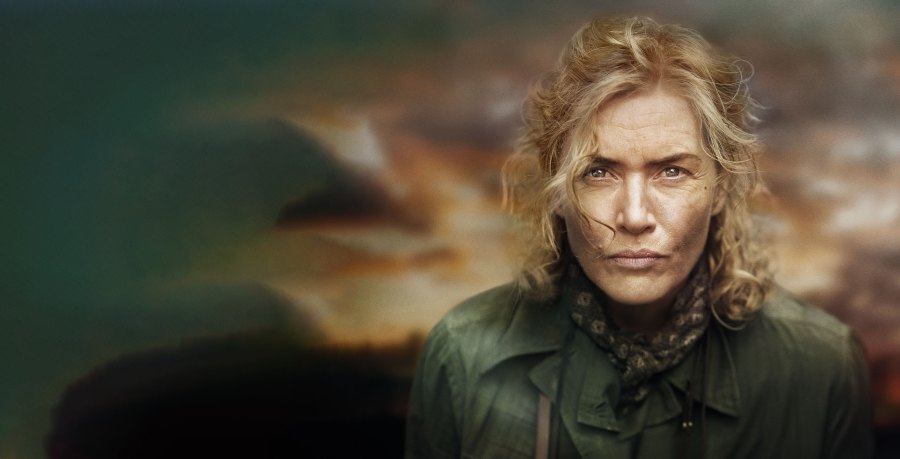
Quick Synopsis: The tale of Lee Miller, acclaimed war photojournalist
This review was going to be so simple. It was just going to be a lot of jokes about how the name character has the same name as me. Lots of “I don’t remember doing any of this” stuff. It was going to be SOOOOO dumb but funny. Now I can’t do that. And I can’t do that because this film is too good for that. It’s deeply emotional and important, and making stupid jokes about it feels like it would cheapen it a lot. Stupid Lee, being too good for me to make jokes about, as all my friends say: Lee ruins everything.
Lee is not perfect, at times it feels like it assumes you know the importance of certain images, so you’re sitting there and being amazed at the recreations and new insight into how they were constructed etc. As it is, you spend a few moments with no idea what is happening. My other issue, and it hurts me to say this, Andy Samberg is not as good a dramatic actor as the other performers. In a lot of films, that would be okay, but here, he’s opposite Kate Winslet who is at the top of her game. Despite my prediction towards small weird stuff, and my avoidance of the obvious big-budget films (by which I mean, I haven’t seen Titanic), I’ve always been a fan of Winslet, mainly because she’s in the supremely underrated Heavenly Creatures. This is off-topic, but she also seems like a hugely brilliant human being.
The other downside of Lee is going to make me sound a bit weird. There’s been a lot of Nazi films lately. Not films about Nazi leadership, or even the soldiers. But a focus on the ideology, about how it penetrates everyday society and needs to be snuffed out before it poisons. This concerns me. Not because I think “but free speech! people should be free to be racist idiots!” or “WOKE!” etc. But because writers, even those writing about the past, are ALL writing about the current world. So I’m slightly uncomfortable that so many writers in 2020’s feel the need to point out how nazi’s are bad, we don’t have that many “don’t eat lava” films, because we all know that’s obvious. So I’m worried that there is a resurgence in Nazi viewpoints being accepted in polite society, and astute writers are noticing that.
Otherwise, this is damn fine. There is so much to like about this. It’s shot beautifully for a start, done in such a way that it really makes you feel like you’re in a different time. The story is what’s key though. It’s incredibly engaging throughout. It’s the closest I’ve seen to Civil War in terms of how it details the importance of war photographers (incidentally, the lead character in that film was named after Lee Miller). It does so much right. Importantly, it starts off pre-war. But in a time where, in hindsight, war was inevitable. It’s fascinating to see how dismissive they are of the looming threat. It also provides a huge contrast when war does break out, even when you don’t see them, you are aware of what has happened to some of the characters we were introduced to in the opening (although it could do a better job of reminding you they are when they’re mentioned near the end).
In summary; there is A LOT to like about Lee. It’s harrowing, beautiful, and absolutely essential. I’ve seen some movies where the audience stands up and leaves the very second the closing credits start. Sometimes people sit there, but from the general hubbub, you can tell they’re just waiting for a credits scene. With this, there was silence, not of shock, not of exhaustion, but one of appreciation, almost reverance.
Quick synopsis: After the love of his that he’s known for a suuuuuuch a long time is murdered in front of him, Eric is given the power of face paint and healing to get his revenge.
I know how this is supposed to go. Reviews for this have been so negative there was concern it would somehow end up with a minus score on rotten tomatoes. The jokes would have been obvious, “This does to Skarsgards career what the original did to Brandon Lee”. About how it was a cynical cash grab, that forgot the “cash” part. Maybe comments about how this is the second review this year which would lead itself to jokes about Sting. Truth is, I won’t be making any of those jokes.
Not because this film is good, far from it, it’s definitely a steaming pile of crap that I wouldn’t recommend to anybody. And certainly not because I feel it deserves compliments for effort and you can tell the filmmakers are trying. The reason it’s hard to rustle up any anger and vitriol towards The Crow is because it’s so unbelievably bland. I haven’t encountered anything so devoid of taste since a Wetherspoons fry-up.
The original Crow movie is iconic, in the 30 years since it was released, the combination of a white face and black trenchcoat has inspired countless school shooters. It’s hard to imagine this version inspiring anything other than complete apathy.
It’s hard to think of anything about this that works. The romance, you know, the entire reason the character is so vengeful in the first place, doesn’t feel real. For some reason, The Crow thinks we need to see their whole relationship, including how it starts. We don’t NEED to see them meeting, in fact, that actually makes it worse because you then realise the “Love of his life” is someone he’s known for a few days. So his reasons for coming back from the dead seem less “I have lost EVERYTHING!” than they should. It’s not helped by the fact they don’t seem to have much chemistry. I don’t get how Skarsgards performance is so meh in this considering he’s basically made a living treading that line between corpse and hot. This is only the second feature film credit for FKA Twigs, and she’s better than that would suggest. Note “better” does not necessarily mean “good”.
The soundtrack is forgettable. I’m assuming that anyway, I can’t actually remember. This would have been the PERFECT time to play a shitload of dark pop. Get some stuff in there that’s both danceable and depressing; some Lana Del Ray, some Ashnikko, some Charli XCX, don’t play fucking Enya.
Nothing about this answers the question “Why was this made?”. Do we need a dark and gritty film which is a remake of a film that’s already dark and gritty? The only notable thing about this movie is that Danny Huston continues to be a solid choice for “threatening mob-like guy”. But even that’s ruined by the inconsistency in his character.
Even the fight scenes aren’t well done. We know Skarsgard can do fight scenes, but you wouldn’t know that if you have only seen this, because of how bland and weirdly neutered the fights are. I’ve never seen scenes so full of blood still manage to come off so sanitised and “safe”.
It’s not the worst film ever. It’s not a complete mess that fails at everything it attempts. What it is, is something much more offensive than that; dull. It doesn’t fail at what it tries because it never tries anything. There is zero effort, zero heart, and consequently, zero reason to watch this film.






 Troubled Productions