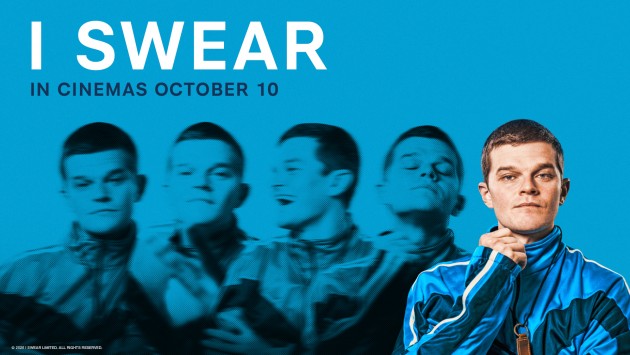
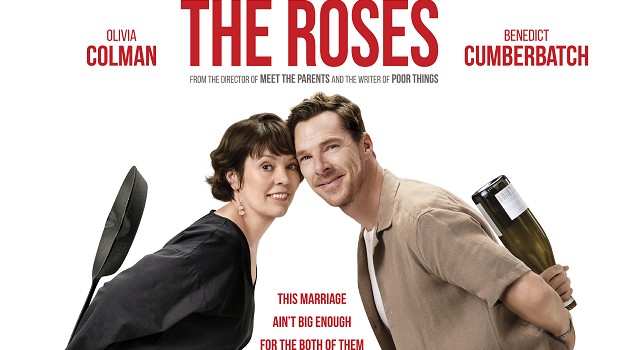
Quick Synopsis: Reformed criminals are forced to return to a life of crime.
I have to be honest, I can’t really remember that much from the first one. I know I’ve seen it, and I know I reviewed it. But none of the characters really stuck with me. My main memory of it is how it had the bad luck to be released very close to Zootopia/Zootropolis whilst exploring familiar themes.
The sequel has the advantage of being released roughly 4 months before the Zootopia sequel, so it doesn’t have the same comparison issues. It’s also much better paced, starting with a heist instead of a conversation. The initial heist is surprisingly well written. Not just in terms of the action making sense in terms of physics and geography, but it also showcases all of the gang’s talents. It could easily get away with “this is Ms. Tarantula, expert computer hacker”, but instead it just shows her expertly hacking. This is incredibly smart as it means that people who watched the first one recently won’t feel like it’s repeating itself, but people who haven’t watched it recently still get to know their personalities and skills. I admire the scriptwriting that goes into that.
I admire other parts of the script less. It feels very episodic, it doesn’t flow from one scene to the next, instead it feels like there’s a definite STOP at certain points, seemingly destined for a theme tune and a “How will our fishy friend find his way out of this aquarium of agony? Find out next week!” voiceover. Some of those moments are better than others. The section at the Lucha Libre show is a particular lowlight. If you’ve been on the internet, you may have seen people point out how impossible one of the Fast and Furious movies is because it has a scene that takes place on a runway, and for it to work in the film, it would need to be miles long because of how long the scene is. This has a similar issue. Characters run for far too long in a small ring without hitting the ropes. It’s a minor issue, but once I noticed it, it was impossible to ignore.
It’s a shame, as that moment could have been brilliant. The space-bound sections are much better, and it’s clear that the writers did their research on how rocket launches occur in stages. Yes, it’s incredibly unrealistic in parts, but mainly for the rule of fun. The action scenes on the space station make tremendous use of the situation, and it’s genuinely difficult to see how they’re going to top that in the sequel.
Overall, I liked this more than the first one. The first was too obviously indebted to its influences; this feels like its own movie; it has an identity that the first one didn’t. The bringing back of Professor Marmalade felt weird, though. Had some funny moments, but it felt needless. Also, there were moments where it felt like this was trying to appeal to furries, especially with the way they portray Kitty Kat. A bit uncomfortable, not gonna lie.
Quick Synopsis: An NBA star, a corrupt cop, a female rap duo, teenage punks, neo-Nazis and a debt collector embark on a collision course in 1987 Oakland.
I think this is the first anthology film I’ve reviewed. I have to be honest, it’s difficult to figure out how to review a film like this. Do I review each one individually, or take it as a whole? I’ve decided to try to do each segment in turn. If it were something like the VHS series, where there’s A LOT of segments, I’d do it as a whole (or just not watch it), but with only four segments? That seems doable. This will be more stream-of-consciousness than most of my reviews, so fair warning for that.
Strength In Numbers: The Gilman Strikes Back
Ah, this really made me wish we had a local music community. There’s so much togetherness displayed among the characters. Jack Champion has played the worst character in at least two movies (Avatar: The Way Of Water and Scream VI), but his performance in this shows that it was ALL due to bad writing. He is charming and sweet in this. I love Tina, though. Ji-Young Yoo is full of energy and repressed anger.
I appreciate that in an age where “don’t be a dick” is taken as “woke political correctness”, I appreciate how this segment (the entire film, in fact) is not subtle. This is not subtle, one character outright says “the rules don’t apply to nazis” when they discuss their “no hate” rule. But when we have politicians outwardly saying they want to put the unemployed in concentration camps, we can’t afford to be subtle. I have seen one person say that the portrayal of nazi’s in this segment made them “cartoonishly evil”, especially when they beat up someone on crutches. Got news for ya, that’s far from the worst thing Nazi’s did to people.
The fight itself is brutal. Doesn’t shy away from the blood and anger. It plays up some of it by making it slightly comic booky, but you are left in no doubt that these are real people (and nazi’s). The message here, “You can’t afford to be a pacifist if you’re being attacked”, is vital in 2025 (and yes, that is depressing). The relevance and importance of the message wouldn’t matter if the other components weren’t good. Obviously, the soundtrack is brilliant, with tracks from Operation Ivy and Black Flag suiting both the tone and the time. The visuals are pretty fun too, a standard conversation between the two characters is made visually interesting with animated overlays (very similar to Ninjababy, if you ever saw that). There’s some great stuff with aspect ratio too, with the frame pushing in at the start, making the whole thing seem like an 80’s VHS tape (that’s helped by the slight grain to the footage too). On the downside, the grainy nature of the visuals does make it difficult to see things at times. But I suppose it’s in a dark room, everybody is wearing black, so if you combine that with the 80’s filter, it’s difficult to see how it could be brighter without looking fake.
My other problem was a singular scene just before the chaos started. There’s a conversation between two punks outside when the nazi’s arrive, it feels stilted and is the only part that doesn’t feel real. If I were told “these two actors won a competition/are the crew”, I’d believe it.
Don’t Fight The Feeling
It’s certainly a choice that the nazi story was followed by a story about two black women. Just to showcase how shitty the 80s were, there wasn’t just racism, there was also sexism. Their race never drives the narrative, though, I suppose if it did, then it would have risked repeating the lessons from the first section.
It’s not just the themes; tonally, this is completely different. That’s what you want from a film like this. You want to showcase the diverse group of characters, and it’s no point doing that if every section feels the same. There are connecting themes and settings, but they’re not even in the same genre or sharing a visual technique. The soundtrack is also completely different, with this section taking on more of a hip-hop slant.
It’s not as satisfying an end, though. They defeat a battle rapper who only hired them to humiliate them. His rhymes are hateful and sexist as fuck, and he deserves to be beaten. But, you don’t get the feeling that he’s learned his lesson. He’s still going to be misogynistic as fuck, just not to these two particular women.
Born To Mack
After the youth-oriented previous chapters, it’s a surprise that the opening of this consists of Tom Hanks and Pedro Pascal. I knew Pedro was in this, genuinely had no idea Tom Hanks was. Explains all the references to the previous segments made to him.
There’s a “but you’re the owner, you’ve always been the owner” spooky fake-out was brilliant and I loved it. This is a much more deliberate and slower story than the previous two. It’s strange, it has the most story, more happens (and it’s certainly the only one so far that you could imagine becoming a feature on its own), but it somehow feels like it stagnates more. In the previous sections, not much happened, but it happened quickly. If the previous two were sprints, this is a marathon. It’s not quite as entertaining, but ot is much more fascinating.
The Legend Of Sleepy Floyd
And we’re back with the nazi cunts (fuck off). This is an excellent culmination of everything we’ve seen. The sci-fi undertones become more obvious, with the references to telekinesis finally becoming meaningful. This is how the final section of an anthology should be; the previous scenes all crashing together in a magnificently meaningful coda.
I can see why people would hate this movie. I found it oddly charming. The opening leads you to think that the science-fiction elements may be more prevalent than they actually are, but that’s a minor issue. If you take it with no expectations, it’s a collection of stories which you’ll love to watch.
Synopsis: A family gathers to renovate their home. Truths are unearthed and memories dug up.
Josh Radnor appears to be following the Zach Braff career path of being the lead in a sitcom, which everyone eventually comes to hate, thinking the lead character is creepy and weird, to low-budget indie films, the only difference being that he’s starring in them instead of directing them. Braff’s films are weird. It felt like everyone loved Garden State, then watched it again and changed their mind. Josh Radnor is yet to even approach anything like Garden State, casting agents seem reluctant to cast him in feature films for some reason.
All Happy Families (AHF, pronounced Arth) isn’t going to change their mind. He plays the same put-upon character we’ve seen him play before. It feels like he was cast because he played a similar character, not because they wanted to give him a chance to spread his thespian abilities. That’s not saying he gives a bad performance. But you are going to compare his character to Ted Mosbey, who, love him or hate him, is a character audiences are familiar with and have notions about. His character here is never given enough to distance himself from that comparison. The closest he gets from stepping away from that character is when he’s interacting with his family members and the chaos they bring; and that’s only because that entire dynamic makes you think of the Bluths from Arrested Development (only in this case, it’s the brother character that is accused of sexual misconduct, not the actor who plays the father. Seriously, fuck Jeffrey Tambor, and the way the entire male cast talked over Jessica Walters’ experiences.) If you thought being compared to How I Met Your Mother is bad, try being compared to Arrested Development.
This may seem like I disliked it. The truth is, I didn’t. It’s a difficult film to dislike, mainly because it’s a difficult film to feel any powerful emotion towards. It’s sauceless pasta. Bland, dull, and everybody has tried similar stuff that’s better.
There are glimpses of what this movie could be. The scene on the boat is fun, and it displays the characters’ personalities very well. The mum (Sue, played by Becky Ann Baker) is the type of person who corrects a tour guide, Will (his brother, played by Rob Huebel) is famous and kind of smug, Graham feels overshadowed, and their dad, Roy (John Ashton,) just goes along with it. If the writers tweaked the narrative and put this scene first, it would have made a fantastic opening scene.
The moment where his mother has a discussion with his trans daughter is incredibly sweet, and the kind of scene which feels modern and like it has something to say. Other narratives are running throughout, every character going through their own trials: Sue has been groped by her boss, Roy has a gambling addiction that threatens to rear its head, his brother Will has been accused of sexual misconduct on the set of his TV show, and Graham is going through a personal crisis. All of these are very worthy plots, and all are narrative fruits that are ripe for picking. However, they’re so underdeveloped that the audience only gets a brief glimpse of each narrative before it is disposed of. This approach can work in real life; not every story gets an ending, sometimes it’s just that things happen. But it’s handled really badly here, especially in the closing section.
The end feels really rushed. You have all this drama colliding together, and you expect it to lead to something. Instead, it just kind of becomes nothing. I mean, stuff happens, but it doesn’t FEEL big. The payoffs are incredibly flat, and there’s zero intensity. It feels like a 10-episode TV show which skips episodes 7,8, and 9. Or the writer HAD to keep it under 90 minutes and wasn’t allowed to delete stuff they’d already done.
In summary, it’s cosy, sweet, and very heartfelt at times, with good performances throughout. But it’s nowhere near as good as what’s already out there. In a world of exquisite dining, this is toast.
Quick synopsis: A brother and sister are placed with a new foster mother; she’s a bit weird.
Sally Hawkins can do anything, can’t she? At no point during Bring Her Back do you think she’s English; she slips into her performance perfectly. The supporting cast also gives performances beyond their years, especially Billy Barratt, who gives a near-perfect performance of someone haunted by trauma but trying to stay strong. It’s also clear that the Philippou brothers are tremendous directors, with a real flair for understanding what makes certain visuals work.
I thought I’d start with that so I could move onto the negatives, as I really didn’t like this film. It’s not that I actively hated it; I just wasn’t impressed with it, at all. It tries so hard to matter, to be important, to deal with themes of grief and guilt, but does so far too unsubtly to the point of repetitiveness. It makes its points, then a few minutes later says the exact same thing again (a bit like I just did with the previous two sentences).
It is possible I just don’t like their stories, as I also wasn’t fond of their previous film, Talk To Me. Reading that review again (posted here), I have many of the same issues; it didn’t live up to its potential, a lot of scenes were needless, and it was a few tweaks away from being great.
BHB (pronounced Bah-haaab) isn’t sure whether its audience is comprised of geniuses or idiots. So it veers between “now to just make sure, we’re going to have this character explain this again” and “because f*ck you! that’s why that happened”. So watching it is akin to trying to do a kids crossword and a cryptic crossword on the same board.
As much as I love how the brothers create horror, I think BHB may have been better if it weren’t a horror movie. If they instead focused on the themes of grief and loss. Keep the possession angles, just dial down the “scares” back a bit. The cult interludes feel forced, and like they are just there to get creepy moments in. That’s a shame, as if we didn’t see those moments, then when we see her attempt to do it later, it would have more of an impact. At the moment, the cult videos are more disturbing than the main product. To put it in wrestling terms, it would be like starting a card with a match full of barbed wire baseball bats to the face, and then having the main event end with a single baseball bat to the back, and the person is knocked out for 10 minutes and taken to the hospital. If you’ve already seen something more devastating, it dilutes the payoff you’re looking for.
Cutting down on the horror would mean leaving out some of the deaths, but that’s no great loss, as the moment where two characters die has all the impact of a single raindrop on a swimming pool. They feel particularly mean-spirited and pointless. If you cut them from the script entirely, it would only require a 20-second scene to fix the hole that’s left. The deaths don’t cause any lasting trauma to the characters, don’t drive the story forward, and are pretty inconsequential. So either delete them, or make them have a purpose.
In summary, I’m going to end this with the exact quote I ended my review of Talk To Me.
It’s a shame as with a few tweaks this could have been among my favourite films of the year. But I sense that everything could have been better.
Quick Synopsis: Tech genius Renner (hey, that’s the title of the movie) has developed an AI tool to help develop confidence. A tool that’s unwittingly influenced by his domineering mother
I went into this expecting to be impressed. I knew who was in it, and I knew roughly what it was about; that was it. I don’t say this often, but if I had read more about it, I’m not sure I would have bothered. It actually annoyed me that I didn’t like it, because I know what the next two films I have to review are, and I would have liked if I had at least one positive review this week.
It’s not just that this wasn’t for me; at times, I actively disliked it. The lead character’s romance arc reminds me of Y2K, the film, not the year. He invites a neighbour to his house for an introduction. She brings a guy, and he is visibly annoyed to the point of rudeness. He’s then visibly elated when it turns out to be her brother. So, he comes across as a little bit entitled. Sentences like “I feel as if I’m being friend-zoned, this is like a horror movie” back up my viewpoint on that. You can’t be annoyed if a woman you’ve just met is wary of being at your home alone.
The other characters? They follow the same pathway of “the performances being better than the writing”. Violett Beane is incredibly charming and likeable in her performance, but that impact is lessened by the stuff the script makes her character say (You don’t get to say “it feels like my mouth had an orgasm” and then get surprised when someone turns it sexual). Her character feels like wish fulfilment; there’s not much reason for her to be into Renner. Look at it from her POV; she meets a guy who gets visibly angry at her for knowing a male. We don’t really get a reason for her to like him. Yes, you can say that part of that is due to (spoilers) her pretending to be into him so she can steal his shit. But it turns out that she does actually like him, but with no demonstration as to why. You can definitely tell this is written by a guy. The only character of the three who seems genuine is Chad, and that’s because he’s one of the few who calls characters out on their bullshit. In a lot of films, that might come off as annoying. But in something like Renner, it’s actually refreshing.
There’s some really interesting stuff done with colours. It is sometimes flat, garish, and ugly, but there are moments where it works, particularly after the monopoly conversation, where they move through colours. It’s incredibly minimalist, and when the visuals work, they really work. They look sparse, like the character is emotionally hollow. When they don’t work, they look cheap and like a student film.
I said earlier that this was clearly written by a man. That was wrong. It was written by four guys, one less than it takes to build a burger chain. This obviously wasn’t how it was done, but if you told me each writer took a scene and they never consulted with each other, I’d believe you. There are some inconsistencies between scenes that are harder to swallow than a burger van burger the next day. In particular, there’s a genre switch which doesn’t really work because it doesn’t feel right for the characters. It’s jarring, but not in a shocking Sinners way, but in a “yeah that didn’t work AT ALL” way. It doesn’t help that the key scene for this moment is shot in such a way that it appears to be a dream/fantasy sequence. It has a “looks like a dream but is reality” a few times, but the genre switch moment is the most egregious. It’s not to do with the way it’s shot, it’s entirely down to the way it’s edited.
Essentially, the problem with Renner (besides the title, which is difficult to Google) is that it has no idea what it wants to be. One of the best bits of scriptwriting I’ve ever been told was “do more with less”. Essentially, cut out unnecessary twists, plot points, and themes. It may suck as you may love them, but it improves the narrative if you cut out the fluff and focus on the essentials. I know that goes against my usual preference for ambitious failures over safe successes. But the ambitious failures I like are when I see something new. Nothing in Renner is new or original; it’s just unfocused, and the multiple attempted plotpoints all stumble over each other. If it cut out the bullshit, streamlined the narrative, DEFINITELY changed the ending, then you’d have something impressive. As it is? I can’t even be bothered to watch the trailer again, let alone go near the movie.
I do like that the film ended with a “made by humans” note. Very cute.
Quick synopsis: The UK PM and the US President are forced to put aside their personal rivalries when the plane they’re travelling on gets shot down.
This is a weird thing to say, but in 2025, Amazon originals are better than Netflix. That might be because netflix is much better at showing you new stuff, so it’s easier for me to see when they add a new original film to add to my watchlist, whereas Prime showcases stuff it doesn’t have access to unless you pay more, so your brain filters most of it unless something stands out in some way.
Heads Of State (HOS, pronounced hoes, because obviously) is not meant to top any “best films of 2025” lists. It’s not a technical masterpiece that will astond you and change the way you think about cinema. But it is exactly what it needs to be: a fun waste of time. You can tell it does WANT to be smart though. There are multiple twists and turns designed to keep you on your toes. But they happen so quickly that none of them have an impact. If I tell you “My name is Jonas, no it’s not, it’s Earl, actually it’s Who”, then when I reveal that my name is actually Slim Shady, you won’t give a shit because I’ve spent so long trying to convince you my name is something else that the actual revelation lands deader than my hopes and dreams. I’m not saying it needs to be dumber, but it would be improved if it had a more streamlined vision.
The action scenes are good, but I would expect better from Ilya Naishuller. This is the third film by Naishuller; he previously directed Nobody and Hardcore Henry, both of which had a distinctive style that made them memorable. By comparison, HOS could have been made by a number of different directors. There are moments where his style seeps through; the fight in Belarus, in particular, is a lot of fun, almost Jackie Chan-esque in how it combines violence and comedy. It’s also incredibly creative in the way it uses the surroundings.
HOS is the perfect showcase for the performers. I’m not sure whether it was intentional, but it does seem like there’s a subtext to the casting. Idris Elba, a respected actor who has honed his craft across decades, alongside John Cena, a brash American who walks in and starts getting top roles. Especially with lines like “I don’t watch your movies, I watch actual cinema”. The supporting cast all play their part. Although I’m pretty sure Priyanka Chopra is supposed to be co-lead, that’s certainly the impression the marketing gives you. HOS doesn’t fuck around with its supporting cast, having Stephen Root, Sharlto Copley, Sarah Niles, and Paddy Considine. Considine, in particular, is building up more evidence that he’s one of the most versatile performers around. He keeps going like this, and he’s going to end up in a reboot of Jaws, as the shark, and he will be magnificent.
Now it’s time for the downsides. It feels like Idris and Cena stay opposed for longer than they should. The “reluctant team-up” is a vital part of a movie like this, but it feels like they’re too hostile for each other for an unnaturally long time, especially for two people who’s jobs require them to be respectful to people they hate. There are times when it works, but those are mostly in the first half, where it would make sense for them to act like that to each other. I’m thinking mainly of their argument on the plane, where the two lay out their disdain for each other, and they both have a point. That should lead to some thawing of animosity, but it doesn’t. I’m also not a fan of one character surviving, mainly because they didn’t feel important enough to earn an end-credits appearance.
Overall, there are better films than this, but there are A LOT worse. It will be difficult to watch HOS and not, at the very least, be somewhat entertained. Although it is somewhat unrealistic that the two countries would both have politicians who are likeable.
Quick Synopsis: M3gan comes back, this time as a hero.
This is a terrible horror movie. That’s mainly because it’s not a horror movie. I’m used to horror franchises delving more into action or comedy, but it’s usually a few minutes in and it’s a sign of decline. I can’t remember a time it’s been so drastic as this. There’s no traditional horror movie beats, no shots that fill you with dread or keep you awake at night. What there is, is quips, fights, and weirdness.
On the one hand, the genre switch means that M3gan 2.0 is fun to watch and will appeal to a wide audience while still keeping true to the spirit of the original. On the downside, from the first trailer, where it was made clear that this time she’ll be more heroic and will be teaming up with those who defeated her in the first movie, comparisons have been made to Terminator 2. Those comparisons are much harder to ignore when the change of genre makes the movies even closer. It’s almost begging you to make those comparisons, and when it does, it doesn’t hold up.
On its own merits? It’s a lot of fun. It’s violent, funny, and kind of sweet. It has really good characterisation. Making M3gan a hero could have backfired, but it works wonderfully. That’s helped by the fact that even when she was a villain in the first movie, her entire motivation was doing what she felt she should do to protect a child. So she could easily turn them into heroes without changing their motivation. It feels like the next logical step. Her introduction is a lot of fun, with her controlling the aspects of a smart house to defeat an invading police force, who burst into a house all guns blazing to arrest an unarmed woman and a child, but because this isn’t real life, nobody got shot.
The performances are also key, the main characters from the first film return, and it’s clear they all love playing these characters. There aren’t too many new characters, but those who are introduced fit in perfectly.
Now onto the downsides. There are a few minor ones in terms of tone and consistency, and some moments are just a little bit too much like a video game for my liking. The major issue for me is the villain reveal. I live quite near a 12th-century castle. A castle, which is a crucial part of local and national history. A castle, which is vital to tourism and is a visual centrepiece of the local area. If you visit this town, you kind of HAVE to visit the castle.
That castle isn’t as clearly signposted as the villain reveal in this movie. I guessed it from the character introduction, not only that they would turn out to be the villain, but also their motivations and reasoning. It felt so obvious as the film went on, with a few “but nobody could have known this” about things which he would have known about. It’s so clear that I felt it was a red herring; I didn’t think a movie in 2025 could be this obvious with its twist. I haven’t seen a reveal this obvious since, well, every superhero movie where a character named something like “Evil Von Murderface” turned out to be the bad guy.
In summary, don’t go in expecting scares, and you’ll have one hell of a good time. It has a lot to say about AI, specifically about the role of humanity in controlling it. It’s much smarter than it needs to be, and I will always love that. I will also always love it when, in the final product, an editor takes out a really creepy moment from the trailer.
Quick Synopsis: DS Billings is a cop who needs help infiltrating a local drugs ring, so employs the most logical people possible: Improv Comedians.
Certain streaming sites have a higher expectation of quality when it comes to their originals. With Mubi, you expect something that, even if you don’t like it, is well-made and has something you will appreciate. Disney+ originals will be slick and well-produced, but overly stylised. Amazon Prime? They’re usually the most avoidable. Their original films are normally “we paid someone who has been successful in the past to make something not quite as good”, a perfect example? The last Guy Ritchie film. I will admit, it’s not helped by Prime being, undoubtedly, the WORST streaming service, one which isn’t so much “user-unfriendly” as openly hostile to the viewer, bombarding them with adverts just as you were starting to get into the film, because obviously, Amazon isn’t rich enough. Also, the last action film with Bryce Dallas Howard was Argylle, which was a huge disappointment. So it’s fair to say my expectations were low, especially in a year which has provided more disappointments than a night in a hotel room with [complete joke here].
Even with those low standards, Deep Cover still disappoints me, because it’s so good. I was hoping it would be bad so I could make jokes about how terrible it is. But nope. It’s good. Really good. A very solid 7.5/10. If you think about the premise too much, you will see it for the bullshit it is, but it’s entertaining enough that you don’t think about that while you’re watching it.
A huge part of Deep Cover working is the cast. Bryce Dallas Howard is great at showing comedic exasperation, but not overdoing it. Nick Mohammed plays a similar character to the one he did in Ted Lasso, but I’m starting to think that is actually what he’s like. I’m most surprised by Orlando Bloom. I feel a bit sorry for him; his career went kind of downhill, and I’m not sure why. He’s not thought of as washed up; he still gets decent work, but his heyday does seem to be over, which is odd as he hasn’t really had that many notable failures. He’s really good in this, overly intense and dramatic. Sonoya Mizuno is fun. I’ve seen her in stuff before, mainly in the work of Alex Garland, and I’ve always liked her, but I’ve never felt to single her out until now. The rest of the cast is fun too. If you’re familiar with the British comedy scene, you’ll be delighted at who they managed to get in some of the smaller roles. Related to that, Deep Cover has fantastic characters. Even people who are only there for a minute or so are memorable; they’re well written enough that the universe seems ripe for spin-offs.
It’s described as an “action comedy”, but the comedy definitely comes first. It’s difficult to recall many action sequences that were notable. The comedy is definitely memorable, though. There are some truly great jokes and comedic set-pieces here. There are potential comedic gold mines which go unexplored, mainly the characters’ interactions with others. It would have been nice to see how some of their friends would react to the situation, especially since the two moments where we do see a glimpse of the wider world are hilarious.
In summary, all your instincts will tell you to avoid this movie, avoid those. It’s not the greatest, but it is a hell of a lot of fun.
Quick Synopsis: After civilisation collapses (the concept, not the game), a rich family live out their lives in an underground bunker. Their peaceful existence is disrupted by a girl.
I’ve been playing a lot of The Executive – Movie Industry Tycoon lately. For those who aren’t aware, it’s a game where you play as a producer who develops movies, picking the genre, age rating, actor, etc. It’s very similar to Game Dev Tycoon if you’ve ever played that. The key to success in that game is working out which genres and styles work together. For example, “Slasher” goes better with “horror” than it would with “romance”. Like all games, it’s not perfect, and it’s not perfect because it doesn’t take into account outliers. The End would definitely score a low mark, “Apocalyptic Musical starring Tilda Swinton”. Based on that, this would fail. You would not expect it to work.
Turns out, formulas exist for a reason. It feels like the two genres are constantly getting in each other’s way. Every time the narrative becomes dramatic and moves forward, it stops for a song. The narrative has potential, but it trips over itself too many times and feels disjointed. There are too many dramatic moments that don’t affect the overall story being told. It’s just “incredibly deep personal revelations for the sake of tension in that scene”, then the next scene, like they were all written separately then sewn together to form a cinematic quilt.
It’s not too impressive on a moment-to-moment basis. It’s nowhere near as deep as it thinks it is, being depressingly surface-level in terms of character intentions, which is again, where the two genres get in each other’s way. Drama, deep personal drama that sticks with you, is made of unsaid character motivations and agendas. Whereas a lot of musicals are dependent on characters literally singing out their emotions, turning their inner monologues into outies.
So far, this review has been negative, and that’s unfair. All the performances are superb, in terms of both acting and singing (although the fact that I’ve already forgotten every song is not a good sign). Also, the fact that rich people would rather kill the world than give up their wealth or some of their home space is depressingly realistic.
It’s also new. I’ve not seen anything like this, and I’m not entirely certain I ever will again. I’ve seen some weird films before, but usually they belong to a director who specialises in weird. For example, The Second Act (as reviewed here) was weird, the director also made Rubber and Mandibles, which are also weird. The main exception to that is if it’s a new director eager to make their mark. The End is different from both of those; it’s from an established director, Joshua Oppenheimer was nominated for an Academy Award in 2014 and again in 2016. But both of those were for documentaries. The End is an ambitious film at the best of times, but from a first time feature director, it seems like fucking insanity. But I would much rather watch something like this than more bland shit.
“Something like this”, not this, because this is far too long and in need of editing. But I fully respect the attempt.
Quick synopsis: A witch travels to the Lost Lands in search of a magical power that allows a person to transform into a werewolf.
Okay, so about an hour before I watched this, I was having an imaginary conversation with someone about how hard it is to take Lock, Stock, and Two Smoking Barrels seriously because my first encounter with one of the actors was in a comedy. The fictitious people weren’t convinced, so I had to prove it to them by watching the sketch (YouTube the Armando Iannucci East End Thug, it’s that). After the imaginary argument was won, I watched another sketch from that show, the “This House Is Made Of Paper” one. I mention this for three reasons:
To increase the word count.
Watching those sketches was more entertaining than watching this movie.
The guy from the “This house is made of paper” is in this movie, in a serious role. So to prove a point to imaginary people, I ended up proving that point to myself. Because it made In The Lost Lands (ITLL, it-lull) difficult to take seriously.
Not that it’s an easy film to take seriously in the first place. Somehow, it’s both one of the dumbest things I’ve ever seen, yet also overcomplicated with everybody switching sides and allegiances at the drop of a slippery hat. If you threw in Macguffins On A Pole, casual racism, and misogyny, you’d have a Vince Russo special. Stuff happens, but none of it FEELS important. You’re never not aware that these are fictional characters, so nothing hits.
It’s not helped by the look. You know how, when you go swimming in a chlorinated pool, and after you leave, all the light that comes from light bulbs looks weird for a while? It’s that, but intentionally, and without the joy of swimming. Even JJ. Abrams told them to tone down the lens flare. I don’t get the fascination with it; most of the time, it looks awful. I don’t know how, but even shots of sunlight hitting mountains look fake. It looks like every scene takes place in front of a green screen (which it may well have done).
The performances are…..off. They’re not necessarily bad, but you’re aware that every performer is capable of better. Nobody will use this on their highlight reel, with the possible exception of Amara Okereke, who carries herself so well that you assume you’ve already seen her in loads of stuff even if you haven’t. If there’s any justice, she can use this to land roles in the future where she’ll be able to receive more plaudits.
I didn’t expect ITLL to be good; I went in knowing it would be a mess. I thought it would at least be fun. That I’d watch it and be satisfied knowing that it’s shit, but entertaining shit, shlock. I didn’t expect it to be as incomprehensibly shit as it is. It looks bad, the story is bad, and nothing about it is memorable in a positive sense. I can only assume the 55 million dollar budget went on avocados and Starbucks, because none of it comes out on the screen. On the plus side, it’s not notable enough to stick in my memory.