Enola Holmes 3 (2026) Review

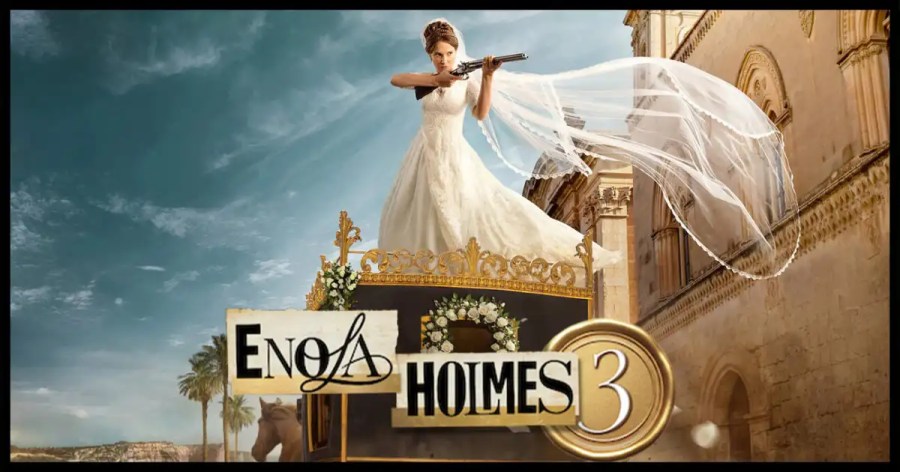
Quick synopsis: Enola is in Malta about to be married when Sherlock goes missing, leaving a mystery to be solved.

I didn’t see them the year of release, so I didn’t review them, but I have seen the other two Enola Holmes films and enjoyed both of them. But I’d definitely fail a quiz on them. I’d be able to answer the names of a few of the actors, and even fewer of the characters (I know Susan Wokoma was in the first two, but can’t remember who she was). I could remember the essence of the movies; a spirited Holmes sister, Sherlock as the more respected older brother, etc. I did enjoy them, but nothing was that memorable. It may not be the case at the moment due to how recently I’ve watched it, but I’m guessing Enola Holmes 3 will continue that tradition.

Enola herself remains a great character. I almost wrote that she feels like the kind of character I would write, but then realised how unbearably smug and self-indulgent that would sound, so instead I just threw in this sentence explaining it, which is definitely much less smug. There’s just something about her that clicks. Intelligent without being annoying, resourceful without coming off as McGuyver, and with a sense of curiosity that is endearing in the extreme. We’re so used to intelligent people being dickheads in media that it’s refreshing to see a character who balances their intelligence with warmth.

A lot of that comes down to Millie Bobby Brown. She has a sense of playfulness that’s more infectious than COVID, elevating every scene she’s in. There’s a charm to her performance that’s almost impossible to dislike. I had a weird thought whilst watching this; she belongs in either the Paddington movies or Doctor Who. She has the sense of sincerity and weirdness for the former, and the eccentric wit for the latter. She must have been asked, surely? If not, then I wonder what the hell the writers of those franchises are doing besides counting their money. That comes off really negative now I think about it. Truthfully, I love the Paddington franchise, and I really enjoyed Doctor Who up to a point.

One structural decision I wasn’t entirely convinced by concerns Enola’s own history. The recurring “who we are” reflections about her identity and upbringing feel like they belong at the beginning rather than emerging later. As an opening narration, they would have grounded both returning viewers and newcomers, establishing the emotional framework before the mystery begins. Instead, they arrive piecemeal, making them feel slightly less impactful than they might otherwise have been.

Where the movie surprised me most, though, was its politics. The spectre of colonialism hangs over almost every aspect of the story, and to the film’s credit it never treats that history as background decoration. Instead, it confronts Britain’s imperial legacy directly. This isn’t one of those adventure films that borrows exotic locations while politely ignoring how Britain came to be there in the first place. It repeatedly forces its characters, and by extension the audience, to reckon with uncomfortable truths. If this were part of a gigantic blockbuster franchise with an even larger online profile, I suspect it would become the latest target for the usual culture-war bullshit. You can almost imagine certain public figures dismissing it as “woke” simply because it acknowledges historical reality. But the film isn’t preaching so much as recognising that these conversations are impossible to avoid when telling stories rooted in the British Empire.

One line in particular genuinely stopped me.

“We saw it as advanced reparations.”

It’s an astonishing sentence because it sounds simultaneously absurd and entirely believable. It’s exactly the kind of bureaucratic moral gymnastics that powerful institutions have always employed to justify exploitation. The horror isn’t that someone says it; it’s that history (and the present) is full of people who almost certainly would have. Another line lands with equal force:

“The Empire cannot admit guilt.”

For me, that’s the film’s thesis. It’s not simply a statement about Victorian Britain but one that echoes into the present day. Britain still struggles to have an honest national conversation about empire. Public memory often celebrates exploration, trade and victory while quietly stepping around conquest, extraction and violence. The refusal to acknowledge wrongdoing isn’t confined to history books; it’s woven into parts of the national psyche. Whether audiences agree with that interpretation or not, the film deserves credit for provoking the discussion instead of pretending it doesn’t exist.

That’s perhaps what impressed me most about Enola Holmes 3. Beneath its lively detective story, witty dialogue and charismatic performances lies a willingness to engage with genuinely difficult ideas. It never forgets that it’s an entertaining mystery, but neither does it shy away from asking what Britain inherited alongside its myths.

I still don’t know whether this franchise will become one I’ll revisit endlessly, but unlike its predecessors, this instalment has stayed with me for a little while. Not because of a particular mystery or plot twist, but because of the questions it asks and the confidence with which it asks them.

That’s a far more lasting achievement than simply solving another case.
Apex (2025) Review

Quick Synopsis: Mourning the death of her partner, Sasha travels around the Outback, finding herself being hunted by Ben, a cannibalistic serial killer.

Four years ago, I reviewed Beast, another film by Baltasar Kormákur that was about someone being hunted in a landscape. In that review, I specifically mentioned how great it looked, and how great a cinema experience it was. So I was sceptical that this was released straight to Netflix, doesn’t exactly fill me with confidence. I mean, it still looks pretty. But that might be due to the landscape doing half the work for him.

I need to open this review by talking about Australian actors. I mean, they must exist otherwise Home and Away wouldn’t have lasted as long as it did, so why cast a Welsh actor to play Ben? To be fair, they do touch on it, making it clear he wasn’t born there. But he tries an accent for most of it, so he’s supposed to be, at the very least, naturalised. It almost feels like the “You’re not from here, are you?” line was added after someone noticed the accent slipping. The only way it works is if it’s his gimmick, that he’s overexaggerating his Australian nature as part of his “public persona” for some reason, I dunno, because it’s “crazy” and wacky? That would suit the rest of his character. He is definitely supposed to be crazy. But it doesn’t work. It’s like the character isn’t sure if he’s supposed to be Heath Ledgers Joker, or the villain from a 90’s Saturday morning kids cartoon, and not even a good one. Every scene has him narratively screaming, “Look at how crazy I am!” rather than simply letting him be frightening. It’s annoying and kind of distracting, feeling like the character itself is going overboard, rather than the actor. The best screen killers don’t need to constantly advertise their insanity. Michael Myers barely emotes. Anton Chigurh speaks almost conversationally. Even Mick Taylor (watching the Kill Count video for Wolf Creek as I write this), another Australian outback killer, is terrifying because he feels like someone who could actually exist. The villain in Apex feels like someone doing an impression of what a movie psychopath is supposed to look like.

That’s not the only thing harming him as a character. For a serial killer, he doesn’t do much killing. Two people (I think) died in this movie; both died in the exact same way, killed by the protagonist. The antagonist apparently has a history of murdering people, but the audience barely gets to see him do it. We’re told he’s dangerous, but storytelling generally works better when you show these things. By the end, gravity has claimed more victims than the serial killer.

That’s a problem.

It’s like making a Friday The 13th movie where everyone dies in a bus crash. Eventually you stop worrying about the villain and start keeping an eye on the terrain. There’s an obvious rewrite staring the film in the face. Make him an Outback tour guide. It’s perfect. Tourists trust him. He knows the landscape better than anyone else. He can separate people from the group without raising suspicion. Better still, we get to see him operating before the protagonist becomes his target. We understand why he’s dangerous because we’ve watched him be dangerous. So, when he meets someone who refuses to become another victim, we’ve already bought into him as a threat.

Instead, the film spends most of its running time trapped in a hostage scenario rather than delivering the hunt it advertises. The premise promises a predator tracking prey across the Australian wilderness. What we actually get is people being stuck somewhere while the plot periodically remembers there’s supposed to be danger involved.

This is a shame, because buried under the clichés is a genuinely interesting premise. Imagine spending your life preying on easy victims, only to discover this one keeps surviving everything you throw at them. The hunter slowly becomes frustrated. The prey grows more confident. Suddenly the balance of power shifts. That’s a film. Instead, Apex never really commits to that dynamic. Scenes happen, and large stretches of the film simply wash over you. Rather than a tense game of cat and mouse, it often feels like everyone is just waiting for the next location. Also, because the cast is so small, narrative convention tells you neither character is going anywhere until the climax.

The result is a thriller that never quite finds its pulse. It’s never aggressively bad. It’s too well-shot for that, and the scenery genuinely is spectacular. But almost every interesting idea feels like it’s sitting in the draft immediately underneath the one that got filmed.

You can see the better version peeking through the cracks. But I don’t want to spend my time peering at cracks, I risk getting put on a list for that.

The Rip (2026) Review

Quick Synopsis: A group of cops find a fortune in cartel cash, and almost immediately start wondering which one of them is going to betray the others first

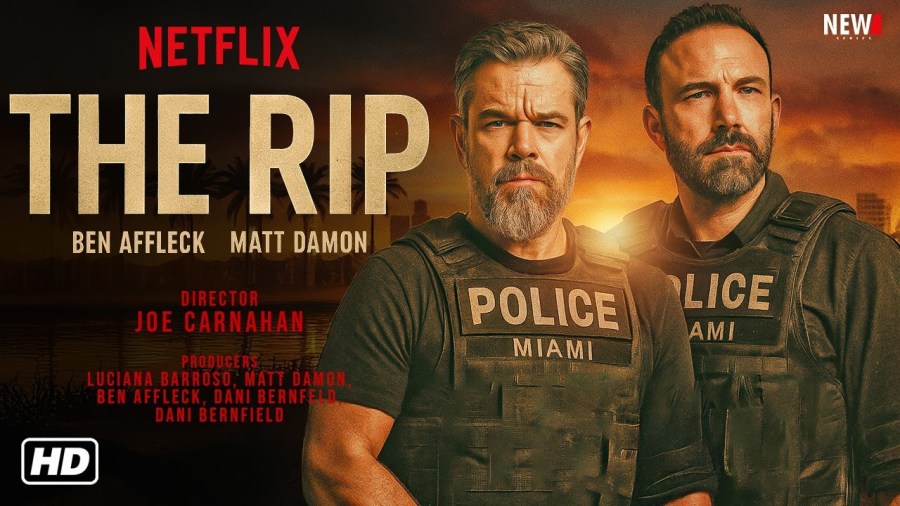
I’m not going to lie; I went into this with low expectations. It was a Netflix original, which doesn’t exactly fill me with confidence anymore. Plus, it was from the writer of Bad Boys for Life (which I still maintain should have been the fourth movie), 2018’s Death Wish, and 2010’s The A-Team. And as much as I love Affleck and Damon, they do occasionally choose quite poorly. For every Gone Girl or The Martian, there’s a Hypnotic or Downsizing.

So I was surprised by how much I enjoyed this. To the point where I wish it got a cinema release. A huge part of that is the chemistry between Matt and Ben. Seeing them on-screen like this is like watching your favourite band reuniting; you can tell they’re relying on old tropes, but they are both bringing a more mature energy than they have before. Sure, they may not be hitting every note perfectly, but the chemistry leaps off the screen. It would be nice if the other characters were given time to shine or, God forbid, actual characterisation. But you can’t have everything.

The plot? If you ever wanted to see a more American version of the supremely underrated Shallow Grave, you’re in luck. The pacing is surprisingly quick for a film where not a lot happens. The opening is kind of dull, and full of “people are investigating cops for corruption? How dare they!” weirdness which I’ve always been uncomfortable with seeing on screen; why is the idea of police being held accountable seen as a bad thing? Thankfully, it moves past those moments quicker than Obsession moved past Ian’s billion-dollar windfall. Once the money appears, shit gets real. Relationships disintegrate like cake in the rain. Trust withers down, and suspicion grows quicker than those toys that were tiny but then expanded when you doused them in water. It’s less action-heavy than you’d expect, being more interested in metaphorical explosions than real ones. There are still some action scenes, but they’re not the things you’ll remember most.

The action scenes themselves are fine, but nothing special. It feels like they’re there just because its expected of them, almost as if netflix had certain script stipulations that meant it needed a big action scene in the first 5 minutes so people would stay tuned in, and *checks the script of a Matt Damon interview from January 2026* if the plot needed to be reiterated three or four times so that people on their phones could still understand whats going on. The best way to describe the action? Competent. It won’t blow you away, but it won’t bore you either. They’re just there.

In terms of other technical aspects: there are some weird lighting choices. It looks artistic, but it makes the film less comprehensible than it would be otherwise. It’s like they want to show off technical prowess and cinematography rather than whether it’s the best thing for the story. As cliché as it sounds (and if there’s one thing The Rip is familiar with, it’s clichés), sometimes the simple option is the best one (“Go For The Simple Option” is also the tagline on my dating profile).

There’s nothing in The Rip that you haven’t seen before, but most attempts at it won’t be as good. It’s a film you’ll be glad you watched, but not one you’ll be in a hurry to see again. It’s not big, it’s not clever, it’s not original, but it is entertaining. Maybe that’s all that’s needed now.

Before I go, fun fact: two police officers tried to sue the makers of this movie because they said it made them look like they stole stuff. No characters are named after the police officers, so it kind of seems like a guilty conscience, right?

Thrash (2026) Review

Quick Synopsis: An American town is beset by twin problems: hurricanes and sharks.

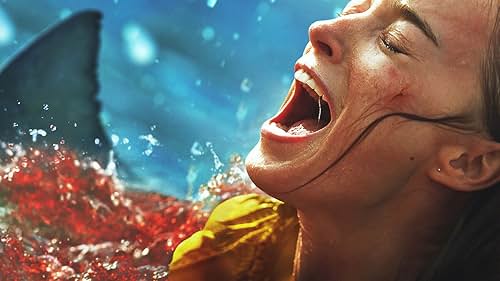
Disaster movies can be intense. Nothing is scarier than nature (except maybe toilet snakes), hurricanes are destructive, fast, and cinematic. Shark movies are similar: I loved 47 Meters Down, and apparently, Jaws is quite popular. So, hurricane movies = good. Shark movies = good. Mixing the two? Well, then you get Sharknado. Usually, when a serious movie is made comedic by another film, the comedy comes later. Airplane! pretty much killed off the “Danger on a Plane” disaster movie, for example. But Sharknado was released in 2013, 13 years before Thrash. Surely the makers of Thrash knew what comparisons people would make? I’m not saying this is Sharknado, but it’s not not Sharknado. Maybe it would have worked if the film leaned into the slightly ridiculous nature, but it doesn’t. It’s more po-faced than a red teletubby.

That’s a weird way to start this review, I know. But it’s hard to find stuff to say about Thrash. There’s almost nothing of substance to it; it’s the cinematic equivalent of vape clouds. You know it’s there, but it leaves zero impression on you. It’s not that it’s a bad movie; it’s just incredibly bland. There’s not much to actively hate about it, but there’s not that much to like, either. I have some issues with the shot choices; a few scenes feature camera movements which seem to indicate they’re about to reveal something, but instead, it just shows us blank space (not the Taylor Swift song).

I love Djimon Hounsou; he’s a great actor, usually. Not so much in this, his performance feels spectacularly low-effort, almost like he can’t believe the dialogue he has to say. Matt Nable is wonderfully hateable; he does sometimes feel like he’s veering a bit too close to being over-the-top, but always pulls away before he reaches that point. Whitney Peak is probably the best performer, but even her performance feels more like she’s advertising for a bigger role than seeing this as her peak.

On the plus side, it looks real. At no point do the sharks look overly CGI, or the hurricane seem anything less than dangerous. The last film I saw that I can compare to this was probably Crawl back in 2019, and I liked this a lot more than I liked that. It’s paced well, doing a lot in a short time. The characters react logically to the situation, with the exception of characters we’re supposed to dislike, who are killed by their own hubris (and sharks, mainly sharks). Thrash has a lot of moving parts to juggle, and while some of the choices as to when to move between them are a bit weird, it mostly keeps the different narrative plates spinning well enough that none of them loses momentum.

The kills themselves could be better; I assume so, anyway. None of them sticks out as particularly memorable. Which, how do you have a movie like this and not have any memorable deaths? I assume that has something to do with the budget. Thrash feels low-budget, impressive for a low-budget disaster movie, but still low-budget. From the non-American cast (some hide their native accents better than others), all pretending to be American, through to the shark attacks, which consist of someone screaming whilst waving their arms in the air like they just don’t care.

In summary, I will forget I’ve seen this film. If I were in the room as someone else watched it, it would take me a while to remember I’ve already seen it. I watched Mortal Kombat 2 before this, but I had to get this review out of the way first because I knew, even though I made notes whilst watching it, I would have absolutely nothing to say about this if I left it any longer. I mean, in my first draft of this review, I referred to the disaster throughout this review as flooding, when it’s actually a hurricane. That alone shows how little this film stayed with me. I only remembered the water aspects, not a single moment where high winds caused issues.

That being said, I’m still looking forward to director Tommy Wirkola’s next movie, Violent Night 2.

War Machine (2026) Review

Quick synopsis: America fights aliens.

I’m not a complete idiot (that sound you hear is my family and friends laughing), so I am aware of the influence the US military has on films. The US Department of Defense even has an entertainment unit that handles requests when filmmakers want to utilise military equipment or locations. It’s not just “we need to make sure you use the equipment safely”; they denied support to Independence Day because the director refused to remove references to Area 51. The 1954 animated movie Animal Farm was purchased by the CIA and had the ending changed, which is ironically, very Orwellian. It’s not just film; the DoD also has agreements with TV shows such as The Price Is Right, America’s Got Talent, and The Kelly Clarkson Show. So, yeah. I’m used to American media figuratively fellating the US military. But few have done it so obviously as War Machine.

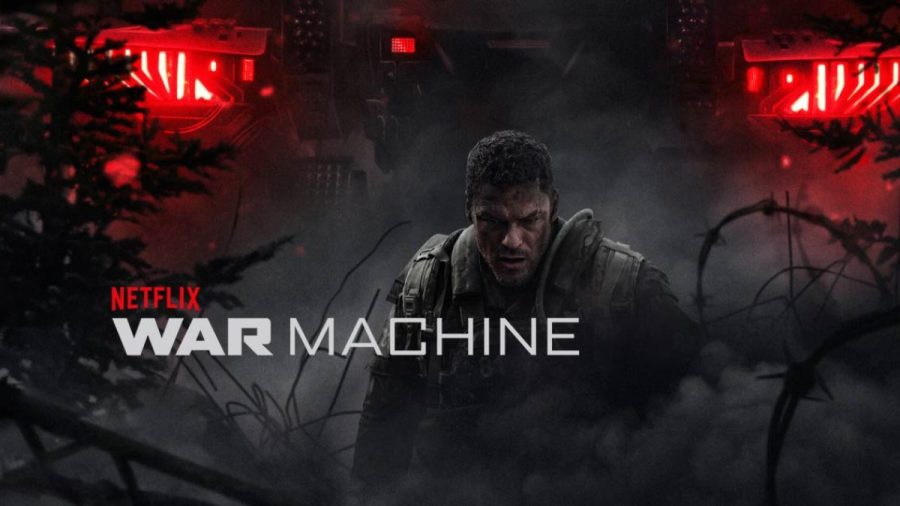
War Machine (WM, pronounced Womb) is not a movie; it’s a recruitment service. To the point where it almost seems like a parody. The villains? Alien machines that land on Earth. Now, and I believe this is very important, they don’t attack first. The machines just sit there. The US military decides to attach explosives to it to blow it up, after which, the machines rise and attack. So to reiterate: the good guys attempt to kill something, then claim to be victims when they get attacked in revenge. If that doesn’t showcase US foreign policy, I don’t know what does. I know Hitler Simpson wants to be heavily involved in the making of Rush Hour 4, but if it turns out he was involved in this, I would not be surprised. That’s how blatant the propaganda is.

WM feels like an early 90’s action movie, and that’s not a compliment. The villains are basic “others”, the characters are ultra masculine to the point of being laughable (the main character refuses to go to therapy after the death of his brother), and it all boils down to “one straight, white, American male will save the entire world”. How does he save the world? By blocking the machine’s ventilation ports. Did the visitors not realise that would be a problem? This keeps happening in movies like this, and it feels like it comes down to writers not understanding the ending of War Of The Worlds, where the aliens were defeated by a random virus. That’s not “invaders will all have one fault we can exploit”, it’s “invaders can be so cocky they neglect to take into account everything”, and that has historical precedent: think of the empires built where the first contact involved a lot of people dying of unknown diseases that their bodies weren’t used to. “Leaving a port open” is not like that; they would know that Earth has dust, rocks, and dirt. It feels slightly cheap to have a big threat defeated by what’s essentially a banana in a tailpipe. What’s weird is that this only happens once. At no point in their invasion of Earth did the alien machines get clogged up with sand in the desert, rocks from a collapsing mountain, or glass bottles full of piss thrown by English football hooligans.

How about the characters? Do they salvage this? Nope. For one thing, they’re all given numbers instead of names. Which strips them of their humanity. I get it, that’s probably the point, the military dehumanises you so you work as part of the machine. But for films? You’re supposed to give a shit about the people you’re seeing. Compare the two sentences:

  1. “It absolutely devastated me when Martha died”
  2. “I still haven’t fully recovered from the death of number 81”.

One sounds reasonable, one sounds stupid. You remember names; they’re unique, they have emotional resonance to them. Numbers don’t. It makes you feel like these characters don’t matter

So yeah, it’s dumb. But you wouldn’t know this by the Wikipedia page, which I feel has been edited by the production company. The top line says “the film received generally positive reviews from critics, praising it as a fun, old-school, throwback action movie despite its familiar, formulaic storyline”. Even the positive reviews are 3 out of 5, etc. The kindest response would be “mixed”

On the upside, it looks good. The action scenes themselves are fine, and the villains look menacing. The performances are fine, but nobody is really given enough to do. I also like the brief insight into survivor’s guilt, especially when 81 mentions how the medal he was given is just a constant reminder of the worst day of his life. That’s a fascinating look into both his character and American culture.

I’ve seen worse films this year. But it’s hard to think of films where I’ve given less of a shit.

Wake Up Dead Man (2025) Review

Quick Synopsis: A baffling death inside a quiet church draws Benoit Blanc into a tense investigation where faith secrets and suspicion blur as a close community turns against itself.

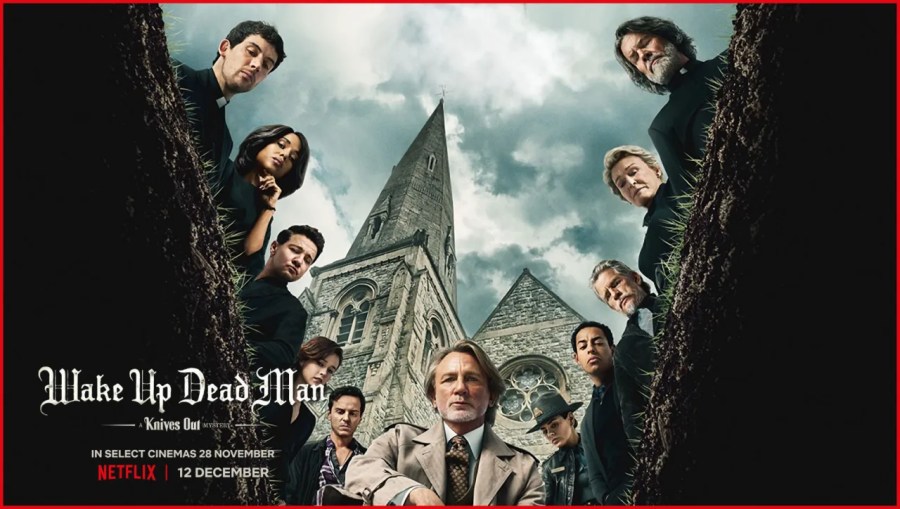
I should note that this will be my last review of 2025. To be honest, I just couldn’t be bothered to go see Anaconda, and Marty Supreme wasn’t available for viewing at my local cinema until 2026. Plus, it feels right to end 2025 on this movie. A few weeks ago, I was discussing the end-of-year awards with someone, and I mentioned the potential winners for “best film”. I narrowed it down to a list of five, but added “There’s a gap left for the new Knives Out”. In a year of uncertainty, I was certain it would reach that. So it’s weird that I don’t think it has matched my expectations. It’s not a bad film; it is still amazing, but it does feel like a slight downgrade from the two previous entries. It does improve on a second watch, but the initial feeling of slight disappointment doesn’t leave.

The main issue is that there’s very little Benoit in this Benoit movie. He doesn’t appear for 40 minutes. Now, Jud is a good character, played brilliantly by Josh O’Connor. But he’s not Benoit Blanc, so you do spend the time waiting for him to arrive. The lack of Benoit does break with tradition somewhat, but other than that, it stills to the formula pretty well; someone is dead, there’s a cast of characters all played by phenomenal actors, there’s a picturesque location, Blanc teams up with someone who is kind and very good at their job, plus there’s some weirdness.

I have no complaints about that. The formula works, so breaking it just for the sake of breaking the formula would feel silly. It does make me feel a bit sad that we won’t get to see some of these performers in another Knives Out movie; Jeffrey Wright, in particular, feels underutilised. Cailee Spaeny continues to be absolutely fantastic in everything she does. Josh O’Connor is good enough that it only took roughly 10 minutes for my brain to stop going “Is that Ralph Little?”.

The world-building of these movies frustrates me. On the one hand, it is great that they reference cases we haven’t seen; it makes it feel like the character exists outside of this universe. On the other hand, the two cases we have seen would be pretty high profile; one involved the death of a world-famous author, and the other involved an Elon Musk proxy. You’d think that would have come up in this. The right-wing influencer definitely would have asked Blanc about Miles Bron, and a best-selling author would definitely ask about Harlan Thrombey. I’m not asking for the entire film to revolve around the previous entries, but it would be interesting to see Blanc dismiss their questions as he’s too focused on the current case. Also, the first movie had Martha vomiting on Chris Evans, Glass Onion had the moment where everyone smashes shit up. Both of them are moments which are highly cathartic and entertaining, moments which you can point to as highlights of the year. There’s no equivalent in this. There’s no moment which stands out as being a highlight.

I do genuinely love this movie; it’s a solid 9/10 at the very least, but the others are so close to perfection that you can’t see this as anything other than a downgrade. Like the other two entries, it does NAIL the closing, though. It’s definitely the best Netflix movie of the year, but when their other efforts have included “Kinda Pregnant”, that’s not a high bar to clear.

The Twits (2025) Review

Quick Synopsis: Remember the book? It’s not like that.

I’ll start this by being brutally honest about my opinions on the original book: I don’t like it. I’ve never liked it. I’ve always had a very specific issue with a line in it. There’s a moment in the book where the author says that a person who has good thoughts can never be ugly, and if someone is ugly, it’s because they’re a shitty person. As someone with a face that looks like the “before” picture in an advert for “You’re a lost cause, just slice off your entire face”, you can see why I’d have an issue with this. I don’t need books to insult me; I have myself for that. So I went into this not expecting to love it. Coupled with that is the fact that almost every review of this was highly negative, so my expectations were so low that even limbo dancers would refuse to go under it.

Now I know what people expect: that this is a setup for me to say “However, I liked it”. Nah, fuck this movie. It’s not the worst of the year, but it should be very thankful for films like War Of The Worlds. Actually, that’s cruel and implies this will end up in the Awful section for the end-of-year roundups; it’s actually probably going to go in the one above it. It’s not absolutely terrible, but it’s definitely not good. The main problem is the script; the original book is roughly 100 pages, if I remember correctly, which isn’t enough story for a feature-length movie. So the writers have to stretch it out. Phil Johnston has a weird career as a writer; he wrote Zootopia, which was great, The Brothers Grimsby, which was okay, and Wreck-It Ralph 2, which was bad. The Twits isn’t his best work; it’s incredibly unfocused. It doesn’t flow organically, instead coming off as a series of shorts. There’s not a central narrative; it’s just stuff happens, then different stuff happens. Some of the “episodes” are better than others. The Muggle-Wump part feels like it comes from something completely different, and not in a good way. The build-up to them entering the mayoral elections is pretty fun, though, with some political satire that’s so sharp you can cut steak with it. Thing is, it’s not saying “these political thoughts are bad”, it’s saying “voters need to stop believing obvious bullshit, a mayor can’t make everyone in town a billionaire”. But even that plot point is ruined by a truly juvenile (even for a kids’ movie) fart joke.

One other upside is the casting. Johnny Vegas is an obvious choice as the male lead. I didn’t expect esteemed character actress Margo Martindale to work as well as she did. I’m guessing she was hired here because of her work on Bojack Horseman. Emilia Clarke and Natalie Portman are weird choices for such small roles; tonally, it feels odd to have their voices in something so deliberately ugly.

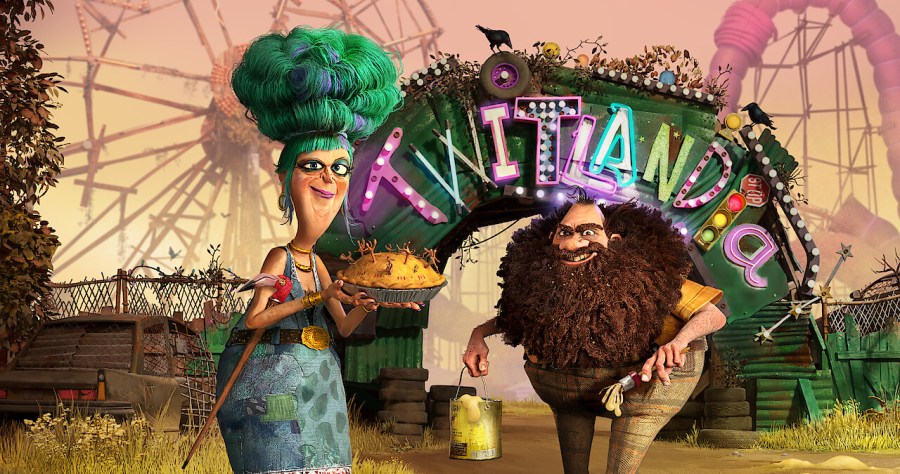
Make no mistake; this is an ugly film to watch. I get that that might be the point, but the animation is so off-putting that it’s not a pleasant experience at times. It looks like a (much) cheaper version of the shiny elastic CGI animation that most companies use, which is fine when it works, but here it doesn’t. Narratively, this is like most Dahl adaptations; it works best when it’s slightly cruel. There are times it manages that: key among them is when a family arrive at an orphanage to say they won’t be adopting anybody because they’re worried a recent disaster has made the kids contagious; it’s so cruel, and wickedly funny.

That’s somewhat negative, truth be told; most of this review has been. But there’s something oddly charming about it. It’s a shit adaptation, I’ll give it that. So fans of the original are sure to hate it. But fans of the original are adults now, so it’s not really for them. But who is it for? Are there many kids clamouring for an animated adaptation of a book they haven’t read? Does Johnny Vegas have a large toddler fanbase that Netflix wants to tap into? Fans of the original book will hate it, and there’s nothing to bring in people who aren’t fans of the book. So again, who’s it for? That’s a question I have no answer for, and I’m not entirely sure the people involved in making this know the answer either. Somehow, the music is weirdly solid. Well, the song from Hayley Williams and David Byrne is anyway.

The Thursday Murder Club (2025) Review.

Quick Synopsis: Four retirees spend their time solving cold case murders for fun, but their casual sleuthing takes a thrilling turn when they find themselves with a real “who has done this” on their hands

It’s possible I did The Thursday Murder Club (TTMC, pronounced Ta-too-muk) in the wrong order; I watched the film, read the book, then I wrote the review. In some ways, this did help, as most of the casting is pretty spot on and easy to imagine. However, the film makes some things difficult to unsee, one of which is the size of the building. In the book, it’s almost normal, yet in the film? It basically looks like Downton Abbey. This wouldn’t be a problem for most films. But for this? It does bring out the worst aspects; the middle-class tweeness of the whole thing. The feeling that it’s watched by people who spend half their conversations going “I miss the old days when people weren’t so black”.

It’s a shame, as that does a disservice to TTMC. Yes, I expect it to pale in comparison to Wake Up Dead Man when that comes out, but that’s not for a while, so TTMC has a few months of being the best murder mystery film of the year. It’s a pretty good mystery too, especially once you realise that they’ve completely gutted a sub-plot from the boo,k which means they’re either going to change the murderer or change their motivation, otherwise the motivation will be “he’s responsible for this awful thing that nobody has decided to mention for some reason”.

Like all good mysteries, the solution seems incredibly obvious once you’ve figured it out. The clues make sense, and it is possible to make an educated guess before the solution. In fact, I’d say it’s TOO easy. There aren’t enough suspects. The book has quite a few characters who you could easily imagine being the killer. The film has around two. I know stuff has to get cut when you adapt a book, but removing suspects from a murder mystery feels like shooting yourself in the face and leading a bloody corpse (I’ve just been informed the phrase is actually “shooting yourself in the foot”).

The deletion of some of the subplots also means a key scene in the book (and the film-makers obviously realise its importance when you see who they cast for this one scene) is rendered as nothing more than a diversion, albeit a quite entertaining one. That’s the film in a nutshell: not essential, but damn charming and entertaining. It’s the cinematic equivalent of a lovely drive through the country. Really, this is perfect for Netflix, and is probably the best film they’ve released this year.

Happy Gilmore 2 (2025) Review

Quick synopsis: Gilmore returns to the sport of golf since his retirement after winning his first Tour Championship, to finance his daughter’s ballet classes

I will admit, I loved Adam Sandler’s movies as a teen. But as I’ve grown up, I’ve come to find his characters a bit petulant and annoying. Plus, his films have a weird attitude to women; with most of the love interests being more like mothers than lovers. His characters are kind of embarrassing to watch, especially since they all share the same flaws, and the lesson they learn is normally “everyone else is the problem, you shouldn’t change”. Nowhere is this more evident than in the opening of this movie; where he kills his wife accidentally, then his life falls apart; not because of grief, not because of trauma (in fact, the idea that he killed his wife playing golf doesn’t play into the narrative as much as it should, there’s no “but I can’t play golf, golf killed my wife” moments), but because he sucks as an adult and has no idea how to pay bills.

If you can still watch ’90s Sandler and enjoy it, then you will like this. There are a lot of callbacks to the original, which fans will appreciate. On the downside, the movie doesn’t trust you to remember the first film, so a lot of callbacks are prefaced by flashbacks to what is about to be referenced. That’s to be expected from a modern Sandler film; as are the other main faults: the narrative stopping so a character can make a joke, repetitiveness, and the insistence of Sandler putting his friends and family in major roles.

It’s when it’s not traditional Sandler that HG2 shows its best. The message of “no, tradition should be upheld instead of being ignored for something new and flashy” is unexpected. Also unexpected is the redemption arc of Shooter. It feels very in-character, though. Part of the reason he was the villain in the first movie was that he hated how Happy treated the game. So there’s zero reason for him to go along with a plan to change the game to the extent the villain in this movie suggests. The tributes to the cast members who have passed are genuinely sweet whilst remaining tonally consistent with the franchise. I also enjoyed one of the early golf games, where Happy is a drunken mess. That moment is helped by the people he’s playing with, who are played by Eric Andre and Margaret Qualley. It does kind of suck that those characters are never seen again. There are multiple moments where I feel they could have belonged. The villains’ super team of golfers are also an interesting group of characters, who are less developed than an improv comics stand-up set.

In summary, if this came out 20 years ago, I’d have loved it. As it is? It’s just kind of sad. Especially when it shows hints of being a much better movie.

Fear Street: Prom Queen (2025) Review

Quick synopsis: Shadyside High’s 1988 prom queen election becomes deadly for underdog Lori as candidates are targeted.

A few years ago, I changed the focus of this site from “write an article twice a week, which will sometimes consist of reviews” to “review every film I see that’s a new release”. Despite that new policy, I didn’t review the Fear Street trilogy. I’ve reviewed Netflix exclusives before, so that wasn’t the reason. It was because I couldn’t figure out whether to review them as separate entities or count them as one. If there was a bigger break between them, I would have done them separately, because I would have watched them separately. But the way they were released almost made it seem like they wanted you to binge-watch all three. So they felt too interconnected for me to treat them as separate entities.

If I had, I would have been kinder than I am towards Fear Street: Prom Queen (FS: PQ, Fish Pee-queue). I have issues with the original trilogy, but it felt better than this. Prom Queen’s biggest problem is one of horror identity. It doesn’t seem to know whether it’s dumb fun, where you’re supposed to watch and cheer the chaos, or if its supposed to scare and shock you. So it ties itself up in knots trying to serve both.

It’s not necessarily a bad film; it’s just incredibly forgettable. I watched it three days ago, and I’ve already forgotten every character’s name. I remember being incredibly 80s. In fact, it’s so 80s that it’s trying to ban the promotion of homosexuality in British schools using the EXACT same methods that people in the 2020s would use to spread hate against trans people.

The main negatives lie with the script. Most of the events happen over the course of one night, but part of the charm comes from the juxtaposition between the violent deaths and the joyful prom. Which means the prom characters need to be ignorant of the deaths. The script needs to be clever to do it, and Prom Queen isn’t smart enough. Characters split up from the prom scenes just so they can be killed off, and it doesn’t feel natural the way they do it.

On the upside, when it decides to let loose, it’s spectacular. The massacre in the actual prom is wonderfully violent and slick. It’s pure chaos and bloodshed. It’s here where the movie soars, when we see it at its best. It’s bloody, funny, and bloody funny. It also leads into the final scene at the house, which had one of my favourite deaths I’ve seen in a horror movie in a while. I’ll try to keep it vague to avoid spoilers; a character hits the villain over the head with a statue. They don’t die instantly; they don’t even die in that scene. There is no overabundance of blood or screaming. There’s just a character speaking in such a way that you can tell that their brain is fucked, and even if they don’t die, they won’t be able to live unassisted ever again. That moment is too good for a film like this.

Now, onto the three-hundred-pound question: do you need to watch the original trilogy for this to make sense? Thankfully, no. It’s stand stand-alone. It is a richer movie if you remember the others, I assume, the other films were just as forgettable as this one, so whilst I recognised there were some references, such as names, I couldn’t remember the significance of them. There’s a mid-credits scene that’s much more explicit in its reference, but feels more tacked on than the connections in the last Cloverfield movie.

From my few memories of the previous films, this does feel the weakest. That’s a shame as the performances are the best. I’ve long spoken of my love for Katherine Waterston; she’s not always in good films, but she’s always good in whatever she acts in. India Fowler leads the cast admirably, especially when you consider that she’s performing in an accent that’s not her natural one. Actually, all of the performances are good, and I’d have loved to have seen what these performers could do with a better script.

I probably will end up live-blogging the franchise at some point. But I don’t really have any love for the franchise. It exists, and I’ve watched them, that’s as far as my love for it goes. On the plus side; it is probably the best film I’ve seen on Netflix this year, but that says more about the lacklustre offerings they’ve had in 2025.