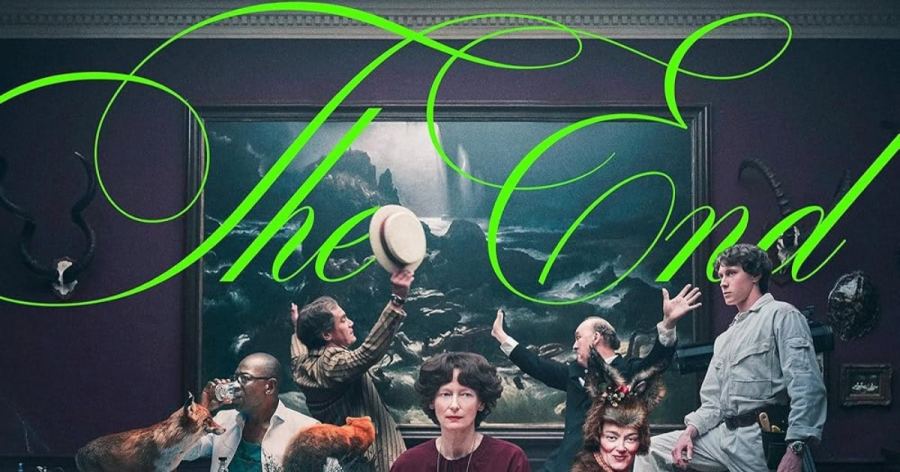
The End (2024) Review

Quick Synopsis: After civilisation collapses (the concept, not the game), a rich family live out their lives in an underground bunker. Their peaceful existence is disrupted by a girl.

I’ve been playing a lot of The Executive – Movie Industry Tycoon lately. For those who aren’t aware, it’s a game where you play as a producer who develops movies, picking the genre, age rating, actor, etc. It’s very similar to Game Dev Tycoon if you’ve ever played that. The key to success in that game is working out which genres and styles work together. For example, “Slasher” goes better with “horror” than it would with “romance”. Like all games, it’s not perfect, and it’s not perfect because it doesn’t take into account outliers. The End would definitely score a low mark, “Apocalyptic Musical starring Tilda Swinton”. Based on that, this would fail. You would not expect it to work.

Turns out, formulas exist for a reason. It feels like the two genres are constantly getting in each other’s way. Every time the narrative becomes dramatic and moves forward, it stops for a song. The narrative has potential, but it trips over itself too many times and feels disjointed. There are too many dramatic moments that don’t affect the overall story being told. It’s just “incredibly deep personal revelations for the sake of tension in that scene”, then the next scene, like they were all written separately then sewn together to form a cinematic quilt.

It’s not too impressive on a moment-to-moment basis. It’s nowhere near as deep as it thinks it is, being depressingly surface-level in terms of character intentions, which is again, where the two genres get in each other’s way. Drama, deep personal drama that sticks with you, is made of unsaid character motivations and agendas. Whereas a lot of musicals are dependent on characters literally singing out their emotions, turning their inner monologues into outies.

So far, this review has been negative, and that’s unfair. All the performances are superb, in terms of both acting and singing (although the fact that I’ve already forgotten every song is not a good sign). Also, the fact that rich people would rather kill the world than give up their wealth or some of their home space is depressingly realistic.

It’s also new. I’ve not seen anything like this, and I’m not entirely certain I ever will again. I’ve seen some weird films before, but usually they belong to a director who specialises in weird. For example, The Second Act (as reviewed here) was weird, the director also made Rubber and Mandibles, which are also weird. The main exception to that is if it’s a new director eager to make their mark. The End is different from both of those; it’s from an established director, Joshua Oppenheimer was nominated for an Academy Award in 2014 and again in 2016. But both of those were for documentaries. The End is an ambitious film at the best of times, but from a first time feature director, it seems like fucking insanity. But I would much rather watch something like this than more bland shit.

“Something like this”, not this, because this is far too long and in need of editing. But I fully respect the attempt.

Holy Spider (2022) Review

Quick synopsis: A journalist descends into the dark underbelly of the Iranian holy city of Mashhad as she investigates the serial killings of sex workers by the so-called Spider Killer, who believes he is cleansing the streets of sinners.

I’m really glad I got a chance to watch this (available on Mubi at the time of writing). Not just because (spoilers) it’s a very good film, but also because it means it doesn’t appear on my to-watch list any more. Every time I saw the title on the list my brain sang it to the tune of Holy Diver by Dio.

If relief at the eradication of an earworm was my main takeaway from this then that would be a bad indication of the quality of it. But whilst relief was slightly how I felt, it was only about 5% of my feelings; the dominant emotion coming out of this was pure anger. Anger, btw, is likely to be the theme of reviews this week. It wasn’t intentional, it just turned out to be a very “We have a point to make!” run of films.

The central theme of this piece is: “Local prostitutes in Iran are being murdered, a lot of people aren’t bothered by this because they see the women as immoral and deserving it”. It’s a depressingly accurate take on cultural misogyny in that country, especially since the killings did actually happen. In 2001, Saeed Hanaei went on a killing spree of prostitutes in the Iranian city of Mashhad. These weren’t quick “in the moment” killings either; he strangled them. Do you know how long it takes to strangle someone to death? Watch Promising Young Woman and find out, there’s A LOT of time to change your mind and come to your senses. And just like in the film; the real Hanaei was supported by locals; with newspapers defending him. And before you get too high and mighty about “well that’s just Arabs, western worlds don’t treat people like that”, read the comments on news articles when asylum seekers or refugees die. You will see an outpouring, not of grief, but of glee.

Hanaei is portrayed by Mehdi Bajestani, and he is so damn good in this. It would be easy to portray Hanaei as a stereotypical one-dimensional fundamentalist killer. But Bajestani (and the writing of Ali Abbasi) provide him with a lot of humanity. He’s not sympathetic or likeable in the slightest, but he is sincere, and you do understand how he got to his point of view, even if it is sociopathic and deplorable. It’s key that the character doesn’t seem to be getting pleasure from this. He seems genuinely disgusted with himself for having to be near the women he’s killing. This really helps him feel genuine. He is terrifying, even when he’s just being an everyday family man. There’s a moment where the veil slips when he has an outburst in front of his family and stops being the kind loving family man. What’s very telling is how his family react. They’re scared, but not surprised. So they know he has the capacity for violence; just maybe not to the full extent of it.

It’s not just Bajestani whose performance anchors this film. The casting of Zar Amir Ebrahimi is genius. I’m not sure if her casting was ENTIRELY just “she’s the best performer available”. I mean, she definitely is great, absolutely phenomenal. But consider this: Holy Spider is a film about how the prevalence of religion in Iran has led to extremists who commit murder and use religion as an excuse for extreme sexism. And the female lead? A woman who was banned from appearing in Iranian films after SOMEONE ELSE leaked her sex tape. So if that wasn’t part of the decision in casting her, it advertently provides a lot of backstory. People talk about political casting, but usually, they just mean “10% of the films cast aren’t straight white men. This is political correctness gone mad!”. This is political casting as an attack on the Iranian cultural misogyny which allowed Hanaei to kill so many women. Ebrahimi brings everything to this. She brings the anger and determination needed, and it would be a much lesser film without her in it.

In terms of the film itself? It’s weirdly reminiscent of It Follows in terms of the stylistic choices; especially when it comes to the music. The murders are brutal, but not in an exploitative way. The first one especially is aided by how damn scared the woman seems; really sells the fear with her eyes. Ali Abbasi did a fantastic job writing/directing this. You can tell he felt he NEEDED to make this. Every scene is full of furious passion and indignation; but also the creative talent needed to make such a hard-hitting story palatable to audiences. He recently directed two episodes of The Last Of Us, so I’m hoping his career continues upward and he gets the opportunities he deserves. Few people can inject emotion and frustration as easily as he managed it, and he’d be an asset to any studio.

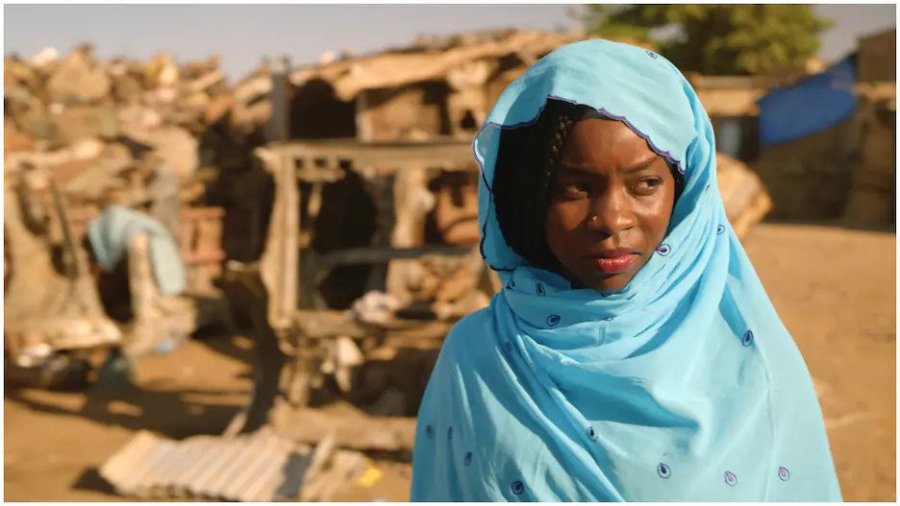
Lingui, The Sacred Bonds (2021)

Quick synopsis: Single mother Maria discovers her 15-year-old daughter is pregnant and the two seek an abortion, which is condemned by both religion and law

Mahamat-Saleh Haroun is a big deal in the film industy of Chad. It’s been argued that he’s the first Chadian director of full-length films. So him making a new film is a big deal, of the kind there is no English or American equivalent. This is the first film I’ve seen from him, and I’ll say I’m pretty impressed.

Yes, there are some flaws. Some of the editing is a bit weird. There’s one in particular where someone is walking behind someone, they get halfway behind them, then it jumps to them standing somewhere different. It’s not a mistake, as it’s clear there was a small time jump, but it is strange to see such an amateur mistake from such an experienced director such as Haroun. I do have to respect him for being a male who chooses to make a film about abortion rights. Let’s be honest, that’s not an issue that concerns men. So it’s an issue that he could ignore, that he could decide “nothing to do with me” and move onto something else. But the fact that he focuses on how shitty the laws regarding abortion are in that country is to be recommended. He has no dog in this fight, but he has chosen to enter it anyway.

It is a bit weird watching a film decrying backwards abortion laws lately, and this is no different. A story about a country where abortion is illegal and yet single mothers are still demonised, and this is all due to religion. You’re supposed to think “oh, that’s horrible”. But all you can think now is “so, like Texas?”

I should point out though, abortion laws in Chad are nothing like they are in Texas. Chad allows it to happen in case of sexual assault or if the pregnancy endangers the life of the mother. So Texas is more backwards than Chad, and that’s a country whose last president has a section on his Wikipedia page titled “died in battle”.

So that’s the politics, how about the film itself? It’s……it’s powerful. It’s shot in a very matter of fact way, there are no shots which blow you away in terms of impressiveness, Haroun preferring to let some of the natural beauty of the locations come through. Achouackh Abakar Souleymane plays Amina, and she does a very good job. Even when she is condemning her daughter, telling her that she can’t through with the procedure due to their religion, the doubt is visible on her face. From that alone you can tell how her story arc is going to go, about how she’s going to react to her leaders and neighbours. It’s an incredibly powerful performance, and one that helps the film become what it is. Rihane Khalil Alio plays her daughter, also giving a pretty good performance. They don’t quite have the perfect chemistry, there are moments where it feels like two strangers talking rather than a mother and a daughter. But then there are moments where you can feel a closeness between the two.

In a weird way this is a film not just about those two, but about the country as a whole. Yes, this is a film about the closeness of mother and daughter, but it’s also about the closeness of community. A community that has to stay hidden and do their work in the shadows. About the communities necessary for life to continue as it does with the harsh restrictions on them. In dystopian films it can often be horrifying to see someone so nonchalant about terrible things. This takes it in the opposite direction. When Amina’s sister is talking about her husband threatening their daughter with genital mutilation, it’s not in a “well that’s how it is, I’m so downtrodden I see this as normal”, she too is horrified by what’s going to happen. It’s a stark reminder that certain laws cause people to suffer, and just because they’re silent about it does not mean they’ve accepted it or given up. They’re still aware that is happening is a grave injustice, and they’re still FUCKING PISSED about it. They can’t depend on the government to provide help or sanctuary, and they can’t depend on their husbands, because they’re often the ones doing it. So who do these women depend on? Other women. A community of women looking out for each other, understanding and advising.

It’s strangely beautiful, but ugly once you realise why. Once you think about the sheer panic the members must live in every day. That panic does come through in this film, especially in the surprisingly violent final act. There’s an act of violence near the end which is incredibly realistic. That works for it and against it. It doesn’t make it seem cinematic, but the dull thuds give it a strange brutality that you wouldn’t get in other, more slick, productions. It doesn’t feel like we’re watching an act of violence on film, it feels like we just walked into a room and are witnessing it. It’s incredibly uncinematic, and in a way that makes it brilliant.

In summary, this is available on Mubi, so if you have an account on that, I would recommend checking it out.

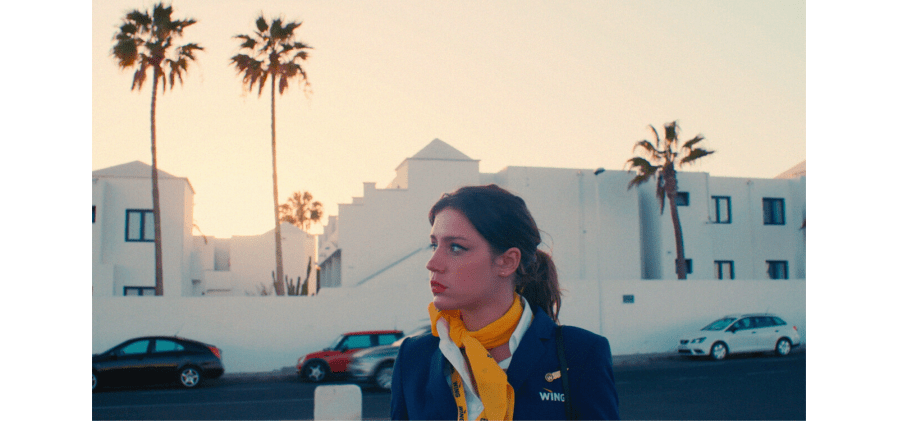
Zero Fucks Given aka Rien à foutre (2021)

Quick synopsis: A tale of a flight attendant on a low-cost airline dealing with idiot customers, senseless management, and the death of her mother.

I’m going to get it out of the way, this is frustratingly uneven. There are moments of greatness, and then moments where it feels like it’s just treading water. When she’s on the plane it’s engrossing, entertaining, and horrifying in how people treat staff they see as “below them”, yet when she steps away from that, the film loses something.

It’s weirdly ironic as that’s one of the central points of the film: that she has no identity outside of her job. It’s very reminiscent of Sweat in terms of how the character feels she has no personality outside of what she portrays to the world, she is not an independent person, but someone who is to be moulded and shaped as her audience wants.

There are a few missteps in the opening. She’s in a meeting at work and being told they’re now being measured on individual sales rather than as a group. You’d think this would lead to the staff being very cut-throat in terms of stealing sales opportunities from each other, but it doesn’t. It’s a missed opportunity. Her next shift is just a standard one, and then she goes drinking. Personally, I think if we were shown her being hypercompetent, a real genius at her job, or stressed out and near breaking point, that would have made the transition to drinks and drugs in the next scene a better contrast.

On the subject of alcohol, the drunken conversations are terrible, but in a good way. Drunk people don’t make sense, they ramble, and they say stupid shit. They swerve from topic to topic like a drunk driver. Usually, when films show drunk dialogue, they do it by just having them slur their words a bit while expressing their true feelings, so it’s good they did something different here. It’s without a doubt among the most realistic drunk dialogue I’ve seen on screen.

The dynamic changes when she’s told her job is no longer needed, and she’s being put forward for another one which she’ll need training for. Maybe it should have started here as that section is one of the most telling moments of the sheer hell the staff have to go through. It’s said out loud there that they’re not human, they’re just smiling faces whose job is not to help the customer, but to sell stuff. It’s remarkably dehumanising, and if this was shown earlier in the film it would have improved it. There’s a moment where her manager is yelling at her because she’s not downrating her crew for things beyond their control, anybody who has worked in retail or customer service feels that pain.

As good as some of the dialogue is, as interesting as the story is at times, and as stunningly beautiful it looks at times, Adèle Exarchopoulos is the definite highlight. When she’s on screen it feels like the weight of the world is on her shoulders. She’s probably best known over here from Blue Is The Warmest Colour, which is great but she doesn’t have pleasant memories of, due to the director being a, let’s put this diplomatically, a complete prick. Hopefully, this becomes her stand-out film, she deserves a film that the western world adores and that she doesn’t have negative feelings attached to. It is a good film, and definitely worth a watch, I just feel it could have been slightly better.

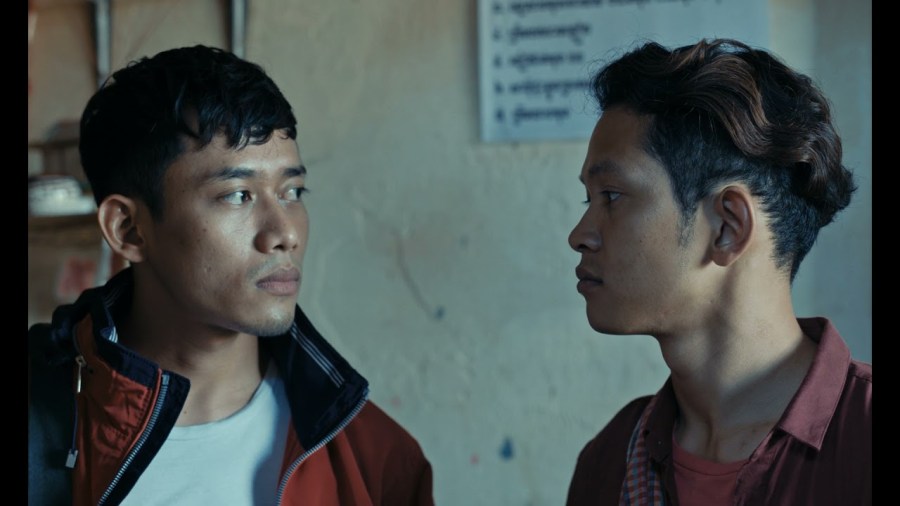
White Building (2021)

Quick Synopsis: A young man in Cambodia struggles to figure out what to do when his home is scheduled for demolition.

This is quite a slow film, almost glacial at the start. But it works, it makes the whole thing feel more slice of life documentary than a normal film. This feeling, that we’re observers of real life, is backed up by the music, well, the lack of it really. In the opening scenes, we see people dance, play football, and have conversations about girls. There’s no music at the forefront, it’s just people talking. That’s the best thing about this film, how it feels like we’re watching someone’s memories, it all feels very real. This is helped by the friendship in the opening section of the main three. The film does a great job of making you know they’ve known each other for a long time. There’s a genuine warmth to their relationship. You get the feeling this is a definitive period in the characters life. Like it should be backed by a “little did I know, that was the last time the old gang would hang out together, life sure was different after that” 80’s-style voiceover. That friendship is put on the backburner by the film when the plot about the building being knocked down starts (which doesn’t really kick off until thirty minutes in), at this point one of the friends moves away and is never really mentioned again. It’s then that the narrative focuses on one person, and becomes a lot more personal.

It’s a definite tonal shift, when the lead character (Samnang) is away from his friends it changes from something lighthearted and sweet, to something quite sad and hopeless. It stops being a story of friendship, focusing on what he has, and instead becomes a film about poverty and ill health, focusing on what he doesn’t have. He meets up again with one of his friends, but the vibe is different. Them riding around town has an increased air of melancholy about it. If the first section is them being in denial about losing their home, the second section is him realising it and coming to terms with it. You genuinely feel the panic everybody has. There’s a moment where they’re discussing the forced selling, and whether to accept the low offer they’re being offered (which isn’t enough to get a new place), or hold out for more. Someone off-handedly mentions that when this happened to another building, the residents were forced out at gunpoint and left with nothing. It’s something that is made all the more horrifying by how casually it’s mentioned and then glossed over. It’s not something that changes everybody’s mind, almost like they all knew it and accepted it.

On the downside, it is a little dull at points. This is definitely a very personal story (the director grew up in the building, and actually includes footage of the demolition at the end of the film), and that is a strength, but there are times where it feels a bit too personal, like he’s forgotten he’s telling this story to other people. Also, it feels like it assumes everybody knows about the history of the building, I read up on the building before watching, and it definitely helped explain a few things, things which the film probably should have. It not only would have made a few things clearer, but also would have made the building feel more like a character, so we get an emotional resonance when it “dies”. Characters drift in and out without reason.

So an interesting film, and a good one, but not a great one. One final thing, and I know it’s a weird thing to say about an actor who doesn’t even have a picture when you search on google, but Chinnaro Soem carries himself like a damn star in the few moments he’s in it. There’s a strange, almost James Dean quality to him and I want to see him in more.

Black Medusa (2021)

Synopsis: By day Nada (Nour Hajri) is a reclusive young woman in a boring office job. She doesn’t speak. By night she picks up men in Tunis’ vibrant nightlife. Here too, she doesn’t speak. She listens to their stories. She goes home with them. And then she kills them.

I’m still uncertain about this. It’s definitely not an easy watch, it’s certainly not cosy, but what it is, is intriguing. It’s one of those films which you watch and you think “maybe I should turn it off” but if someone grabs the remote you tell them to put it down and live the film on.

This film is nothing if not incredibly brave, not many films would start with the main character raping a stranger with a broomstick (the last Spider-man film excluded, obviously). This takes an unflinching look at the character and her actions. It doesn’t condemn her, but it also doesn’t focus on giving her too much of a tragic backstory (there’s a moment early on in flashback but it’s not one that’s focused on throughout the film, it’s a relatively brief moment). It’s not “she is evil”, or “she is good”, it just says “she is”. We’re not asked to judge her, we’re just asked to observe. There’s a cold, emotionless feeling to the killings. We don’t focus on the faces of the victims, sometimes it’s not even on her, we’re watching from a distance, in the dark. It’s strangely compelling.

From a technical standpoint, a lot of this is wonderful. There are some great long shots. The camera staying still as the characters walk towards it from the far end of the street, really highlights how empty the streets are in a way that a more traditional tracking shot would not have. The sound too, the way they use silence when she’s walking down a street really highlights the emptiness of the location. There’s a scene where she kills someone in a house and it is so artfully done, there’s no music, no dramatic cuts. Just the sound of the knife hitting flesh, and shoes squeaking on the floor, to a static camera.

This film isn’t for everybody, for starters, it’s subtitled which may put some people off. It’s not too big an issue but there are a few moments where the subtitles aren’t placed greatly, they linger long after a character has spoken. I know that was probably an outside company that did that, but it’s still not great and does harm your enjoyment. It’s also in black and white, but sometimes that worked for it, there’s a scene in the woods where it’s incredibly bright and striking, in a way we don’t associate with black and white movies often, the character is truly happy, and we can tell from the lighting. But then it almost instantly changes and becomes a lot darker. The way they did it could not be done as effectively if it was in colour.

But then are times when the lack of colour hurts it, where so many things take place in shadows that you can’t really tell what’s going on. It does feel like it could be a bit more straightforward in some ways too. It’s a relatively simple story but it’s being told like an art-house student film in terms of how long the cuts are, and what it refuses to show you.

As frustrating as it is enjoyable. You will be annoyed at what you’re watching, but you won’t be able to turn away. It’s fascinating and unique. Plus the sounds of the stabbings were wonderful in how “wet” they sounded. As fascinating as it is though, I do wish it was better. I wish there was more character work, I wish there was less stuff there only for the sake of “well this is ART”. Ultimately, I wish it had a point to it.