

Quick synopsis: A journalist descends into the dark underbelly of the Iranian holy city of Mashhad as she investigates the serial killings of sex workers by the so-called Spider Killer, who believes he is cleansing the streets of sinners.
I’m really glad I got a chance to watch this (available on Mubi at the time of writing). Not just because (spoilers) it’s a very good film, but also because it means it doesn’t appear on my to-watch list any more. Every time I saw the title on the list my brain sang it to the tune of Holy Diver by Dio.
If relief at the eradication of an earworm was my main takeaway from this then that would be a bad indication of the quality of it. But whilst relief was slightly how I felt, it was only about 5% of my feelings; the dominant emotion coming out of this was pure anger. Anger, btw, is likely to be the theme of reviews this week. It wasn’t intentional, it just turned out to be a very “We have a point to make!” run of films.
The central theme of this piece is: “Local prostitutes in Iran are being murdered, a lot of people aren’t bothered by this because they see the women as immoral and deserving it”. It’s a depressingly accurate take on cultural misogyny in that country, especially since the killings did actually happen. In 2001, Saeed Hanaei went on a killing spree of prostitutes in the Iranian city of Mashhad. These weren’t quick “in the moment” killings either; he strangled them. Do you know how long it takes to strangle someone to death? Watch Promising Young Woman and find out, there’s A LOT of time to change your mind and come to your senses. And just like in the film; the real Hanaei was supported by locals; with newspapers defending him. And before you get too high and mighty about “well that’s just Arabs, western worlds don’t treat people like that”, read the comments on news articles when asylum seekers or refugees die. You will see an outpouring, not of grief, but of glee.
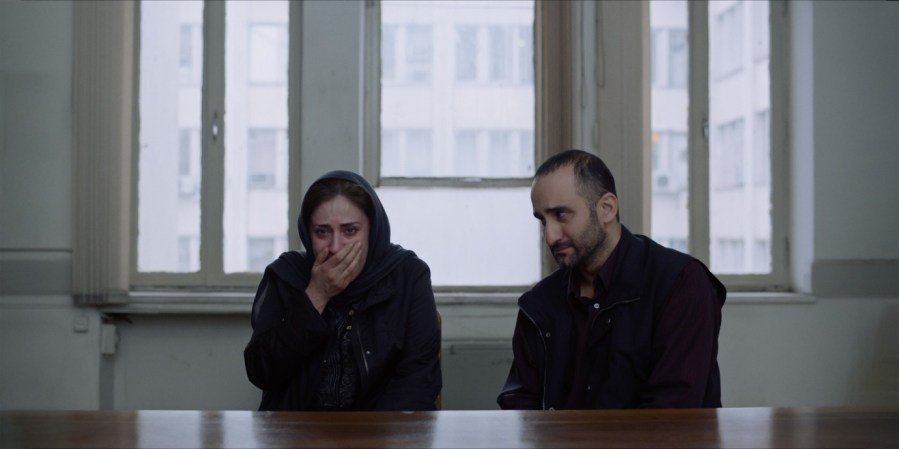
Hanaei is portrayed by Mehdi Bajestani, and he is so damn good in this. It would be easy to portray Hanaei as a stereotypical one-dimensional fundamentalist killer. But Bajestani (and the writing of Ali Abbasi) provide him with a lot of humanity. He’s not sympathetic or likeable in the slightest, but he is sincere, and you do understand how he got to his point of view, even if it is sociopathic and deplorable. It’s key that the character doesn’t seem to be getting pleasure from this. He seems genuinely disgusted with himself for having to be near the women he’s killing. This really helps him feel genuine. He is terrifying, even when he’s just being an everyday family man. There’s a moment where the veil slips when he has an outburst in front of his family and stops being the kind loving family man. What’s very telling is how his family react. They’re scared, but not surprised. So they know he has the capacity for violence; just maybe not to the full extent of it.
It’s not just Bajestani whose performance anchors this film. The casting of Zar Amir Ebrahimi is genius. I’m not sure if her casting was ENTIRELY just “she’s the best performer available”. I mean, she definitely is great, absolutely phenomenal. But consider this: Holy Spider is a film about how the prevalence of religion in Iran has led to extremists who commit murder and use religion as an excuse for extreme sexism. And the female lead? A woman who was banned from appearing in Iranian films after SOMEONE ELSE leaked her sex tape. So if that wasn’t part of the decision in casting her, it advertently provides a lot of backstory. People talk about political casting, but usually, they just mean “10% of the films cast aren’t straight white men. This is political correctness gone mad!”. This is political casting as an attack on the Iranian cultural misogyny which allowed Hanaei to kill so many women. Ebrahimi brings everything to this. She brings the anger and determination needed, and it would be a much lesser film without her in it.
In terms of the film itself? It’s weirdly reminiscent of It Follows in terms of the stylistic choices; especially when it comes to the music. The murders are brutal, but not in an exploitative way. The first one especially is aided by how damn scared the woman seems; really sells the fear with her eyes. Ali Abbasi did a fantastic job writing/directing this. You can tell he felt he NEEDED to make this. Every scene is full of furious passion and indignation; but also the creative talent needed to make such a hard-hitting story palatable to audiences. He recently directed two episodes of The Last Of Us, so I’m hoping his career continues upward and he gets the opportunities he deserves. Few people can inject emotion and frustration as easily as he managed it, and he’d be an asset to any studio.
 Troubled Productions