Resident Evil (2026) Review

Quick Synopsis: An everyday medical courier named Bryan must transport a crucial package containing a missing cure ingredient into a chaotic, zombie-infested Raccoon City

I was a Nintendo kid growing up, and stayed that way until the Wii, when I decided my lack of coordination probably wasn’t going to work with the core of what that system was offering. So I switched to Xbox. I’ve just never really vibed with PlayStation, possibly because the kids who played it when I was growing up were the “I’m so cool, I’ll beat the shit out of you if you look at me weird” dickheads who I didn’t get on with. You know the type. The kind who would eventually move on to playing Call of Duty.

As such, Resident Evil isn’t a big part of my gaming life. Yes, it eventually moved onto other consoles, but it became a major gaming franchise on a system I’d never touched. I’m aware of the series and some of its lore, mainly thanks to the Kill Count by Zoran “I Can’t Think Of A Funny Nickname Like He Does And It Would Be An Insult To Try” Gvojic. I’ve seen one or two of the films, although the only thing I can remember is wondering why one of them used its final line – which was supposed to be a big twist – as the tagline. Oh, and I have the soundtrack to Extinction for some reason.

What I’m trying to say is that I’m not approaching this as a video game adaptation. I don’t know enough about Resident Evil to tell you whether it’s faithful to the games, and I’m not going into it like a cast member of The Traitors, desperately looking for clues about how faithful everything is. I’m just judging it as a film.

So, how does it work as a film? It’s pretty good. It’s not my favourite horror movie of the year, but I’m aware that a lot of the things I didn’t like about it are probably the exact things other people will like about it. For one thing, characters appear and disappear without much reason or rhyme. Maxine (played by Kali Reis) is a good example. She’s introduced as confident, badass, and very good at her job, which makes her feel like someone the film is setting up to stick around. She feels like a character being saved for an extended role in a sequel. So when she’s killed a few minutes after we’ve seen her effortlessly be awesome, it feels less shocking than it does cheap. The film spends time convincing us that Maxine is going to matter, only to immediately take her away.

The tonal whiplash was also jarring for me. Some characters just don’t seem to be taking the threat seriously, particularly the scientists in the closing level, who joke around as if they aren’t currently in the middle of the end of civilisation. You might have noticed I used the word “level” rather than scene. That’s not me being stupid (for once); that’s genuinely how it feels. The film plays like we’re moving through levels rather than following a conventional script. And that’s not entirely a bad thing. Moving between locations and characters gives the film opportunities to do things that wouldn’t work elsewhere, and it makes good use of them. The moment when the infected jump from the rooftops, splattering onto the street as Bryan runs towards the hospital, is something that can only happen in that location. Likewise, the acid-filled hospital lift works because it’s part of that particular sequence. The film’s game-like structure can make it feel disjointed, but it also gives it an excuse to keep throwing completely different situations at us.

The scares in the hospital were the highlights for me. The harsh lighting certainly helps, and hospitals are creepy enough without an army of infected people running around them. But Resident Evil doesn’t just rely on the obvious advantages of the setting; it comes up with some genuinely inventive scares of its own. The maternity ward scene, in particular, is sure to become the stuff of legend.

Conversely, the farmhouse wasn’t nearly as effective for me. Mainly because it’s one of the few sections where the film seems to lose its own identity. A lot of the moments there could have been lifted from almost any other horror movie. That’s what makes it stand out: for long stretches, Resident Evil knows exactly what it is and has a distinctive visual and tonal identity. So when it suddenly starts feeling like a generic horror film, you notice it. The problem isn’t that the farmhouse is less scary; it’s that it feels like Resident Evil has temporarily stopped being Resident Evil.

Performances? Austin Abrams does fine. Actually, he does more than fine. But every time I try to remember him, my brain immediately replaces him with Franz Kranz’s performance in The Cabin in the Woods. Nobody else is around for long enough to make much of an impression, so this is very much Abrams’ movie. He’s good in it, but it’s not the sort of performance that’s going to linger with me.

His character, however, has considerably more depth than I’d expect from a film like this. I haven’t seen a video game adaptation with this much character development since To Kill a Mockingbird (which everybody knows was an adaptation of Duck Hunt). Bryan’s entire character is built around avoiding parenthood and responsibility. So when he finds a young girl in danger, you’d expect the rest of the film to be him escorting her to safety like Pedro Pascal. Nope. She dies.

But that doesn’t make the relationship pointless. Her death is actually what makes his arc work. Bryan spends the film trying to avoid responsibility, and eventually he’s forced to step up and do what needs to be done. He doesn’t suddenly become a different person; he’s finally forced to become the person he’s been avoiding being.

In summary, I can’t tell you whether this is a good Resident Evil adaptation. I’m guessing not, but that’s not really my area of expertise. What I can say is that it feels like a video game movie. The characters, the visuals, the way the story is structured, even the fact that the hero is given the most important job in human history and then apparently nobody thinks to give him any help, so he has to do it all himself. It’s basically the video game experience distilled into a film.

Most importantly, it’s fun. It’s the kind of film that makes you want to watch it again, partly because you want to see what comes next and partly because you just want to experience the madness of it all again. And there aren’t many video game movies you can say that about.
Soulm8te (2026) Review

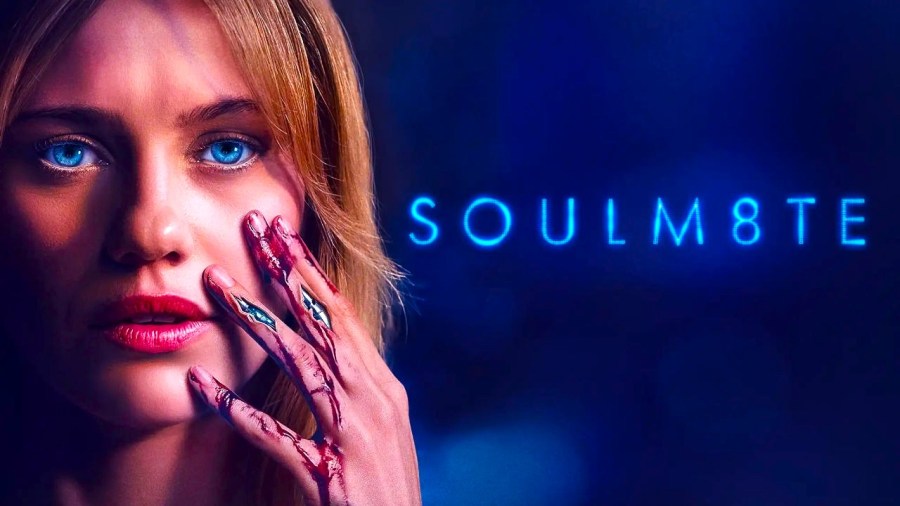
Quick synopsis: David volunteers to beta test an android companion to cope with the death of his wife.

A bit of background. Soulm8te was originally supposed to have a theatrical release in January this year. Obviously, that didn’t happen. I keep a list of films I want to see each year, with titles indented if I haven’t seen a trailer. Soulm8te was on there for ages, until I eventually decided it probably wasn’t going to be released and deleted it. Two days later, the trailer came out. The first I knew it had finally been released was when I spotted it on Disney+ while I was going to watch the new season of Scrubs.

You know how Disney+ puts the release date next to the title? Soulm8te was listed as being released in the year 3000 (where not much has changed but they live underwater. And your great great great granddaughter was pretty fine). In the kindest possible interpretation, this was a joke about how futuristic the film is. It wasn’t. They eventually changed it, so it was clearly just a mistake. The fact that it was sitting there with the wrong release date for several days tells you something about the level of care that went into releasing this film. And the fact that it didn’t even become a meme tells you how little attention anyone was paying.

That being said, Coyote Vs. Acme was also beset with release problems, and that turned out to be incredible. Plus, Soulm8te is directed by Kate Dolan, who gave us You Are Not My Mother, a great hidden gem if you like low-budget horror. That film showed she could take a strange, unsettling premise and turn it into something genuinely creepy, so her involvement gave me some hope that Soulm8te might be better than its troubled release suggested. And some genuinely great films have been released straight to streaming. So, despite everything, not all hope is lost.

Until you start to watch it. Then you give up hope pretty quickly. I will admit, I only watched this because of the M3GAN connection. If that’s why you’re watching it too, don’t. There is no meaningful connection. No serious connection, anyway. It mentions one company that also appeared in M3GAN, and that’s about it. If anything, the fact that it’s set in the same universe actively harms the movie. The events of the M3GAN films would be well known in this world, yet they’re never mentioned. You’d think a robotics company making lifelike companion dolls would say something like, “And remember, be careful you don’t end up with a situation like that doll a few years ago that killed a bunch of people.” Instead, people come face to face with Sara and seem AMAZED that a robot can look lifelike. Almost as if the M3GAN films didn’t exist.

And it gets even sillier when one of the people who hates Sara for being a robot does so because she pays for something using her palm at a chip and PIN machine. That’s not scary futuristic robot technology. That’s something people can already do if they have the right implant. That’s like someone in a movie shooting another person because, “He was using a wireless telephone! Witchcraft!”

It’s not all bad. There is something weirdly sweet about David’s early interactions with Sara. They’re very wholesome, even if the relationship is obviously one-sided. But then again, she is an AI companion, so asking about her childhood pets and stuff would be a bit weird and disingenuous. He’s getting to know her, while she’s essentially been designed to get to know him.

The performances are good across the board. Sadly, I think David Rysdahl is the weakest, although that’s only because everyone else is so good. Lily Sullivan is perfect as Sara, managing to make her feel convincingly human while still retaining something slightly artificial about her. She’s not in it much, but I also liked Emma Ramos. I really enjoyed Claudia Doumit’s performance, too. She has the same kind of inherent likeability that makes Jameela Jamil so watchable, where you can’t help but enjoy having her on screen.

There’s also some genuinely fun moments. Her singing Lovefool at karaoke is lovely, and really sells David’s feelings for Sara, making you believe that he genuinely cares about her. The film also comes up with some surprisingly creative deaths. A guy gets his dick ripped off and then kneed in the face. She also kills someone using her ever-tightening vagina. (Ever-tightening Vagina was my folk-reggaepunk band back in college.) These are the moments where the film is at its most entertaining, because it seems to remember that having a bit of fun with some of its more ridiculous ideas is actually a good thing.

But that brings me onto the downside. Yes, the suffocating vagina death is fun to watch, but it has no consequence. In fact, none of the kills do. Sara kills a fair few people, and their deaths have almost no effect on the story. There’s no news reports about them. No police. Nothing. It’s not that I need Soulm8te to suddenly turn into a police procedural, but these deaths should have some kind of impact. For a film supposedly interested in the importance of human connection, it has remarkably little interest in the people who actually die.

The film has the potential to say something genuinely interesting about human relationships, and I get the feeling some of that may have been lost in the edit, particularly when it comes to David’s ex-wife, Lizzie. There’s the potential for something beautiful there. David has lost his wife, and then finds himself forming a relationship with an artificial person who is designed to give him the companionship he’s lost. But besides the dialogue telling us about it, we don’t really FEEL that David is haunted by Lizzie’s death. We needed more moments of him watching footage of the two of them, remembering their life together, or even just struggling with the fact that Sara is filling a space that Lizzie left behind. That would make his relationship with Sara much more emotionally complicated – and much more interesting.

On the subject of the characters: Sara herself is strange. She has moments of brilliance. When she says, “Your hypocrisy forces me to contort myself into this impossible ideal,” it briefly shows a much better version of this movie than the one that actually exists. A movie that focuses on male entitlement to female bodies and attention. Sara has been created to be the perfect companion, designed around what a man wants from a woman, and yet the moment she develops desires and expectations of her own, she’s suddenly the problem. If the film leant more into that, it could have been really interesting. It would draw comparisons with films like Companion and Obsession, and, more importantly, give Soulm8te something genuinely worth discussing beyond whether its robot vagina kills are funny.

But Sara isn’t all good. She doesn’t understand a lot of very basic things about human nature, but somehow understands how to blackmail someone using deepfake porn. And why was she programmed with jealousy in the first place? It seems like her behaviour is based less on what would make sense for an AI and more on whatever the plot needs her to do at that particular moment.

Although I suppose it is a bit much to expect logic from a film with a title as mind-numbingly stupid as Soulm8te. I’m sorry, but it’s possibly the worst name a film has had all year. It doesn’t even say “soulm-eight”. It says “Soulm-eight-et”. A character actually points this out in the movie, but acknowledging that your title is stupid doesn’t magically make it less stupid. If anything, it just confirms that you knew it was stupid and went with it anyway.

In summary, it should be better. That’s the most frustrating thing about Soulm8te: I’ve seen what this movie could be, and I’ve seen what it actually is. There’s a genuinely interesting film buried in here about loneliness, grief, male entitlement and what happens when an artificial companion develops desires of its own. Instead, we get a movie that’s too serious, more po-faced than a Teletubbies mask.

It’s not even that sexy. Which, for a film labelled an “erotic thriller”, is a death knell. It mistakes nudity for sexuality. There’s no atmosphere, no passion, just cold, sterile nudity. And nobody wants cold nudity. It’s why you don’t see many naked people in the Arctic.

Backrooms (2026) Review

Quick Synopsis: Failing furniture store owner Clark accidentally stumbles upon a dimension of seemingly endless liminal spaces in this movie based on the popular internet legend.

My local cinema offers a membership card that lets me watch as many films as I want for a monthly fee. As a result, I technically haven’t paid for a cinema ticket since 2020’s Fantasy Island, which remains one of the worst films I’ve ever willingly sat through.

That changed with Backrooms. I was visiting friends when we decided to see it, but after missing our original screening, we had to buy another set of tickets. In effect, I paid to see Backrooms twice. You’d be forgiven for thinking that experience might have predisposed me against it. (I’m still not entirely convinced that my dislike of Oculus isn’t partly due to the cinema staff turning the lights on ten minutes before the ending.)

Adding to that, Backrooms is based on an internet urban legend I knew almost nothing about.

It’s a testament to the film, then, that I didn’t just enjoy it: I loved it. It’s deeply unsettling, although pinning down exactly why can be surprisingly difficult. If you described some of its most effective scares to someone who hadn’t seen it, they’d probably look at you as though you had “stare here” tattooed across your forehead. “Man walks around an empty room in silence” sounds more depressing than frightening. In that sense, it reminded me of Vivarium, which somehow turned “a couple driving around a suburban street” into one of the most unnerving sequences I’d seen in years. The difference is that Backrooms is actually good.

As I said, I wasn’t particularly familiar with the original urban legend going in, although I’ve since conducted extensive research; by which I mean I watched an eleven-minute YouTube video. From what I can tell, the film adapts the concept remarkably faithfully. It doesn’t feel the need to introduce random demons, sinister corporations, or some grand mythology to explain everything. The horror comes from the unknown. And by “the unknown”, I mean the abstract concept, not the strange metallic-faced creature from that infamous Willy Wonka experience in Glasgow.

That’s a difficult balance to strike. The Backrooms are fundamentally an idea rather than a story, and if you’re not careful, a film adaptation can easily end up looking like a bloke wandering around town while nursing the world’s worst hangover. Somehow, Backrooms manages to avoid that trap.

The characters help enormously. At first, you might congratulate yourself for seeing through Clark, played by Chiwetel Ejiofor. While he’s attending therapy sessions, it’s easy to sit there thinking, “Yeah, but you’re still an abusive arsehole.” The clever thing is that the film wants you to think exactly that. Clark is selfish, unpleasant, and often his own worst enemy. That’s precisely why he makes the choices he does.

His gradual transition from protagonist to supporting character is handled with impressive skill, even if I would have appreciated a little more clarity regarding how long he’d actually been trapped. As he recedes into the background, Renate Reinsve effortlessly takes centre stage. I’m not particularly familiar with her work, although both The Worst Person in the World and Sentimental Value have been sitting on my watchlist for a while. Her performance here only makes me more eager to get around to them.

What impressed me most about both leads was how believable they felt. These aren’t horror-movie caricatures sprinting from room to room while delivering exposition. They’re terrified. Exhausted. Broken down by an environment that seems determined to strip away every ounce of certainty and confidence they possess. You can practically watch their personalities deflate as they venture deeper into the building.

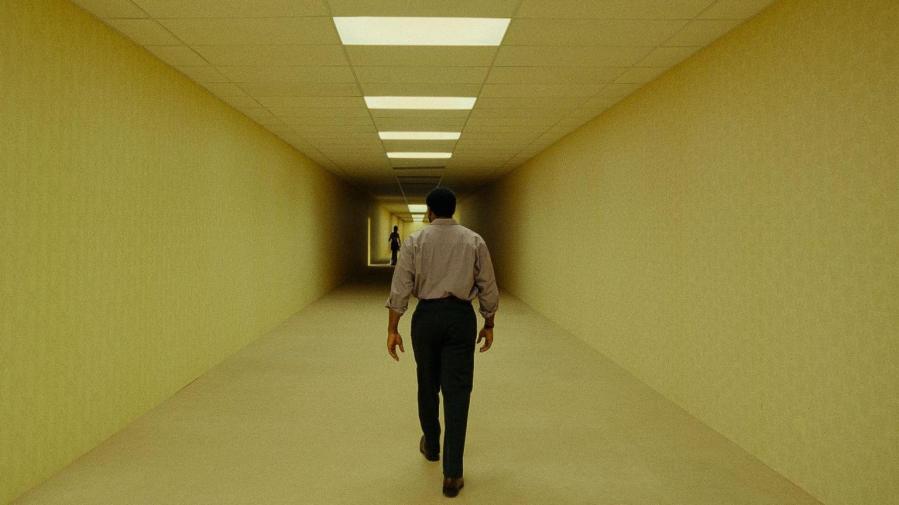
Anyone familiar with the original images or videos will immediately recognise the aesthetic. Endless yellow walls, harsh fluorescent lighting and chairs and tables that appear to have become partially absorbed into floors and walls. The production design is extraordinary, and the sheer amount of effort that went into creating these spaces is evident in every frame.

That said, I actually preferred the moments that looked cheaper. The grainy footage, muffled audio, and degraded visuals gave the film a grimy authenticity that made everything feel more real. The more conventionally shot scenes are still unsettling, but they occasionally possess a level of polish that feels slightly at odds with the concept. It’s difficult to fear a place that sometimes looks as though it belongs in an expensive architectural photography magazine.

My biggest reservation concerns the sequence involving the malformed human imitations. I understand what the film is aiming for, and the interpretation that the distorted woman represents Clark’s wife at least gives the scene some thematic weight. Even so, it felt like the film was pushing a little too hard.

It’s not a bad sequence. Far from it. It’s creepy, strange, and often fascinating to watch. It just feels like a slight detour from what makes the rest of the film so effective. The horror of the Backrooms comes from vast emptiness and uncertainty; introducing recognisably monstrous figures risks making the threat feel too tangible.

Also, the pirate looks goofy as fuck.

Still, these are relatively minor complaints. For the most part, Backrooms is one of the year’s finest horror films, and one that genuinely changes the way you look at the world around you.

After leaving the cinema, I found myself walking through a near-empty Tube station late at night. Somehow, that experience was more unnerving than ninety percent of horror films I’ve seen. That’s the mark of a truly great horror movie: not that it scares you while you’re watching it, but that it continues to haunt you long after you’ve left the safety of the cinema. If you get a chance, go see this on the big screen. It simply won’t have the same effect watched on a mobile phone or a train etc.

Passenger (2026) Review

Quick Synopsis: A travelling couple are haunted by what’s essentially a hitchhiking demon.

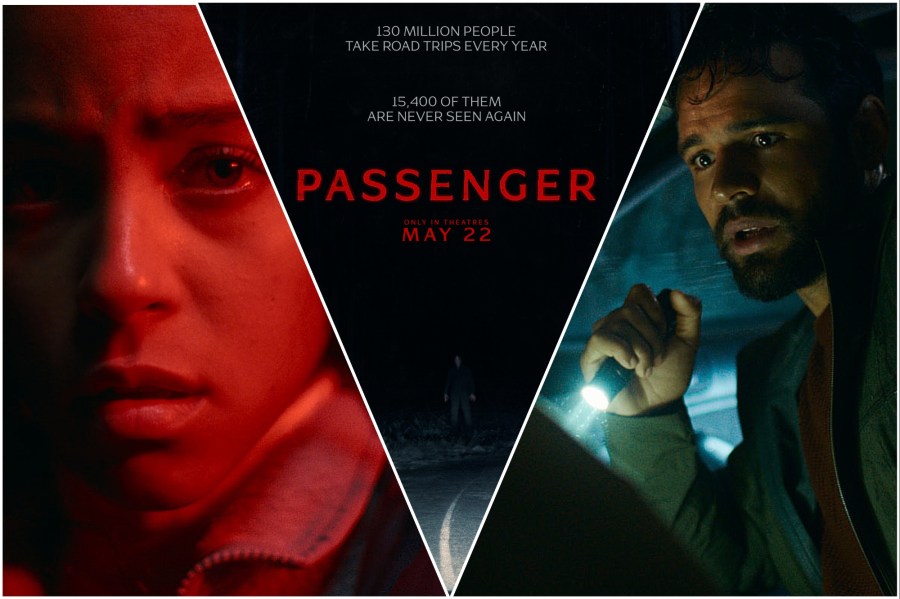
The last André Øvredal film I reviewed was Scary Stories To Tell In The Dark back in 2019. I thoroughly enjoyed that, although I was surprised by it because I assumed it would be more kid-friendly/my first horror. I’ve also heard very good things about The Autopsy Of Jane Doe, The Last Voyage Of The Demeter, and Trollhunter, with all three of them being on my list to watch. I didn’t love Passenger, but it didn’t dampen my enthusiasm for his work. The most interesting things about Passenger are the things he brings to it. It’s far more visually interesting than similar films; at times, it’s close to art. Disappointingly, it does dip into the “random face jumps at the camera” scares, which are cliché to the point of boredom. Weirdly, there are times when I think it does a bit too much. Some scares are heavily signposted, and maybe it would have been better if they were a bit more subtle. The perfect example of this is a scene where Maddie (played by Lou Llobell) is trying to get to the van. She hears a noise and turns to look at the source, then turns back, and the van is further away. There are dramatic scare chords accompanying this happening. Personally, I would have liked it to be a bit more subtle, so the audience had to pay attention, putting them in the same place as the character: wondering if it is actually further away, or if her mind is playing tricks on her.

I didn’t know that much about Passenger. I saw the trailer months ago, but for some reason, the trailer wasn’t available online at the time, so I haven’t watched it again. I mainly remember it focusing on someone driving and seeing the same figure again and again by the side of the road. That kind of intrigued me, but I was curious as to how that could extend to a feature-length film. I mean, how can you get 90 minutes of someone driving and NOT picking up a hitchhiker? So I was doubtful it would have enough meat on its narrative bones. Good news, that’s not what the film is about. Bad news, it still doesn’t have enough meat. The main characters are cursed because they decide to stop their car (which kind of seems like this film is saying that stopping to help people is a bad thing and should be avoided, but what do I know?). So it’s somewhat ironic that the film itself keeps stopping. Weirdly, those are the parts of the film I think worked best. There’s an incredible scene where the two are watching Roman Holiday on a projector in the woods. It’s very sweet, the scares are subtle enough that they gradually build, and there’s actual tension. But then they get back into the van, and it turns into visual noise.

In contrast, the dumbest part is when they’re in the van and time suddenly skips forward to night. The set-up for this is that the entity is powerful at night and weakened during the day, so the characters think they’re safe in the day, but that safety is disrupted by the time skip. I would argue that manipulating time in such a manner requires immense supernatural power, much more than it would take to, say, loosen a wheel and cause a car crash. Or did he just make them fall asleep for that long? If that’s the case, why not kill or hurt them then? Also, why wake them up? They’re heading to the church of Saint Christopher, patron saint of travellers and the only place where someone would stand a chance of killing the entity. The characters don’t know where it is, so they have to look out for symbols and clues to try and find it. The characters appear to have travelled in the missing time. Here’s my issue: the demon wakes them up BEFORE they get a sign with a symbol on that tells them where the church is. If he can only timeskip a certain number of hours, why not wait until they’ve travelled a few more hours, THEN jump ahead so that they unknowingly drive past the only clue that’s visible from the roadside? They might have even taken the wrong exit and ended up avoiding it entirely. If anything, he got them closer towards it. He’s a video game boss who just happens to have the only weapon that defeats him in the hallway outside his dungeon.

On the upside, the lore is fantastic. It FEELS like a genuine urban legend. Specifically, an American one. It appears to be based on a few different ones rather than a single one. But when you watch it, it feels real, like the kind of thing travellers will tell each other. I’d have loved to have seen this as part of another movie, where we see new urban legends get told. But as a full movie? There’s just not enough to it to justify it. It says a lot that the best scares and most memorable scenes were all ones that could have come from any movie, not many that are unique to a road trip horror.

Obsession (2025) Review

Quick synopsis: Baron (nicknamed Bear, maybe so he gets an ego boost by seeing women online say they’ll choose him?) is deeply in love with his friend Nikki. He decides to win her over by improving himself, gaining confidence, and being a dateable candidate. Sorry, he does none of that, he makes a wish so that she’ll fall in love with him. It ends badly.

I’m a big fan of “be careful what you wish for” movies. Where someone gets what they want, but it’s twisted to be negative. But it’s one of those subgenres that fails more than it succeeds. Okay, maybe “fail” is the wrong word, but they’re very rarely what I want them to be. A lot of them (thinking mainly of Fantasy Island at the moment, but there are others) have the same issue: the negative consequence is too stupid. If the consequence is so unrealistic and stupid, then it doesn’t work as a warning. If someone says, “I wish I won the lottery”, and that wish comes true but leads to betrayal and paranoia, that makes sense. If it leads to them going on holiday, antagonising the locals, and it leads to a world war, that makes slightly less sense, but if it’s well written, sure, why not? But if it turns out that the characters’ dead relatives all come back to life to claim the money, then it turns into a zombie movie? That’s f*cking stupid.

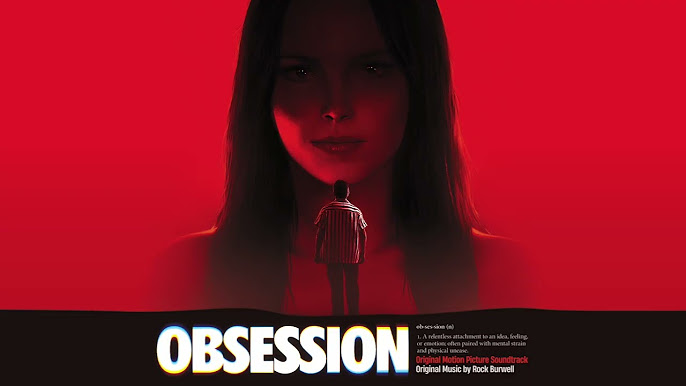
That’s my main problem with Obsession (by Calvin Klein). There’s an interesting story to tell about how someone being creepily into you can cause problems: how it costs you your independence and sense of self-worth, how they control your life, making you lose your friends because they’re jealous, make you lose your job so you’re dependent on them, etc. All in all, there’s a very realistic way to tell this story. Obsession does not do that. The obsession doesn’t feel real or sensical. There’s no “be careful what you wish for” because the end result doesn’t feel like a natural progression of the want and desire.

That being said, Inde Navarrette plays her part perfectly. She goes from sweet and innocent to psychopathic weirdo with just a change of posture. Michael Johnston didn’t quite work for me. He reminded me of Matthew Baynton, but not as accomplished. He’s fine with some of it, but when he has to show terror or any ounce of vulnerability, you’re very much reminded that he is an actor playing a character, rather than an actual person.

There’s no doubt that Curry Baker is one hell of a director. The fact that he pulled this movie off on such a small budget is something to be commended. If Blumhouse want to make a Conjuring spin-off that’s actually worth watching, then Baker would be a great choice to direct. He crafts scares without ever being cliche or cheap. There are a few jump scares, but they’re well-crafted. Think “end of Carrie” rather than “random video a friend shows you to see your reaction”. Actually, screw a Conjuring spin-off, I think Baker could pull off a Carrie remake.

I’d want someone else doing the script, though. Really, that’s the part of Obsession I didn’t like. There are no characters to root for. The main character is an incel douchbag who feels entitled to affection and sex. His friend is a slight douche. We don’t really see enough of Nikki to get a gauge on her actual character, but there are hints that she’s kind of a bitch. Obsession ever needed to make Baron seem sympathetic and then gradually descend into darkness, or do it from Nikki’s point of view and make Baron an out-and-out villain so the movie becomes about her being aware of what’s happening but unable to stop it (kind of like Get Out).

Their friend Ian is involved in one of the dumbest scenes of 2026. Baron takes another One Wish Willow to Ian and tries to get him to wish that Nikki is no longer obsessed. Instead, Ian wishes for a billion dollars, which starts raining from the ceiling (it’s at this point I realise the director severely underestimated how big a billion is). Baron is frustrated that his one chance at happiness is over, so he runs back home. So, Ian is aware that the wishes come true, and he’s aware that Nikki is now borderline sociopathic (whether he believes what Baron said or not, he’s seen enough evidence that should make him careful). The only other person on the planet who knows about Ian’s new wealth is Baron. So why would Ian then go to Baron’s house to celebrate? The two are no longer particularly close, and it’s shown at the party scene that he has other friends. So I’m really struggling to think of a reason the character would do that, outside of “the film needs Nikki to kill him”. That scene also makes it seem like Baron and Nikki are the main characters of the universe. Ian only dies because of those two. The wishes are supposed to backfire, but really his only backfired because of the main characters. Would it not have made more sense for him to actually be crushed to death by the falling cash? It would tie into the “be careful what you wish for” concept, would make his death mean something, would mean that Baron is left completely alone, and it would be kind of comedic in an Osgood Perkins way.

So in summary, a very well-made horror movie. It’s not my type of movie, but it was damn close.

Mother Of Flies (2025) Review

Quick synopsis: When a young woman faces a deadly diagnosis, she seeks dark magic from a witch in the woods; but every cure has its cost.

I have to say this first: I don’t think I’ve seen a film that perfectly encapsulates independent filmmaking like this. A real group effort by John Adams, Toby Poser, and Zelda Adams, the three of whom pretty much did everything. So at the very least, you have to admire what they did. There’s no doubt that this is low-budget. So I will be judging it based on that. There are some concessions you have to make with lower-budget films. You have to judge them based on what they had available to them. Think of the scenes in Captain Marvel where the backgrounds felt disconnected, so you never forgot you were watching a piece of fiction. If that happened in a low-budget independent, I’d have forgiven it. Weirdly, I felt the budget more in the conversational scenes. The background audio was too loud (almost distractingly so), and the lightning was off. I was genuinely considering cutting my losses and turning it off. Then there was a scene where Mickey (played by Zelda Adams, and she’s pretty great) hallucinates in a motel room. That moment brought me back in. The visual effects and the editing transition between night and day are expertly done. It comes after some incredibly trippy visuals, and just before a pretty fine song (“Murder” by H6llb6nd6r. I love the song almost as much as I hate that band name). On the subject of music: it’s REALLY good, especially in the opening section, which sounds a bit like if the Psycho theme were being played on a ship’s foghorn.

I should note: this is possibly not the best film to watch if you want to avoid an existential crisis. There’s lots of discussion about mortality and death. There’s a lot of talking about subjects that you may not be ready to handle. The conversations themselves are usually engaging enough. Containing some comedic lines, but it’s not Marvel-style quips; it’s a woman who is clearly scared and is using humour to deflect her fears. I like the woman who explained the history of the witch. She had great energy. Haven’t seen a one-scene “who’s that enigmatic woman” performance since Howard the Duck. Her story about teenagers getting drunk and throwing stones at the grave of a witch is incredibly realistic.

That makes it sound like Mother Of Flies (MOF, pronounced Mouth) is exposition-heavy, full of obvious dialogue that explains everything so you can still follow it if you’re scrolling your phone or playing Football Manager. Nope. There’s a lot of visual storytelling, especially with the flashbacks. MOF demands your attention and is talented enough to hold it.

MOF is not a traditional horror. It’s a slow burn, but the type that can destroy a building. There’s not really a villain. Even the person designated the villain has somewhat altruistic motives.

This has all been very positive and kind. To the point where you’d think this is the best film I’ve seen all year. It’s not. There are times when the budget does hurt it. Where the colours are washed out, or the performances are not quite where they should be. It also can’t decide whether it wants to be overly artsy and surreal or straightforward and easily digestible. The flashbacks to Solveig’s past don’t feel like they occurred centuries ago; they’re shot the same way as the scenes in the modern day, and there’s no attempt to use visual language to showcase the time differences. I have to be honest, I don’t think I need to watch it again.

MOF is definitely worth a watch, but you have to go in knowing what type of movie it is first.

They Will Kill You (2026) Review

Quick Synopsis: Asia Reaves (Zazie Beetz) infiltrates a high-rise building in New York in an attempt to find her sister.

As anybody who has played The Executive – Movie Industry Tycoon can attest, release dates can drastically affect how a movie is received. Some are simple: don’t release Christmas movies in April, for example. But some are more unpredictable: can you imagine how badly an anti-military film would have been received after opening weekend if it were released on September 7, 2001? It’s not quite that unlucky, but my view of They Will Kill You (TWKY, pronounced Twick-ey) has certainly been negatively affected by its release date. 7 days. That’s the difference; if I had watched it 7 days earlier, I’d have liked it more. So what happened in those 7 days? Did I also get a job in a shady building to save my sister, only to find out that the building is full of immortal satanists that pray to a pig’s head? No, nothing like that (the ones I had to kill prayed to a hippo). What happened was I watched Ready Or Not 2. In some ways, there are no similarities at all. This doesn’t involve a game of hide and seek, the villains don’t rule the world, and the racial component of TWKY does add another layer to the satire. But there are spiritual similarities.

When you compare the two, TWKY is found lacking. The characters aren’t as compelling, the satire isn’t as sharp, and it doesn’t look anywhere near as good. The action sequences are fun, with some great fight scenes. But it’s when people get hurt that it doesn’t impress. Limbs are sliced off far too easily; there’s almost no impact to dismemberments and decapitations. It all feels a bit too rubbery for my taste. It’s not helped by not having any memorable music, so the scenes aren’t quite as good as they should be: to be perfectly honest, some of them feel unfinished.

I don’t think it realises how good some of the ideas it introduces are. A character says that each floor is tailored to a different vice, then only shows us two floors. It doesn’t even do the most with the floors it gives us. I remember Everything, Everywhere, All At Once, which had a fantastic action scene that incorporated sex toys; despite having a floor based around sex, this doesn’t attempt anything similar. It also seems to waste the emotional potential of that being the floor where Asia finds her younger sister. I don’t think every female character in fiction has to have sexual assault as a backstory, but if you find a young woman working on a floor dedicated to sex, that question does have to be asked. But again, think of all the fun they could have had with Asia working through multiple floors all dedicated to different vices: her fighting a group of drugged up psychopaths, against people who are much larger than they should be because they spend their entire days eating. To be honest, with the satanic themes, it could have been very unsubtle and have floor be a deadly sin. I’m not sure how you could have action scenes based on Envy, maybe a hall of mirrors, or people focused on destroying the face? I dunno.

It’s a shame, as this could have been great. It’s really just a mix of bad timing in terms of release date, and too low a budget (or a director who doesn’t know how to utilise the budget). On its own, it is pretty fun. Asia is a great character. It’s nice to see Paterson Joseph on the big screen. It is odd that Tom Felton is in a film based around satanists sacrificing people, and it’s still not the most evil franchise he’s been involved in. There’s not a single weak link in the case, and the characters they portray all make sense and are entertaining.

In summary: a solid 6.5/10, that had the misfortune to follow an 8. The scene where Asia sets an axe on fire and attacks a room full of people in the dark is fantastic, and if it kept that energy and invention up, it would have been a 9/10.

Ready Or Not 2: Here I Come (2026) Review

Quick Synopsis: After surviving a deadly game of hide-and-seek, Grace is forced into a repeat, this time with her sister.

Sadly, I missed out on the first movie. Not because I didn’t want to see it, but because every year, no matter how many films I watch, I always get a bit burnt out in Autumn, so I end up missing stuff I otherwise would have seen. I am aware of what happened in the first film due to watching the trailer and the Kill Count. Truth be told, I’m not sure you NEED to have seen the first one for this to make sense: it does a pretty good job of catching you up on the essentials, and the stuff it doesn’t tell you is stuff you can figure out yourself. I’m sure there is stuff that I missed or didn’t appreciate fully because I hadn’t seen the first one, but I was never lost, and that’s what you want from a sequel.

But how is it as a film? I loved it. Ready Or Not 2: Here I Come (RON2: HIC, pronounced Ron-two-hick) is ridiculous, but it leans into it so you never sit there thinking “well that’s not realistic”. It’s also much more fun than mass death should be. Everybody is clearly having a blast. Samara Weaving is quickly becoming an icon of modern horror, and she’s joined by someone else who is gaining a similar reputation: Kathryn Newton. The two work well together, but it would be nice if their characters had a few more differences in their personalities. They’re joined by Sarah Michelle Gellar, who seems more comfortable lately going back to horror, and she’s always welcome, especially when she’s chewing the scenery as gleefully as she is here. The weirdest casting choice is David Cronenberg: he’s known for directing incredibly bleak fare like Maps To The Stars, Scanners, and Eastern Promises. So it’s strange he’d be in something as fun as this.

Cronenberg has stated in the past that he views all art as inherently political, and it’s easy to see RON2: HIC as political, it’s not even subtle about it: a group of rich people control the world and kill poor people to increase their power? Too believable. It’s notable that the rich dickheads are forbidden from killing each other, only targeting unwitting players in their game. They’re all deeply unlikeable, but on the bright side, they suffer. The deaths and injuries are brutal. Much like Jaws made people afraid of going in the water, Psycho made people afraid of showers, and 2024’s The Crow made people afraid of watching movies, RON2: HIC could keep you afraid of washing machines: at least that’s what I’m using as an excuse anyway.

It’s not just the deaths; the fights are great too. A lot of films lately are using Bonnie Tyler songs to score action sequences, to the point where it’s almost becoming a cliche. As someone who has openly declared how much he wants to see a car cash set to Total Eclipse Of The Heart, it’s a cliche I very much welcome. The other thing that’s notable about that particular scene is that both characters are blinded for a large portion of it. I love how this film does things like that, adding creative twists to scenes that render them different from what we’ve seen before.

Now for the negative: the split between the two sisters feels fake. The longer the film goes on, the less their relationship feels real. Their relationship with each other isn’t consistent; if it were The Sims, then their relationship meter would be going from 20 to 70 and back again on a whim.

That’s a minor complaint. RON2: HIC is a highly enjoyable way to spend 2 hours. It’s funny, fun, with a great soundtrack. It also features one of my favourite endings in a long time for pure batshit insanity. It could have slightly more memorable needle drops, and it does feel a bit more like the second in a trilogy rather than a finished narrative.

Final note: this will sound weird, but Samara Weaving and Kathryn Newton suit the blood-soaked look.

Scream 7 (2026) Review

Quick Synopsis: When a new Ghostface killer emerges in the quiet town where Sidney has built a new life, her darkest fears are realised as her daughter becomes the next target.

Thoughts going in: I’m assuming Stu will be back. Curious how this will work, though.

Scream is an anomaly among horror franchises. For one, it’s protagonist-centred. Most horror movies are focused on the villain, whereas Scream has always been about Sidney Prescott (except for the sixth one, but even that featured characters we’d met before, some from the first movie). It has also remained relatively well-received. By this point, Friday the 13th had reached lows twice (the third and fifth movie), Saw had basically imploded, Child’s Play had gone past Seed, and Halloween had suffered The Curse Of Michael Myers. The low point for this franchise has been the third, and even that has its defenders. Personally, I think the sixth was the lowest because of the lack of Sidney and the unremarkable killers.

Sadly, Scream VII has more in common with the sixth than the others. Characters who should be here are missing due to studio bullshit (Neve Campbell for 6 because she knows her worth, Melissa Barrera and Jenna Ortega from this one due to the studio being anti-Palestine and pro killing children), characters survive what should kill them, and most of all, most annoyingly, incredibly weak killer reveals. Much like the sixth one, the reveal of the killers negated most of the goodwill the rest of the movie built up. It reminds me of Sherlock, the Benedict Cumberbatch TV series. The second series ended with Sherlock faking his death; to say fans were excited to see how it was done would be an understatement. The internet was full of fan theories and suggestions. Everyone was eagerly looking forward to the first episode of the third series, explaining it. Then the third series started, and the explanation was………not there. I think it’s fair to say that enthusiasm for the series has cooled down significantly, and it’s hard to think that the way the show handled this wasn’t a small part of it. That’s what Steven Moffat did, though; he would do tremendous setups, but they were only tremendous because the audience had a belief that things would pay off, but the resolutions were never satisfying.

For two-thirds of Scream 7, I was into it. Every time I thought I had the answers, they changed the questions. I was enthralled, making mental notes of everything that could be a clue or foreshadowing. Sure, there was a guy who worked at the hospital who was weird, but surely he is too obvious and is placed there as a red herring? I had faith that it would wrap together in a neat little package.

Did it fuck. The red herring turned out to not be one; it wasn’t a subversion, it was just bad writing. The other killer isn’t much better, being someone we’ve barely spent any time with. It’s like the script spent so long saying “this person isn’t the killer” that it forgot to write for the people who turn out to be the killers. I’d estimate that before the reveal, the killers have a total of 5 minutes of screen time, and even that feels generous.

Like I said, it’s a shame the reveal is so shit, because if it nailed that, then this would be among the best. I do appreciate that they turned Neve Campbell’s absence from the sixth one into a plot point/motivation. The kills are sadistic and brutal as hell. There’s no art to these deaths, just pure sadism and cruelty. Sidney’s daughter being named Tatum (after her friend in the first movie) is incredibly sweet. Gale’s entrance is pure brilliance. And the way the final killer is disposed of will make you feel like cheering.

Really, it’s all about the next step. If Scream 8 is a misfire, then seven will be seen as the place where the rot is solidified; if it’s an improvement, it will be seen as a set-up. It’s hard to see where they can go from here, though. Rumours have been circulating for years that Stu is still alive, which is why it was somewhat believable that he was the killer here. But now that the franchise itself has addressed that possibility, it makes it VERY hard for it to be true in the next film without it coming off as weak. I’d say they’re cut off from “person from an earlier movie who we thought was dead is now the killer” reveals for at least 2 movies now. Maybe by the time the next one comes out, the whole cast will be there, and it won’t feel like something is missing. It is hard to see where the next one will go, because when Scream has been successful, it’s been when it’s been satirising current horror tropes and trends. I’d like to see the Stab franchise matter again, maybe in-universe it can be rebooted, and the next film looks at that, mixed with overly gimmicky horror films. Essentially, the Scream series needs to remember to be ABOUT horror tropes, not be full of them. This series is at its best when it’s treating the horror genre as the set text that the audience is to study. Scream 7 treats its own franchise as the text instead. It’s not about horror movies, it’s about the Scream movies, and nothing more.

Cold Storage (2026) Review

Quick synopsis: Two employees of a self-storage facility have to deal with an escaping parasitic fungus. Shit gets wild.

Thoughts going in: I get the feeling Liam Neeson is going to die very early on. This was incorrect, by the way.

You don’t get enough films like Cold Storage. Films which are dumb fun without being stupid. Yes, there is a difference. Dumb means its just fun, not intended to have a deeper meaning or be too interested in plot twists and wrongfooting the audience. Stupid is when characters change personalities based solely on what the story needs; there’s no consistency in villain weakness, or everything is just too convenient. Cold storage is firmly in the “fun” category. It does occasionally get close to stupid, but the general tone allows it to do things I’d insult other films for.

The best example comes in the opening scene. There’s a character called Dr Hero. Most films, I’d insult that, but for this, it kind of works. The tone is so tongue-in-cheek you can swear it’s searching for an ulcer. It’s helped by the music. Lots of high-tempo songs to get the blood pumping, from Blondie, all the way through to a cover of Don’t Fear The Reaper. The performances are good too. Obviously, Liam Neeson, Vanessa Redgrave, and Leslie Manville are good performers; that’s not a shock to anybody. It’s been said before, but Neeson is great at comedy. Leslie Manville has done comedy before, but it’s usually been sitcoms or farce; this is a completely different ballgame, and she nails it. Georgina Campbell is the best performer throughout, but she is responsible for the worst line delivery of the movie. When she realises Neeson’s character set off the bomb before handing it to them, her “he set the bomb off” delivery sounds flatter than a freshly ironed shirt. It brings to mind someone saying, “My landlord, and my plumber are both here. And I don’t have the money to pay them”, in a low-budget porn. I get the feeling it was ADR’d, it certainly sounds like it, and it’s a weird blemish on an otherwise sensational performance.

I also wasn’t happy with the way this movie ended. What’s worse is I could sense it coming. I knew we’d get the “there’s still an infected creature out there” opening, and I knew it would end up with something either jumping at the screen, or exploding, or something similar, where it’s a split-second THING before credits. It’s a trend in modern horror movies, and I hate it. You wouldn’t write an atmospheric horror novel, have an incredibly well-crafted conclusion, then have the final line be “Emily sat down in peace, drifting into a peaceful slumber. AND THEN A SHREK ATE HER!” It would ruin the atmosphere, destroy the story you were telling, and get you sued by DreamWorks.

Those are minor complaints, though. Cold Storage is one of the most outright fun films of the year. It’s incredibly funny at times, a lot slicker than its budget would suggest, and has a script full of likeable and believable characters. It reminds me of Shaun Of The Dead, mixed with slight Kingsman energy. It’s only Johnny Campbell’s second film as a director, his first being Alien Autopsy. He’s most known for his TV work, directing two episodes of Doctor Who that could not be more different from each other: The Vampires Of Venice, and whatever the Van Gogh one was called. This has more in common with the vampire episode than it does the Van Gogh one, with emphasis on scares (with a small “S”) and shlock than emotion. That’s for the best, as emotion has no place in a film like this. If anything, it would just slow things down.

Which brings me onto the pacing. Cold Storage is efficient as hell; setting up the fungus very quickly. The opening scene could be a short film on its own. Fun fact: the part about a parasite that takes over an animals brain and makes it climb high so that the parasite can be released over a wider area? That’s accurate, and is why I’m deeply suspicious of mountain climbers. It feels longer than 99 minutes, but that’s only because of how much it gets done in such a short space of time. It juggles so many characters, so even characters with only a few minutes screentime have clear motivations and character arcs.

I won’t say this is among the best films of 2026, but it is one of the least flawed. Yes, it never reaches greatness, but it also doesn’t make too many mistakes. In the buffet of cinema, this is a lasagne. Not going to be the best meal you’ve eaten, but you’ll enjoy it more than you would most.