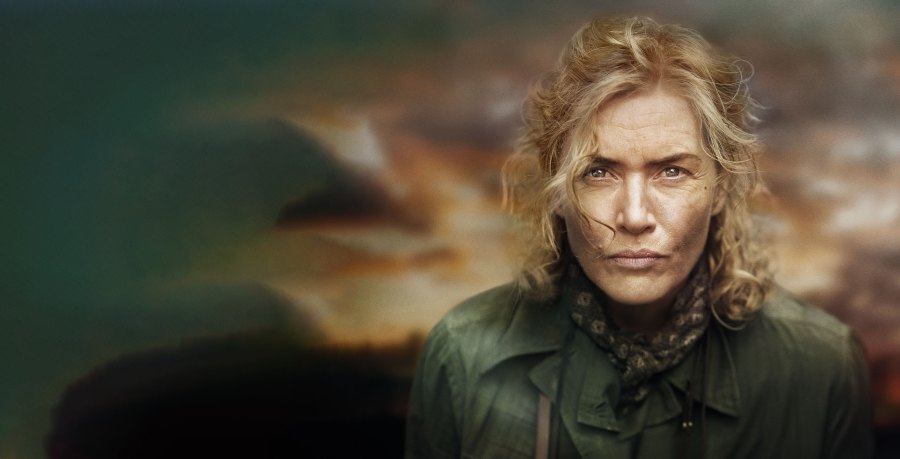
Lee (2023) Review

Quick Synopsis: The tale of Lee Miller, acclaimed war photojournalist

This review was going to be so simple. It was just going to be a lot of jokes about how the name character has the same name as me. Lots of “I don’t remember doing any of this” stuff. It was going to be SOOOOO dumb but funny. Now I can’t do that. And I can’t do that because this film is too good for that. It’s deeply emotional and important, and making stupid jokes about it feels like it would cheapen it a lot. Stupid Lee, being too good for me to make jokes about, as all my friends say: Lee ruins everything.

Lee is not perfect, at times it feels like it assumes you know the importance of certain images, so you’re sitting there and being amazed at the recreations and new insight into how they were constructed etc. As it is, you spend a few moments with no idea what is happening. My other issue, and it hurts me to say this, Andy Samberg is not as good a dramatic actor as the other performers. In a lot of films, that would be okay, but here, he’s opposite Kate Winslet who is at the top of her game. Despite my prediction towards small weird stuff, and my avoidance of the obvious big-budget films (by which I mean, I haven’t seen Titanic), I’ve always been a fan of Winslet, mainly because she’s in the supremely underrated Heavenly Creatures. This is off-topic, but she also seems like a hugely brilliant human being.

The other downside of Lee is going to make me sound a bit weird. There’s been a lot of Nazi films lately. Not films about Nazi leadership, or even the soldiers. But a focus on the ideology, about how it penetrates everyday society and needs to be snuffed out before it poisons. This concerns me. Not because I think “but free speech! people should be free to be racist idiots!” or “WOKE!” etc. But because writers, even those writing about the past, are ALL writing about the current world. So I’m slightly uncomfortable that so many writers in 2020’s feel the need to point out how nazi’s are bad, we don’t have that many “don’t eat lava” films, because we all know that’s obvious. So I’m worried that there is a resurgence in Nazi viewpoints being accepted in polite society, and astute writers are noticing that.

Otherwise, this is damn fine. There is so much to like about this. It’s shot beautifully for a start, done in such a way that it really makes you feel like you’re in a different time. The story is what’s key though. It’s incredibly engaging throughout. It’s the closest I’ve seen to Civil War in terms of how it details the importance of war photographers (incidentally, the lead character in that film was named after Lee Miller). It does so much right. Importantly, it starts off pre-war. But in a time where, in hindsight, war was inevitable. It’s fascinating to see how dismissive they are of the looming threat. It also provides a huge contrast when war does break out, even when you don’t see them, you are aware of what has happened to some of the characters we were introduced to in the opening (although it could do a better job of reminding you they are when they’re mentioned near the end).

In summary; there is A LOT to like about Lee. It’s harrowing, beautiful, and absolutely essential. I’ve seen some movies where the audience stands up and leaves the very second the closing credits start. Sometimes people sit there, but from the general hubbub, you can tell they’re just waiting for a credits scene. With this, there was silence, not of shock, not of exhaustion, but one of appreciation, almost reverance.

Emily (2022)

Quick synopsis: A biographical film about Emily Brontë, and the writing of her most famous work, a shopping list. No, wait, Wuthering Heights.

It’s weird, this film is supposed to be about the writing of Wuthering Heights, but it doesn’t feature Kate Bush at all. Plus it’s set in the 1840s instead of the 1970s. Such a basic lack of fact-checking. Oh, it turns out Wuthering Heights is not just a banger of a tune, it’s also a book (Books: they’re like television shows for your eyes), huh, the things you learn.

I’m not that familiar with Wuthering Heights, or the work of any of the Brontë sisters truth be told. I worried this would hinder my enjoyment of it. There was a high chance that I just wouldn’t vibe with this film, not just because I don’t know much about the sisters, but also because I tend to not like period films that much. And for a lot of this film’s opening, I was uninterested in this film. It felt like the characters were taking some things far too seriously and ignoring obvious truths which would reduce their anxiety. My fears were justified, I was bored, and I had started to tune out.

Now I’m about to say something I wish wasn’t true. The Brontë sisters are important in a literary sense, and are among the most famous female writers of all time, coming from a time when women were legally second-class citizens. So any story about them has to be feminist AF for it to work, which makes the following sentence make me feel shitty for saying: the film gets a lot better once her brother enters the spotlight more. There’s a turning point where he and Emily are talking and it tells you so much about who Emily is. It’s the first time you see the dynamism and excitement that she has. It’s the first time that she feels like an actual human instead of a character. The two actors have undeniable chemistry and I hope they work together in the future.

I have no idea how historically accurate this is, so I can’t judge it based on that. I can only judge on what I see, and what I see is slightly frustrating at times. As I said, the opening doesn’t do a great job of drawing you in, and the main romance that’s central to the plot feels lacking. Hard to explain why, they have good chemistry, and the way it ends is heartbreaking, it just doesn’t feel quite as real as it should. I think it’s because the meet-cute moment doesn’t land. As I said, the way it ends is brilliant, but the way it starts feels a bit rushed and forced. The performances are great though, the only time I’ve seen Emma Mackey in something was Death On The Nile, where I described her as “distractingly like Lucy Hale, but better”. None of that here, she is completely different and knocks every moment out of the park. Fionn Whitehead has a good energy to him, although I did spend a lot of the film wondering where I knew him from, I thought I was just getting him confused with Matthew Baynton, but now I know he was in possibly the best episode of Inside No. 9. I’m really looking forward to seeing what the two of them do next.

This is the first film directed by Frances O’Connor, best known for her performances in Mansfield Park, Importance Of Being Earnest, and Madame Bovary. I would not have guessed this is her first film as a director. It’s very ambitious, she doesn’t approach it as a standard period film, she uses handheld shots, dynamic camera movement during chases, and very dark colours to give it a slightly modern feel. It doesn’t always work, the scene where characters are getting drunk feels very poorly edited. I get what she was going for, but it didn’t really work. There are some moments when the visual language is unclear and it can be frustrating and difficult to watch. But when it’s good, it’s very good. Although I do have the feeling her future is not in period dramas, but in horror. There are a few scenes in here which are directed as if they’re in horror movies, and I’d love to see her do one. Not a modern slasher, but a retro-style ghost story.

It’s strange, I’m not sure I learnt any facts about Emily, but it did give me great insight into who she was. I’m not sure I could pass a multiple-choice exam on her, but this did give me an understanding of her character to the point where I could probably BS my way through an essay on her. Worth a watch, but not essential.