Drop (2025) Review

Quick Synopsis: A widow goes on a date with a man she met online. A date that gets ruined by her trauma and anxiety, plus she keeps getting phone messages that threaten to kill her son if she doesn’t poison her date.

I am a slight fan of Landon, but mainly when he works a distinct style; kickass female leads in genre-bending weirdness (Happy Death Day and its sequel, Freaky, etc). When he steps away from that? Well then, you get Paranormal Activity 5 and Scouts Guide To The Zombie Apocalypse. Drop could easily fall into either of the two; yes, it has a strong female lead, but it isn’t playing off a genre, so it was difficult to figure out which side of the Landon fence it would fall.

I’ll get this out of the way; it’s much closer in quality to Happy Death Day than it is to Scouts Guide. From a technical standpoint, it’s his best film yet. There are some incredible shots here, this is the most impressed I can remember being with his camera work; sometimes when it didn’t even need to be. He doesn’t NEED to transition between the bar and the table with a tracking shot; a simple cut between the two would have worked. But he DOES make the choice to use the more difficult shot, and it’s beautiful. The set design also allows some visuals that are stunning, but not in an overly showy way.

Sadly, that doesn’t make Drop his best film. You can tell a lot of effort has been put into closing off any potential loopholes or answering any questions you may have about the logic. Drop REALLY doesn’t want you to question its core premise, but it doesn’t do enough to get you to care about anything outside of that. It has the essence of a political thriller, but it feels kind of underdeveloped. The villain’s main motivation comes off a little weak, especially since he seems to have picked the worst possible method to fix his problem. It’s written by the pair who wrote Fantasy Island and Truth Or Dare, which I still count as two of the worst horror movies I’ve had the misfortune of watching. Drop is nowhere near as bad as those two films, but the issues I had with them do linger here, too. The ambition is beyond its talent, trying so hard to be clever that it comes off as kind of stupid, and some character choices aren’t logical. There’s nothing inherently terrible about Drop. Nothing that will annoy you or offend you, but there are a lot of small issues with it, and eventually, they do build up.

Thankfully, Drop has something wonderful in its box of tricks: the cast. Meghann Fahy and Brandon Sklenar make incredible leads. Separately, they’re very good performers. But it’s when they share the screen that magic happens. You really buy them as a nervous couple on a date; they could lead a rom-com together easily. The background cast is fun too (especially Violett Beane), never overshadowing the leads, but providing enough uniqueness that you do notice them, so if they were revealed as the mastermind behind the scheme, you wouldn’t be sitting there like “Who’s that?”. I’d have liked to have seen more work done on the writing of those characters, more motivational possibilities for some of them, and more doubt placed in our heads about some of them.

So, the reveal itself? It’s good, not great. If you ignore the “That’s literally the worst way you could have done this” questions, then it does make sense, and it’s easy to see how it was pulled off. However, there’s something deeply unsatisfying about how the reveal is set up. Just an offhand comment that no professional serving staff would make, followed by a lucky guess. It’s nowhere near as bad as the last Scream movie, but it’s also not one that makes you want to see the film again and watch it again with that reveal in mind.

In summary, it’s a very cute relationship movie that then breaks out into a thriller, and it does 75% of that VERY well.

The Second Act aka Le Deuxième Acte (2024) Review

Quick Synopsis: It genuinely doesn’t f*cking matter, seriously.

It’s weird how a trailer can win you over by not showing a single second of what’s in the film. It may seem counter-productive to not include anything from the movie in the trailer, but sometimes it’s not needed. Sometimes, all you need is a way to tell people “This is the tone and style”. The Second Act (TSA, pronounced Tizz-ah, but not like the drink) trailer did that brilliantly and is probably the best trailer I’ve seen in a while. It tells you everything while showing you nothing. The complete opposite of most Marvel trailers.

Now, the film itself. It’s meta and weird. Near the start, a character says something mildly transphobic and then is told “You can’t say that we’re being filmed” Then the character tries to rephrase it differently. He doesn’t say that as the character, he says it as the actor playing the character, if that makes sense? It’s a weird moment, the first of many, and how you react to that scene will let you know whether its worth continuing with the rest of the movie. Personally, I found it funny. But I will admit that it does highlight a small issue I had with this; it is occasionally too meta. As much as I do love the opening scene and how meta it is, there is still a small part of you that thinks “Get on with it”. I’m not saying be less meta, I never say that, but spread it out more among the story. As it is, TSA will stop the story for 5 minutes to focus on meta-commentary, then pick up the story again. In a film that’s less than 90 minutes long, that’s a lot of waiting around. There should have been a more seamless way of threading the meta-ness through the narrative without pausing. I typed that after 10 minutes. Really I should delete it because this film wouldn’t exist without the meta. All it has is “we’re actors making a film” and fourth wall breaks upon fourth wall breaks (16 walls?).

That kind of stuff is to be expected from fans of Quentin Dupieux, those who watched and enjoyed the *checks notes* sentient tire that kills people with psychokinetic powers movie Rubber, will enjoy this. It’s very similar, you have to go into it expecting it to break the very notion of narrative and cinema, you’re not watching it for the plot, you’re just watching it for the experience of watching it. If you are expecting some form of sense, you’re going to be deeply disappointed.

I’m quickly falling in love with Lea Seydoux, she was phenomenal in The Beast, and continues to impress throughout TSA. She’s charming, friendly, and seems believable as a slightly frustrated actress. The others are all fine, but Seydoux is the best of a very good bunch.

From a technical standpoint, this is a marvel (and not just because it stops the plot to make jokes), not in terms of special effects or even outstanding beauty, but because of the tracking shots. Oh my science, the tracking shots. They’re so prevalent that the pre-credits scene makes a point of showcasing just how long the tracks were to make them happen.

Really the only thing to take from TSA? Films are silly. Making them is silly. Writing them is silly. So what not make it so watching them is silly too? It’s not for everybody, and I’d be lying if I said it wasn’t a slightly frustrating watch at times, but it’s also one that’s not entirely without merits.

The Woman In The Yard (2025) Review

Quick synopsis: Grieving (and injured) widow Ramona lives on a dilapidated old farm in the middle of nowhere. They’re struggling financially when things are made worse by everyone’s biggest fear: a person nearby.

Long-time readers will know that I love horror movies, but when I don’t it’s usually due to one of two things: 1) Unlikeable characters. 2) Terrible ending. Usually, it’s specifically the final scene, where we find out the demon/ghost/haunted sandwich is still alive because the writers sacrificed ending the film on a scare over the narrative. Usually, that’s not enough to completely sink a film, but it will make a bad film even worse. I’ve yet to have a case where the final third has completely sunk my opinion of a film the way it did The Woman In The Yard (TWITY, pronounced “twit-tea”).

It cannot be overstated how much the final third absolutely torpedos any goodwill the rest of the film provides. For two-thirds of its runtime, TWITY is a tense, atmospheric family story set against the backdrop of a silent ghost; a tale of grief and guilt manifesting itself in unexpected ways. A display of the toll that motherhood can take, how it can seem like it takes over your entire life and leaves you feeling like you don’t have your own identity. I liked that film. I found it “spooky” without being silly, emotional without being overbearingly depressing, and slow-paced without being boring. It’s the kind of film I want to see more of, original and creative. It was up there in the top 50% of films this year.

Then the final third happened. Then it becomes the worst of Blumhouse, a visual and narrative mess which confuses deliberate confusion for scares, rapid cuts instead of tension, and a final shot “reveal” that doesn’t actually reveal anything going by online discourse which gives it two different meanings. It feels like the writer isn’t sure he’s going to get another shot at writing a horror film so crammed as many horror tropes and conventions as he could, regardless of whether it worked for the story he was trying to tell.

If they figured out a way to fix it, TWITY could be a classic. It has some truly great cinematography. Most horror movies utilise darkness, TWITY goes the other way, using intense sunshine and brightness to create mood. The shot of the woman just sitting there silently is unsettling as hell, and is PERFECT for marketing purposes. The performances are also good, Danielle Deadwyler is believable as a grieving mother who is trying to balance her grief and being a responsible mother to home-schooled children. Estella Kahiha sometimes falters, but she’s a child so that’s forgivable. I was really surprised by how good Peyton Jackson was. Jackson gives the kind of performance that you can imagine being looked back on in 10 years time and saying “THAT’S how it started, look at all the awards and acclaim he has now”. He’s the audience’s “in”, the level-headed character who points out how crazy the other characters are behaving, while trying to look after his younger sister. As such, a lot of the emotional labour of the narrative has to go through him, and with a lesser performer it would have sunk; Jackson does SO much with what he’s given; handling the role with a maturity beyond his years.

There’s also a lot to like about how damn good the opening two-thirds is. It sets up so many small details that pay off later. The titular woman is treated like existing folklore in terms of her actions and appearance, it would be easy to believe that in this world, the tale of The Woman In The Yard is told by teens at slumber parties and summer camps, a way to scare kids into behaving. The characters are believable, even when they do possibly abusive things. The setup is good too; we’re shown that the family are isolated and with their electricity cut off, so it really feels like they’re cut off from the rest of civilisation.

In summary; I am so disappointed with this. I loved seeing the delicate narrative house of cards built up into a magnificent art piece, only to see it knocked over by a fart of flat writing.

Death Of A Unicorn (2024) Review

Quick synopsis: Paul Rudd kills a unicorn, briefly.

Oh, this hurts, not quite as much as being impaled by a unicorn horn, but it still hurts. Death Of A Unicorn (DOAU, pronounced Dow, to rhyme with cow) has been one of the films I’ve looked forward to most this year (alongside the new Knives Out). The title, the premise, the cast, everything about it would lead you to believe it’s going to be incredibly fun.

It’s not. That’s the big problem, it’s so po-faced it’s practically a Teletubby. Maybe that’s my fault. I foolishly assumed that a Paul Rudd film about a unicorn killing millionaires would be fun, that’s on me. It’s far too serious. The seriousness isn’t quite as ruinous as it was for Night Swim, but it does leave a bad taste in the mouth.

Just because it’s not fun, doesn’t mean it’s not dumb, but that stupidity comes mainly from character decisions. Characters do things purely to advance the plot, with no call for logic or consistent characterisation. I did appreciate the satirical nature of it, even though the “the real monster is capitalism” message is as subtle as a brick with the words “message!” smashed into your face repeatedly. The rich people don’t come as real, and not in a way that actual rich people don’t, they appear overly written with every bit of dialogue feels like it was written solely to say “these people are dicks”, rather than “how would an actual human (or rich business owner), respond to this?”. As such, they’re too ridiculous to take seriously, more like caricatures than characters.

That’s not to say that DOAU is without its charms. The performances are great, Will Poulter, in particular, is quickly becoming one of the most versatile performers in the world. I’ve been a fan of him since I first saw Son Of Rambow, and no matter what role he’s given, he always manages to make you believe it. He’s next going to be seen in Alex Garland’s Warfare, and I have no doubt he will nail it. Richard E. Grant continues to be a lot of fun, clearly relishing every syllable he speaks or movement he makes. Ortega continues to do what she does, she’s got a real handle on that character and plays it well.

I also loved how shockingly violent it was. Yes, there’s one death that’s actually less effective in the finished film than it was in the trailer, but mostly? It’s violent fun. The horn deaths aren’t quick or painless, they’re slow and brutal, almost as if they’re being done for revenge rather than animalistic instincts. The unicorns themselves are great characters; they’re original, yet tie into the mythology that we already know. They’re not “We’ve taken these creatures and turned them dark and angry”, they’re “Yeah, these creatures have always been like this, they’ve got fucking horns, obviously they’re violent”.

In summary, it’s so mediocre that it’s disappointing. It’s also far too boring for a film with this premise. But it’s worth a watch at least one, maybe. Weirdly, I would watch it as a musical, and I have no idea why that is, I just think it could work.

Matt And Mara (2024) Review

Quick Synopsis: Mara, a young professor, is struggling with marital problems when she suddenly meets Matt, a man from her past, who wanders onto her university campus.

Despite what my rather morose personality may make you think, I genuinely love a good rom-com. That’s mainly because they’re usually character and dialogue-based, which are things I adore. They’re also not restrained by budget; a low-budget one can be just as good as a multi-million dollar one. They’re a real display for both writers and performers, allowing them to showcase what they do (especially with actors because they get to do emotional grand scenes).

So it’s kind of disappointing how much I didn’t like Matt And Mara. It’s not that it’s too low-budget (but that will be a turn-off for some people, who will be put off by the opening 20 seconds and how muffled some of the dialogue is). The main issue for me was the characters.

To paraphrase It’s Always Sunny; there’s no will they/won’t they, instead it’s “I know they won’t, and I don’t want them to”. The actors have chemistry, but the script doesn’t really allow it to show. I know movies like this need conflict, and often that conflict is silly and can be solved by a twenty-second conversation. Or it’s over something so inconsequential like “Oh my god, you prefer cheesecake over sponge? It’s over!” that the characters come off as stupid. MAM has the opposite problem, the script (or the actors, with the improvisational nature of the movie, it’s hard to figure out who caused it) is so focused on the conflict that it occasionally seems like they’re constantly either arguing or on the verge of arguing. Not small ones either, harsh words which will definitely need to be either discussed in depth or completely ignored for their friendship to carry on. It gets to the point where I’m not actually sure these characters like each other at all.

One thing that is definitely the fault of the filmmakers rather than the performers is the editing. It keeps cutting away before interesting things happen, or just after they happen but before we’re allowed to see the aftermath. Bombs are dropped but we’re not allowed to see the explosions or the burning crater. This would be acceptable if the rest of the film worked; but as a whole, it’s too unfocused and underbaked.

It’s not all bad; there are some charming moments, but they’re fleeting, not enough to sustain the story. I wish there were more of them but as it is they’re peppered through like croutons of hope in the soup of disappointment. I saw one review which describes it as “an excursion into nothing much”, and that’s incredibly accurate. In the 90’s, Seinfeld described itself as “a show about nothing”, Matt and Mara is a display of what happens when you take that theory too far. That being said; the scene in the cafe was actually brilliant, partly because it feels like one of the few moments where you can see why they’re friends and what they’re like when they’re working on the same side.

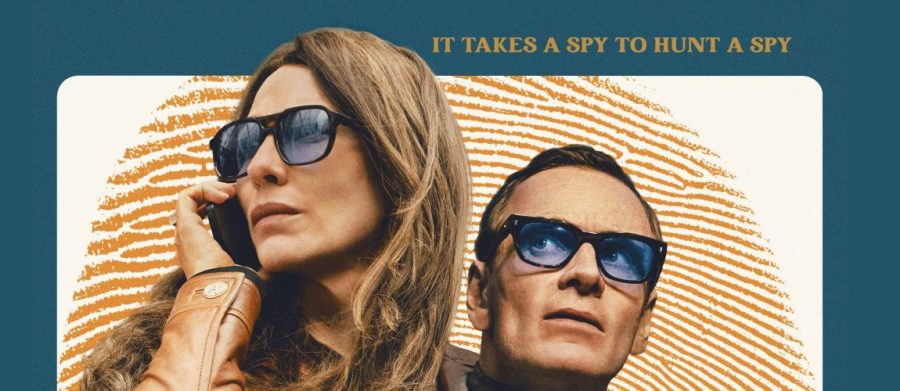
Black Bag (2025) Review

Quick Synopsis: When his beloved wife, Kathryn, is suspected of betraying the nation, intelligence agent George Woodhouse faces the ultimate test — loyalty to his marriage or his country.

I think I may be a terrible film-watcher. There are some directors who I just never vibe with, and three of them are critically acclaimed. There’s Paul Thomas Anderson, there’s Wes Anderson (with the exception of Fantastic Mr. Fox and Isle Of Dogs, which would make you think my issue is his live-action visuals, nope, it’s the dialogue), and there’s Steven Soderbergh. I do like some of his stuff, but there are also a few things he’s done which I just haven’t vibed with; Presence was pretty but dull, Unsane was a gimmick, and I didn’t find Logan Lucky as charming as everyone else seemed to.

That doesn’t change with Black Bag, which, whilst I didn’t actively dislike, I was thoroughly underwhelmed by. There are a lot of moments to like, but in a big film like this, it’s weird that my favourite moments were the smallest. There’s a dinner party early on which is superb in terms of scripting and character dynamics. I love dinner parties in movies. They’re so fun to watch because they easily allow group conversation, and there are certain unspoken etiquette rules that it’s fun to watch get broken. Away from those small moments? It falters. The central McGuffin is so underbaked it’s liable to give you salmonella. It’s weird that “government agencies tried to implement a plan that would create a nuclear melton that would kill thousands of innocent civilians” is the least important part of this movie. There’s seemingly no discussion about whether it’s the right thing to do, barely a sentence on how they need to keep the plan hidden because revealing it would cause world war 3. There’s not even much discussion on the war the plan would be stopping. It’s a trolly problem which is only briefly glanced at, and never investigated. It doesn’t even seem that interested in investigating its own themes. A key point in the trailer is “If your job is lying to everyone, how can a couple trust each other?”. Which is an interesting theme to look into. Black Bag refuses to do so. The relationship between George and Kathryn is barely dented, let alone shattered. You never really get a sense that they don’t trust each other. Their utter devotion to each other is never shown as being at risk of being broken. Which is very sweet and all, but utterly uninteresting in an espionage movie.

Fassbender and Blanchett do have great chemistry though. You really buy them as a couple. Every scene the two share is filled with an air of “the second the camera turns off, these characters are gonna fuck”. In fact, all the performances were good. Which actually hurts, because it’s a shame they’re wasted in this. I’m still waiting for Rege-Jean Page to break through and become a household name because he already carries himself like one.

The performances are definitely the best part of Black Bag. As I said, the script is lacking (but I have a huge appreciation for how quick it starts, it goes from “opening credits” to “your wife is possibly a mole” within minutes), and it’s nowhere near as clever as it thinks it is (or it needs to be), and the music is forgettable. I also wasn’t a fan of the visuals, which can best be described as “staring at street lights after going swimming in a heavily chlorinated pool”.

Normally for spy films, I’d say it needs to go bigger. But Black Bag needs to go smaller; ignore the trolly problem, ignore the international satellite surveillance, and don’t bother with the money transferred to a bank account. Just have the whole thing as the initial dinner party, have it take place in real-time, and the secrets spread over the three courses. Yes, it would be a lot riskier, but it would allow Black Bag to focus on its strengths, which are the looks at the minutiae of spy work.

Presence (2024) Review

Quick Synopsis: A family becomes convinced they are not alone after moving into their new home in the suburbs.

Full disclosure: I was originally going to post the review of Black Bag today and The Electric State on Friday (and spoilers for that, but “state” is an apt description). But then I watched Presence and realised I had the opportunity to review two films by the same director (Steven Soderbergh) in one week. I may never get that opportunity again, so I felt I had to take it.

Spoilers for the Black Bag review, but while I liked that more than Presence, I was more impressed with Presence. It was mismarketed though. The trailers etc made it feel a bit like a horror movie, when it’s more like a family drama. Yes, it involves ghosts, but that doesn’t make it a horror. Not in the traditional sense either. You won’t be scared of the ghost, you’ll be scared of one of the human characters definitely, especially since people like him are not only prevalent in society, but thrive.

At its heart, Presence is a tale of a family suffering. A mother who is doing *something* illegal, a husband who is worried he’ll be implicated and is slowly becoming disenfranchised with the relationship, a son who is so protected by his mother that he is doomed to fail, and a daughter who feels lost and alone while in mourning of her friends. None of these characters are perfect, all are DEEPLY flawed, the mother and son more than the others, she’s incredibly dismissive of her daughter while showering her son with praise, and he tricks girls into sending him nudes and then shares them with friends. All of them feel real. The performances are great (and Lucy Liu continues to prove that Bill Murray was wrong), and their chemistry is incredible. They all feel like family members, but family members with strained relationships.

Now, onto the ending. I’ll try not to say what happened, but those who do know will know what I’m talking about. I wasn’t a fan of the last scene where it explained what the presence was. Mainly because I feel it didn’t suit that narrative. I can buy that the ghost stayed to “fulfil its purpose”, which was killing someone. I can also buy that when it did that, it ceased to exist and floated outside the house into nothingness. What I have a little trouble with, was why it waited so long afterwards. It doesn’t disappear straight after doing what it was supposed to, it hangs around. And considering the characters are shown moving out, which doesn’t happen quickly, it’s obviously a while later. So why is the presence still there? Was part of its “mission” to hang around a bit until the characters realised who it was? I get WHY, it’s so that the audience understands what happened, but it felt like there could have been a better way of doing it. Even if it just involved the presence turning towards a mirror that was at the scene of the death, and we saw the reveal then. But at the moment? It’s too “there for the audience’s sake”. Unless, was it buffering? Is that a thing for ghosts that transcend? Obviously not, that’s stupid.

There were times when Presence didn’t feel like a movie, but like a video game. Not a Turok or GTA obviously, more like What Remains Of Edith Finch or Gone Home. You walk around and witness the environment, piecing together the story as you find objects, occasionally interacting with them, with occasional moments where people do a Darth Vader on Christmas impression and sense the Presence. To be honest, I feel that may have been a better medium to tell the story because as a film, there’s a disconnect between the film and the audience. It reminded me of Here, and not in a good way, although Presence is definitely a better watch. Presence is more emotional. I was always more touched by Presence, Here not so much.

Don’t get me wrong, Presence is an impressive feat, and it’s original, which I always appreciate. But if you strip away the fact it’s from a ghost POV, it’s not that interesting. I wish I could watch this on a virtual reality device, I get the feeling that I’d really get lost in it then. But on a standard television screen? Not so much. It feels more of a curiosity than a finished product. If it was a short? I’d have loved it.

Novocaine (2025) Review

Quick Synopsis: A character nicknamed Novocaine can’t feel pain, he decides to utilise this after his love interest is kidnapped.

The world is shit. That has been the case for a while, but just today the world has seen a submarine sink in the Red Sea, storms destroy sacred temples in South Korea, journalists arrested in Turkey, and my custard cream just broke apart in my cup of tea. In times like this, while important and political films are needed, it’s nice to have a bit of escapism. While I LOVE films like A Real Pain, sometimes (and this may come as a shock) I want to watch a film that makes me happy rather than make me feel things.

It’s also a nice change to have Jack Quaid play a man who isn’t responsible for a woman being set on fire, makes a nice change. I’ve seen Quaid in Scream, and Companion (as reviewed here and here), but this is the first time I’ve seen him as the undeniable lead. He does a really good job. I’m used to seeing him as a sociopathic dickweed, so this is a nice change. He definitely has the charisma needed, maybe not for a major action film with a bigger budget than this, but I feel he has the charm to lead a rom-com.

He’s helped by a pretty tight script. Novocaine isn’t the smartest, most mature movie, but it does a really good job of showing why the characters’ inability to feel pain is a bad thing. We see how it affects his day-to-day life, from not being able to eat solid food in case he bites his tongue without noticing, to having to set a timer to pee because otherwise, his bladder might burst. This is a rather long-winded way of saying that for a dumb movie, this is pretty smart.

Novocaine makes the most of its concept, with every single action scene based around the gimmick. None of the scenes would work in a different film, which is what you want from something with such a unique gimmick as this.

Even outside of the gimmick, it kind of works. There’s a genuinely good mid-twist. On the downside, there’s something that’s supposed to be a twist, but was instead all over the marketing. Production companies NEED to stop doing that shit, especially with things that won’t actually make anybody see the film, so all they do is ruin the enjoyment of people who actually pay to watch the film.

Now on the downside: it is hard to ignore just as one-note this is. That doesn’t stop it being good, but it does stop it being great. Yes, it is a good gimmick, but the film’s reluctance to ever move away from it does mean it resembles a modern-day SNL sketch that goes on too long and features people you don’t know (or in other words, an SNL sketch). Also, the villains are not that interesting. I can vaguely remember what they look like, but it’s difficult when they don’t have that much screen time and spend most of that just sitting still waiting for the hero to come to them.

It’s also not technically the greatest. The fun from the fight scenes comes all from the script and performance, not from the direction. There’s one fight sequence near the end where the visuals actually detract from the action, with the core moment of it being too difficult to see what’s actually happening.

In summary; if this was the 90s it would be the perfect film to rent from blockbuster, in 2025? I dunno, watch it on Netflix or something, I guess.

Last Breath (2025) Review

Quick Synopsis: The true story of Chris Lemons, a deep-sea diver stranded at the bottom of the sea with no oxygen.

There are some films which challenge every notion you have; films which are so complex and fascinating that it feels like you need to make notes during it just to follow. Those are fine, and it can be very interesting to see those complicated plots reveal themselves in front of you. Then there are films like Last Breath, films are so ridiculously simple you have to wonder how they can make it into a feature (similar films include Fall, Buried, and a third one I can’t be bothered to think of because I’m sleepy). Sometimes those films fail because they can’t maintain such a simple story (as in the case of Night Swim), but when they work? They’re superb.

Last Breath is a simple film, but it’s a great one. What it lacks in clever plotting or twists, it makes up for in tension. From the moment the breathing tube breaks, right to the final credits, you will be on the edge of your seat. It’s pacey, getting to the main plot very quickly, but not so quickly that it feels rushed. Crucially, you’re given enough of a reason to actually care about the characters. This is essential, especially since one of the characters (played brilliantly by Finn Cole) spends most of the film runtime unconscious on the ocean floor, so you can’t really get much character development done for him (unless you utilise flashbacks, which will break up the tension too much). So a lot of the introduction is spent on him, giving us a reason to care about him. The rest is logically spent on the other characters, all of whom are likeable, realistic, and (crucially), competent. The disaster isn’t caused by mistakes, stupidity, or carelessness. It just happened. In some ways that’s good, because it would be weird if incompetent characters were in charge of important things like that, it would be like having someone high up in government who adds journalists to online message groups where they discuss war, it would just be unrealistic and make them seem stupid. On the other hand; it makes it more terrifying. The idea that no matter how well prepared you are, no matter how many precautions you take, you can still die alone at the bottom of the sea just because of bad luck?

Make no mistake—everyone in this is DEEPLY competent, to the point where the competence is entertaining in itself. There’s something to be said about watching a group of people being VERY good at their job, it’s sort of like the opposite of watching BBC Parliament. Even decisions which in lesser films would make someone the villain (such as when a character decides not to drop anchor so they can stay near the abandoned diver), are displayed in a way that you know the character making that decision is uneasy about it, only doing so because they fear dropping the anchor will sever a pipeline.

If I’m being critical, Last Breath could do a slightly better job of showing WHY they’re doing certain stuff. You can pick up on a lot of it due to context clues or previous knowledge of diving safety equipment. But there are still some moments where the audience is seeing stuff happen, but aren’t told what the purpose of it is. It’s a minor criticism because I’m not sure HOW they could have done it without some ham-fisted dialogue. The ending also suffers from being nowhere near as interesting as what comes before it. Last Breath knows how to keep you interested during the dive, but it’s not quite as good at making the post-dive moments feel like anything other than a needless coda.

Those are minor criticisms though. Last Breath is genuinely one of the best films I’ve seen this year. The performances are great (Woody in particular has never been better), the visuals are striking in how sparse they are undersea, and the soundtrack is majestic without ever overshadowing the visuals. I’ve liked some films more than this, but Last Breath is the best movie I’ve seen with wide mainstream appeal.

Opus (2025) Review

Quick Synopsis: A young writer travels to the remote compound of a legendary pop star who mysteriously disappeared 30 years ago. 

This is the debut feature of writer/director Mark Anthony Green, and I feel it has to be viewed through that lens. There are parts of Opus that could only be made by someone early on in their career, which I mean as a positive and a negative. There’s an ambition behind the work, an ambition and cockiness that would have been beaten down by experience. There are narrative and visual risks that can only come from a newcomer. On the downside; it doesn’t live up to its own ambitions. Green KNOWS what he wants to say, but he doesn’t quite know how to say it.

I will say this, Green is fantastic at setting up tense moments, he’s also good at all-out narrative chaos. What he’s not so great at is connecting the two. Narratively, it feels like a walk through creepy woods. Very slow, very deliberate, very unnerving. It then realises you’re never going to reach the end in time so pushes you down a hill. There’s a definitive cliff-pushing moment here, and the moment itself is brilliant. But it’s such a shift that it feels a bit weird. It seems like there could have been a few more scenes beforehand. I also wasn’t a fan of how it ended. I know what they were going for, and on paper, it’s a tremendous ending, truly some Twilight Zone/Outer Limits shit. But for some reason, it just didn’t work for me. I can’t even fully explain why. The ending made sense, it ties into the characters well, plays into the themes perfectly etc. It just……..I dunno, it didn’t quite land. It felt more like a concept of an ending, a casual conversation between people about “we should end like this” rather than an actual ending. It’s not helped by the fact that it’s dependent on everything going EXACTLY as they planned.

Not to say Opus isn’t a worthwhile watch. The music alone makes it a good experience. Green did a FANTASTIC job of setting the world up. It doesn’t punch you over the face with “This is how the world is different”. It sets up our reality, then slides into the Opus reality through aged footage and interviews with people the audience is familiar with. If you showed someone the montage parts of this, you could easily convince them that it’s reality. The locations feel real too. In particular, the compound feels vast and like you could actually walk around and explore it, with the film subtly providing enough clues that it’s probably possible to create a map. The music feels like real music too. Crucially, in regards to the pop star, it never feels like Malkovich is playing the part, it feels like he IS the part.

The other performers more than hold their own. Ayo Edebiri continues to be one of the most consistent young performers around, Juliette Lewis gives a performance worthy of the character, and Tony Hale has hair. Nobody gives a weak performance, even cult members who are only there for a single scene are spot on (as is Rosario Dawson as the puppet of Billie Holiday).

I love that Opus actually had something to say. The “cult of celebrity” aspect is not exactly subtle, but it is timely. I mean, America handed political power who named a department after a meme, and he was in that position because of his celebrity status (and bribery, possible bribery). People keep telling celebrities “stop talking about politics” (normally ONLY when they support a different political party than the person complaining), but political parties still court them, because they know the viewpoints of celebrities carry weight. The whole anti-vaxxer movement in the US entered mainstream political conversation because of celebrities, and for some reason, people view the medical opinions of Jim Carrey as having more worth than actual doctors. The cult of celebrity is ripe for satire and ridiculing, and that’s something Opus does fantastically. Yeah, it doesn’t quite know WHAT it wants to say about it, but I respect it for at least trying.

Green will make something superb once he finds his visual voice. At the moment, as impressive as it looks, it never looks unique. Even at its most tense, it feels like shots were designed with “now make this like a Jordan Peele film, now make this look like this Midsommar, now make this like The Menu” in mind. Opus is overly ambitious, but I would MUCH rather watch that than a film where the creators didn’t try. So it’s hard to dislike it too much, even if I didn’t like it that much as it went on.