Predator: Badlands (2025) Review

Quick Synopsis: Cast out from its clan, an alien hunter and an unlikely ally embark on a treacherous journey in search of the ultimate adversary.

They had to know, didn’t they? The writers, the directors, and the studio. When they made a Predator movie about a rookie Yautja being helped and trained by a woman, they knew it would piss people off. Even though it’s obvious that Yautja don’t come into the world as fully trained badasses, the woman was a robot designed by the Weyland-Yutani corporation, and the Predator franchise has always had a slightly matriarchal bent to it anyway. None of that would matter, the internet would see it and go “This film hates men. Woke!” then bitch and complain like the whiny jackasses that they are.

Yet they still made it. I respect that. I’m glad they did, too, as this is a fun movie. Its not quite as violent as it could be, it’s a 12A, and I’m not saying it needs to be an ultra bloody 18 with guts and decapitated heads flying around, but there are moments where it feels neutered slightly, where you can sense it’s deliberately pulling back to make sure it keeps its rating.

Badlands is an incredibly easy movie to like. Part of that is down to Elle Fanning, who plays Thia and Tessa very differently from each other. She’s exceptionally charming as Thea; funny, smart, and able to kill things easily, just what I look for in a woman. Okay, she also has no legs, but I can fix her. Its essential she does a good job, because she’s the most human character we spend time with. Dimitrius Schuster-Koloamatangi (yes, I did copy and paste that) does a good job as Dek; physically imposing when he needs to be, physically vulnerable when faced with a new threat, but he is still playing a character who is obviously not human, so there will be that slight disconnect.

This is as good a time as any to mention the world-building (not in a LEGO way). The film does hold your hand slightly when introducing certain aspects of the planet, but it does in a way that makes sense. Dek is new to the planet, so he doesn’t know the environment (such as the exploding plants, the grass that is like glass, etc), so it’s logical that he’d need Thea to explain it to him.

For all the good it does in building up the world, some of the characters feel underdeveloped. Chief among those is the Kalisk. We’re told it’s a seemingly unkillable apex predator on a planet full of danger. Yet it never really feels like it. It just feels like another creature; there’s nothing particularly awe-inspiring about it.

There’s also an issue with Dek at times. His relationship with Thea reminds me of How I Met Your Mother, where characters would come close to reaching the narrative ending, but the show would get renewed for another series, so the writers had to quickly snap the characters back so they were further away from their goal. There are many instances where Dek learns the same lessons again and again.

There’s a sequence near the end where our ragtag group of misfits take over a base, and it’s brilliant. The tooling up sequence leading up to it? Could be clearer. But the actual sequence itself? Masterful. Expertly shot, creative in terms of deaths, and very funny. Sequences like that are made for the big screen, so see this at the cinema while you can. It ties into the Alien franchise in a way that’s not too heavy on the fanservice. It’s such a smart way to do it, and it shows just how much effort was put in.

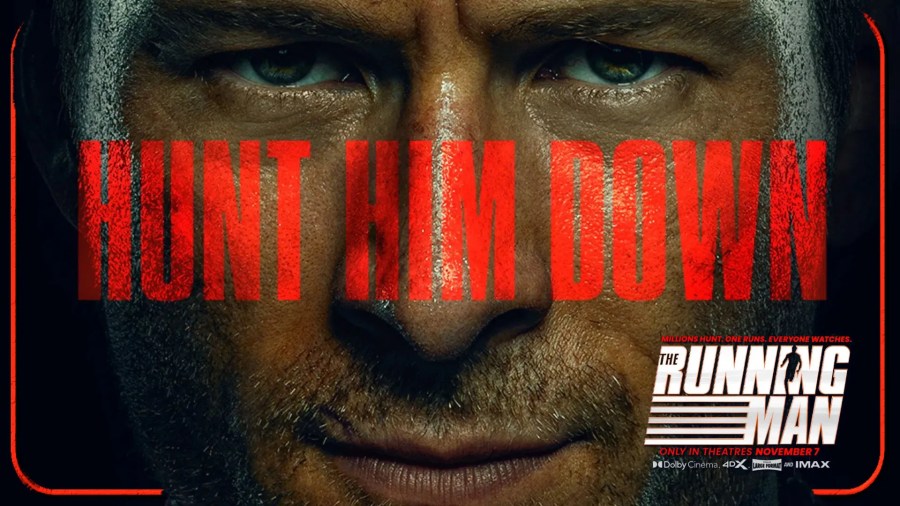
The Running Man (2025) Review

Quick Synopsis: Desperate to get the money required to get his family luxuries such as food and healthcare, Ben Richards enters The Running Man, a TV show where people must survive 30 days being hunted by assassins.

The existence of this movie has annoyed a lot of people. People who are complaining, “They remade the Arnie movie. Be original! And they’ve changed aspects of it”, seemingly not realising that it’s not a remake, it’s another adaptation of the book, and some of the changes have been made to make it more faithful to the book. I watched the original a few weeks ago; it’s a VERY loose adaptation of the source material, removing a lot of the central themes. So in that sense, the 2025 version is better; it’s a lot more faithful, keeping not just the basic plot points but also the world-building required to make the story more than “muscle man kills everyone”.

As good as the first version is, it never truly felt dystopian or real. This feels real. The characters are clearly financially suffering, and living in a world where most of the media shows glamorous lifestyles that are beyond the reach of most people. A world where people are constantly watched. A world where the divide between corporations and government is wafer-thin. In short, a world which can either be described as “one we’re heading towards” or “one we’re already in”, depending on whether you view your glass as half full, half empty, or missing because some fucker stole it. The world has changed since the 80s, when America was led by a psychopathic manchild brought to the world by his appearances in the media, and Britain was determined to crush the rights of the poor, disabled, non-white, and members of the LGBTQ community. The proliferation (big word, go me) of AI and surveillance means that certain parts of this now ring very true. It does make things easier for the filmmakers; characters don’t have to say “they edited it using artificial intelligence based on pre-existing recordings” We’re all so familiar with deepfakes that we automatically know.

So it’s a good adaptation, but is it a good movie? I mean, the Tim Burton version of Charlie And The Chocolate Factory is clearly more accurate than the Gene Wilder one, but is clearly inferior, partly (but not entirely) down to Depp’s decision to play Wonka like Michael Jackson, but more creepy. I liked it. The political satire is on point, the action sequences are fun, and there are no sequences where you’re bored. Also, it’s fun. Action movies can make a political point and still be fun.

That being said, it could do more. Edgar Wright is known for certain things, mainly his editing and his music choices. It feels like The Running Man doesn’t showcase his skills. There are some very good music choices (especially in the opening), and like I said, some of the action sequences are fun. But there are no scenes which stand out as particularly impressive compared to his other works. There’s nothing which you can point to and say, “That! That is why we love cinema”, like the opening chase of Baby Driver.

The performances are fine. It’s still weird to see Glen Powell as an action hero, but I suppose that’s kind of the point. Colman Domingo is great, bringing to mind Carl Weathers’ performance as Apollo Creed with the energy and charisma he has.

There’s been some negative talk online about this movie. Those people are wrong. The Running Man is one of the most fun experiences you can have in a cinema without risking being thrown out. There’s a delightful energy to the whole thing, and the action scenes actually make sense. There’s not much suspension of disbelief required for it to make sense, no requirement to leave your brain at the door and “stop nitpicking and just start enjoying”. That doesn’t mean it’s overly pretentious and serious, though. You can just watch it at home (when the DVD/Blu-ray is released) with a couple of beers and some friends (sadly, friends aren’t included with a dvd purchase, I’ve checked) and cheer at the sequences, you’re not going to be have to be like “shhhh, you’re missing important plot points, concnetrate!”. Essentially, this movie is what you make it; if you want political satire, it’s got it, if you want bang bang blow up shoot shoot action movies, it’s that. So while it’s not an easy film to declare the best movie ever, it’s a very easy movie to enjoy.

I like that.

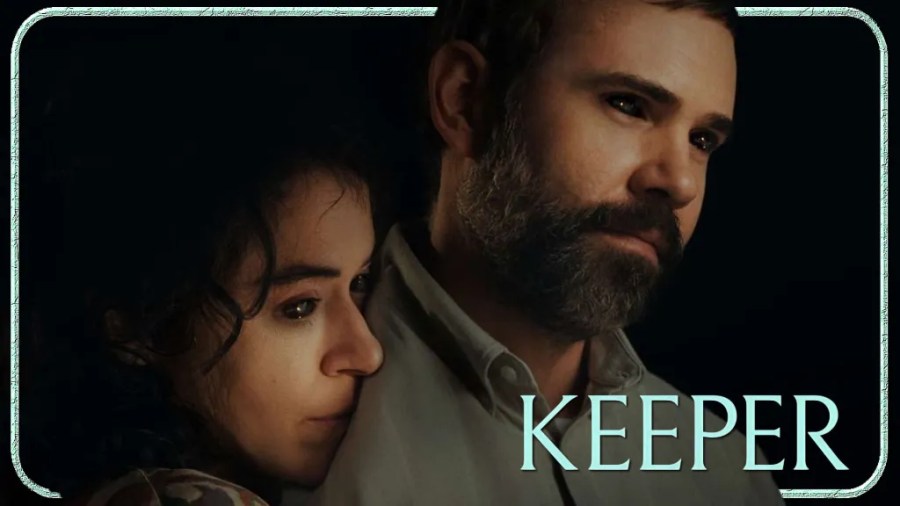
Keeper (2025) Review

Quick Synopsis: Terrifying visions plague a free-spirited artist when she travels to a secluded cabin with the doctor she’s been dating for one year.

I went into this surprisingly blind for someone who has seen the trailer at least 11 times at the local cinema. It gave nothing away. So I expected it to be mysterious and creepy. Turns out it didn’t give anything away because there’s not that much to give away, at least not until the ending. It’s not a sequential escalation of events; it’s just stuff happens, then similar stuff happens, with no explanation.

Imagine you go to a restaurant expecting chocolate cake. It’s a 60-minute time limit, but for 50 minutes, all you have access to is bread. You’re confused, trying to figure out what is going on, wondering if you’re even going to get any cake. Then, just when you’ve given up hope, the cake arrives, and it is good; it somehow explains the bread. In that scenario, are you going to tell people “the cake was really good”, or are you going to talk about how you spent most of the time eating bread? That’s my experience with this movie (the bread is nonsensical weirdness, the cake is logic and storytelling, obviously). Most of the 99-minute runtime is spent with incomprehensible weirdness instead of scares. I have similar issues with it that I had with Osgood’s 2024 movie Longlegs; it looks pretty, the performances are good, but nothing happens, and then it continues to happen. It’s demonstrably dull. Part of that is the weirdness; it overplays the “something spooky, but it was possibly a dream” moments, so nothing lands. Every time you see something, you’re never sure if it’s real, so you assume it’s not, which means nothing has meaning.

The performances are great, that has to be said. By which I mean, of the three characters we spend the most time with, one is spectacular, and is luckily the one who is onscreen most of the time. On the downside, I have recently watched Broad City, so it did take a while to move past Tatiana Maslany’s resemblance to Ilana Glazer. If it wasn’t for Maslany, I’d have HATED this movie. Her performance is incredible, which is handy as most of the time she doesn’t really have anyone to bounce off.

Perkins has injected the film with an atmosphere that’s very low-key, incredibly naturalistic. Which makes it all the more disappointing when he keeps going back to hackneyed horror tropes when we see the creatures/visions. Those visions don’t seem to increase in levels; they stay consistent throughout, so they seem more repetitive than my complaints about them.

To be honest, this is a difficult review to write as it’s difficult to resist the urge not to just repeat a lot of the sentences from the Die My Love review, maybe mixed in with my Longlegs review too. There’s a filmmaking rule: Show, Don’t Tell. Essentially, if you want to tell the audience that a character is in pain, it’s best to do that by having them wince when they move, etc, rather than have them come in and say “I am in pain”. Films like Keeper take that advice too literally, showing us random things with no explanation. Short flashbacks and spooky shit do not count as foreshadowing; it’s just annoying.

In summary, I think it’s a style issue. I just don’t like Perkins’ style as a filmmaker. Except for The Monkey, I loved that. If this were a short, I’d have loved it. But because it spent sooooo long getting to the f*cking point, I was too bored to care by the time it got interesting.

The Hand That Rocks The Cradle (2025) Review

Quick Synopsis: Afluent attorney Michelle brings a new nanny into her home, shit gets creepy.

The original movie is one of my non-childish childhood favourites. I think everyone has those movies you watched growing up that you have fond memories of, that weren’t kids’ movies. Movies that aren’t stupid and cheesy. These are “proper” films. Your first introduction to nuance and mature themes. I’ve watched it again recently, and it still holds up. It’s a tense drama, led by some fantastic performances, especially Rebecca De Mornay, winner of the “Actress whose name sounds most like a Hitchcock character” award. If I heard this was being remade, I would have been deeply offended but curious. I only ended up hearing about its existence roughly two weeks before the release date, so I didn’t really get enough time to draw up strong opinions about it.

I’m not as opposed to remakes as some people; I won’t dismiss something purely because it’s a remake. So I was going into this with an open mind, but with the knowledge that it could suck. One advantage this has is that Maika Monroe isn’t as inherently unsettling as De Mornay. That’s not an insult to De Mornay, by the way, but she’s very easily believable as a creepy person, so it’s difficult to build her up as a creepy person because that’s her baseline. It’s like watching an action movie where you’re expected to be surprised that the mild-mannered janitor played by The Rock turns out to be a former soldier; it’s kind of obvious.

This does what a remake should do: sticks to the spirit of the original whilst changing the specifics so that you are still surprised. As good as the original was, Mrs Mott’s motivations always felt a little too caricatured evil to be as compelling as it could have been; “I’m annoyed that this woman reported my husband for sexually assaulting her” is a weird motivation. I won’t spoil it, but the villain’s motivation in this version is much more believable and personal. As good as Annabella Sciorra was in the original, Mary Elizabeth Winstead exceeds her in some aspects; it helps that she’s great at being frightened.

On the downside, the husband’s role is even more of an afterthought in this than it was in the original. I can’t remember his name, what he looks like, or any aspects of his personality. That’s a small complaint, though, as the core relationship in this story will always be the one between the two women.

In terms of visuals, this is overly artsy at times. Sometimes it works; the house fire is beautifully cinematic. But on others, it’s a little much; we don’t need a shot of her blood on the road the way it’s done. Truth be told, it feels a little pretentious at times. It’s definitely more cinematic than the original, for better and for worse. There’s one shot which I’m definitely not a fan of; when Rebecca kills someone with a baseball bat it lacks impact due to how it’s shot; it needs a split second or two

The story? I mentioned before how I preferred the villain’s motivation in this version, but how it’s revealed feels a little weak. There’s also a sex scene that doesn’t feel necessary. In a lesser movie, that would be a random sex scene made for titillation, but because this movie is obviously trying to be good, cheap moments like that hurt it more than they’d hurt others. If this weren’t trying to be so good, it would be a better movie. Which is a weird thing to say, I know. But the story is cheesy and over exaggerated, but the directing and performances are mature and sophisticated, which causes a weird style clash.

In summary, an interesting watch, and not one I regret. But I won’t hold it with the same love and reverence as I did the original.

Die My Love (2025) Review

Quick synopsis: Grace is a writer and mother. One of those things is ruining her life.

This is going to be a difficult review to write. Not for personal reasons, the emotional moments didn’t cause PTSD or flashbacks to similar events in my life. It’s difficult because it’s going to be tricky for me to talk about this and not make it very similar to my review of Urchin. I also went into that with high expectations, which weren’t met. Both films seem to have a disconnect between reviewers and audiences; with multiple high scores in professional reviews, yet audiences (at least the screenings I was in) met them with silence at best, and derision at worst. They both suffer the same flaw: making a straightforward and potentially emotionally compelling piece “artsy” to the point it’s incomprehensible.

Die My Love (DML, pronounced Dimm-ell) has noble intentions; showcasing how postnatal depression can cause women to feel isolated and gaslit by their own brain, how damaging it can be to their mental and physical health. The issue is that it’s clear that some of the film takes place inside her head, but you’re never sure quite how much. It’s the kind of film which, if it ended and you found out everything except the opening scene was all a dream, would make sense. There’s no indication of what’s real and what’s imagined, so it’s difficult to feel fully invested. It also makes it difficult to learn anything from it. It doesn’t say how you can help your loved ones who are dealing with similar issues, and no indication of how women can help themselves through it. The character does go to a psychiatric institution, but that doesn’t help. If anything, it just widens the chasm between the two leads, with her being angry at him for attempting to get her help. So the main message seems to be “you’re fucked”. The lack of audience investment also means that there is zero emotional resonance. This should be deeply emotional; instead, you’re left cold because you don’t give a shit about anybody in it.

Jennifer Lawrence gets some slack, but she is the core to what does work; the few moments which have emotion are all down to her. Robert Pattinson is fine, but there were many scenes where I couldn’t tell if he was angry and frustrated or just drunk. The two have great chemistry as a couple. The opening moments of them as a happy couple are delightful. The wordless foreplay feels real; they feel like a couple at play, completely comfortable with each other. Most of the other cast aren’t really in it long enough to leave an impact. I love LaKeith Stanfield, but his character adds nothing except raised questions. If you removed him, it would leave no hole in the film. That’s partly because a lot of the film goes from moment to moment, with things happening and then not being referenced again. You’d think somebody headbutting a mirror until they bleed would be mentioned, but nope. They rarely mention a character killing a dog. In fact, they don’t bring up the baby as much as they should, with multiple scenes where it feels like they just leave it at home.

On the plus side, the choice of music is good. With some songs you’ll know, and some you won’t. They are all tonally perfect for each scene, usually played at the perfect volume. I am aware that’s a weird thing to say, but sometimes films struggle to show music being played, with there being a disconnect between the music and the scene, with it clear that the music isn’t actually being played on set. DML, you can almost feel the beats of the music as it’s played, and she dances around the house.

In general, DML is a deeply uncomfortable watch. The constant noise and narrative disruption mean the audience never feels settled; they always feel tense and frustrated. I get it, that’s the point, it means you feel what the character feels. But if something is designed to be deliberately off-putting, it’s not an unfair criticism to not like it because you find it off-putting. I can watch films about death and loss without the requirement of the cinema staff murdering the person sitting in front of me. It feels like a film you’re supposed to analyse, dissect, discuss, think about, pore over. There are very few moments where it feels like a film you’re supposed to watch and want to see again. It’s a thesis, not a film.

Shelby Oaks (2024) Review

Quick Synopsis: Mia is haunted by the disappearance of her sister Riley 12 years ago. She’s given up all hope, then a stranger hands her a videotape of Riley’s final moments.

I’ve seen this movie described as a mix of Blair Witch and Hereditary, which is remarkably accurate. It has the lore and world-building of Hereditary, and the reality-based found footage of Blair Witch. It’s been overused since then, so people forget just how exciting The Blair Witch Project was when it came out. What made that movie work was how real the footage itself felt; the people in it didn’t like actors, so it genuinely felt like we were watching something hidden. It also wasn’t overly edited and full of jump scares, which is a trap its weaker imitators have fallen into. In that regard, Shelby Oaks continues that tradition, with the found-footage sections being incredible to watch.

It’s when it steps away from the found-footage premise that it becomes less interesting. The moment it happens is brilliant, and feels like a genuinely “holy shit” moment, the likes of which I haven’t seen since the Ghostface deaths in the opening of Scream 6. It can’t keep that momentum up, though. Once that moment has gone, the film doesn’t come close to matching it. You’re still invested in the story and the mystery, but a little bit of that “wow” factor has gone; there’s not as much to separate it from every other horror movie. I think part of the annoyance with it is that the mystery is intriguing, but you never really feel like you’re getting close to solving it until the film tells you what’s happening; there are no clues for the audience to figure out. If you’re watching this with friends, there will be no discussion about your theories or guesses. It gives you a puzzle, then makes you watch someone else solve it, so after a while, your brain can’t help but wander. Without that “I want to solve the mystery”, you’re just left with a spooky story, albeit a very competent one.

It’s clear that Chris Stuckmann has a lot of talent as a director; he’s an expert at crafting scares out of seemingly nothing. He’s helped by a brilliant performance from Camille Sullivan. I was also fond of Sarah Durn’s performance as Riley, especially towards the end when we see her perform not as a video host, but as a traumatised victim. She looks haunted. Nobody else really lasts long enough to have an impact, but it is always nice to see Keith David. There’s also some great audiowork, which is an underrated part of crafting tension.

When it is tense, it’s on “edge-of-your-seat” levels. Shelby Oaks is the kind of film that nail-biting was invented for. I watched it in the cinema, which is a great way to watch a film like this; sitting in a dark room with lots of space around you, letting everything overwhelm you. The only way the experience could be better is if you had to listen to it on those massive over-ear headphones.

What surprised me about Shelby Oaks is just how nostalgic it made me feel. The videos genuinely feel like they’re from the early days of YouTube, where it was weird people making art as opposed to corporations making “content”. There’s a sort of innocence to the videos the Paranormal Paranoids make, which makes what happens to them all the more frightening.

I wish I could play this as a video game, or watch it as a series of YouTube shorts played off as real. As a feature film, it runs out of ideas in the final third (but the ending is pretty shocking), which really does a disservice to the art created beforehand. In summary, quite frustrating, but the work of people who clearly know what they’re doing. One day, Stuckmann could make the greatest horror movie of modern times, but he’s not quite there yet.

Relay (2024) Review

Quick Synopsis: A bribe broker facilitates deals between corrupt companies and their threats. His new threat is a woman who has some dangerous leverage against a multinational conglomerate.

I was in a weird position for this. I’m not entirely sure how, but I had heard the “twist” ending for this. So I couldn’t be fully invested because instead of wondering where it was going to go, I spent my time trying to see the crumbs that would eventually come together into the sandwich of narrative completion. I’m going to admit, I did wonder if I had heard incorrectly. It felt like there was no way the ending I heard could be correct. If it was, surely they’d have set it up somehow? Put clues which don’t make sense until a second watch? Nope. It’s unpredictable, but not in a good way. It feels like it’s a twist for the sake of a twist. The annoying part is how unnecessary it is. If you changed it and made it more straightforward, it would work much better.

Remove the unnecessary moment near the end, and it’s a very solid thriller. I’m sure there are some plot holes that emerge if you think about it, but none that are so glaring that any idiot (by which I mean, me) can see them. I’m unsure of the opening. On the one hand, it is nice to have a film that doesn’t treat you like an idiot, but on the other, it takes longer to give you context clues than it should. One thing I am sure about is that Lily James’s character repeated her motivation. She explains it to a lawyer, who advises her to contact the relay service. She then explains it to Ash (played by Riz Ahmed). I understand why she would need to explain it twice, but I don’t understand why we had to see it twice. It would have worked if we started at the end of her meeting with the lawyer, so we just see him say “we can’t deal with this, but unofficially, here’s someone who can”. As an audience, our tension will be heightened, and we’d be wondering what it is that she’s so desperate and in danger. Although that does remind me of one plot hole that does need explaining, but I can’t explain it without ruining the twist. So I’ll just say this: the characters are INCREDIBLY lucky their plan went as it did.

This is all sounding negative. Which is a bit mean. Relay is one of the tensest films of the year. When it works, it’s remarkably old school and Hitchcockian; a tale of an ordinary man caught up in something much bigger than him, surviving on just his wits and local knowledge. The central premise is actually genius; a messaging service keeping anonymity by using deaf messengers and teletypewriters is perfectly suited for tense dramas. It reminded me of John Wick, how it set up its world visually and trusted in the audience to buy in.

It’s anchored by a great performance by Riz. That really shouldn’t be a surprise, I mean, he’s an Oscar-nominated performer (losing to Anthony Hopkins, which is nothing to be ashamed of). I think he may be one of my favourite British performers, and has been ever since I saw him in Four Lions. He has a nervous energy in this, like you can imagine that he jumps twenty feet in the air every time someone taps him on the shoulder. But he also seems like someone who’s really good at his job and is confident in doing it. It’s a strange dichotomy that is tricky to pull off, but he does it brilliantly.

In summary, this won’t be in my list of best films of the year. But it will join the likes of Bridge Of Spies, The Post, etc, by being a film that in a few years’ time will be added to a streaming service, and I’ll think “oooo, I really enjoyed that, I’ll watch it”, and then think “yup, that was certainly a good movie”.

Roofman (2025) Review

Quick Synopsis: The true story of Jeffrey Manchester, an armed robber who escapes prison and secretly hides in a Toys R Us for six months.

I was quite hyped for this, the trailer made it look fun and pacier than a blue hedgehog wearing trainers. So it was somewhat of a shock when I realised it was over two hours long. The concept (man hides in Toys R Us) didn’t feel like it had enough meat on it to justify that runtime. I’ve now seen it, and those fears were not without merit. It overly complicates what should be a relatively simple story, and just isn’t fun enough.

Roofman is weirdly cosy, at times playing like a Hallmark Christmas movie. On that note, it should have actually been a Christmas movie. So many of the emotional and narrative set-pieces are built around it in the final third, so they really should have just leaned into it and released it a few weeks later. It also meant that it would have been played on TV every single year. At the moment, I can’t really see many TV stations rushing to show this. It doesn’t really have much to it.

Maybe it would have helped if we actually saw more of how he operates. He goes from a normal person to a serial thief off-screen. We’re shown him thinking about committing armed robbery, to having already committed almost 40 of them. I’m not saying we needed all of them in full, but it wouldn’t have hurt Roofman to cut some of its superfluous moments and replace them with a robbery montage near the start. This would have improved the pacing and made it flow a bit better than it currently does. Also, it would have made him seem more competent. We’re told he’s great at noticing things; he commits 5 crimes in this movie. One, he gets caught and thrown in prison, not good. Then he escapes prison, all good there, but heavily dependent on luck. He camps out in the store, but commits simple errors whilst doing so (he’s clearly noticeable on security cameras). Fourth, he goes to break into a pawn shop and ends up in the building next door by mistake, a failure. Lastly, the toy store again, which he messes up. So the only time he objectively succeeds is in escaping prison. We don’t see him being good at his “job”. A montage would have solved something; we would have seen what makes him so talented.

I have a specific problem with the pawn shop robbery. He ends up in the building next door and breaks through the wall to the pawn shop. This sets the alarm off. He then breaks the glass door with a giant statue and escapes. Does this lead to an exciting police chase? No. Does this lead to a moment of panic where he realises how reckless he’s being? No. Does it lead to a near miss? Nope. So what does it do? It gets him a gun. That’s it. The alarms, etc, don’t matter to the plot at all. So what was the point of that scene? It’s America, “but how did this white person get a gun?” is not a question any audience members would have asked; we would have assumed he found it in a cereal box or something. Asking where an American got a gun from is like asking where a 19th-century London prostitute caught syphilis from; it would be more surprising if they didn’t have it. There are a few other moments which aren’t followed up on; he breaks into the store’s computer to change someone’s shifts. That’s never followed up on; at no point does the manager notice, “hang on, I had this person due to work and now they’ve mysteriously disappeared from the roster, who did this?”

Now onto the romance part of the film. I’m not opposed to it. The worst part of it is that it kind of negates his kids. He goes from “my children are my entire world, it’s why I do what I do”, to “Wooo new family”. He tries to contact his kids once or twice, but his focus and motivation definitely seem to be on his new relationship. The relationship between the two feels real, and her inner conflict towards the end makes complete sense when you take into account her character and personality. Usually, a relationship between a woman and a criminal is displayed in a “she softened his hardened heart, and hardened his…” way. But Roofman takes great lengths to display how kind a person he is, even before that, only committing crimes so he can buy the necessities for his family (a big TV, a brand new bike, mariachi singers for a birthday. You know, the essentials), so he doesn’t really change at all. Really, it’s just two people who stay exactly the same for the entire film, with no personal growth. Yes, he is looking to escape to another country when he can, but that never seems to be his main motivation. The “I am flying away” parts only take up roughly 5 minutes of screen time, and could be missed entirely with a few badly timed pissbreaks. All it needed was for him to put posters of his destination on the wall.

In summary; not a perfect film. It’s likeable enough, but has less weight than a helium balloon. The kind of film you stick on at Christmas to have on in the background as you sleep off a cheese coma.

Springsteen: Deliver Me From Nowhere (2025) Review

Quick Synopsis: On the cusp of global superstardom, New Jersey rocker Bruce Springsteen struggles to reconcile the pressures of success with the ghosts of his past as he records the album “Nebraska” in the early 1980s.

Music biopics have surged in the last few years, probably because of Bohemian Rhapsody. I actually don’t mind it, I usually like them. But I feel its important that the biopic style matches the subject. No matter the reality, if someone made a dark and depressing biopic of Ace Of Base, it would be weird. Conversely, if someone made a light and fun movie about Cradle Of Filth, it would seem unnatural. Springsteen: Deliver Me From Nowhere (S: DMEN, pronounced Ess-dee-murf-en) is a fantastic melding of film and subject. The logical step for a Springsteen movie would be to be about the creation of Born In The USA/Born To Run, or maybe a look at his life growing up and how he became famous; his journey from Springsteen to Springsadult. Instead, this deals with him writing Nebraska, his most personal and least commercial album. In a way, that’s very Bruce; having a movie ignore the mainstream and instead focus on the personal is what he was intending with the album, so to have a film reflect that is tonal genius.

If you watch this expecting a fun time where you get to hear all his songs, you’ll be disappointed. This is more of an intense character study. In some ways, that is to be admired, but in others, it does mean the film is an occasionally frustrating watch. It keeps teasing you with familiarity and then pulling back. It’s like listening to an album of B-sides where some of the songs contain a riff that was later used in a single. If you know what to expect, or you’re a fan of him, you will enjoy this movie a lot more than someone who isn’t particularly bothered about him.

What everyone will enjoy is the performances, Jeremy Allen White gets it spot on, you never feel he’s playing Bruce as much as he is him. It’s nice to see Stephen Graham in big movies, but it is odd that they cast someone English in SUCH an American story.

I’m surprised by how much I didn’t hate the direction, considering the director made 3 of my least favourite movies (Black Mass, Antlers, The Pale Blue Eye). I love how he shot some of the smaller gigs; he really captured the sweat and energy of those places; it makes you wish you were there.

I’m not sure about the accuracy of most of it, but apparently, the basics are pretty accurate. The way he recorded the demos and ran them through a machine that had been severely water-damaged? True. His dad asking him to sit on his knee (whilst Bruce was in his 30s and had never done it as a child)? True. Faye, the woman he dates? False. I’m not sure why they added that, as her sections are the least interesting and don’t really add anything to the narrative. If anything, it just makes Bruce seem like kind of a dick for treating her and her child the way he does. I’m used to biopics inventing moments to make their subjects likeable, but having them create something that just seems to exist to make him worse is certainly a brave choice. Stupid, but brave.

In summary, a curious watch with a very specific audience in mind, which feels risky for a $50million budget movie. It did make me want to listen to Springsteen, though, so in some ways it’s a success.